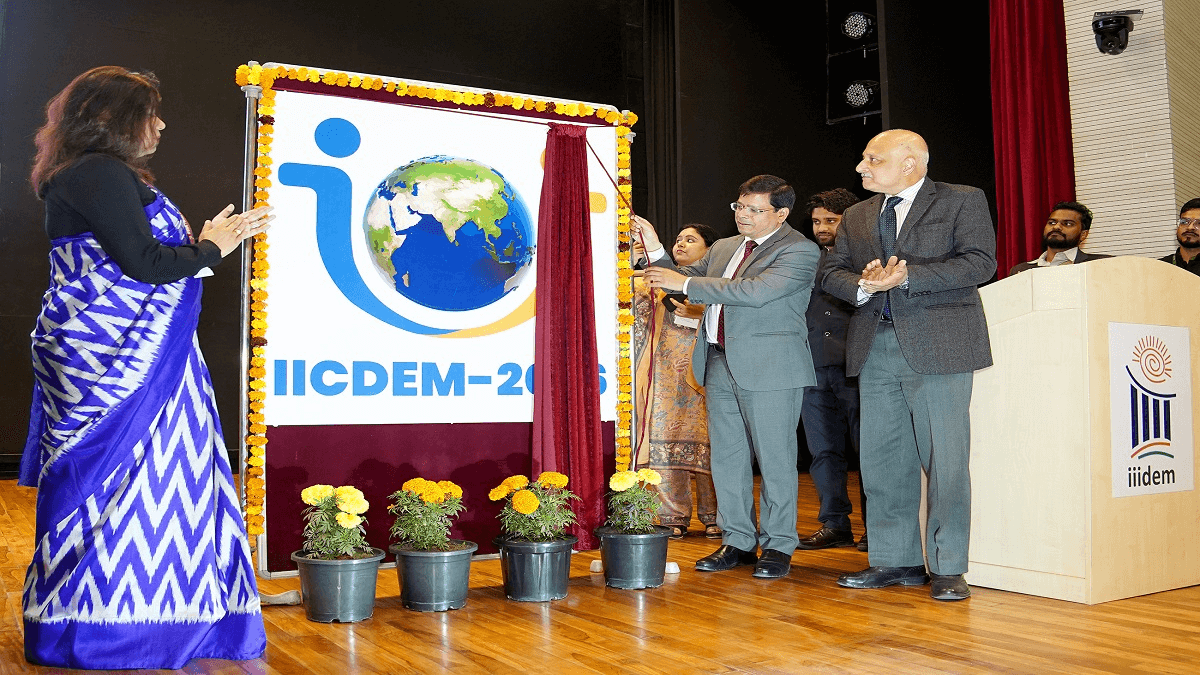
The Election Commission of India (ECI) will host the inaugural India International Conference on Democracy and Election Management (IICDEM) 2026 from January 21 to 23, 2026, at Bharat Mandapam in New Delhi. This three-day international event marks a major step in positioning India as a global hub for dialogue and cooperation on democratic governance and election management. The conference represents India’s commitment to sharing its rich democratic experiences and expertise with the international community, while advancing global cooperation on strengthening electoral systems and democratic institutions worldwide.
Key Facts for Competitive Exams and Current Affairs
- Event: India International Conference on Democracy and Election Management (IICDEM) 2026
- Dates: January 21-23, 2026
- Location: Bharat Mandapam, New Delhi
- Duration: Three days
- Organizing Body: India International Institute of Democracy and Election Management (IIIDEM)
- Under the Aegis of: Election Commission of India
- International Participants: Nearly 100 delegates from Election Management Bodies (EMBs)
- Conference Theme: “Democracy for an inclusive, peaceful, resilient and sustainable world”
- India’s Role: Chairship of Council of Member States of International IDEA for 2026
- Chief Election Commissioner: Gyanesh Kumar
- Academic Participation: 36 thematic groups from leading institutions (IITs, IIMs, NLUs, IIMCs)
- Election Commissioners: Dr. Sukhbir Singh Sandhu and Dr. Vivek Joshi
- Bilateral Meetings: Over 40 scheduled with EMB heads and international delegates
Global Platform for Election Management Bodies
Largest International Electoral Conference Hosted by India
IICDEM 2026 is positioned as the largest global conference of its kind hosted by India, representing an unprecedented assembly of electoral expertise and international cooperation. The conference will attract participation from:
- Nearly 100 International Delegates: Representatives from Election Management Bodies (EMBs) spanning democratic nations across multiple continents, bringing diverse electoral systems, methodologies, and experiences.
- International Organizations: Representatives from global bodies dedicated to democracy promotion and democratic governance strengthening.
- Foreign Missions in India: Diplomatic representatives from numerous countries accredited to India.
- Academic and Electoral Experts: Scholars, practitioners, and specialists in electoral processes and democratic governance from academic institutions worldwide.
India’s Strategic Leadership Role
Chairship of International IDEA
India’s assumption of the Chairship of the Council of Member States of International IDEA for 2026 provides the institutional framework for IICDEM 2026. International IDEA, a global organization dedicated to promoting sustainable democracy worldwide, recognizes India’s growing role in advancing democratic governance and electoral excellence.
Theme: Democracy for Global Progress
The conference’s overarching theme, “Democracy for an inclusive, peaceful, resilient and sustainable world,” reflects India’s emphasis on:
- Democratic Resilience: Strengthening electoral systems and democratic institutions to withstand contemporary pressures and challenges.
- Inclusive Governance: Ensuring that democratic participation extends equitably across diverse populations and marginalized communities.
- Peace and Stability: Recognizing democracy’s role in fostering peaceful societies and resolving conflicts through democratic mechanisms.
- Sustainable Development: Connecting democratic governance with environmental and social sustainability objectives.
Conference Programme and Structural Framework
Comprehensive Programme Structure
According to Director General of IIIDEM Rakesh Verma, the conference programme includes:
- Inaugural Session: Formal opening addressing the significance of electoral cooperation and democratic governance.
- EMB Leaders’ Plenary: High-level session bringing together heads of election management bodies for strategic dialogue.
- Working Group Meetings: Specialized sessions focused on specific electoral challenges and solutions.
- Thematic Sessions: Deliberations on international electoral standards, best practices, and innovations.
- ECINet Launch: Introduction of India’s electoral information network and technological platform.
- India’s Electoral Framework Showcase: Familiarizing international delegates with India’s democratic processes and electoral innovations.
Cooperation and Best Practice Exchange
The conference enables cooperation among EMBs through exchange of best practices, innovations, and shared solutions to contemporary electoral challenges. This collaborative approach recognizes that electoral systems globally face similar pressures—from technological disruption to security threats—and that shared learning strengthens all democratic institutions.
Academic Engagement and Institutional Leadership
Prominent Academic Participation
36 thematic groups from leading Indian academic institutions will contribute to conference deliberations:
- IITs (Indian Institutes of Technology): Contributing expertise in technological applications in electoral processes.
- IIMs (Indian Institutes of Management): Providing administrative and organizational perspectives on election management.
- NLUs (National Law Universities): Addressing legal and constitutional aspects of electoral governance.
- IIMCs (Indian Institute of Mass Communication): Engaging media’s role in democratic processes and electoral reporting.
Bilateral Engagements
ECI leadership, including Election Commissioners Dr. Sukhbir Singh Sandhu and Dr. Vivek Joshi, will conduct over 40 bilateral meetings with heads of EMBs and international delegates. These bilateral interactions facilitate direct dialogue on specific electoral challenges, bilateral cooperation opportunities, and knowledge exchange tailored to individual countries’ democratic contexts.
Showcasing India’s Democratic Capabilities
IIIDEM Dwarka Campus
The conference will showcase the IIIDEM Dwarka campus, highlighting India’s growing role in global capacity building for democratic and electoral governance. This campus represents India’s institutional commitment to training electoral professionals and disseminating knowledge on democratic governance internationally.







 Sagarmanthan 2026 Brings Maritime Leader...
 10th India Mobile Congress 2026 Begins a...
 Indian Parliamentary Delegation Particip...