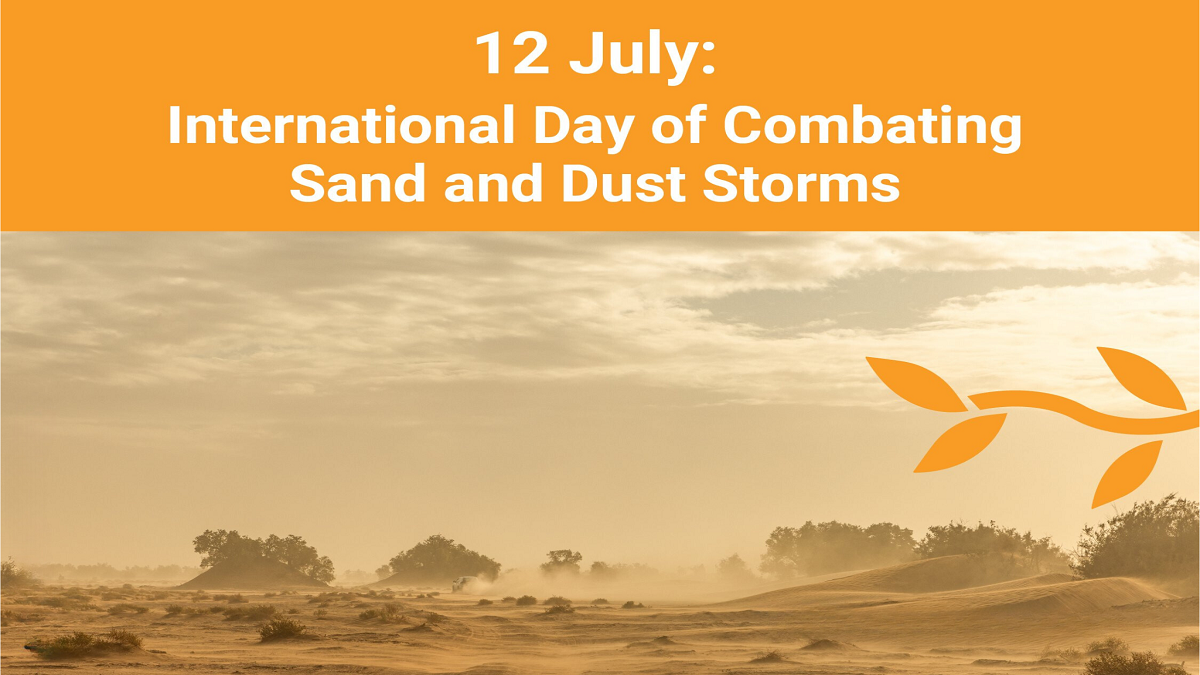
Sand and Dust Storms: A Global Challenge to Sustainable Development
Some of the most intimidating sights in nature are rolling dark clouds of sand and dust that engulf everything in their path. This phenomenon, known as sand and dust storms (SDS), turns day into night and wreaks havoc everywhere from Northern China to sub-Saharan Africa. These storms have become a serious global concern in recent decades due to their significant impacts on the environment, health, agriculture, livelihoods, and socio-economic well-being.
The Nature of Sand and Dust Storms
Natural Occurrence and Human Influence
Sand and dust storms are an essential element of the Earth’s natural bio-chemical cycles. However, they are also caused in part by human-induced drivers, including:
- Climate change
- Unsustainable land management
- Unsustainable water use
In turn, sand and dust storms contribute to climate change and air pollution, creating a cyclical effect that exacerbates environmental issues.
Global Impact
The impacts of sand and dust storms are felt in all regions of the world, affecting both developed and developing countries. At least 25 percent of global dust emissions originate from human activities, and in some areas, desert dust has doubled in the 20th century.
The impact of this phenomenon is difficult to control, as human activity in one part of the world can cause sand and dust storms in another region. However, just as sand and dust storms are caused by human activities, these storms can also be reduced through human actions.
Sand and Dust Storms and the Sustainable Development Goals (SDGs)
Sand and dust storms present a formidable and widespread challenge to achieving sustainable development in its economic, social, and environmental dimensions. They pose severe challenges to achieving 11 of the 17 Sustainable Development Goals, with particular impact on:
- SDG-2: Zero hunger
- SDS can damage crops and reduce agricultural productivity.
- SDG-3: Health
- Airborne particles from SDS can cause respiratory issues and other health problems.
- SDG-6: Water and sanitation
- SDS can contaminate water sources and damage water infrastructure.
- SDG-8: Economic growth
- The economic impact of SDS can be substantial, affecting various sectors.
- SDG-11: Cities
- Urban areas can be severely affected by SDS, disrupting daily life and infrastructure.
- SDG-13: Climate action
- SDS both contribute to and are exacerbated by climate change.
- SDG-15: Biodiversity, forests, and desertification
- SDS can lead to land degradation and loss of biodiversity.
United Nations Action
International Day of Combating Sand and Dust Storms
Recognizing the international concern surrounding sand and dust storms, the United Nations General Assembly proclaimed 12 July as the International Day of Combating Sand and Dust Storms (A/RES/77/294).
Global Cooperation
The United Nations General Assembly stressed the need for cooperation at the global and regional levels to address SDS. This cooperation focuses on:
- Preventing, managing, and mitigating the effects of sand and dust storms
- Enhancing early warning systems
- Sharing climate and weather information to forecast sand and dust storms
Understanding the Multidimensional Impacts
The General Assembly affirmed that resilient action to combat and reduce sand and dust storms requires a better understanding of their severe multidimensional impacts, including:
- Deterioration of health, well-being, and livelihoods
- Increased desertification and land degradation
- Deforestation and loss of biodiversity
- Reduced land productivity
- Threats to food security
- Impact on sustainable economic growth
UN Coalition on Combating Sand and Dust Storms
In response to several recent General Assembly resolutions, the United Nations Convention to Combat Desertification (UNCCD) Parties officially launched the UN Coalition on Combating Sand and Dust Storms. This coalition commits the UN System to a proactive approach to combat SDS and to enhance cooperation and coordination on SDS at global, regional, and sub-regional levels.
Mandate of the UN Coalition
The mandate of the UN Coalition on Combating SDS, as defined by the participating entities, includes:
- Promoting and coordinating a collaborative UN System response to SDS
- Facilitating exchange of knowledge, data, and best practices among Coalition members
- Encouraging and promoting collaboration on initiatives and actions among members of the Coalition
- Facilitating dialogue and collaboration amongst affected countries and the UN system
- Facilitating capacity-building of Member States, raising awareness, and enhancing preparedness and response to SDS in critical regions.









 International Day of Non-Violence 2026: ...
 Lal Bahadur Shastri Jayanti 2026: Histor...
 Gandhi Jayanti 2026: History, Significan...