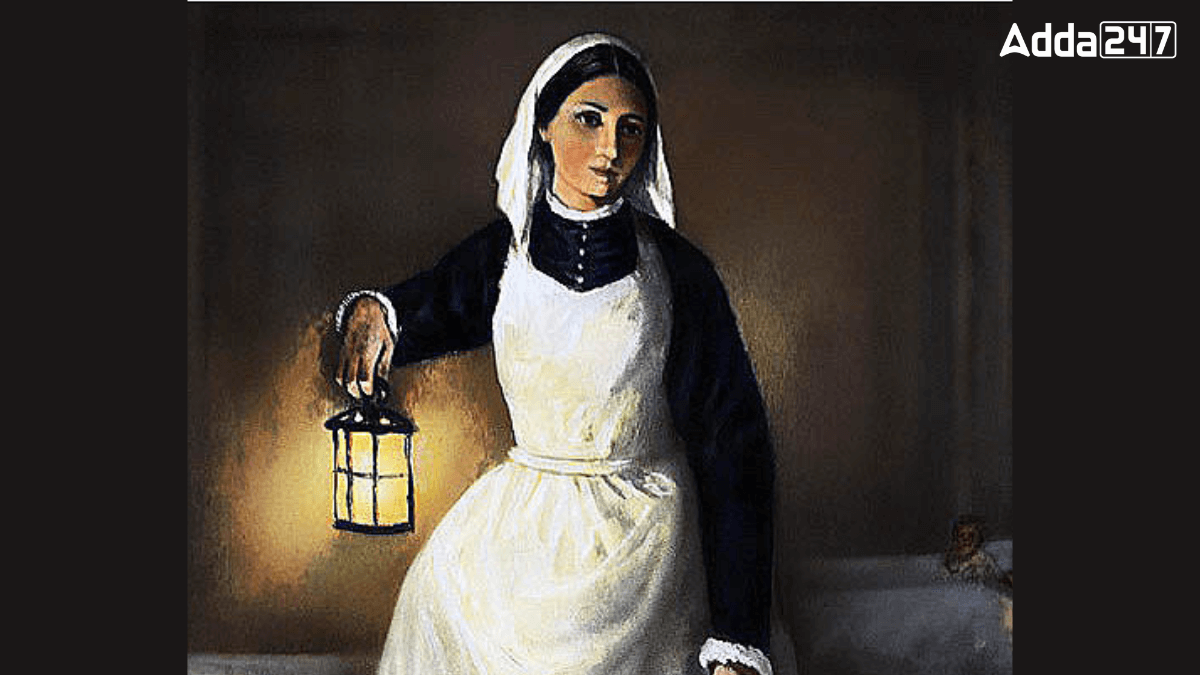
The title “Lady with the Lamp” is famously associated with Florence Nightingale, a British nurse and social reformer. She became a symbol of compassion, care, and dedication to nursing. This article explains why she is called the “Lady with the Lamp” and her important contributions.
Lady with the Lamp
Florence Nightingale, born in 1820, is famously called the “Lady with the Lamp.” She was a pioneer in nursing and is remembered for her incredible contributions to healthcare and hospital reforms.
Why is Florence Nightingale Known as the Lady with the Lamp?
Florence Nightingale is known as the “Lady with the Lamp” because, during the Crimean War, she would often walk through the hospital wards at night, carrying a lamp to check on the soldiers. Her compassionate care and dedication to their well-being earned her this nickname, symbolizing her commitment to nursing and her tireless work to improve healthcare.
Florence Nightingale and Nursing
Florence Nightingale became a symbol of care and compassion during the Crimean War. She organized a group of nurses and traveled to Crimea to help injured soldiers. Her work in these hospitals set high standards for modern nursing.
Florence Nightingale’s Writings
Nightingale was not only a nurse but also a prolific writer. She wrote over 150 books, pamphlets, and reports on health and hospital care. In 1856, she shared her knowledge and findings with Queen Victoria and Prince Albert, helping to bring attention to the need for healthcare reforms.
Other Accomplishments of Nightingale
Nightingale is credited with designing one of the first pie charts to present her findings clearly. She also introduced helpful services like a kitchen for patients, a laundry, a classroom, and even a library in hospitals, enhancing patient care.
Her Lasting Legacy
Florence Nightingale’s contributions did not go unnoticed. Queen Victoria honored her with a special engraved brooch called the “Nightingale Jewel” and a monetary award of $250,000 from the British government.







 Who Is Navi Pillay? Nobel Peace Prize 20...
 Vande Bharat vs Amrit Bharat Express: Ke...
 Asian Games to LA28: Which Sports Earned...