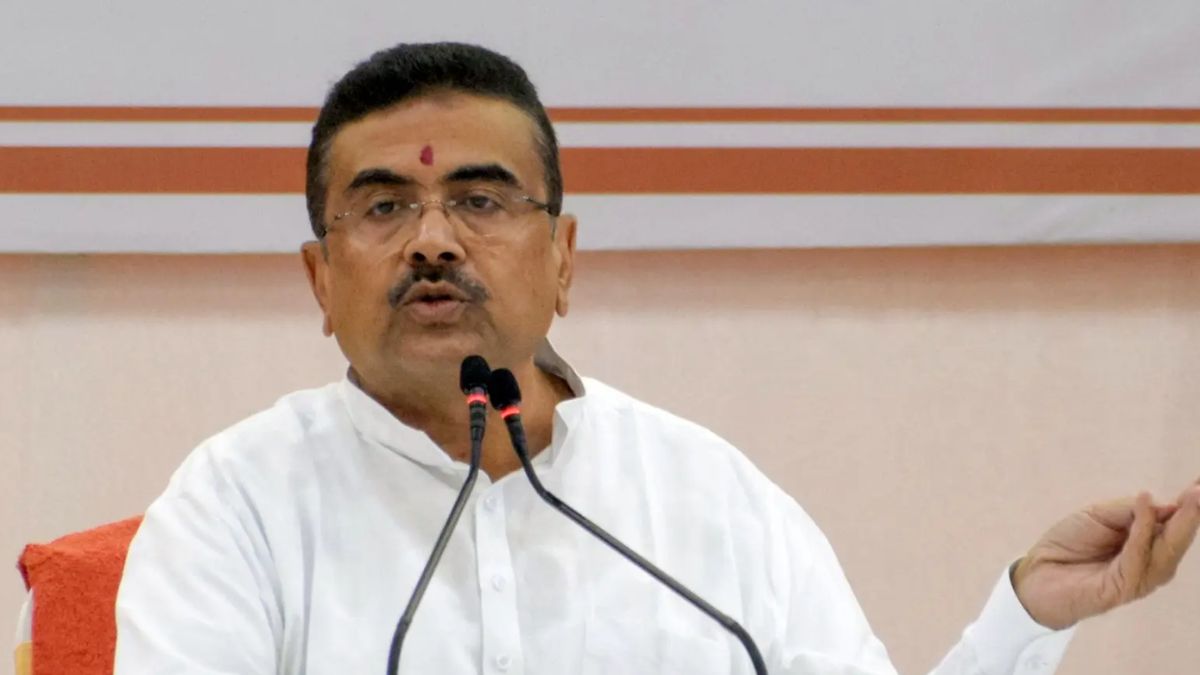
Bhagini Nivedita Scheme 2027: West Bengal Approves ₹50,000 Aid for Women

The Bhagini Nivedita Scheme has been sanctioned by the West Bengal Cabinet, under which single ladies who are studying further will get ₹50,000 assistance in the span of three years. The scheme was launched by West Bengal Chief Minister Suvendu Adhikari on October 5, 2026. The West Bengal Cabinet has sanctioned 14,454 appointments in government departments. Monthly remuneration of Karmabandhus has been enhanced from ₹5,000 to ₹8,000 while the food allowance of SC/ST students of government hostels has been enhanced.

What is the Bhagini Nivedita Scheme?

The Bhagini Nivedita Scheme is an initiative of the government of West Bengal which aims at offering financial help to unmarried women who are in pursuit of further studies. As per the scheme announced structure, each eligible beneficiary will be provided with ₹50,000 in three years.

This will not be in one-time payments but will be offered in three installments to eligible beneficiaries. The scheme will offer benefits for further education of women.

The government has announced the overall benefit structure and timeline for implementation. Other details like eligibility criteria, procedure to apply, required documents etc. will be separately announced.

Bhagini Nivedita Scheme: Yearly Financial Assistance

As per the scheme, financial assistance will be offered through different installments over the span of three years.

Years Financial assistance
First year ₹17,000
Second year ₹17,000
Third year ₹16,000
Total ₹50,000

Two installments together make up ₹34,000 of the total assistance while the last installment of ₹16,000 makes it ₹50,000.

The scheme will start working throughout the state from January 2027 onwards.’

Who Are the Beneficiaries of the Scheme?

The specified beneficiaries of the scheme are single women who are pursuing their education in West Bengal. However, the government has not yet provided the full list of eligibility criteria for the scheme in the currently available information.

Some of the important details which have to be clarified are as follows,

  • Courses for which students would be eligible
  • Age and domicile, if any
  • Income limitations of the family, if any
  • List of documents needed for the application process
  • Website and procedure for submitting the application
  • Procedure for releasing installments

Till the release of the complete guideline, none of these criteria must be assumed.

West Bengal Approves Recruitment to 14,454 Government Posts

In addition to the above scheme, the Cabinet has also approved the recruitment to 14,454 government posts in various departments.

According to the Chief Minister of West Bengal, Suvendu Adhikari, the recruitment process would be over in six to eight months’ time. Examinations and recruitment for the new positions would be conducted by the State Public Service Commission and State Police Recruitment Board, respectively.

The posts shall include various departments like forest department, fire service, prisons and Home and Hill Affairs.

Recruitment and Appointment Letters for Police Posts

Chief Minister further informed that the formalities regarding appointments for 12,000 police vacancies will be dealt with on October 11, 2026.

It was anticipated that nearly 5,000 selected candidates will get their appointment letters on that day through a programme. These police recruitment-related decisions have been made independently of the approval of 14,454 vacancies by the Cabinet.

Remuneration for Karmabandhus Enhanced to ₹8,000 per Month

Cabinet decided to enhance the monthly remuneration for Karmabandhus, contractual sanitation and support workers employed under land and land revenue department of the state.

Item Remuneration Amount
Earlier ₹5,000 per month
New Raised Amount ₹8,000 per month
Monthly enhancement ₹3,000
Percentage enhancement 60%
Effective month October 2026

The enhanced remuneration increases the payment by ₹3,000, which is 60% more than the previous amount.

Food Allowance of SC/ST Hostel Students Upgraded

Similarly, the Government of West Bengal has enhanced the food allowance of students belonging to Schedule Caste (SC) and Schedule Tribe (ST) staying in the government hostels.

Category Amount
Existing monthly food allowance ₹1,800
Enhanced monthly food allowance ₹3,300
Increase in the monthly allowance ₹1,500
Percentage increase Approximately 83.3%

The new allowance is meant to make more financial assistance available to students residing in government hostels.
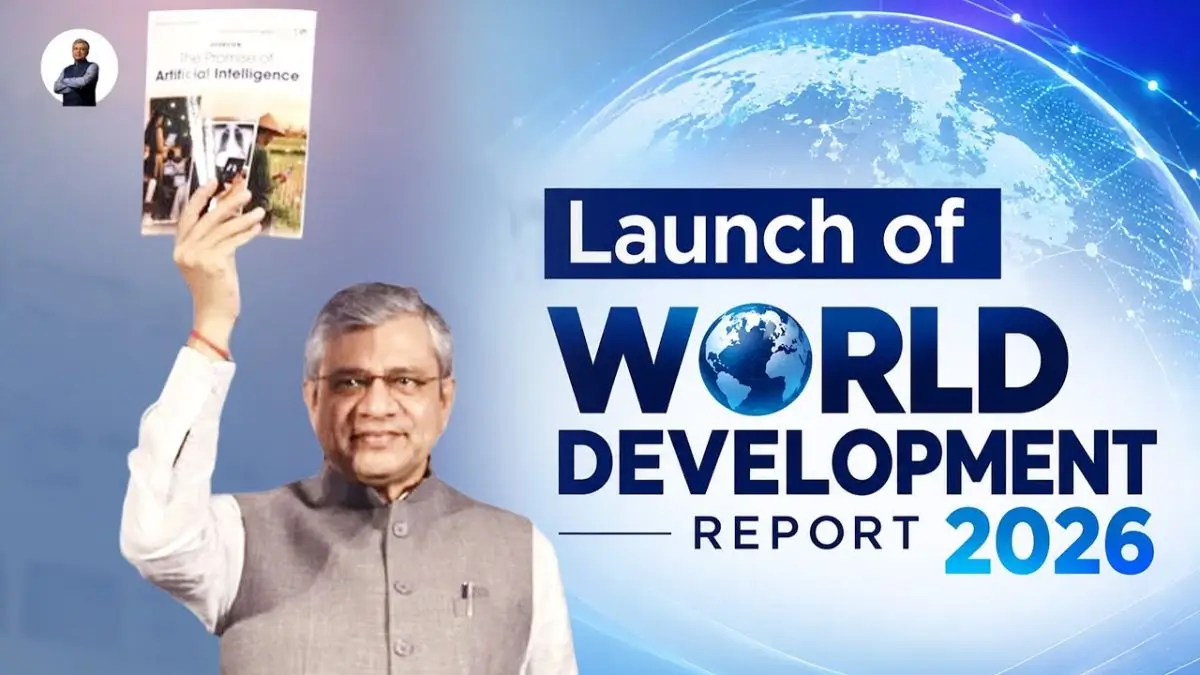

World Development Report 2026: The Promise of Artificial Intelligence

The World Bank Group’s World Development Report 2026: Artificial Intelligence: The Promise for Developing Economies explores ways that AI could assist developing countries enhance their productivity, increase access to expertise, and improve public services. World Development Report 2026: Artificial Intelligence was launched by Indian Union Minister of Electronics and Information Technology, Ashwini Vaishnaw, in New Delhi, India on October 8, 2026. The report suggests that a strategy with three key areas be taken into account: usage of AI technologies, adaptation of those technologies, and development of domestic competencies.

What Is the World Development Report?

The World Development Report is the flagship annual report by the World Bank Group. It provides analysis and research on the major development challenges faced by the international community.

The World Development Report in 2026 will be dedicated to the topic of artificial intelligence. It will discuss the application of this innovation in overcoming the development challenges faced by low- and middle-income countries. The topics of the impact of artificial intelligence on providing access to specialized knowledge, making decisions and delivering services will be considered in light of required infrastructure and institutional setting.

It should be noted that the developing countries do not have to develop the most sophisticated artificial intelligence algorithms in order to use the innovation for their benefit. Significant progress can be made through the implementation of the available technologies.

Adoption, Adaptation, and Advancement: A Three-Part Framework in the Report

The report recommends a three-part framework that will assist developing nations to adopt AI while avoiding unnecessary expenditure of their limited resources.

1. Adoption of AI Tools

One of the easiest ways in which a country can utilize the technology is to adopt already existing AI applications to tackle its practical needs.

These include the use of AI in conducting medical tests, in agriculture to provide weather updates, and even in education to assist teachers in preparing educational materials.

2. Adaptation of AI to Suit the Country’s Needs

All AI tools must be localized according to the language used, data, institutions, and other aspects of the social situation prevailing in a country.

This will make it easy for individuals who may not have adequate digital literacy and even those that don’t possess sophisticated gadgets.

3. Build Domestic Capacity

A country could build its domestic capacity with respect to AI through investments in skill building, R&D, computing infrastructure, and innovation. The development of domestic capacity would allow governments and private companies to cater to the needs of their particular country and not be overly dependent on a certain provider of technology.

The report sees these three priorities as mutually reinforcing approaches.

Major Findings of World Development Report 2026

AI Can Increase Access to Expertise

There is a lack of specialists such as doctors, agricultural experts, or educators in many developing countries. Artificial Intelligence can help make the expertise of the current specialists available through helping them and providing additional information.

AI can help healthcare specialists with the diagnostics process, provide information for farmers about the weather situation, and help teachers prepare their lessons.

AI Can Make Work More Efficient and Public Services Better

AI will allow for quicker processing of information, automation of some activities and better decision making due to being better informed. The government could implement these qualities to make service delivery more efficient, while companies might take advantage to boost productivity and produce innovative products.

But relying on AI is not enough to achieve better results. The success of AI depends on the quality of its implementation, human resources available and the ability of the institution to integrate AI into its operations.

Basic Infrastructure is Still Required

The report lists several factors which determine whether countries will be able to benefit from AI,

  • Reliable electricity supply
  • Internet connectivity
  • Computing infrastructure
  • Good quality of data
  • Education and skills of the workforce
  • Functional public institutions
  • Regulations and protection

Absence of these elements might hinder people and companies from using AI or limit the benefits gained through it.

Small AI Applications Can Improve Accessibility

“Small AI” applications are those that have low cost and are designed to solve particular issues without necessarily involving the most expensive computational infrastructure and general purpose models.

In this regard, depending on the type of application, access to the AI application service will be through means such as sending text messages, calling via telephone or use of simple cell phones.

Launch of the Report in India

The Indian report was launched on October 8, 2026, in New Delhi. It was jointly organized by the IndiaAI mission, Ministry of Electronics and Information Technology (MeitY), and the World Bank Group.

This report was officially launched by repectable Ashwini Vaishnaw, Union Minister for Electronics and Information Technology, Railways, and Information and Broadcasting. It featured policymakers, development practitioners, technologists, and leaders engaging in discussions about how AI can facilitate inclusive development.

A State AI Showcase was also featured, where AI-based solutions of various Indian states and innovators were shown. The main topics of discussion involved going beyond pilots towards scalable solutions that can be evaluated and implemented.

The Indian approach to democratizing technology so that everyone can benefit from it was showcased during the launch.

Challenges of Using AI for Development

Although AI has great possibilities, some challenges have to be solved.

  • Digital divide: Lack of access to internet and energy does not allow people to use AI technologies.
  • Skills: It is necessary for workers and state officials to be trained in using AI.
  • Data quality: Incomplete, incorrect or biased data may affect the output of AI.
  • Security: Sensitive data needs to be protected.
  • Accuracy and bias: AI may produce inaccurate or unfair results if it was not developed correctly and tested.
  • Technology dependence: Complete dependence on one company may result in many problems.

As can be seen, the framework used in the report implies that implementation should be followed by adaptation, increased capacity and proper institutional measures.

Who Is Navi Pillay? Nobel Peace Prize 2026 Winner, Biography and Achievements

Navi Pillay, who is of Indian Tamil descent and a South African jurist, was awarded the 2026 Nobel Peace Prize for her efforts in the field of international law and peace. Pillay’s career history includes work in the judiciary of South Africa, International Criminal Tribunals and the UN human rights system. Pillay’s life story is significant not only for the award, but also from the perspective of General Studies, in which such topics as apartheid in South Africa, the UN, international human rights law, genocide, crimes against humanity and international courts play an important role.

Background and Early Education

  • Born on 23 September 1941 in Durban, an important port city in KwaZulu-Natal province of South Africa, Navi Pillay’s early life was characterized by the period of the apartheid regime in South Africa in which racial discrimination was practiced against the non-white community.
  • She comes from a family with an Indian Tamil background. Her background and the practice of discrimination contributed to her passion for human rights.
  • Pillay earned her bachelor’s degree in arts in 1963 and in law in 1965 from the University of Natal. Later, she went on to obtain a doctorate in juridical science from Harvard University in 1988, as per the provided biographical details.

Apartheid in South Africa: Background

  • Apartheid was the name given to the system of racial segregation and discrimination in South Africa. The apartheid system was officially adopted by the South African government following the ascendance to power of the National Party in 1948.
  • It limited political participation and other rights according to racial categorisation. In addition, it ensured that the Blacks were denied political power.
  • The anti-apartheid movement included political and civil society groups, as well as international campaigns. One of the most notable leaders of this movement was Nelson Mandela, who eventually became South Africa’s first Black president elected through free and fair elections in 1994.
  • Pillay began her legal practice in such an environment and advocated for individuals fighting apartheid. This shows the important role lawyers and the judiciary have in fighting discriminatory systems.
  • The transition to democracy in South Africa was completed through the 1994 elections and the promulgation of the country’s constitution in 1996.

Navi Pillay’s Major Achievements

Year Achievement
1941 Born in Durban, South Africa
1963 Completed a Bachelor of Arts degree at the University of Natal
1965 Completed a Bachelor of Laws degree at the University of Natal
1967 Began practising law in South Africa
1988 Earned a Doctor of Juridical Science degree from Harvard University
1995 Became the first Black woman appointed to South Africa’s High Court
1995 Joined the International Criminal Tribunal for Rwanda as a judge
1999 Became president of the Rwanda tribunal
2003 Joined the International Criminal Court as a judge
2008 Became the United Nations High Commissioner for the Human Rights
2014 Completed her term as the UN High Commissioner for Human Rights
2021–2025 Chaired the UN Independent International Commission of Inquiry on the Occupied Palestinian Territory, including East Jerusalem, and Israel
2026 Received the Nobel Peace Prize

Navi Pillay’s Work with International Tribunals

Several international tribunals have had the presence of Pillay.

  • The High Court of South Africa: The year 1995 was a memorable one in which Pillay was appointed a judge in the South African judiciary.
  • The International Criminal Tribunal for Rwanda (ICTR): Pillay was involved in hearing cases related to the genocide in Rwanda.
  • The International Criminal Court (ICC): Pillay was a judge from 2003 to 2008.
  • The International Court of Justice (ICJ): Pillay was an ad hoc judge in the case of The Gambia versus Myanmar on genocide allegations.

It is important to note that while Pillay was an ad hoc judge in the case of the ICJ, she was not a permanent judge of the Court.

Indian Navy to Commission Mangrol Anti-Submarine Warfare Craft on October 12

On 12th of October, 2026, the Indian Navy is set to commission its third Anti-Submarine Warfare Shallow Water Craft (ASW-SWC), Mangrol at the Naval Dockyard, Mumbai. It is built by Cochin Shipyard Limited (CSL), Kochi. VAdm Sanjay Vatsayan, Flag Officer Commanding-in-Chief, Western Naval Command, will preside the flag-in ceremony. This event will be attended by senior naval and defense officials, several representatives from the Ministry of Defense and Cochin Shipyard Limited, veterans and representatives of indigenous weapons and sensor manufacturers.

Anti-Submarine Warfare Shallow Water Craft Defined

An Anti-Submarine Warfare Shallow Water Craft is a military ship whose role is to detect and defeat submarines in shallow waters such as those close to coastlines and harbors. Such waters are vital as they provide access to ports and harbors among other coastal facilities.

It is possible that larger warships could be restricted from maneuvering in shallow waters, but vessels like Mangrol are able to navigate and perform submarine surveillance and defeat, maritime operations of low intensity and some mine warfare missions.

The vessel also works together with maritime patrol aircrafts and other naval ships in providing maritime surveillance and defense.

Detection Devices and Weapons on Mangrol

Mangrol has systems that are meant to detect any underwater threat and conduct anti-submarine warfare.

  • Abhay Hull Mounted Sonar: Used for detecting underwater objects and possible submarine threats.
  • Lightweight torpedoes: These are used to attack submarine threats underwater.
  • Anti-submarine rocket launcher: This system is meant to aid in the anti-submarine warfare mission of the vessel.
  • Maareech Torpedo Decoy System: This is a system that helps to defend a vessel against torpedo threats.

This is a combination of detection devices and weapons that aims to enhance the Navy’s capability against underwater threats in coastal waters.

Indigenous Construction and Aatmanirbhar Bharat

Constructed by the Cochin Shipyard Limited in Kochi, Mangrol is constructed from over 80% indigenous components. The construction of Mangrol embodies the growth in domestic capacity of designing, building and integrating warships, their weaponry and sensor systems.

Mangrol project fits well within the Make in India and Aatmanirbhar Bharat policies of the Indian government that encourage domestic manufacturing and lessen dependence on foreign sources for defence hardware.

Indigenous shipbuilding could also help with domestic manufacturers, engineers and technologies that could be used for future naval warships.

World Bank Ranks India Among Top 10 Emerging Markets in AI Readiness

According to the World Bank report India and Artificial Intelligence: Seizing the Development Opportunity, which was published in October 2026, India is one of the top 10 emerging market economies ready for artificial intelligence. The World Bank report points out that among the most significant assets of India is a vast technically-oriented workforce, an information technology sector that is internationally integrated, and a digital infrastructure of the government. Moreover, it points out opportunities in increasing productivity and delivery of services with the help of AI.

Readiness of India to Artificial Intelligence: Main Findings from the Report of the World Bank

According to the World Bank, India is an emerging-market performer, which has managed to build substantial expertise in artificial intelligence (AI) under certain conditions.

Three key reasons include the following,

  • Abundance of technical labor force: India has a sizable number of experts in technology and engineering that could work on development and implementation of AI.
  • International integration of IT sector: International integration of information technology sector makes it possible for domestic capacities to link up with global business.
  • Digital infrastructure: There are digital platforms that facilitate service provision and make possible the use of AI.

It is necessary to spread the use of AI beyond the borders of big firms located in urban centers of the country.

AI Investment and Technology Workforce in India

In India, private investments in AI have risen to $4.1 billion in 2025, almost three times the level in the preceding year based on the data given in the report coverage. The rise is an indication of increased investment in the technology sector in India.

Furthermore, employment in the Indian GCCs has risen to 2.36 million. GCCs are off-shore centres set up by MNCs for carrying out activities like technology development, research, analytics, engineering and business operations.

India’s technology workforce and technology services industry offer a base for implementation of AI. However, investments alone will not assure success. The business enterprises require skilled manpower, computing power, infrastructure and organizational capabilities to implement AI.

AI readiness and the global AI divide

The World Bank’s policy research document “Beyond the AI Divide: A Simple Way of Recognizing Global and Local Overachievers in AI Readiness” analyzes the disparities that exist between various countries’ readiness in respect to artificial intelligence.

The document also highlights how these countries exist in varying levels of the economic and technological environments. In high-income economies, such as Singapore and the United States, strong capital markets and sophisticated regulatory structures exist. In upper-middle-income economies like China and Malaysia, there are technological and infrastructural capabilities that allow them to implement AI at scale.

How Should India Improve Its Readiness for AI?

According to the World Bank, the strategy should not be limited to investments or the development of new technologies only.

Instead, it should include widening the availability of AI technologies, developing workers’ skills, enhancing the infrastructure, and the integration of AI technologies into public services. An adaptive governance framework should also be established to manage technological shifts and new risks.

World Mental Health Day 2026: Theme, Tele-MANAS Helpline 14416 and Key Initiatives

World Mental Health Day is celebrated by the Ministry of Health and Family Welfare on October 10th, 2026, to emphasize the significance of the having accessible and inclusive mental health care services. The theme of the year for 2026 is “Lived experiences heard: real voices, real change,” it reflects the need to listen to the views of those individuals who have experienced the mental illness. The measures taken by India in this direction includes Tele-MANAS, the toll free number 14416 for the mental health, and MANN Jaagriti.

Theme and Significance of World Mental Health Day 2026

The 2026 theme of the day is “Lived experiences heard: real voices, real change,” which defines involving individuals with lived experience of the mental disorders in discussions regarding mental health care policies.

The involvement of such individuals will provide the policymakers and practitioners with information regarding the challenges that individuals face when accessing the services.

This theme also reiterates the significance of dignity, inclusivity, confidentiality, and destigmatization of mental disorders.

World Mental Health Day is celebrated each year on October 10th in order to raise awareness regarding mental well-being and improve mental health service delivery globally.

Tele-MANAS: National Mental Health Helpline of India

The Tele-MANAS means that Tele Mental Health Assistance and Networking Across States. The initiative was introduced on October 10, 2022, and it provides free confidential counselling and guidance on issues of mental health via the toll-free number 14416 at the national level.

The helpline is operational around the clock, 24/7, and supports multiple languages. It allows individuals dealing with problems of emotional distress, anxiety, stress, insomnia and other issues of mental health to receive initial aid without visiting any healthcare centre.

Where necessary, the caller can be referred to mental health experts and the corresponding services. This bridges telephonic guidance and the overall public healthcare system.

MANN Jaagriti: Mental Health Awareness in the Community

MANN Jaagriti is a community awareness and engagement program designed to improve mental health awareness, reduce stigma, and motivate seeking help.

This program engages the community through schools, colleges, workplaces, medical establishments, and community organizations.

It promotes involvement of health care providers, teachers, community workers, youth, family members, caregivers, civil society organizations, and persons with experience of mental illnesses.

Through open discussion and dissemination of information about services available such as Tele-MANAS, MANN Jaagriti tries to create awareness of mental illnesses within communities.

National Mental Health Programme and District Mental Health Programme

In India, there is community and facility-based care alongside digital mental health care in the form of the National Mental Health Programme (NMHP) and the District Mental Health Programme (DMHP).

DMHP has been approved for implementation in 767 districts, being assisted by the States/Union Territories as per the National Health Mission.

Services provided by the DMHP include out-patient care, counseling, psychosocial interventions, medications, follow-ups, outreach services and referrals. In-patient mental healthcare facilities are also covered under this programme.

Through these services, individuals can be linked to care beyond telephonic counseling.

Ambaji Mohanthal Gets GI Tag: Gujarat’s Famous Temple Prasad Receives Recognition

Traditional Mohanthal Prasad of Ambaji Temple, Gujarat, has been recognized with a Geographical Indication (GI) tag for its relation to the region’s religious and culinary heritage. On 8th of October, 2026, GI Tag for Mohanthal Prasad was issued after an application filed by the Shree Arasuri Ambaji Mata Devsthan Trust on 1st of October. Also, the formal certificate handover ceremony to be held on 11th of October, 2026 and this date will also coincide with the first day of the Navratri Festival.

Details of GI Tag for Ambaji Mohanthal

Geographical Indications Registry has conferred the GI status to Ambaji Mohanthal under class 30, which includes many food items including confectionery and sweetmeats.

It has been applied by the Shree Arasuri Ambaji Mata Devsthan Trust, which is related to the Ambaji temple in Gujarat state. GI tag signifies the link between the traditional sweet and its geographical background and significance.

Mohanthal is an Indian sweet item which is traditionally made by mixing gram flour, ghee and sugar. Its significance lies in its association with Ambaji.

GI Certification Ceremony on October 11

As per the published document, the GI certificate handover ceremony will be organized on October 11, 2026 at the Ambaji Devasthan. This ceremony will fall on the first day of Navratri.

The ceremony will take place during the time period from 10 am to 11 am. Prof Dr Unnat P. Pandit, Controller General of Patents, Designs and Trade Marks and Registrar of Geographical Indications, will deliver the lecture on that occasion and hand over the certificate to the temple trust.

This ceremony will be held to commemorate the GI certification and also emphasize the protection of the traditional products of particular regions.

What is a Geographical Indication (GI) Label?

A Geographical Indication (GI) refers to an intellectual property that protects the unique quality of the product as well as the reputation of the product based on the geographical origin of the product.

The Geographical Indications of Goods (Registration and Protection) Act of 1999 regulates the process of registration of a Geographical Indication in India.

Examples of GI-Tagged Temple Prasad in India

In India, there are a number of regional brands of foods that have religious significance and are traditional in the sense of being associated with certain regions. Besides Ambaji Mohanthal, some examples include,

  • Tirupati Laddu: The famous prasad from the Tirumala Venkateswara Temple in the State of Andhra Pradesh.
  • Palani Panchamirtham: The traditional prasad from the Palani Murugan Temple in Tamil Nadu.
  • Ambaji Mohanthal: The traditional prasad from Gujarat; according to the report, this was GI-tagged in October 2026.

The above examples demonstrate how GI protection can be beneficial for maintaining the traditional identity of these foods and places of worship.

Vande Bharat vs Amrit Bharat Express: Key Differences Every Traveler Should Know

There is an increasing trend of introducing modern trains in India’s railway network according to the needs of passengers. Two such trains are Vande Bharat Express and Amrit Bharat Express, but there are differences between both in terms of their service models. While Vande Bharat trains emphasize fast daytime travel with air-conditioned seating, Amrit Bharat trains aim at cost-effective long-distance travel with sleeper and unreserved coach options. Vande Bharat and Amrit Bharat trains also vary in their speed, seating, and facilities.

Vande Bharat and Amrit Bharat: Comparison at a Glance

Feature Vande Bharat Express  Amrit Bharat Express
Primary emphasis Fast, premium daytime travel Affordable long-distance travel
Maximum speed Design speed up to 160 kmph Up to 130 kmph
Coaches AC Chair Car, Executive Class Non-AC Sleeper and unreserved coaches
Air Conditioning Full air conditioning Non-AC
Passenger Category Premium/daytime passengers Budget/long-distance passengers

Main facilities Bio-vacuum toilet, GPS display, sealed gangways CCTV, new berths, charging facilities, and luggage facilities

1. Speed and Travel Time

The first major distinction is speed. The Vande Bharat trains have a maximum speed of 160 kmph with faster acceleration and braking.

Amrit Bharat trains run at a speed of up to 130 kmph. Therefore, Vande Bharat is a more appropriate choice for people who want fast travel between cities depending on the permissible speed on the railway line.

2. Ticket Price and Passenger Segment

Vande Bharat is intended as an upscale train with full air conditioning and ticket prices that are higher than those of regular economy trains.

Amrit Bharat is created for low-budget long distance travel. It features a mixture of sleeper and unreserved compartments, which allows it to attract cost-effective customers.

Ticket prices for both are based on distance and other factors.

3. Coach Configuration

Vande Bharat mainly consists of AC Chair Car and Executive Class coaches, making it more appropriate for day-long travel.

Amrit Bharat mainly comprises coaches for long-distance journey with non-AC sleeper and unreserved coaches with facilities like better luggage rack, LED lighting and mobile charging.

Different coach configuration is due to different passenger needs met by each train.

4. Passenger Amenities and Safety

Modern amenities found in both the railways are present, but with some differences.

Vande Bharat train has sealed gangway, bio-vacuum toilet and GPS based information display for passengers. More attention was paid to the design of Vande Bharat to provide better passenger experience.

Amrit Bharat has advanced amenities like CCTV, pressurized flush and ergonomically designed berth, along with better luggage facilities.

5. Which Train is Better?

This will mostly depend on the preferences of the traveller.

If the passenger values speed and air-conditioned seats, Vande Bharat Express will be a good choice.

On the other hand, Amrit Bharat Express caters to cost-effective intercity travel requirements and would suit passengers that need sleeper or unreserved class accommodations.

It should be noted that there is no train that can be considered superior as both trains serve different segments of passengers in India’s growing railway system.

2026 Nobel Prize Winners: Categories Wise Complete Winners List

Nobel prizes in 2026 will be declared during the first half of October, and there will be six different types of Nobel prizes, namely, Physiology or Medicine, Physics, Chemistry, Literature, Peace, and Economic Sciences. The Nobel prizes are the most prestigious international prizes that reward outstanding achievement in science, literature, peace and economic sciences. The 2026 Nobel Prize winners will be announced beginning with the Prize in Physiology or Medicine on 5th October and ending with the Economic Sciences prize on 12th October.

Nobel Prize 2026 Winners List

Prize  Date of Announcement Winner’s Name Awarded By Location
Physiology or Medicine 5th of October, 2026 Karl Deisseroth, Peter Hegemann and Georg Nagel Nobel Assembly at Karolinska Institutet` Solna, Sweden
Physics 6th of October, 2026 Francis Halzen Royal Swedish Academy of Sciences Stockholm, Sweden
Chemistry 7th of October, 2026 Henri B. Kagan and Kenso Soai Royal Swedish Academy of Sciences Stockholm, Sweden
Literature 8th of October, 2026 Anne Carson Swedish Academy Stockholm, Sweden
Peace 9th of October, 2026 Navi Pillay Norwegian Nobel Committee Oslo, Norway
Economic Sciences 12th of October, 2026 To be Announced Royal Swedish Academy of Sciences Stockholm, Sweden

Nobel Prize in Physiology or Medicine 2026

The 2026 Nobel Prize in Physiology or Medicine is due to be unveiled on October 5, 2026.

The Nobel Prize in Physiology or Medicine for 2026 was awarded jointly to Karl Deisseroth, Peter Hegemann and Georg Nagel in recognition of their discoveries regarding light-gated ion channels and optogenetics.

Their research findings have revolutionised neuroscience by providing a means to manipulate the functions of individual neurons with light.

The pioneering studies were carried out in connection with the light-reception process of the one-celled alga Chlamydomonas and have paved the way to explore the workings of the brain, which are responsible for memories, emotions and actions.

The prize is to be awarded by the Nobel Assembly at the Karolinska Institute. This prize goes to discoveries of great importance in the field of physiology or medicine.

Winner: Karl Deisseroth, Peter Hegemann and Georg Nagel

Nobel Prize in Physics 2026

The 2026 Nobel Prize in Physics is announced on October 6, 2026.

The Royal Swedish Academy of Sciences has awarded the Nobel Prize in Physics 2026 to physicist Francis Halzen for his pioneering work on the IceCube Neutrino Observatory and the discovery of the high-energy neutrinos of astrophysical origin.

The prize citation states that Halzen was honoured “for decisive contributions to the IceCube Neutrino Observatory and the discovery of high-energy neutrinos of astrophysical origin.”

His work helped establish an entirely new way of observing the universe by using elusive particles known as neutrinos as cosmic messengers.

The Nobel Prize in Physics is awarded by the Royal Swedish Academy of Sciences for major contributions to physics.

Winner: Francis Halzen

Nobel Prize in Chemistry 2026

The 2026 Nobel Prize in Chemistry is announced October 7, 2026.

The Nobel Prize in Chemistry 2026 has been awarded jointly to Henri B. Kagan and Kenso Soai for their pioneering contributions to asymmetric organic synthesis.

The Royal Swedish Academy of Sciences honoured the two scientists “for the discovery of non-linear effects and autocatalysis in asymmetric organic synthesis.”

Both laureates will share the prize equally, with each receiving a one-half share of the 2026 Chemistry Nobel Prize.

The Nobel Prize in Chemistry is to be awarded by the Royal Swedish Academy of Sciences for achievements in the field of chemistry.

Winner: Henri B. Kagan and Kenso Soai

Nobel Prize in Literature 2026

Nobel Prize in Literature for the year 2026 announced on October 8, 2026.

Canadian writer, Anne Carson who won several awards in her lifetime, has been chosen as the recipient of the Nobel Prize in the Literature for the year 2026 for her unique literary creations which have connections with the classical literary heritage.

The Nobel Committee said about Carson, “For her pioneering and original oeuvre, characterized by her playful interplay with the classical tradition, which has created new forms of literature.”

Anne Carson was born on 21 June 1950 in Toronto, Canada. She is a famous poet, essayist, translator and a literary critic of classical literature.

The Swedish Academy decides the recipient of the Literature prize, which goes to a person whose works in the field of literature are highly appreciated.

Winner: Anne Carson

Nobel Peace Prize 2026

Nobel Peace Prize for the year 2026 announced on October 9, 2026.

Unlike other prizes, the Nobel Peace Prize is decided by Norwegian Nobel Committee.

This award goes to those who have made any contribution for peace and international cooperation.

Winner: To be announced.

Nobel Prize in Economic Sciences 2026

Nobel Prize in Economic Sciences for the year 2026 announced on October 12, 2026.

Navi Pillay was honored by the Norwegian Nobel Committee for her work towards establishing a more robust international law regime and accountability of the most severe human rights violations and the humanitarian law.

She has been instrumental in the prosecution of individuals alleged to have committed genocide, war crimes and crimes against humanity. Such acts may affect peace when the perpetrators escape prosecution.

Justice and peace have always been intertwined in the career of Navi Pillay since legal structures have helped victims while assigning responsibility to such crimes while ensuring that no one is above the law regardless of political or military authority.

This award is given by Royal Swedish Academy of Sciences to recognize achievements in economic sciences.

Winner: Navi Pillay

The Nobel Prize – Key Information

The Nobel Prizes were created according to the will of Alfred Nobel, a Swedish inventor, engineer, and industrialist.

They relate to accomplishments in physics, chemistry, physiology or medicine, literature, and peace.

In addition, the prize for economic sciences was instituted in 1968 by Sveriges Riksbank in memory of Alfred Nobel.

Among well-known Nobel Prize winners of history, there are such names as Marie Curie, Albert Einstein, Nelson Mandela, and Bob Dylan.

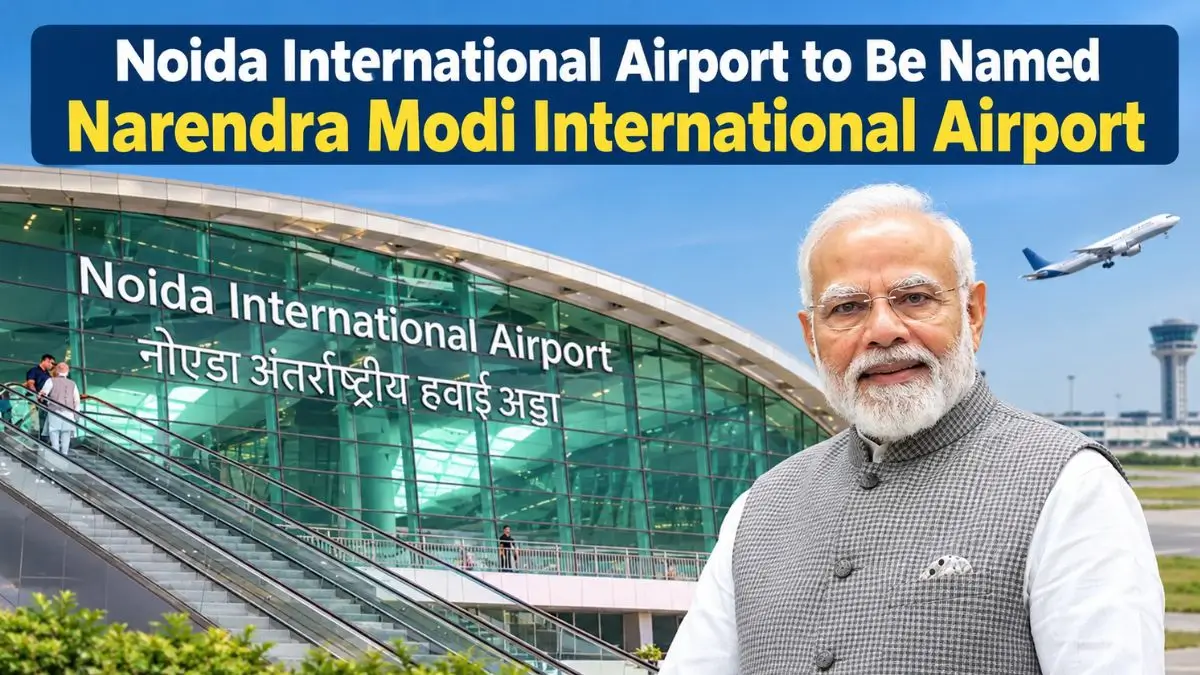
Noida International Airport to Be Named Narendra Modi International Airport

The State government of Uttar Pradesh has announced that the Noida International Airport at Jewar which is also known as the Noida Jewar International Airport set to be renamed after Honorable Narendra Modi International Airport after the Indian Prime Minister Narendra Modi. This was announced on October 9, 2026, after a meeting of the cabinet that took place in Lucknow. This airport is located in Gautam Buddha Nagar district and is an important greenfield airport project meant to improve connectivity in the National Capital Region (NCR).

Why is Jewar Airport Renamed?

Yogi Adityanath, the Chief Minister, informed about the resolution passed by the Cabinet regarding the renaming of the Jewar Airport and expressed gratitude towards the Prime Minister for undertaking the airport project. He further stated that the project will transform the airport into the biggest one in Uttar Pradesh.

In addition to this, the Cabinet expressed its appreciation for 25 consecutive years of Modi being at the helm of the government. This tenure of his started on October 7, 2001, when he was appointed as the Chief Minister of Gujarat.

Moreover, Adityanath also pointed out some of the changes that have taken place in Uttar Pradesh ever since 2017 in terms of development in infrastructure, law and order, governance and attracting investments.

The Cabinet has accepted the proposal related to renaming; however, it must not be confused with any other formal approval that follows in the process.

Location of Noida International Airport and its development

The airport is located at Jewar in Gautam Buddha Nagar district of Uttar Pradesh. The objective of this airport is to serve the National Capital Region and act as a supplement to Delhi’s Indira Gandhi International Airport.

The development of this airport project is taking place through public-private partnership (PPP) mode. The developer of the airport project is Yamuna International Airport Private Limited (YIAPL). YIAPL is a wholly-owned subsidiary of Zurich Airport International AG of Switzerland. The project development company representing the role of the Uttar Pradesh state government is Noida International Airport Limited (NIAL).

The airport is supposed to provide better connectivity by air to Noida, Greater Noida, Western Uttar Pradesh, and surrounding areas.

Location of Noida International Airport and Construction of this airport

This airport is situated in Jewar in the Gautam Buddha Nagar district of Uttar Pradesh. The main objective of this airport is to service the National Capital Region and will be a complementary one to the Indira Gandhi International Airport at Delhi.

Construction of the airport is going on under the public private partnership (PPP) model. The developer of the airport is Yamuna International Airport Private Limited (YIAPL). This company is a wholly owned subsidiary of Zurich Airport International AG, Switzerland. The project development company, playing the role of Uttar Pradesh government, is Noida International Airport Limited (NIAL).

This airport will provide better air connectivity to Noida, Greater Noida and Western Uttar Pradesh area.

_12.1
October 2026
M T W T F S S
 1234
567891011
12131415161718
19202122232425
262728293031