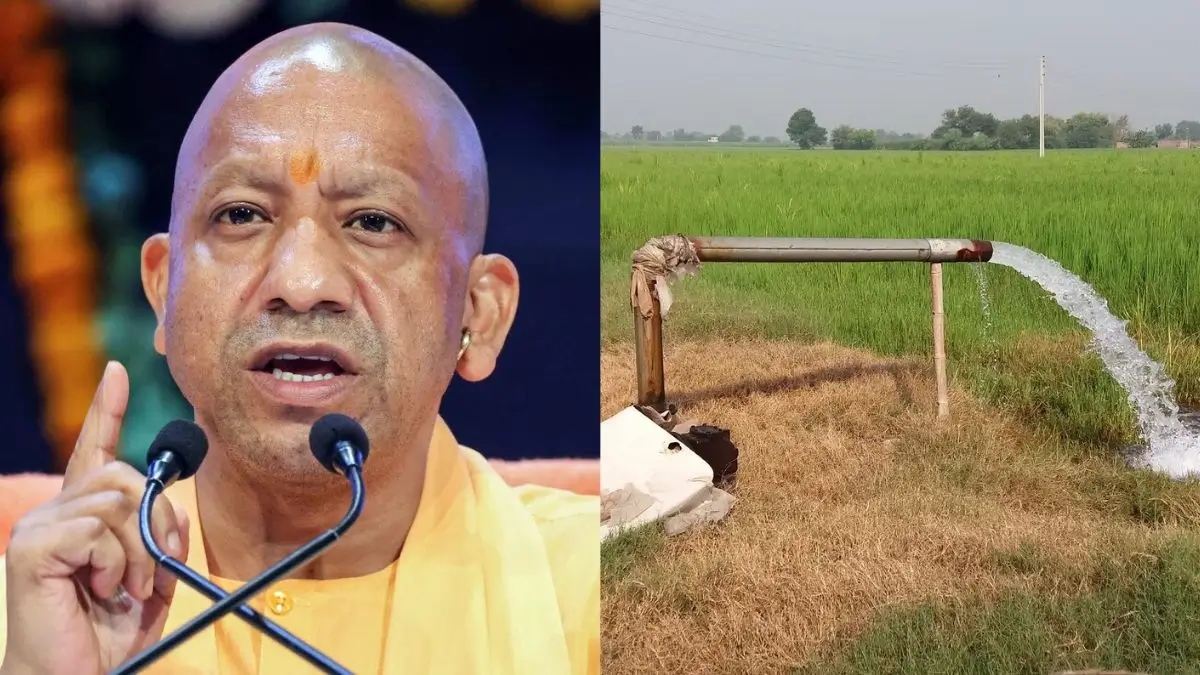
As water is the backbone of the agriculture of the state of Uttar Pradesh, state continues to struggle with inadequate irrigation facilities. To address these challenges, Uttar Pradesh Government is set to implement the UP Nishulk Boring Yojana 2026, it s former scheme which provides free borewell (boring) installation along with support for the subsidised pump sets to eligible farmers.
This scheme mainly targets to small and marginal farmers, and helps them to access reliable irrigation, improve crop productivity, and reduce dependence on rainfall. Here is everything you need to know about the UP Nishulk Boring Yojana 2026.
What is UP Nishulk Boring Yojana 2026?
The UP Nishulk Boring Yojana is an irrigation assistance scheme, launched by the Government of Uttar Pradesh to provide free borewell installation for agricultural purposes.
This scheme also offers subsidised pump sets of up to 5 HP, it enabling farmers to get access of the groundwater for irrigation at a lower cost.
It was originally introduced in the year 1985; this scheme continues to support the farmers of state by strengthening the irrigation infrastructure and enhancing agricultural productivity.
Originally introduced in 1985, the scheme continues to support farmers by strengthening the irrigation infrastructure and enhancing agricultural productivity across the state.
Overview of the UP Nishulk Boring Yojana 2026
Scheme Title: UP Nishulk Boring Yojana 2026.
Region: Uttar Pradesh.
Introduced By: UP Government.
Initiation Year: 1985.
Classification: Agriculture.
Major Advantage: No-cost boring and subsidized pump sets.
Targeted Group: Small-scale and marginal growers.
Website: https://minorirrigationup.gov.in
Objective of UP Nishulk Boring Yojana
In Uttar Pradesh, agriculture is heavily dependent on irrigation because of the state’s large farming population and high food grain production requirements. There are many farmers, mainly with the small landholdings, who struggle to afford irrigation infrastructure.
The primary objectives of the scheme are,
To provide affordable irrigation facilities to small and marginal farmers.
To increase their agricultural productivity through reliable water access.
To reduce farmers dependence on the monsoon rainfall.
To improve crop yields and strengthen rural livelihoods.
To promote sustainable agricultural development across Uttar Pradesh.
Benefits of UP Nishulk Boring Yojana 2026
This scheme offers several important benefits to eligible farmers, such as,
Free Borewell Installation
Eligible farmers receive a free agricultural borewell (boring) to improve their irrigation facilities.
Subsidised Pump Set
The government also provides a pump set of up to 5 HP either at a subsidised rate or free, depending on the eligibility.
Improved Irrigation
Reliable water availability also enables farmers to cultivate the crops throughout the year with greater confidence.
Higher Agricultural Productivity
Better irrigation contributes to improved crop yields and increased farm income.
Reduced Financial Burden
This scheme significantly lowers the cost of installing irrigation infrastructure for the economically weaker farmers.
Eligibility Criteria
Applicants have to must meet the following conditions to avail the benefits,
Must be a permanent resident of the Uttar Pradesh.
Agricultural land must be located within Uttar Pradesh.
Small farmers with the landholding up to 2 hectares are eligible.
Marginal farmers with landholding up to 1 hectare are eligible.
The applicant should not already have an agricultural borewell.
SC/ST farmers are eligible irrespective of landholding limits under applicable provisions.
Documents Required
Applicants need the following documents while applying for the scheme,
Aadhaar Card
Khasra/Khatauni (Land Record)
Bank Passbook
Uttar Pradesh Domicile Certificate
Caste Certificate (for SC/ST/OBC applicants, if applicable)
Passport-size Photograph
How to Apply for UP Nishulk Boring Yojana 2026
Eligible farmers can apply by following these simple steps and get benefits.
Step 1
Visit the official website of the Uttar Pradesh Minor Irrigation Department.
Step 2
Select the UP Nishulk Boring Yojana application option on screen.
Step 3
Fill the application form with the personal details, land information, and bank account details.
Step 4
Upload the required documents related to scheme.
Step 5
Review all this information carefully and submit the application.
Step 6
After the submission, the related concerned department will verify the application and land records.
Step 7
After the successful verification, eligible farmers receive approval for the free borewell installation and applicable pump set assistance.
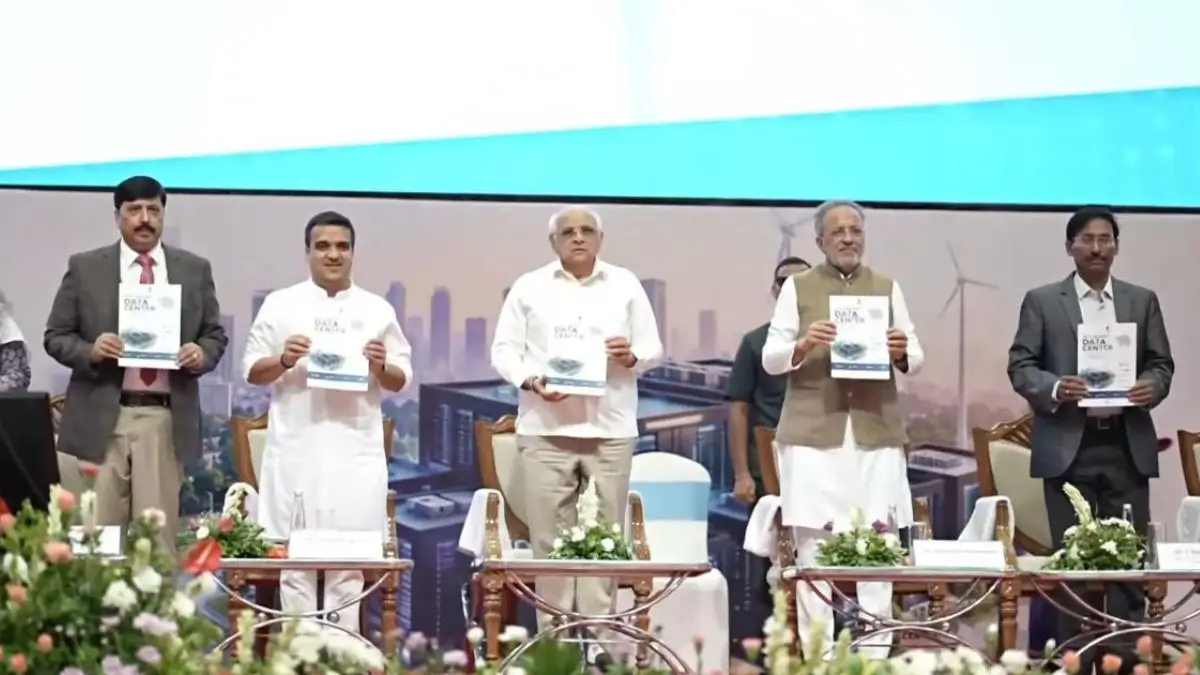
The State Government of Gujarat has unveiled the ‘Viksit Gujarat – Data Centre Policy 2026-29’ to position the state as the leading destination for the hyperscale data centres, artificial intelligence (AI) infrastructure and cloud-based digital services. Honourable Chief Minister Bhupendra Patel has launched this policy in state capital, Gandhinagar, he highlighted Gujarat’s ambition to become a major digital infrastructure hub. This initiative is backed by the attractive incentives, renewable energy resources and world-class industrial infrastructure and this policy seeks to accelerate investment in the state.
What Is Gujarat’s Data Centre Policy 2026-29?
The Viksit Gujarat – Data Centre Policy 2026-29 is a strategic initiative, it is aimed at attracting domestic and global investments in the data centres, AI infrastructure, cloud computing and digital services.
This policy recognises the data centres as the strategic infrastructure, which reflects their growing importance in to supporting digital payments, cloud applications, artificial intelligence, government services and modern businesses.
By creating the investor-friendly ecosystem, the state of Gujarat aims to become one of the India’s largest hubs for digital infrastructure and contribute to the nation’s long-term technology growth.
Importance of this Policy
Speaking at the launch event, Science and Technology Department Secretary P. Bharathi has strongly emphasised that “data is even more valuable than oil.”.
Although India generates nearly to the 20% of the world’s data, it currently accounts for only about just 3% of global data centre capacity. In comparison with the, United States and China, together account for nearly 70% of the worldwide capacity.
This new policy aims to bridge this gap by encouraging large-scale investments in Gujarat.
Key Highlights of the Gujarat Data Centre Policy 2026-29
This policy offers an attractive package of fiscal and non-fiscal incentives which is designed to encourage developers to establish world-class data centres.
Fiscal Incentives
Investors can benefit from the capital subsidies, interest subsidies, power tariff support, SGST reimbursement, electricity duty reimbursement, stamp duty exemptions and assistance for the desalination plants.
These incentives are also expected to significantly reduce the project costs while improving investment viability.
Non-Fiscal Support
Apart from the financial incentives, the government will also provide measures aimed at to simplifying approvals and creating a competitive business environment for the hyperscale data centres and AI infrastructure.
Gujarat’s Infrastructure Advantage
One of Gujarat’s biggest strengths lies in its robust infrastructure.
The state currently has approximately 69 gigawatts (GW) of installed power capacity, with nearly 47 GW generated from renewable energy sources.
Reliable electricity is one of the most critical requirements for these types of energy-intensive data centres, it making Gujarat as an attractive investment destination.
The policy also highlights major industrial ecosystems such as the,
Dholera Special Investment Region (SIR)
GIFT City
Advanced industrial corridors
Strong logistics connectivity
Together, these assets provide the ideal foundation for building next-generation digital infrastructure.
A major significant development for diabetes care, as Novo Nordisk India has introduced the Awiqli (insulin icodec), it is world’s first once-weekly basal insulin for adults with the Type 1 and Type 2 diabetes. This launch marks an important step towards to simplifying insulin therapy by reducing the number of injections from 365 per year to just 52. As India continues to face the diabetes burden, this innovation could improve the treatment adherence, patient comfort, and long-term disease management.
What Is Awiqli?
Awiqli is a weekly insulin produced by Novo Nordisk that allows for the treatment of adults that have either Type 1 or Type 2 diabetes mellitus.
Unlike the conventional long-acting insulins which require daily injections, Awiqli provides a way to regulate blood glucose levels steadily and uniformly after only a single injection once per week.
The active component of Awiqli, known as insulin icodec, is created in such a way as to effectively last in the body for a whole week and provide continuous regulation of the symptoms of diabetes while minimizing the disadvantages connected with the treatment.
The drug is delivered through a special FlexTouch injection device manufactured by Novo Nordisk. This makes it easier for patients to take their weekly dose without any assistance.
Drastic Change in the Treatment of Diabetes.
Awiqli from Novo Nordisk is way more than just an added benefit in the existing therapy, because the company deems it as an advancing technology that makes the treatment of diabetes simple.
For many patients that are just about to commence insulin therapy, it is delayed due to fears like,
Fear of having to do injections every day
Pain associated with delivery
Complexity involved in scheduling
Hypoglycaemia
Fear of gaining weight
Dose adjustment issues
Complications in long-term management
Awiqli offers a solution that allows patients to have just one injection on a weekly basis.
Results of Clinical Trial: Evidence Collected
Novo Nordisk has summarized the results of its worldwide ONWARDS-1 clinical study, which studied the efficiency and safety of insulin icodec.
In the message of the company, the study showed that Awiqli has,
Provided better decline of the HbA1c compared to the insulin glargine U100 with daily use.
Enhanced Time in Range, which means that the patients spend more time with their blood glucose being at normal levels.
Helped more patients with Type 2 diabetes reach the level of HbA1c below 7 % and avoid hypoglycemia.
Assured better blood glucose control during the day.
The results prove that insulin taken once a week can help manage diabetes without the need for frequent shots.
Importance of This Launch for India
India has the highest number of diabetic patients in the world, making the launch of any diabetes treatment innovation an important event.
According to estimates available,
Over 101 million people in India suffer from diabetes.
About 136 million people suffer from prediabetes and have a high chance of developing diabetes.
The most recent National Family Health Survey (NFHS-6, 2023–24) indicates an increasing incidence of high blood sugar level in both urban and rural areas.
Adults who are aged 15 or older,
The percentage of males using hormone therapy for the diabetes rose from 15.6% in NFHS-5 to 20.9% in NFHS-6.
The same figures for females in the latest NFHS is 13.5% and 17.8%, respectively.
This data reflect the increasing need for treatment options aimed at effective management of diabetes in the long term.
Honorable Prime Minister Narendra Modi’s visit to Australia has contributed to a major achievement in India-Australia relations, with 18 agreements and initiatives being unveiled at the Third Annual Summit between Australia and India. These agreements, which cover wide areas such as defence, maritime security, clean energy, critical technologies, education, skill development, research and cultural cooperation, indicate that this is one of the broadest expansions of the India-Australia Comprehensive Strategic Partnership.
New Phase in India-Australia Strategic Partnership
The summit has reaffirmed that the strategic significance of India-Australia ties is growing in complicated geopolitical circumstances.
Both countries agreed on the need for collaboration in defense, trade, technology, energy security, education and innovation while restating the commitment to the common vision of a free, open, inclusive and rule-based Indo-Pacific region.
The 18 results reflect the long-term intention to cooperate in matters crucial for regional stability and growth.
List of Outcomes During PM’s Visit to Australia
Joint Declaration on Defence and Security Cooperation (JDDSC)
Maritime Security Cooperation Roadmap (MSCR)
India-Australia Joint Declaration on Energy Security
Finalization of the Administrative Arrangement of the India-Australia Civil Nuclear Agreement
Australia-India Partnership on Cyber, Critical Technologies, and Supply Chains (PACTS)
MoU between Indian Coast Guard (ICG) and MBC of Australia
Indian Military Officer in Australian Defence College (2028-29)
MoU on Mining and METS Center of Excellence
Flinders University Branch in Bengaluru
Leather of Intent between NCVET and ASQA
Restoration of Three Indian Artifacts
Starting of Rooftop Training Academy
MoU on Australia-Canada-India Technology and Innovation (ACITI) Partnership
MoU between Geoscience Australia and Geological Survey of India
Traditional Knowledge Digital Library Access Agreement
MoU between CSIR and University of Melbourne
MoU between SRFTI Kolkata and Griffith Film School
Victoria University Campus in Gurugram
Importance of These Initiatives
The outcomes resulting from the third India-Australia Annual Summit go beyond the concept of international cooperation.
These agreements mean better cooperation in vital sectors, which include,
Defense and Indo-Pacific security
Switch to renewable energy
Civil nuclear energy cooperation
Artificial Intelligence and cybersecurity initiatives
Mineral ministry cooperation
Education and skill development cooperation
Research
Cultural heritage protection
These activities are aimed at to strengthening India’s strategic relations and ensuring stability, technological progress, and sustainable growth in the region.
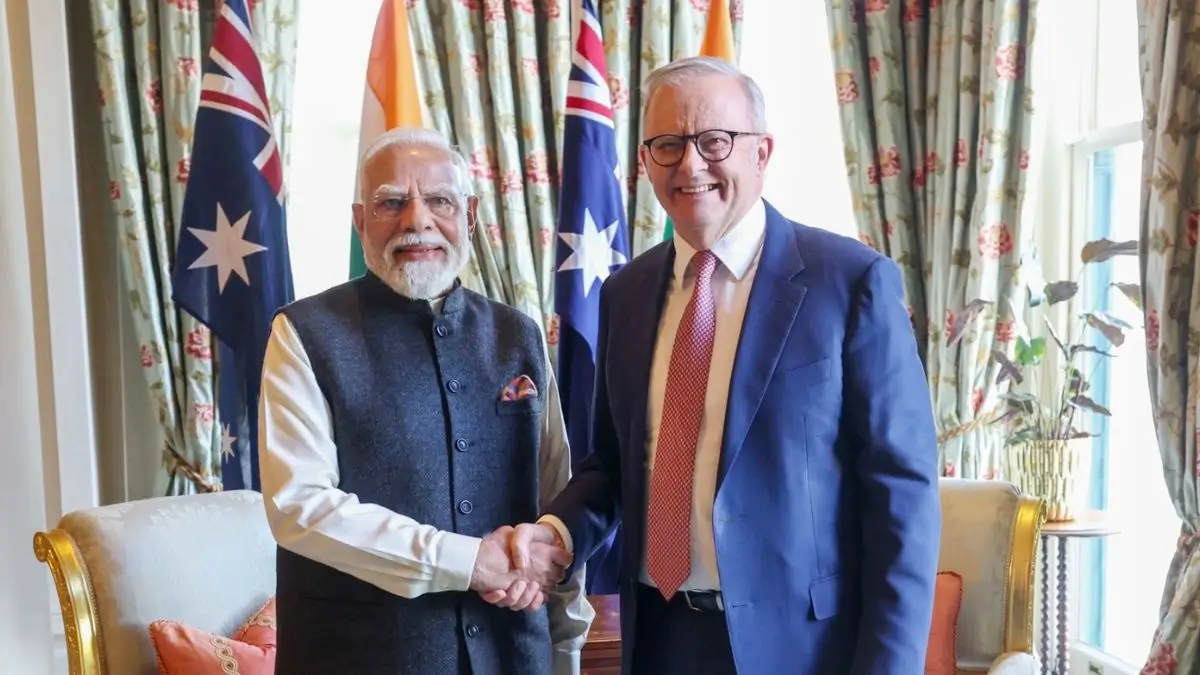
India and Australia have strengthened their bilateral relationship. Honourable Prime Minister Narendra Modi and Australian Prime Minister Anthony Albanese held the third India-Australia Annual Summit in Melbourne. Both leaders have reaffirmed their commitment to expand the Comprehensive Strategic Partnership (CSP) via deeper cooperation in areas like trade, defence, critical technologies, clean energy, education and people-to-people ties.
PM Modi Receives Ceremonial Welcome in Australia
Honourable Prime Minister Narendra Modi has arrived in Melbourne for the high-level bilateral summit and he was accorded with a ceremonial welcome at Government House.
The visit included the,
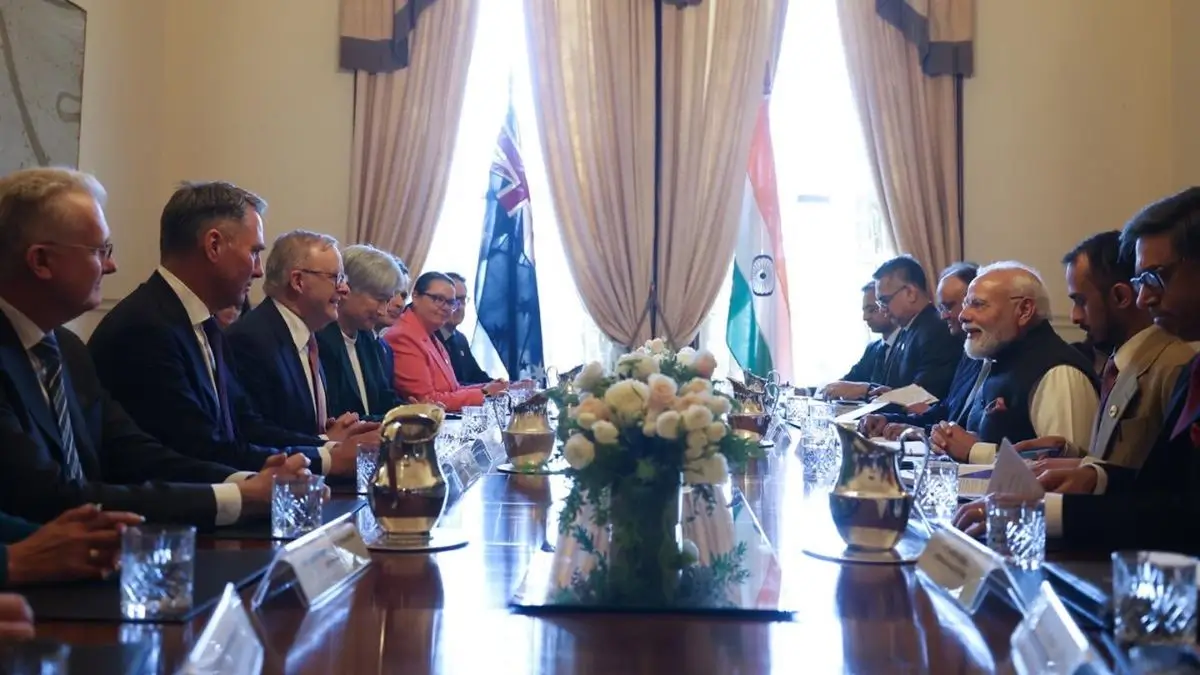
One-on-one discussions between PM Modi and PM Anthony Albanese.
Delegation-level talks, which involve senior ministers and officials from both countries.
Review of the bilateral cooperation since the launch of the India-Australia Comprehensive Strategic Partnership in 2020.
Both leaders has observed that relations between the two countries have expanded significantly over the last six years across the different areas, strategic, economic, cultural, and people-centric areas.
Trade and Economic Cooperation Take Centre Stage
Economic collaboration between the two nations remained as one of the key priorities of the summit.
Both the Prime Ministers reaffirmed their commitment to concluding the Comprehensive Economic Cooperation Agreement (CECA) as soon as possible.
This proposed agreement aims to create a balanced and mutually beneficial trade framework which will enhance market access, investment, and business opportunities.
The leaders also welcomed the outcomes of the
Australia-India CEOs Forum
Economic Roadmap Business Event
They encouraged the businesses from both nations to increase investments in the high-growth sectors and strengthen commercial partnerships.
Defence and Security Cooperation Gets Stronger
This summit placed significant emphasis on expanding their defence and security cooperation amid evolving regional challenges.
India and Australia agreed to deepen collaboration in the areas such as,
Defence and military cooperation
Maritime security
Cybersecurity
Critical minerals
Emerging technologies
Space cooperation
Civil nuclear energy
Both leaders have agreed that stronger strategic coordination would contribute to the regional peace, economic resilience, and a stable Indo-Pacific.
Clean Energy and Critical Technologies in Focus
Both countries has also identified clean energy and advanced technologies as the major pillars of future cooperation.
Key areas discussed included the,
Renewable energy
Solar energy
Critical minerals supply chains
Green technology
Emerging digital technologies
Science and technology partnerships
Education Partnerships Continue to Expand
Education has also emerged as another important theme during the summit.
The two leaders have welcomed the growing presence of Australian universities in India, it describing academic collaboration as an important driver of innovation and skill development.
Expanding educational partnerships is expected to,
Improve student mobility.
Enhance research collaboration.
Build a future-ready workforce.
Strengthen institutional cooperation.
Increase knowledge exchange.
Both leaders have noted that education remains one of the strongest foundations of long-term bilateral relations.
Indian Diaspora Strengthens Bilateral Relations
Prime Minister Modi and Prime Minister Albanese praised the Indian community in Australia for its valuable contribution to Australian society.
Australia Returns Indian Cultural Artefacts
A notable cultural outcome of this summit was Australia’s decision to voluntarily return several ancient Indian artefacts.
The artefacts originating from Tamil Nadu include the,
A stone sculpture of the sacred Nandi.
A metal trident bearing the image of Goddess Bhadrakali.
India’s Energy Storage Requirement Projected to Reach 888 GWh by 2035–36
India’s energy storage requirement is projected to reach 888 GWh by 2035–36, up from the current installed base of about 1 GWh, according to the latest India BESS Market Review, aligning with the Central Electricity Authority (CEA) estimate of 174 GW/888 GWh. The projected requirement comprises 80 GW/321 GWh from Battery Energy Storage Systems (BESS) and 94 GW/567 GWh from Pumped Storage Projects (PSPs). India’s installed BESS capacity has grown rapidly from 0.78 GWh in December 2025 to 8.7 GWh in the first half of 2026 and is expected to exceed 10 GWh by the end of 2026. During the first half of 2026, 47 GWh of energy storage tenders were floated, taking the cumulative pipeline to 260 GWh. India also plans to expand lithium-ion battery cell manufacturing capacity to about 110 GWh by 2030, with overall battery pack and container manufacturing capacity projected at 180–200 GWh, supporting renewable energy integration, grid reliability, and the country’s clean energy transition.
India Becomes the World’s Largest Retail & FMCG GCC Hub
India has emerged as the world’s largest hub for Retail and Fast-Moving Consumer Goods (FMCG) Global Capability Centres (GCCs), hosting 180 GCCs and employing over 272,000 professionals as of 8 July 2026. India’s retail GCC workforce is 34% larger than the combined workforce of Poland, the Philippines, Mexico, Germany, and Egypt. These GCCs, operated by multinational companies such as Lowe’s, Tesco, H&M, Walmart Global Tech, Target, L’Oréal, and AB InBev, manage functions including technology, analytics, finance, supply chains, and customer experience. Bengaluru leads with about 84,000 professionals, followed by Delhi NCR (66,000) and Hyderabad (45,000). AI adoption is rapidly increasing, with AI workforce penetration rising from 2.1% in 2022 to 4.8% in 2025, and projected to reach 7.2% by 2026. The sector generated over 52,000 jobs in 2025, with strong future demand for data analytics, large language model (LLM) engineering, GenAI Ops, MLOps, and vector database expertise.
India Hosts 13th AITIGA Joint Committee Meeting to Strengthen ASEAN Trade Pact
India hosted the 13th ASEAN-India Trade in Goods Agreement (AITIGA) Joint Committee (JC) meeting at Vanijya Bhawan, New Delhi, from 6–10 July 2026 to review progress on the AITIGA Review and advance negotiations for strengthening the India–ASEAN trade agreement. Held in a hybrid format, the meeting included discussions of three key sub-committees on Customs Procedures and Trade Facilitation, National Treatment and Market Access, and Rules of Origin. The Joint Committee directed these groups to expedite the finalisation of pending chapters and assigned time-bound deliverables to maintain negotiation momentum. The meeting was co-chaired by Nitin Kumar Yadav, Additional Secretary, Department of Commerce, India, and Mastura Ahmad Mustafa, Deputy Secretary General (Trade), Malaysia, with participation from all 10 ASEAN member states. ASEAN remains one of India’s largest trading partners, accounting for about 11% of India’s global trade, with bilateral trade reaching USD 128 billion in 2025–26, highlighting the growing economic partnership and scope for deeper trade and investment cooperation.
JIM & WS Team Successfully Summits Mt Khyam Tso Massif in Ladakh
The Jawahar Institute of Mountaineering & Winter Sports (JIM & WS), Pahalgam, successfully completed a 22-member mountaineering expedition to the Mt Khyam Tso Massif in the Rumtse Phu region of Ladakh. Flagged off on 26 June 2026 by Team Leader Col. Hem Chandra Singh, the expedition followed a structured acclimatization schedule before scaling several challenging peaks. The team first summited Peak Pt 5901 m on 2 July, where Col. Hem Chandra Singh also achieved the first-ever paragliding flight from an altitude of 5,600 metres. On 3 July, the team successfully climbed Peak Pt 6090 m and Peak Pt 5944 m despite extreme weather conditions. The expedition concluded with the successful ascent of Mt Khyam-III (6,018 m) on 5 July 2026. The achievement highlights the team’s endurance, technical expertise, and teamwork while strengthening India’s presence in the exploration of the remote mountain ranges of the Ladakh region.
Jaipur Ranked 6th in Happy City Index 2026
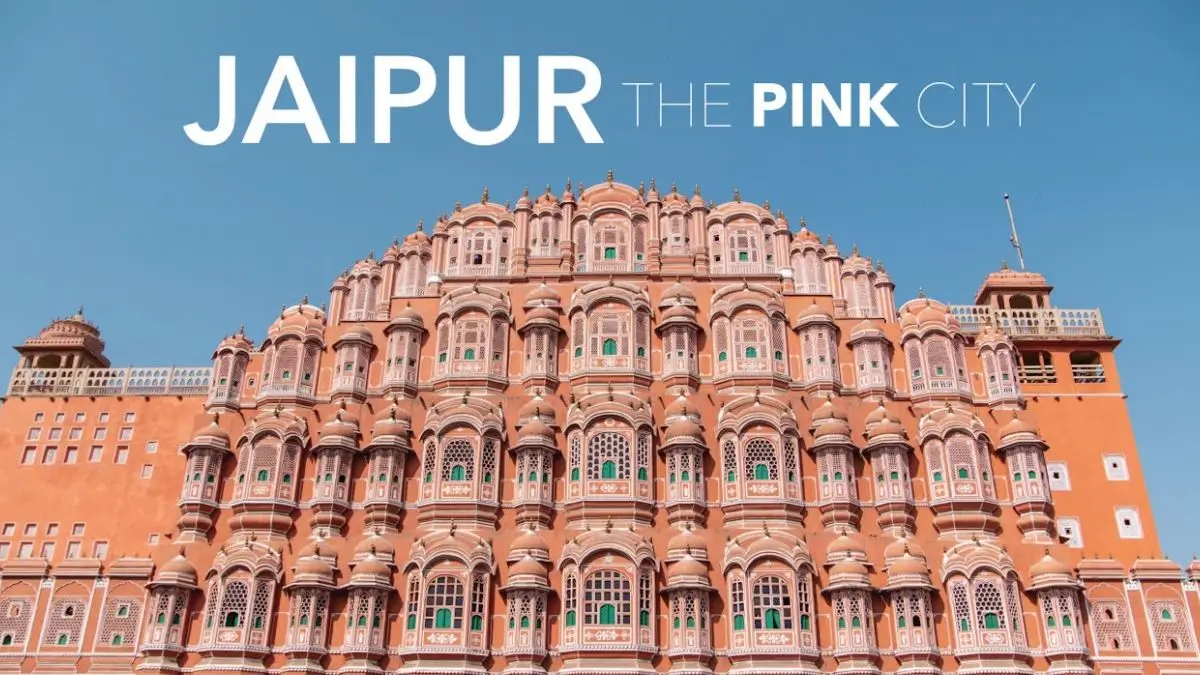
Jaipur has become the only Indian city to feature in the top 10 of the Happy City Index 2026, securing the 6th position globally. The ranking recognizes the city’s high quality of life, effective governance, rich cultural heritage, modern infrastructure, economic opportunities, healthcare, environmental sustainability, and overall well-being. London topped the global rankings, followed by New York City, Paris, Tokyo, and Madrid. Jaipur’s achievement reflects its successful balance between preserving its historic identity and promoting sustainable urban development through improved public services, smart city initiatives, and enhanced civic amenities. Its thriving tourism, handicrafts, jewellery, and hospitality sectors have further strengthened economic growth and employment. The Happy City Index evaluates cities based on governance, healthcare, mobility, education, innovation, environmental sustainability, community engagement, and quality of life. Jaipur’s recognition highlights India’s growing emphasis on creating sustainable, livable, and people-centric cities with a strong focus on citizens’ well-being.
EPFO Launches CITES 2.01 to Modernise PF Services
The Employees’ Provident Fund Organisation (EPFO) has launched CITES 2.01 (Centralised IT Enabled Services), its biggest digital transformation, by migrating around 340 million member accounts from 120+ decentralised databases to a unified national platform. Launched by Union Labour and Employment Minister Mansukh Mandaviya, the system enables faster claim processing, nationwide access to member records, and improved digital services through a single EPFO Member Portal. Alongside the rollout, the government announced that FY2025–26 EPF interest at 8.25%, amounting to about ₹1.44 lakh crore, will be credited to members’ accounts by 15 July 2026. Key features include automated claim validation, centralized processing, real-time claim tracking, and interest calculation up to the actual payment date. The auto-settlement limit for eligible claims has been increased from ₹1 lakh to ₹5 lakh, while UPI-based PF withdrawals and withdrawal of up to 75% of PF balance will be introduced after the nationwide rollout, enhancing convenience and financial flexibility for members.
Navi Mumbai International Airport Notified as 42nd Drug Import Port
The Ministry of Health and Family Welfare has notified Navi Mumbai International Airport as a designated port for the import of drugs by amending Rule 43A of the Drugs Rules, 1945, under the Drugs and Cosmetics Act, 1940. The notification, issued on 8 July 2026 after consultation with the Drugs Technical Advisory Board (DTAB), authorizes the airport as an official entry point for pharmaceutical imports. With this amendment, the total number of notified drug import ports in India has increased to 42, covering airports, seaports, road, and rail entry points. The decision aims to strengthen pharmaceutical import infrastructure, improve supply chain efficiency, reduce congestion at existing ports, provide greater flexibility to importers, and enhance India’s healthcare logistics network while ensuring regulatory oversight and public health safeguards through compliance with the Drugs and Cosmetics Act and expert recommendations of the DTAB.
Union Minister Launches PRAGATI Initiative to Promote Sustainable Agriculture and Rural Entrepreneurship
Union Minister for Agriculture & Farmers Welfare and Rural Development, Shivraj Singh Chouhan, launched the PRAGATI (Promoting Regenerative Agriculture, Growth, Agri-Entrepreneurship and Transformative Innovation) initiative to strengthen sustainable agriculture and rural livelihoods. The multi-partner programme aims to empower 20,000 rural agri-entrepreneurs and improve the livelihoods of 20 lakh small and marginal farmers through regenerative farming, climate resilience, digital innovation, and value addition. Agri-entrepreneurs will provide village-level support in soil testing, scientific crop advisories, farm mechanization, machine rental services, and financial literacy, helping reduce cultivation costs and increase farm income. The initiative will initially cover Madhya Pradesh, Uttar Pradesh, Bihar, Maharashtra, Rajasthan, West Bengal, Assam, and Jharkhand. Designed as India’s largest private-sector-led agri-entrepreneurship programme, PRAGATI is supported by partners including the PepsiCo Foundation, SBI Foundation, Gates Foundation, IDH, Heifer International, Environmental Defense Fund (EDF), Global Agri Entrepreneurship Academy, SAFIA, AEGF, and Transform Rural India Foundation (TRIF), promoting technology-driven and climate-resilient agriculture.
PM Modi Visits Prambanan Temple, Launches ASI Restoration Project in Indonesia
Prime Minister Narendra Modi visited the Prambanan Temple Complex in Yogyakarta, Indonesia, on 8 July 2026, accompanied by Indonesian President Prabowo Subianto, reaffirming the centuries-old cultural and civilizational ties between India and Indonesia. The two leaders unveiled a commemorative plaque marking the launch of the Archaeological Survey of India (ASI)-led conservation and restoration project at the UNESCO World Heritage Site, following an understanding reached during President Prabowo’s 2025 visit to India. Built in the 9th century by the Sanjaya Dynasty, Prambanan is Indonesia’s largest Hindu temple complex, dedicated to the Trimurti—Lord Shiva, Lord Vishnu, and Lord Brahma. The complex, recognised as a UNESCO World Heritage Site in 1991, reflects a blend of Javanese and South Indian Pallava architecture, with the 47-metre Shiva Temple as its centerpiece. The ASI project symbolizes shared heritage and strengthens India-Indonesia cooperation in preserving historical monuments and cultural traditions.
State News
Uttarakhand Becomes India’s Sixth Fully Literate State Under ULLAS Programme
Uttarakhand has become India’s sixth fully literate state after meeting the adult literacy benchmarks under the National Education Policy (NEP) 2020 and the ULLAS (Understanding of Lifelong Learning for All in Society) – New India Literacy Programme. The declaration was approved by the Governor on 8 July 2026, based on literacy standards set by the Department of School Education and Literacy, Ministry of Education. With this achievement, Uttarakhand joins Mizoram, Goa, Tripura, Himachal Pradesh, and Sikkim in the list of fully literate states. Chief Minister Pushkar Singh Dhami described the milestone as historic and credited it to the combined efforts of the government and citizens. He reaffirmed the state’s commitment to promoting digital literacy, financial literacy, continuing education, and life skills, ensuring lifelong learning opportunities and inclusive educational development for all citizens.
International News
Switzerland to Host Geneva AI Summit 2027
Switzerland has announced that the Geneva AI Summit 2027 will be held on 21–22 June 2027 at Palexpo, Geneva, alongside the International Telecommunication Union (ITU) AI for Good Global Summit. Announced by Swiss Federal Councillor Albert Rosti during the AI for Good Global Summit 2026, the event aims to strengthen global cooperation on artificial intelligence governance, innovation, and responsible AI development. The summit will bring together world leaders, policymakers, researchers, technology companies, international organizations, and civil society to discuss AI’s role in economic growth, healthcare, education, climate action, disaster management, and sustainable development. A key focus will be promoting trustworthy, ethical, human-centric, and inclusive AI, while advancing international collaboration on AI safety and governance. Building on previous global AI conferences in New Delhi, Bletchley, Seoul, and Paris, the summit reinforces Geneva’s status as a leading hub for multilateral diplomacy and global policymaking, leveraging the city’s concentration of UN agencies and international organizations to address cross-border AI challenges.
India and Myanmar Hold 23rd Border Coordination Meeting
The 23rd National-Level Border Coordination Meeting between India and Myanmar was held in New Delhi on 7–8 July 2026, with the Indian delegation led by Union Home Secretary Govind Mohan and the Myanmar delegation by Major General Min Thu, Deputy Minister for Home Affairs. The two sides reviewed the security situation along the 1,643-km India–Myanmar border, covering Arunachal Pradesh, Nagaland, Manipur, and Mizoram, and agreed to strengthen cooperation against terrorism, insurgency, narcotics trafficking, arms smuggling, human trafficking, wildlife crime, and cybercrime through enhanced intelligence sharing, operational coordination, and capacity building. Discussions also focused on key connectivity projects, including the Kaladan Multi-Modal Transit Transport Project and the India–Myanmar–Thailand Trilateral Highway, which support India’s Neighbourhood First, Act East, and MAHASAGAR (Mutual and Holistic Advancement for Security and Growth Across Regions) initiatives. Myanmar reaffirmed that its territory would not be used against India’s security interests, highlighting both countries’ commitment to maintaining peace, stability, and effective border management.
OpenAI Plans Wider Rollout of GPT-5.6 Following U.S. Government Review
According to media reports, OpenAI plans to expand access to its advanced GPT-5.6 artificial intelligence model after it completed evaluation under a new U.S. Department of Commerce oversight framework for frontier AI systems. The review was conducted with support from the Center for AI Standards and Innovation, assessing the model’s safety, cybersecurity, and national security implications before broader deployment. GPT-5.6’s wider release had reportedly been delayed to allow U.S. authorities to conduct additional technical assessments, reflecting efforts to balance AI innovation with security considerations. The voluntary review process operates under a 2026 Executive Order establishing oversight for advanced AI models, allowing evaluations of up to 30 days before deployment. The framework aims to identify risks such as cyberattacks, misuse by hostile actors, military applications, and large-scale misinformation while supporting responsible AI innovation. As of the reported development, OpenAI, the White House, and the U.S. Department of Commerce had not officially commented on the reported approval or rollout timeline.
Banking News
RBI Approves Mahesh Pai as South Indian Bank MD & CEO
The Reserve Bank of India (RBI) has approved the appointment of Mahesh Muralidhar Pai as the Managing Director and Chief Executive Officer (MD & CEO) of South Indian Bank for a three-year term beginning 1 October 2026. The Thrissur-headquartered bank informed stock exchanges that the appointment will be placed before its Board of Directors on 16 July 2026 and, after board approval, will require shareholders’ approval. Pai will succeed P. R. Seshadri, who will complete his tenure on 30 September 2026. Currently serving as Chief General Manager (Digital Banking and Innovation) at Canara Bank, Pai brings nearly 30 years of banking experience across digital banking, treasury, foreign exchange, retail banking, MSME and agriculture credit, corporate strategy, and overseas operations. He has also served on the boards of Canara Bank Tanzania Ltd., Karnataka State Financial Corporation, Canara Bank Securities Ltd., and represented Canara Bank in industry bodies such as FIMMDA, SWIFT India, and the Secondary Loan Market Association.
Economy News
IMF Revises India’s FY27 Growth Forecast to 6.4%
The International Monetary Fund (IMF) has revised India’s GDP growth forecast for FY2026–27 (FY27) to 6.4%, down from 6.5% projected in its April 2026 World Economic Outlook (WEO), while raising the FY2027–28 (FY28) forecast to 6.7% from 6.5%. The revision reflects concerns over rising global energy prices, driven by geopolitical tensions in the Middle East, which are expected to increase India’s import and fuel costs despite strong domestic demand and a resilient services sector. The IMF projects the petroleum price index at $89 per barrel, with crude oil prices 32% higher than in 2025, natural gas prices up 22%, fertilizer prices 26%, and global food prices 8% higher. The IMF also lowered its 2026 global growth forecast to 3.0% from 3.1%, citing persistent geopolitical tensions, elevated commodity prices, and higher energy costs. Despite the revision, India remains the fastest-growing major economy.
Acharya Ranchhodlal Goswami of Ahmedabad has been selected for the Ustad Bismillah Khan Yuva Puraskar 2025, announced by the Sangeet Natak Akademi under the Ministry of Culture, for his outstanding contribution to preserving Haveli Sangeet. The award honours exceptional young artists in music, dance, and theatre and is named after legendary shehnai maestro Ustad Bismillah Khan. A 32-year-old and the 16th-generation Acharya of the 450-year-old Goswami Haveli in Doshiwada ni Pol, Kalupur, he has composed over 2,200 devotional verses, authored eight books, contributed to Gujarat University’s Haveli Sangeet curriculum, and is pursuing doctoral research in music. Haveli Sangeet, a 550-year-old devotional music tradition of the Pushtimarg sect founded by Mahaprabhu Vallabhacharya, preserves ancient forms such as Prabandha, Dhrupad, and Dhamar, along with the devotional compositions of Ashtachhap poets like Surdas and Parmananddas, making it a living tradition of Indian classical music and Krishna worship.
Defense News
DRDO Successfully Flight-Tests Pinaka Long Range Guided Rocket
The Defence Research and Development Organisation (DRDO) successfully conducted the flight test of the Pinaka Long Range Guided Rocket (LRGR) at the Integrated Test Range (ITR), Chandipur, Odisha, on 8 July 2026. The test validated the rocket’s user-defined minimum operational range of 60 km, with the LRGR accurately following its planned trajectory, performing all in-flight manoeuvres, and hitting the target with high precision. Developed to enhance the Pinaka Multi-Barrel Rocket Launcher (MBRL) system of the Indian Army, the LRGR uses advanced guidance, navigation, and control technologies for long-range precision strikes. The project was developed through collaboration among ARDE (lead design), HEMRL, DRDL, and RCI, with testing supported by ITR and Proof & Experimental Establishment (PXE). The successful trial strengthens India’s indigenous defence capabilities under the Aatmanirbhar Bharat initiative, enhances battlefield precision and standoff attack capability, and reduces dependence on imported precision-guided weapon systems.
Sports News
Aswath S Becomes India’s 98th Chess Grandmaster, Strengthening India’s Global Chess Legacy
Seventeen-year-old Aswath S from Kanyakumari has become India’s 98th Chess Grandmaster, marking another milestone in the country’s growing success in world chess. He secured his final Grandmaster norm at the 2026 Pune International Grandmaster Round Robin by defeating USA’s FM Kannan Vaidyanathan with the black pieces in the final round. Aswath finished the tournament with 7 points from 9 rounds, recording six wins, two draws, and one loss to claim second place. He had earned his first GM norm at the Grenke Open and his second at the First Saturday GM Round Robin in Budapest, where he also crossed the 2500 FIDE rating requirement. Despite an early setback in Pune, Aswath made a remarkable comeback to achieve the prestigious Grandmaster title, becoming India’s 98th Grandmaster.
Science & Technology News
ISRO Successfully Tests Main Parachutes for Gaganyaan Mission
The Indian Space Research Organisation (ISRO) successfully conducted the Integrated Main Parachute Airdrop Test-05 (IMAT-05) for the Gaganyaan human spaceflight programme on 7 July 2026 at the Aerial Delivery Research and Development Establishment (ADRDE) drop zone in Sheopur, Madhya Pradesh. The test involved dropping a simulated crew module payload with a dummy mass from an altitude of 2.5 km using an Indian Air Force IL-76 transport aircraft. The parachute deployment sequence—comprising the extractor, drogue, and main parachutes—performed successfully, reducing the payload’s descent to a safe terminal velocity. The Gaganyaan Crew Module Deceleration System consists of 10 parachutes of four types, designed to ensure a safe ocean splashdown after atmospheric re-entry. Conducted with the participation of ISRO, DRDO, the Indian Air Force, and the Indian Army, the test validated the structural integrity and design margins of the main parachute under maximum expected load conditions, marking an important milestone toward the uncrewed Gaganyaan G1 mission and India’s first human spaceflight.
Switzerland has announced that the Geneva AI Summit will be held on 21st and 22nd June, 2026 at Palexpo, Geneva, it marks the major international platform for the discussions on the emerging artificial intelligence governance and innovation. This summit will take place alongside with the International Telecommunication Union (ITU) AI for Good Global Summit, it bring together the world leaders, policymakers, researchers, technology companies, international organizations, and civil society representatives.
Switzerland Declares Geneva AI Summit 2027
The announcement was made by the Swiss Federal Minister Albert Rosti during the inauguration of the AI for Good Global Summit 2026 held in Geneva.
He stressed that the objective of Switzerland is to establish a global platform where governments, companies, academic institutions, and the international community will have an opportunity to join forces in managing AI development.
He emphasized that Geneva is the most appropriate place for international AI governance because of its status of the longstanding center of diplomacy.
Details of the Summit
Geneva AI Summit 2027 will take place on:
Dates: June 21 and 22, 2027
Venue: Palexpo, Geneva, Switzerland
The event will take place right before the ITU AI for Good Global Summit which will allow the participants from around the world to attend both conferences and combine practical activities with the topic of discussion.
Continuing with Prior Global AI Summits
The Geneva AI Summit will contribute to the progress initiated by a few notable global AI summits that are:
AI Impact Summit, New Delhi
AI Safety Summit, Bletchley (United Kingdom)
AI Summit, Seoul
AI Action Summit, Paris
The country of Switzerland aims to establish, a continuous dialogue on AI that would help in promoting coordinated governance of AI while encouraging the responsible use of AI technologies around the world.
The Geneva AI Summit’s Major Goals
The summit’s main emphasis will lie on two broad strategic goals.
1. Supporting AI to Get Better Lives for Humans
The first goal is about using technology to enhance people’s lives.
Conversations will cover how AI can be implemented for,
Economic growth
Healthcare
Education
Scientific research
Managing crises
Feeding people
Environmental protection
Sustainable development
2. Developing Trustworthy AI
The second goal is about improving international cooperation in the area of,
AI governance
Ensuring AI is safe
Responsible innovation
Ethical AI
Human-centered designs
Inclusion policies for technologies
The summit’s organizers are convinced innovation and responsible regulations should go hand in hand instead of being seen as rival goals.
Why Geneva is an Exceptional Venue
Switzerland showcased Geneva’s distinct international status as one of the world’s most favorable diplomatic venues.
Geneva acts as home to,
Several UN organizations
NGO institutions
Humanitarian institutions
Research institutions
Diplomatic embassies
International conferences
Such a concentration of international organizations makes Geneva an excellent host for cross-border challenges like, for example, governance of artificial intelligence.
OpenAI is planning to extend the access of its advanced GPT-5.6 artificial intelligence model, it received the US Department of Commerce’s nod as per the new oversight framework for frontier AI systems in the country. Reports indicates that the firm hopes to initiate the wider rollout of the model this week with further technical assessments and talks with the authorities. The move indicates a significant development in the maturing relationship between AI innovation and government rule.
What is the Latest Development?
Based on a report by Axios, the US Department of Commerce has given the green light for the broader availability of OpenAI’s GPT-5.6 model after putting it through more scrutiny under the Washington’s new frontier AI framework.
The review was done by the Center for the AI Standards and Innovation, which assessed the model with the assistance of OpenAI’s technical experts. Because of the successful evaluation, OpenAI is expected to roll out GPT-5.6 to a wider audience.
At the time of reporting, OpenAI, the White House, and the Commerce Department have not given any official comment on the approval.
What Were the Reasons For The Procrastination In Release of GPT-5.6?
Not long time ago, OpenAI has declared that it suspended the official launch of GPT-5.6 due to the request of the government of the United States.
In this context, the rollout of the model was only allowed for the selected group of authorized entities, which was communicated to the federal officials.
Thus, the government of the United States had a chance to carry out a comprehensive analysis of possible risks before launching the technology on the wide scale.
The delays reflect the need of the United States government in establishing the balance between the technological developments and national security.
The Introduction of the New US Framework for Frontier AI
The implementation of the framework comes in accordance with an Executive Order issued by US President Donald Trump in 2026 that is meant to give the voluntary oversight of exceptional AI models.
According to the framework,
Companies that develop “covered frontier models” can voluntarily submit their AI systems to the US government for evaluation.
The approved models may undergo a review for a period of no more than 30 days prior to their implementation.
The process is aimed at identifying risks related to safety, cybersecurity, and national security while encouraging innovation in the sector.
The framework marks a major step forward in the field of AI regulations in the US.
Why Is the US Revising AI Networks?
The US government has recently taken a strict stance on advanced AI networks. The officials are worried that the highly advanced AI models might be used improperly after their official launch if the correct regulations are not in place.
The main areas of concern for security officials include,
Advanced cyber offenses
Production of malware
Mishandling by rogue countries
Military or intelligence deployment by countries from strategic competitors
Mass misinformation or security loopholes
By monitoring advanced AI technologies before their launch, the authorities strive to minimize the risks without overcomplicating technological progress.
The Employees Provident Fund Organisation (EPFO) has launched its upgraded Centralised IT Enabled Services (CITES 2.01) platform, it is the biggest transformation in the history of organization. This new system migrates nearly 340 million member accounts from over 120 decentralised databases to the unified national platform, it enables the faster claim settlements, improved member services, and seamless access to the provident fund records. Alongside the launch, the government has also announced that the FY2025–26 EPF interest at 8.25% will be directly credited to members accounts by July 15, 2026.
EPFO Launches CITES 2.01 Across India
Honourable Union Labour and Employment Minister Mansukh Mandaviya has launched the upgraded CITES 2.01 platform, which is described as the major step towards modernising the EPFO’s digital infrastructure.
Earlier, each EPFO regional office maintained its own database, making service delivery slower and limiting claim processing to the member’s registered office.
Under the new system, all the member records have been consolidated into a single nationwide database, and it allows authorised EPFO offices across the country to process service requests.
The nationwide rollout is also expected to be fully operational by the end of the week.
FY26 PF Interest to Be Credited by July 15
One of the major announcements with the launch is the early credit of Employees Provident Fund (EPF) interest for the FY2025-26.
Key highlights includes the,
Interest Rate: 8.25%
Estimated Interest Amount: ₹1.44 lakh crore
Beneficiaries: Around 340 million EPFO member accounts
Expected Credit Date: By July 15, 2026
According to the Labour Minister, members will able to view the credited interest in their EPF passbooks much earlier than before.
Unified Digital Services for the Members
The upgraded CITES 2.01 platform also introduces the single digital interface through the EPFO Member Portal.
Members will now be able to access to the,
Provident Fund account details
EPF balance
Claim status
Pensionable service records
Previous benefits availed
Membership history
Instead of just navigating through the multiple systems, all information will now be available through the one of the integrated platforms, improving transparency and user convenience.
Faster and Smarter Claim Processing
This new platform is designed to significantly reduce the claim processing time through automation and centralised workflows.
Major improvements includes the,
Automated pre-validation of the claims to detect discrepancies before processing.
Instant notifications and informing members about the corrections, if required.
Visibility of the eligible withdrawal amount under different claim categories before submission.
Centralised claim processing irrespective of the member’s regional office.
These features are expected to reduce the delays and minimise claim rejections.
Higher Auto-Settlement Limit
EPFO has also enhanced the auto-settlement facility for eligible advance claims.
The auto-settlement limit has been increased,
Earlier: ₹1 lakh
Now: ₹5 lakh
This benefit will be available to the fully KYC-compliant members, it enabling quicker settlements without extensive manual intervention.
New Payment System and Interest Calculation
This upgraded platform also introduces a centralised payment architecture for faster electronic fund transfers.
Another major reform relates to the calculation of interest on the final settlements.
Earlier, interest was calculated only up to the last day of the previous month. Under the new revised framework, interest will now be calculated up to the actual date of payment authorisation, it ensuring the members receive a more accurate interest amount.
UPI Withdrawals Coming Soon
The Labour Minister has also announced that UPI-based EPF withdrawals will be introduced after the nationwide implementation of CITES 2.01 is completed.
In addition to this, members will be able to withdraw up to 75% of their provident fund balance under the new revised withdrawal framework, providing greater financial flexibility during emergencies and eligible situations.
Jaipur made a remarkable global achievement, as the city became the only Indian city to be included in the top 10 in the Happy City Index 2026, and it ranked 6th globally. Jaipur was acknowledged for the quality of life, rich heritage, good governance, and developing urban infrastructure. As per the latest report of the Happy City Index 2026, which recognises cities for their governance, health, environment, mobility, economy, and overall well-being. By the way, Jaiipur is the only Indian city in the list, with London being the number one-ranked city in the world.
Jaipur Becomes India’s Happiest City in 2026
Jaipur, popularly called the Pink City, has achieved the distinction of being as the happiest city in India, based on the findings of the latest Happy City Index 2026.
Jaipur has shone in blending the old world charm with the latest urban facilities and city planning which earned it the 6th spot in the global rankings.
The position demonstrates that Jaipur has achieved the ideal balance between growth and the preservation of its unique culture.
Which Is the World’s Most Happiest City in 2026?
According to the newly published Happy City Index, London in the United Kingdom is the world’s most joyful city.
This city has done exceedingly well against several criteria, including governing practices, economic prospects, healthcare provision, eco-friendliness, transport and quality of life.
Top 10 Happiest Cities in the World (Happy City Index 2026)
Rank
City
Country
1
London
United Kingdom
2
New York City
United States
3
Paris
France
4
Tokyo
Japan
5
Madrid
Spain
6
Jaipur
India
7
Rome
Italy
8
Dubai
United Arab Emirates
9
Berlin
Germany
10
Barcelona
Spain
Notably, Jaipur is the only Indian city to feature in the global top 10 list.
Factors Contributing to Jaipur Getting the Rank of One Of The Happiest Cities
Jaipur’s position in the rankings is credited to the combination of the cultural heritage, development and quality of living.
Cultural Legacy
Jaipur is known as one of the historical cities of India and being famous for its forts, palaces, colourful bazaars, and festivals. The importance of culture to the community assures its pride and happiness.
Progress in Urban Development
In the last couple of years, there have been improvements in terms of infrastructure, public service, transport, and smart city projects in Jaipur. This has resulted in making everyday life easier for local residents.
Strength of Tourism
Tourism is the cornerstone of Jaipur’s economy, and the city is wealthy in hospitality, arts and crafts, jewellery, and heritage. The mentioned activities bring income to people and firms, assuring economic stability in the city.
Social Impact of Change
This city pays a lot of attention to cleaning up the public places, enhancing the facilities, developing sustainability, and involving citizens.