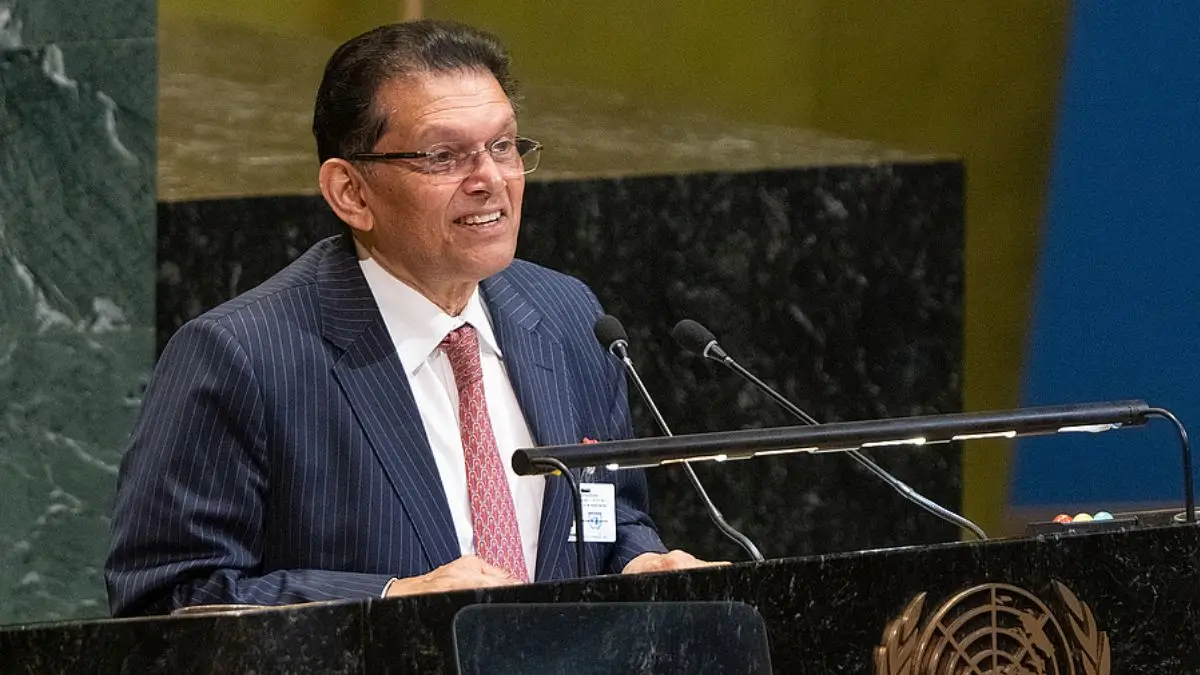
Bangladesh’s Foreign Minister and veteran diplomat Khalilur Rahman has been elected as the President of the 81st Session of the United Nations General Assembly (UNGA). He secured this victory in closely contested election against Cyprus Andreas Kakouris and he will assume the office on 8 September 2026.
Khalilur Rahman President of the 81st UN General Assembly
Khalilur Rahman was elected President of the 81st Session of the United Nations General Assembly after defeating the Andreas Kakouris of Cyprus in a secret ballot.
This election witnessed the strong competition, with Rahman securing the 99 votes against Kakouris 91 votes. Around total of 190 ballots were cast with no abstentions or any invalid votes.
As per the UN’s regional rotation system, the presidency for the 81st session belongs to the Asia-Pacific Group making the Bangladesh’s nomination eligible for the position.
Rahman will serve as the one-year term which will begin from on 8 September 2026.
Who is Khalilur Rahman?
Khalilur Rahman is Bangladesh’s one of the most experienced diplomats and bringing more than four decades of expertise in diplomacy, international cooperation and multilateral negotiations.
He currently serves as the Bangladesh’s Foreign Minister and he has previously held several important positions, including the,
- National Security Adviser of Bangladesh
- High Representative on the Rohingya Issue
- Senior diplomatic assignments in New York and Geneva
- Career diplomat since joining Bangladesh’s foreign service in 1979
His extensive experience within the UN system is expected to help to navigate the complex challenges facing the organization currently.
Why This UNGA Session is Particularly Important
Rahman’s presidency also coincides with one of the most significant periods in the recent UN history.
A major responsibility during the 81st session will be overseeing the discussions related to the selection of the successor to the António Guterres, whose second term as the UN Secretary-General ends on the 31st December 2026.
The session will also address,
- Ongoing global conflicts
- Climate change challenges
- Sustainable Development Goals (SDGs)
- Financing for development
- Institutional reforms within the United Nations
As a result of this the 81st session is expected to have thelasting impact on the future direction of the UN.
Six Key Priorities of The Khalilur Rahman’s Presidency
Rahman has outlined the total six broad priorities that will guide his presidency of the General Assembly.
1. Peace and Security
2. Accelerating Sustainable Development Goals (SDGs)
3. Climate Action and Environmental Protection
4. Human Rights Promotion
5. Governance of Emerging Technologies
6. United Nations Reform
Improving the effectiveness, efficiency and the representativeness of the UN system will remain as the key priority during the session.
Theme of the 81st Session
Rahman also announced the central theme of his presidency as a ,”Restoring Trust, Managing Transformation: A United Nations that Delivers for All”
The theme reflects the growing concerns regarding the declining confidence in international institutions and there is need to strengthen the global cooperation.
The President-elect emphasized that his intention to serve as the bridge-builder among member states and it will create the opportunities for constructive dialogue despite geopolitical divisions.






 India Hosts First BIMSTEC Home Ministers...
 World Bank Mobilises $112 Billion in Pri...
 Who Is Katie Zacharia? Trump Names New W...