
The central government intends to borrow ₹7.86 trillion through dated securities for H2 FY26-27. This comes after ₹8.14 trillion borrowing through dated securities in H1 FY27 and takes the projected gross market borrowing for FY27 to approximately ₹16 trillion. The government has maintained the budgeted net market borrowing figure at ₹11.73 trillion, which is intended to be used mainly to finance the fiscal deficit.
Gross and Net Market Borrowing
Government borrowing is usually analyzed in terms of gross and net market borrowings.
Gross market borrowing refers to the total amount borrowed through the issuance of government securities in a particular financial year. On the other hand, net market borrowing refers to the amount that remains after deducting repayments on maturing debts and serves as one of the major sources of funding the fiscal deficit.
For FY27, the revised government borrowing figures are approximately,
| Particulars | FY27 Figure |
| H1 dated-securities borrowing | ₹8.14 trillion |
| H2 dated-securities borrowing | ₹7.86 trillion |
| Projected gross market borrowing | ₹16 trillion |
| Budget Estimate of gross borrowing | ₹17.2 trillion |
| Net market borrowing | ₹11.73 trillion |
| Estimated repayment | ₹4.36 trillion |
Why is the Government Increasing the Use of Longer-Tenors in Financing?
The H2 schedule raises the proportion of long maturity government securities. There is an increase in the share of 15-year securities from 14.5% to 17.6%.
The government has also raised the use of 30-year, 40-year and 50-year securities. However, there has been a reduction in the proportion of five-year and 10-year securities.
| Maturity | H2 Proportion | H1 Proportion |
| 15-year | 17.6% | 14.5% |
| 10-year | 26.3% | 29.0% |
| 5-year | 12.1% | 15.4% |
| 7-year | 9.1% | 8.1% |
| 3-year | 6.9% | 8.1% |
The higher proportion of longer tenors might lead to higher weighted average maturity (WAM). The longer WAM might help in reducing the need to roll over maturing debt.
Government Planning to Hold 23 Weekly Auctions in H2FY27
The government will organize 23 weekly auctions in order to conduct the H2 borrowing programme. The government will be able to obtain from ₹33,000 crore to ₹36,000 crore in each auction.
The government also plans to generate funds worth ₹15,000 crore through sovereign green bonds in H2FY27.
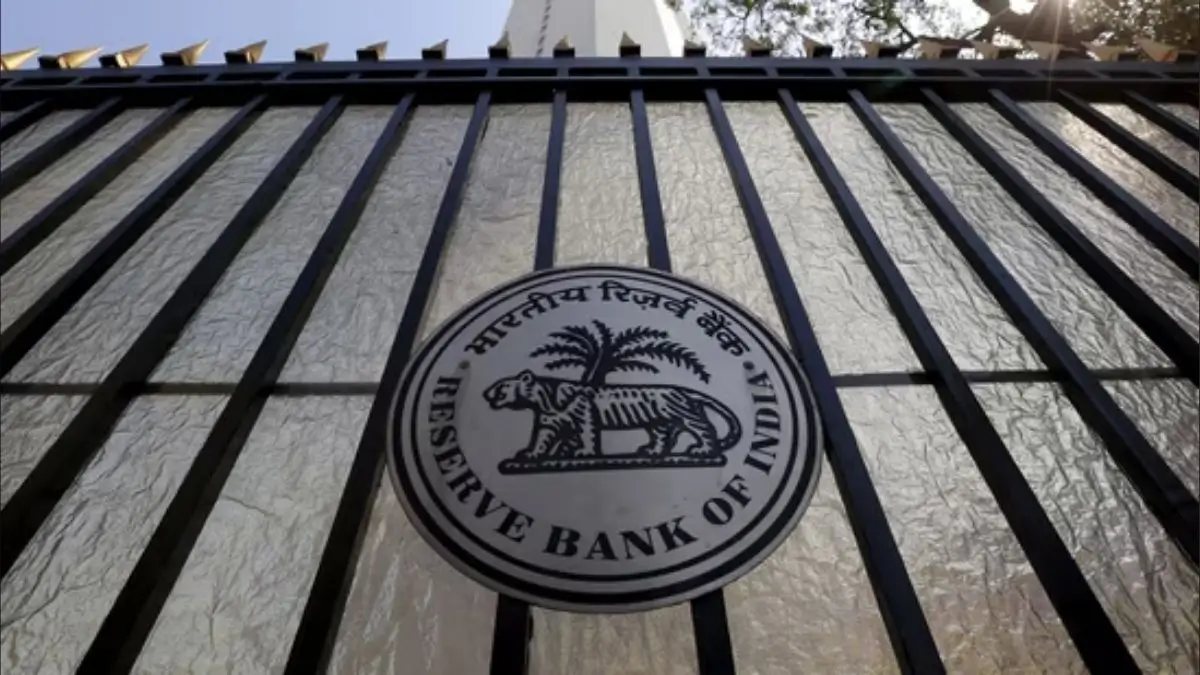
The sovereign green bond is a debt instrument, which is used to obtain funds for certain eligible projects having environmental or climate goals. The government securities are usually issued through auctions organized by the Reserve Bank of India (RBI).
Treasury Bills and Ways and Means Advances
In addition to long-term borrowing through dated securities, the government has unveiled its programme of short-term borrowing.
Government aims to borrow approximately ₹2.99 trillion from Treasury Bills during Q3FY27, which includes October to December 2026.
Treasury Bills represent short-term government securities that mature within a year. These securities are sold at a discount and paid off at par value.
In case of mismatch between receipt and payment of government, Ways and Means Advances (WMA) have been set at ₹50,000 crore for H2FY27.
WMA represents a temporary accommodation extended by the RBI to the government to meet short-term mismatches in cash flows. It should not be used to cover up a continuing fiscal deficit.
Fiscal Anchor Changes to Debt to GDP
There has been a change in the approach to fiscal anchor with the adoption of debt-to-GDP ratio, with the primary focus shifting from the use of fiscal deficit ratio as an anchor.
The target is to achieve the debt-to-GDP ratio between 49% and 51% by 2030-31.
As per the central government figures, the debt-to-GDP ratio is 58.2%, against the annual target of 56.1%.
Debt to GDP ratio is a comparison of government’s total debt with the GDP of the country and is commonly used as an indicator of sustainable public debt.






 India’s Current Account Deficit Narrow...
 Direct Tax Collection 2026: Net Revenue ...
 PLFS September 2026: Urban Female Labour...