
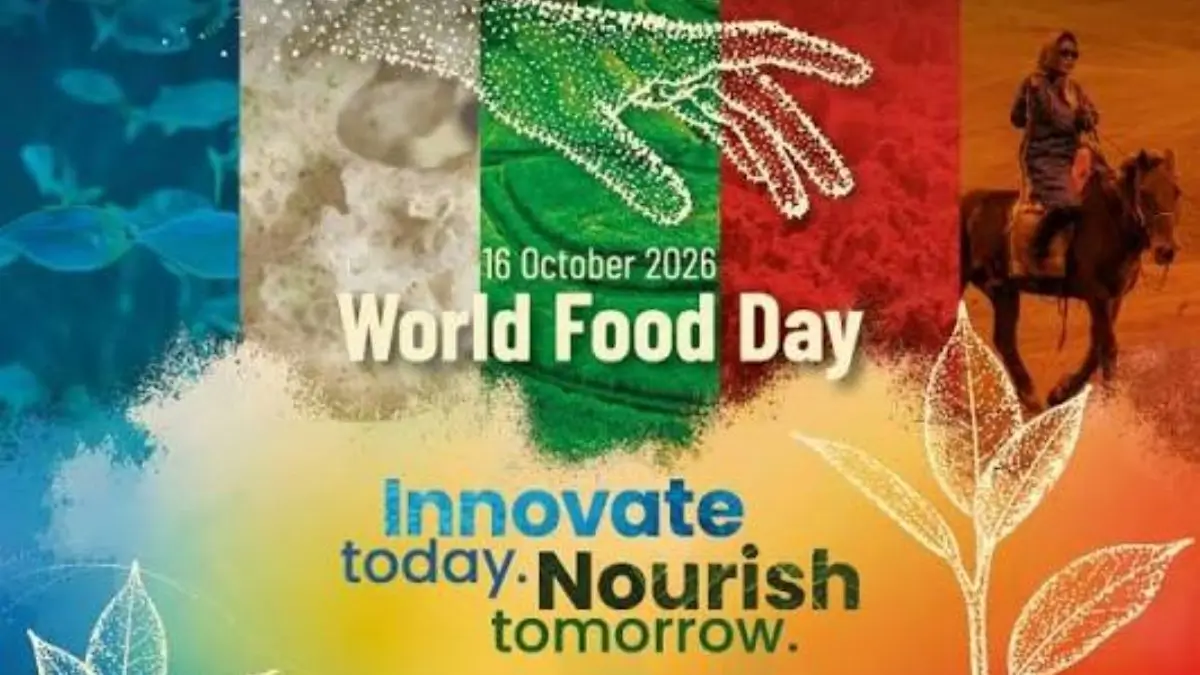
The World Food Day is marked annually on 16 October with an aim to address issues of hunger, nutrition, and sustainable food systems in the world. The theme of this year’s observation will be “Innovate today. Nourish tomorrow.”, emphasizing the role that innovation can play in enhancing food production, preservation, distribution, and nutritious diets. While there is no scarcity of food production in the world that would prevent the global population from being well-fed, there still remain millions of people who suffer from hunger and billions of those who cannot afford a nutritious diet.
Theme and Importance of World Food Day 2026
“Let’s Innovate for Today. Let’s Feed Tomorrow” is the theme for World Food Day 2026. FAO has chosen this theme to highlight the importance of innovation in creating food systems that are inclusive, sustainable and resilient.
Agri-food systems innovation involves the use of more than technology.
It includes improved seed varieties, agricultural research, joint farming, traditional knowledge, better irrigation, more efficient food chains and easier access to finance.
The theme calls for cooperation between governments, farmers, researchers, companies and communities. Such collaboration will enhance the efficiency of food systems. They will be more resilient to any kind of shocks, including wars, economic changes and weather disturbances.
What Is World Food Day?
World Food Day is an international event aimed at highlighting issues of hunger, malnutrition, food security, and sustainable agriculture. The event also aims at promoting activities that will provide people access to safe and healthy foods.
World Food Day is commemorated on October 16th as it is the anniversary of the establishment of FAO in 1945. FAO is the organization that focuses on nutrition, boosting productivity in agriculture, rural development, and sustainable food production.
World Food Day is celebrated around the world through campaigns, discussions, learning sessions and activities aimed at helping farmers.
History of World Food Day
The World Food Day concept originated from global attempts to tackle the problems of hunger and development of agriculture.
- 1945: Establishment of Food and Agriculture Organization on 16 October.
- 1979: Member nations of FAO adopted the resolution to observe World Food Day every year in its 20th General Conference.
- 1980: The observance was supported by the United Nations General Assembly and recommended to the governments and organizations to observe it.
- 1981: Observation of the first World Food Day on 16 October.
- 2026: The world observes the 46th observation of World Food Day.
Every year, the observance is centered around a particular theme related to food security, nutrition, agriculture development or sustainable food systems.
World Food Day and SDG 2: Zero Hunger
World Food Day is directly related to the second Sustainable Development Goal (SDG 2), which was set out by UN member countries as part of the 2030 Agenda for Sustainable Development.
Goal SDG 2 entails the elimination of hunger, food security, improvement of nutrition and promotion of sustainable agriculture until 2030.
Its key focus areas include,
- Elimination of hunger and ensuring availability of healthy, diversified and sufficient food all year round.
- Elimination of all forms of malnutrition.
- Improving livelihoods and productive capacity of small scale food producers.
- Promotion of sustainable and climate-resilient agricultural practices.
- Maintaining the genetic diversity of seeds, plants and livestock.
- Making more investments in agricultural research and development.
The goal of achieving Zero Hunger goes beyond food production. It also involves affordable and nutritious food, good distribution systems, less food loss and access to resources.
Food Losses, Food Wastes, and Water Management
Food security is contingent on how efficiently food is produced, preserved, distributed, and consumed.
Losses happen mainly in the process of production, harvesting, preservation, processing, and transportation of food, while food waste takes place mostly in the distribution and consumption phases.
Their reduction helps to enhance the availability of food without increasing its production by the same volume. Cold storage, transportation, processing and consumer behavior are among those factors that contribute to this goal.
Water management is just as important as it is through water that agriculture takes the lion’s share of the total amount of fresh water used in the world.
Food Security in India
For India, World Food Day can be related to agricultural productivity, nutrition, rural development and affordable food products.
There are various government policies and initiatives dealing with different sides of the problem:
| Initiative | Main goal |
| National Food Security Act, 2013 | A legal framework to provide subsidised foodgrains to the eligible households |
| Pradhan Mantri Garib Kalyan Anna Yojana (PMGKAY) | Supports eligible beneficiaries through the supply of free foodgrains within the appropriate food security framework |
| National Food Security Mission | Supporting the growth of production of certain crops by productivity interventions |
| PM POSHAN | Hot cooked meals to the eligible children in government and government assisted schools |
| Mission Saksham Anganwadi and POSHAN 2.0 | Nutrition and early childhood care through the provision of specific services and interventions |
It shows that there are many aspects included in the food security issue: food availability, accessibility, nutrition, and the delivery of public assistance.







 Mahila Kisan Diwas 2026 to Highlight Wom...
 World Students’ Day 2026: Date, Signif...
 International Day for Disaster Risk Redu...