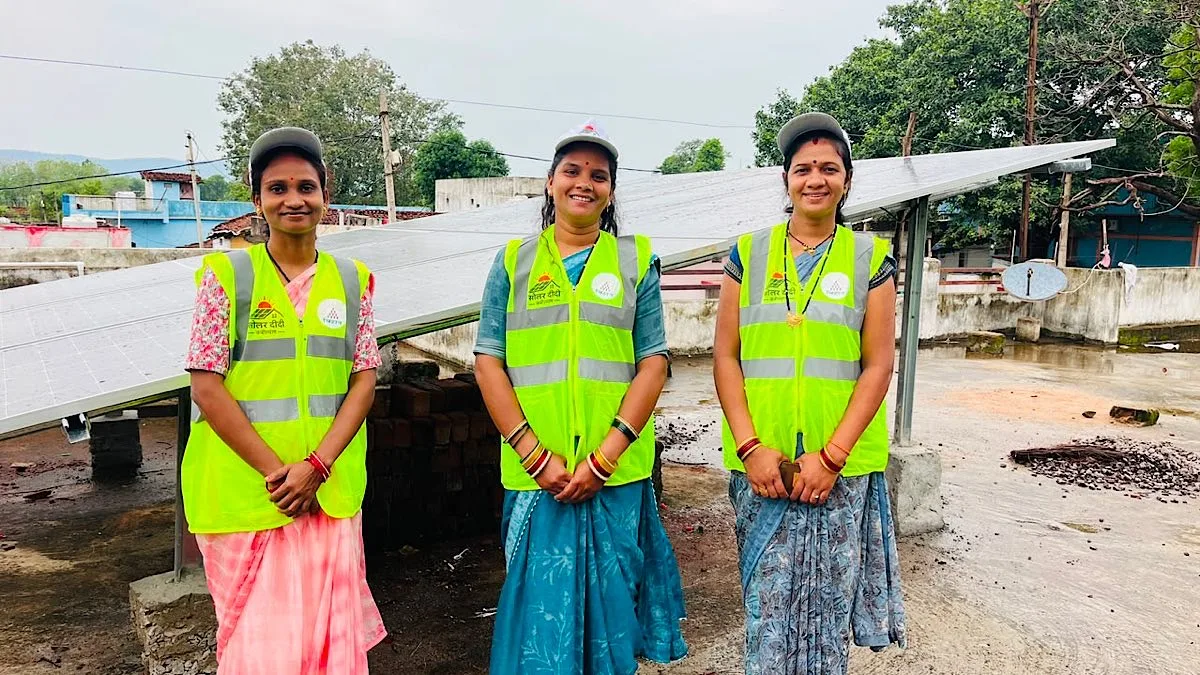
In a landmark initiative to promote women’s empowerment, renewable energy, and rural entrepreneurship, the Chhattisgarh Government has launched the Decentralised Women Empowerment on Energy and Policy for Transformative Inclusion (DWEEPTI) Yojana in July 2026.
The scheme is India’s first women-led distributed Renewable Energy (RE) policy, aimed at transforming rural Self-Help Groups (SHGs) into solar entrepreneurs. The initiative seeks to establish 5,000 women-led solar enterprises and generate around 50,000 green jobs across the state.
Developed by the Panchayat and Rural Development Department, Chhattisgarh, in collaboration with Transform Rural India (TRI) under the Green Economy Transition Mission, the scheme is expected to play a key role in expanding clean energy access while strengthening women’s participation in the green economy.
What is DWEEPTI Yojana?
DWEEPTI Yojana is a women-centric renewable energy initiative designed to empower Self-Help Groups (SHGs) by enabling them to become solar entrepreneurs.
The scheme combines clean energy adoption with livelihood generation by providing women with training, financial support, and business opportunities in the solar energy sector.
It also contributes to India’s renewable energy goals while creating sustainable income opportunities in rural areas.
Objectives of DWEEPTI Yojana
The major objectives of the scheme include:
- Promote women-led solar entrepreneurship.
- Increase access to clean and affordable energy.
- Create sustainable livelihood opportunities.
- Strengthen rural Self-Help Groups.
- Support India’s green energy transition.
- Encourage renewable energy adoption in villages.
- Generate employment in the green economy.
Energy Access Targets
The scheme has ambitious clean energy targets across the state.
Under DWEEPTI Yojana, the government aims to provide:
- Clean energy access to 5 lakh families.
- Solar energy solutions for 10,000 public institutions across Chhattisgarh.
The initiative is expected to improve energy security while reducing dependence on conventional energy sources.
Implementation Strategy
The scheme will be implemented through a decentralized model involving local institutions and women-led organizations.
Key Implementation Features
- 13 Cluster Level Federations (CLFs) across 12 districts have been registered as authorised vendors.
- The implementation is being carried out under the Pradhan Mantri Surya Ghar Muft Bijli Yojana (PMSGMBY).
- The programme is being implemented in partnership with the Chhattisgarh State Power Distribution Company Limited (CSPDCL).
This model enables women-led organizations to directly participate in rooftop solar installation and related services.
Kabirdham Becomes the First Implementation District
Kabirdham district has become the first district where DWEEPTI Yojana has been implemented.
The Vande Mataram Cluster Level Federation has been registered as an authorised solar vendor with the support of the Zila Panchayat Kabirdham (Bihan).
The district serves as the pilot model for expanding the initiative across the state.
Creation of ‘Solar Didis’
One of the unique features of DWEEPTI Yojana is the creation of “Solar Didis.”
With technical support from Tata, around 35 women from Self-Help Groups (SHGs) have received training in:
- Rooftop Solar Installation
- Solar System Maintenance
- Renewable Energy Services
- Customer Support
These trained women will act as local solar entrepreneurs and technicians in their communities.
Financial Support Under the Scheme
To encourage wider participation, the scheme also provides financial assistance.
Key financial features include:
- Flexible loans for SHG members.
- Support for rooftop solar installations.
- Assistance in establishing solar-based enterprises.
- Promotion of sustainable livelihoods.
- Linkage with the Lakhpati Didi Initiative.
This financial support will help women build independent businesses while contributing to clean energy adoption.
Significance of DWEEPTI Yojana
The scheme is significant because it combines women’s empowerment, renewable energy, and rural development into a single policy framework.
Major benefits include:
- Creation of green jobs.
- Promotion of clean energy.
- Women’s economic empowerment.
- Strengthening rural entrepreneurship.
- Increased participation of SHGs in the renewable energy sector.
- Support for India’s Net Zero and sustainable development goals.
It also establishes Chhattisgarh as a pioneer in women-led renewable energy initiatives.
Key Takeaways
- Chhattisgarh launched DWEEPTI Yojana in July 2026.
- It is India’s first women-led distributed Renewable Energy policy.
- The scheme targets 5,000 women-led solar enterprises.
- Around 50,000 green jobs are expected to be created.
- The initiative aims to provide clean energy to 5 lakh families and 10,000 public institutions.
- Kabirdham became the first implementation district.
- 35 SHG women have been trained as the first “Solar Didis” with technical support from Tata.
- The scheme is linked with the Lakhpati Didi Initiative to promote sustainable livelihoods.







 Uttarakhand Becomes India’s 6th Fully ...
 Odisha Launches India’s First MICE Inc...
 UP Kamadhenu Pashu Bima Yojana 2026: Lat...