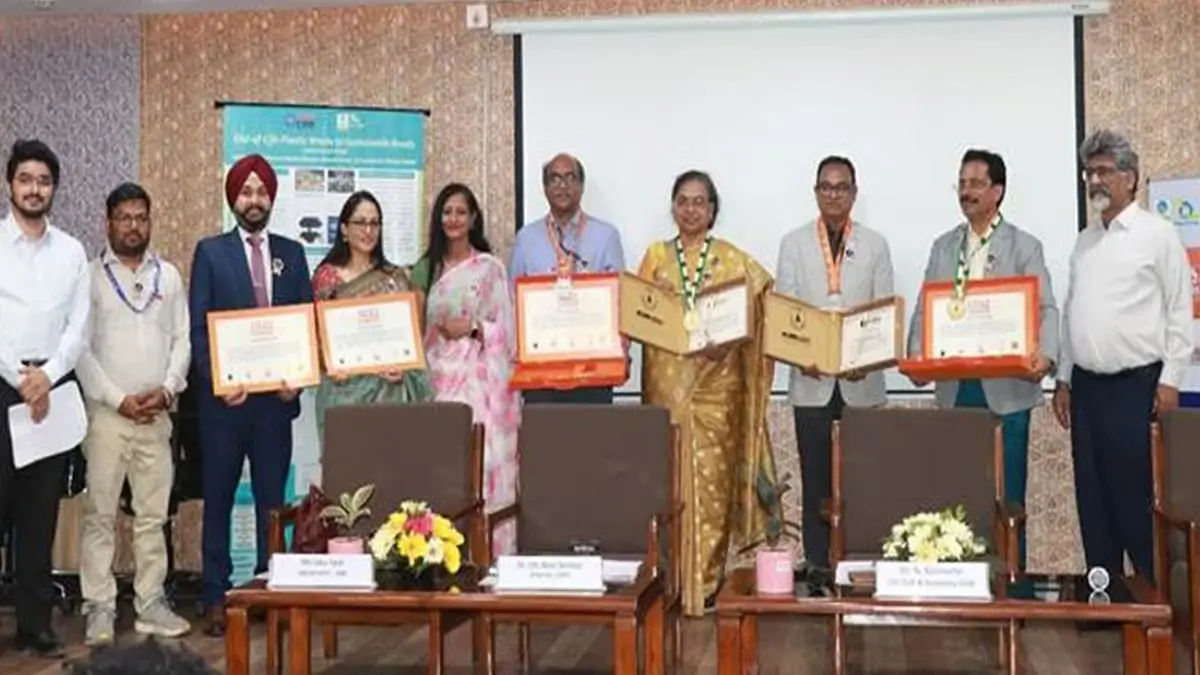
The CSIR-Central Road Research Institute and Bharat Petroleum Corporation Limited have received the recognition from the India Book of Records and Asia Book of Records. As they have created the India’s first roadblock section constructed using the technical textile geocells which are made from end of life plastic waste. The felicitation ceremony was held at the CSIR-CRRI in the New Delhi in the presence of senior scientists and industry experts.
What Makes This Road Technology Unique
The project focused on converting the difficult to manageable plastic waste into the durable infrastructure material. The researchers developed the technical textile geocells by using the processes end of life plastic and applied them in roadblock construction.
Geocells are three dimensional cellular structures used in the civil engineering to improve soil stability and strengthen the road infrastructure.
In this case the geocells were manufactured by using recycled plastic waste and created a sustainable alternative to conventional materials.
This innovation is also considered as the first of demonstration in the road engineering and it has now received recognition from both national and Asian record authorities.
How the Technology Supports Sustainable Infrastructure
The initiative will directly addresses two major national challenges which are plastic waste management and resilient road infrastructure development.
As India generates the massive quantities of plastic waste every year and much of its part is difficult to recycle or dispose of safely.
By converting the end of life plastic into the road engineering materials this technology will supports the concept of a circular economy where waste is reused productively instead of ending up in the landfills or polluting the environment.
This geocell-based system will improves structural stability and durability in the road applications and making the infrastructure more sustainable and resource efficient.
Role of CSIR-CRRI and BPCL in the Project
The project reflects the strong collaboration between the scientific research institutions and industry partners.
CSIR-CRRI led the research, testing and engineering validation processes part and on the other side BPCL has supported the initiative as part of its sustainability and research goals.
According to scientists which are involved in this project stated that extensive performance evaluation and the material characterization studies were conducted to ensure that the recycled plastic geocells should meet the engineering standards related to durability, structural integrity and field applicability.
How Geocell Technology Works in The Road Engineering
Geocells are lightweight, honeycomb like structures and they are generally used to reinforce the weak soil and improve load distribution in roads and embankments.
They also help increase road strength, reduce erosion and improve durability.
Traditionally the geocells are manufactured using polymer materials.






 Immigration and Foreigners Act 2025: Can...
 President Murmu Accepts L. Murugan’s R...
 India’s Ramsar Sites Reach 103: Sukhna...