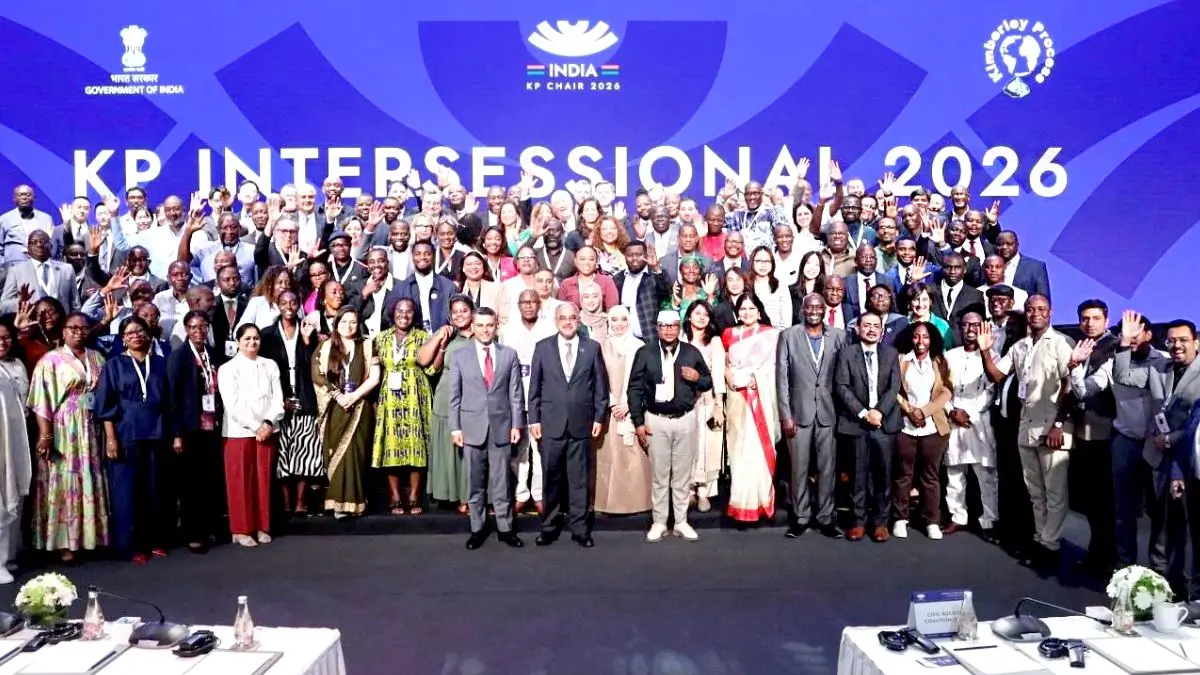
India successfully concluded the Kimberley Process Intersessional Meeting 2026 in the Mumbai. This event was led by Union Minister Piyush Goyal and the event focused on to enhancing the transparency, governance and trust in the natural diamond sector. The event saw the active participation from governments, industry leaders and civil society.
What Is the Kimberley Process (KP)?
The Kimberley Process (KP) is the international initiative which was launched in 2000.
Purpose of KP
- To prevent conflict diamonds from entering global markets.
- Also to promote ethical and responsible sourcing.
- And to ensure transparency in the diamond supply chain.
It operates through the Kimberley Process Certification Scheme (KPCS) which tracks the diamonds from origin to market.
Mumbai Intersessional 2026: Key Highlights
The Mumbai meeting brought together the,
- KP member countries (Participants)
- Industry bodies like the World Diamond Council
- Civil society organizations
Focus Areas
- Transparency in the diamond trade
- Governance reforms
- Monitoring and compliance systems
- Artisanal mining and production
The discussions are aimed at to strengthening trust across the global diamond value chain.
India’s 3C Vision: Credibility, Compliance, Consumer Confidence
India’s chairship was guided by the theme of 3Cs.
Key Pillars
- Credibility: Ensuring the authenticity of diamonds
- Compliance: Also adhering to global standards
- Consumer Confidence: Building the global trust among buyers
India has strongly emphasized that diamonds should remain the symbol of trust and responsibility.
India’s Role in the Global Diamond Industry
India plays the crucial role in the diamond sector.
As India has world’s largest diamond cutting and polishing hub which supports the millions of livelihoods and will make India as a key player in the Global diamond exports.
This makes India as the natural leader in promoting ethical and sustainable practices.
Key Outcomes of the Meeting
The Intersessional achieved the important progress in Mumbai.
- Strengthened the discussions on monitoring mechanisms.
- Improved the focus on data and statistics transparency.
- Also enhanced cooperation among the several stakeholders.
- Also provides the strong emphasis on better consumer awareness and outreach.
These outcomes will guide the future decisions at the KP Plenary in New Delhi.







 India Hosts First BIMSTEC Home Ministers...
 World Bank Mobilises $112 Billion in Pri...
 Who Is Katie Zacharia? Trump Names New W...