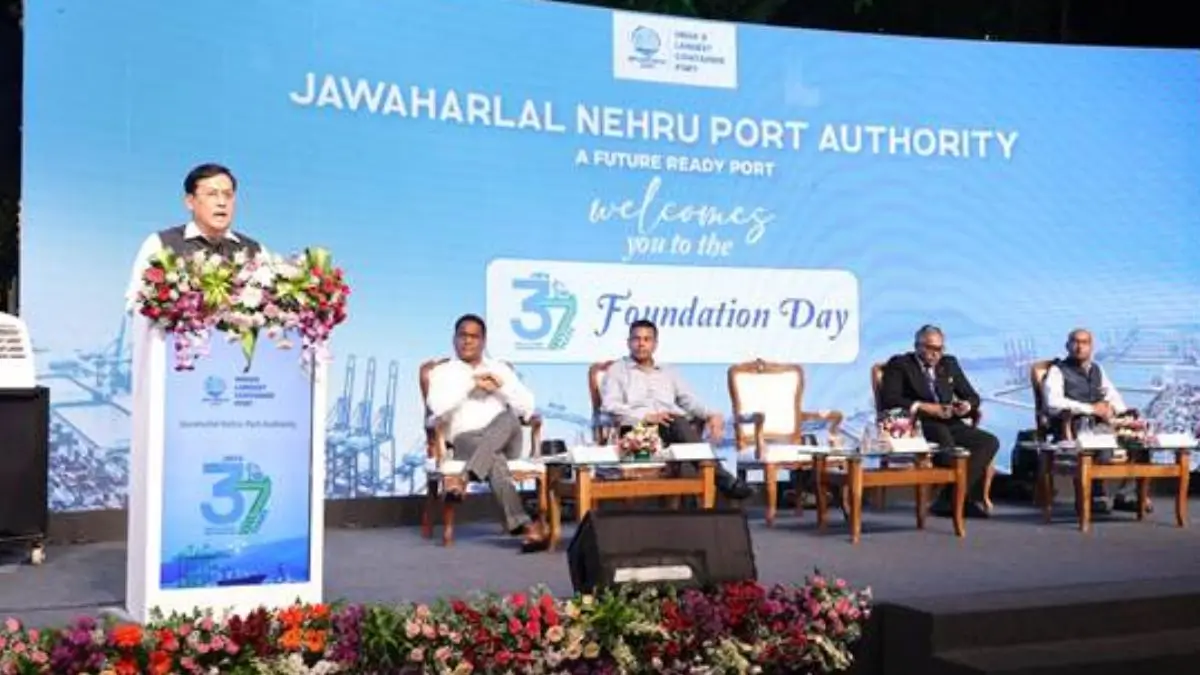
India has launched the Logistics Port Performance Index (LPPI) and several digital governance initiatives. It was unveiled by the Union Minister for Ports, Shipping and Waterways, Sarbananda Sonowal during the 37th Foundation Day celebrations at the Jawaharlal Nehru Port Authority (JNPA) in Mumbai.
India Launches Logistics Port Performance Index (LPPI)
The Logistics Port Performance Index (LPPI) has been introduced as the national benchmarking framework to evaluate and improve the operational performance of Indian ports.
It is developed under the Sagar Aankalan Framework and this index seeks to create the transparent and performance-driven maritime ecosystem.
The LPPI aligns with the several key national initiatives which includes the,
- PM Gati Shakti National Master Plan
- Maritime India Vision 2030
- Maritime Amrit Kaal Vision 2047
The objective is to encourage the continuous improvement and position India among the world’s leading maritime nations.
What is the Logistics Port Performance Index?
The LPPI is designed to assess the efficiency and productivity of the Indian ports across the different cargo categories.
Cargo Categories Covered
- Dry Bulk Cargo
- Liquid Bulk Cargo
- Container Cargo
This index evaluates the ports using various operational parameters to identify strengths and areas requiring improvement.
Key Performance Indicators
- Cargo handled
- Vessel turnaround time
- Berth idle time
- Pre-berthing waiting time
- Container dwell time
- Ship berth day output
The framework gives a equal importance to both the current performance and year on year improvements and encouraging ports to continuously enhance their operations.
Four Major Digital Maritime Initiatives Launched
Alongside with the LPPI, the Ministry launched the four important digital platforms developed by the Directorate General of Shipping (DGS) and these initiatives aims to improve the transparency, efficiency, accountability and service delivery within India’s maritime sector.
Digital Reforms Introduced
- 24×7 Grievance Redressal Module under e-Navik
- Ship Registration Module under e-Samudra
- Medical Practitioner Module
- Unified Ship Recycling Credit Note Module
These reforms are also expected to simplify the processes and strengthen digital governance across maritime operations.
24×7 Grievance Redressal System for Seafarers
One of the most important initiatives launched is the new grievance redressal platform for seafarers. This platform allows the maritime workers to register complaints through multiple channels.
Grievance addressed by the channels like,
- e-Navik Portal
- Toll-Free Helpline
- Dedicated Email Services
This system aimss to provide the timely support to Indian seafarers working across the world and improve their welfare and protection. This initiative also supports the India’s commitments under the Maritime Labor Convention, 2006.
Digital Ship Registration to Simplify Procedures
The new Ship Registration Module under the e-Samudra platform also seeks to modernize vessel registration processes. As traditionally ship registration has involved the extensive paperwork and administrative procedures.
The digital platform is expected to the,
- Reduce processing time
- Improve transparency
- Simplify documentation
- Enhance ease of doing business
Medical Practitioner Module to Improve Compliance
The Medical Practitioner Module has been introduced to streamline the registration and to monitoring of the doctors authorized to certify seafarers.
Key Objectives
- It will prevent fraudulent certifications
- Improve the transparency
- Strengthen a regulatory oversight
- Ensure high-quality medical assessments
The initiative is expected to improve the confidence for the certification process and maintain international standards.
Unified Ship Recycling Portal Launched
A major highlight of the event was the launch of the Unified Ship Recycling Portal under the Ship Recycling Credit Scheme and this scheme is part of the Government’s ₹70,000 crore Maritime Development Package announced in 2025.
Key Features of the Scheme
Ship owners who recycle their vessels at the Indian ship recycling facilities that comply with the Hong Kong Convention will receive the credit notes equal to 40% of the vessel’s scrap value and redeemable credit against the new shipbuilding projects in India.
The initiative aims to promote the domestic shipbuilding and strengthen India’s ship recycling industry.
Top Performers in LPPI 2024-25
The first edition of the LPPI has identified top-performing ports across different cargo segments.
| Category | Aspects |
| Dry Bulk Cargo | Paradip Port Authority |
| Liquid Bulk Cargo | Sikka Port and Terminals |
| Container Cargo | Mundra Port |
| Additional Achievement | Jawaharlal Nehru Port Authority secured the second position among major container ports. |
India’s Growing Global Logistics Standing
The Union Minister also highlighted the India’s improving performance in global logistics and maritime rankings.
Recent Achievements of India
- India’s rank has been improved from 44th to 22nd in the International Shipments category of the World Bank’s Logistics Performance Index.
- Also the seven Indian ports featured among the Top 100 Ports in the World Bank’s Container Port Performance Index 2024.
These achievements shows the impact of infrastructure development and policy reforms undertaken in recent years.
About Sagar Aankalan Framework
The Sagar Aankalan Framework is the India’s port performance monitoring mechanism.
It focuses on to the,
- Measuring operational efficiency
- Promoting transparency
- Encourage the competition among ports
- Driving performance improvements
The LPPI is the important component of this framework and supports a India’s broader maritime development goals.







 Sudhakar Dalela Appointed as India’s N...
 India’s Passport Ranks 84th in Henley ...
 Immigration and Foreigners Act 2025: Can...