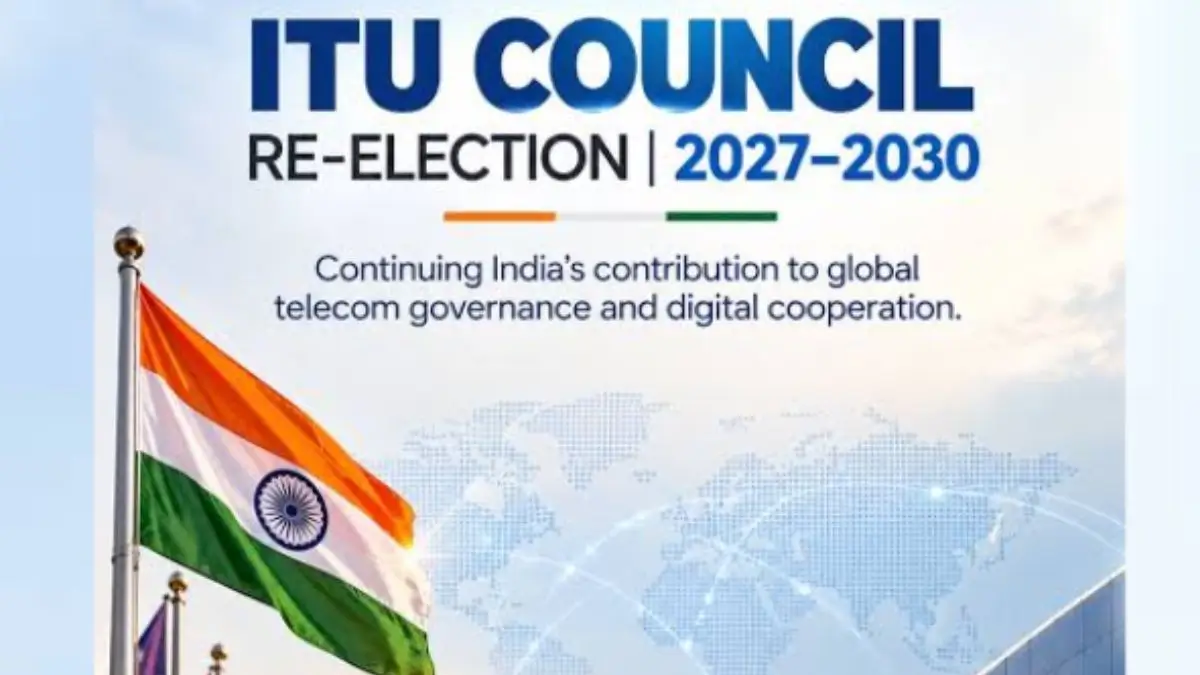
India has been successfully re-elected to the Council of the International Telecommunication Union (ITU) for the 2027-2030 term during the ITU Plenipotentiary Conference in Doha, Qatar. The Council consists of 48 members who oversee the operation of the ITU between the biennial conferences. They also provide guidance and direction regarding policy, strategy and finances. This re-election means India will hold their seat on the body that oversees international coordination of telecommunications and information and communication technologies.
Election summary of ITU
- Country: India
- Organisation: International Telecommunication Union
- Governing body: ITU Council
- Term: 2027-2030
- Members: 48 Member States
- Elected at: Doha, Qatar
- Conference: ITU Plenipotentiary Conference 2026
- Date: 16 November 2026
India are one of 13 countries to be elected to the Council (Region E, Asia and Australasia have 13 seats). Other countries elected from this region are Australia, China, Indonesia, Japan, Malaysia, Qatar and Thailand.
What is the International Telecommunication Union (ITU)?
ITU is a specialized agency of the United Nations focusing on information and communication technologies (ICT). They work with governments, companies and other stakeholders to improve global connectivity and coordinate telecommunications.
The ITU was founded in 1865 making it the oldest specialized agency within the UN. They are based in Geneva, Switzerland and have 194 Member States with over 1000 members from the private sector, academia and other organizations.
The ITU works with many key areas such as,
- Radio spectrum – Manage the use of radio frequencies globally.
- Satellite Orbits – Work to assist the management of satellite orbits.
- Standards – Produce international standards.
Digital Connectivity – Encourage the provision of affordable and reliable ICT services.
What does the ITU Council do?
The ITU Council is the governing body between Plenipotentiary Conferences. These conferences occur every 4 years, the council consists of 48 Member States who are elected based on regional representation.
The council has key responsibilities such as,
- Managing policy – Managing general policy issues related to telecommunications.
- Strategy – Creating and managing the strategy for the ITU.
- Financial – Creating draft financial plans and managing finances.
- Working Groups – Setting up and managing working groups.
- Implementing decisions – Ensuring decisions and resolutions made by the Plenipotentiary Conference are implemented.
The Council usually meets once a year to help keep things running smoothly between the biennial conferences.





 Ten Countries Sign San Francisco Declara...
 7th India–Egypt Joint Trade Committee ...
 Microsoft Global Outage 2026: Why Outloo...