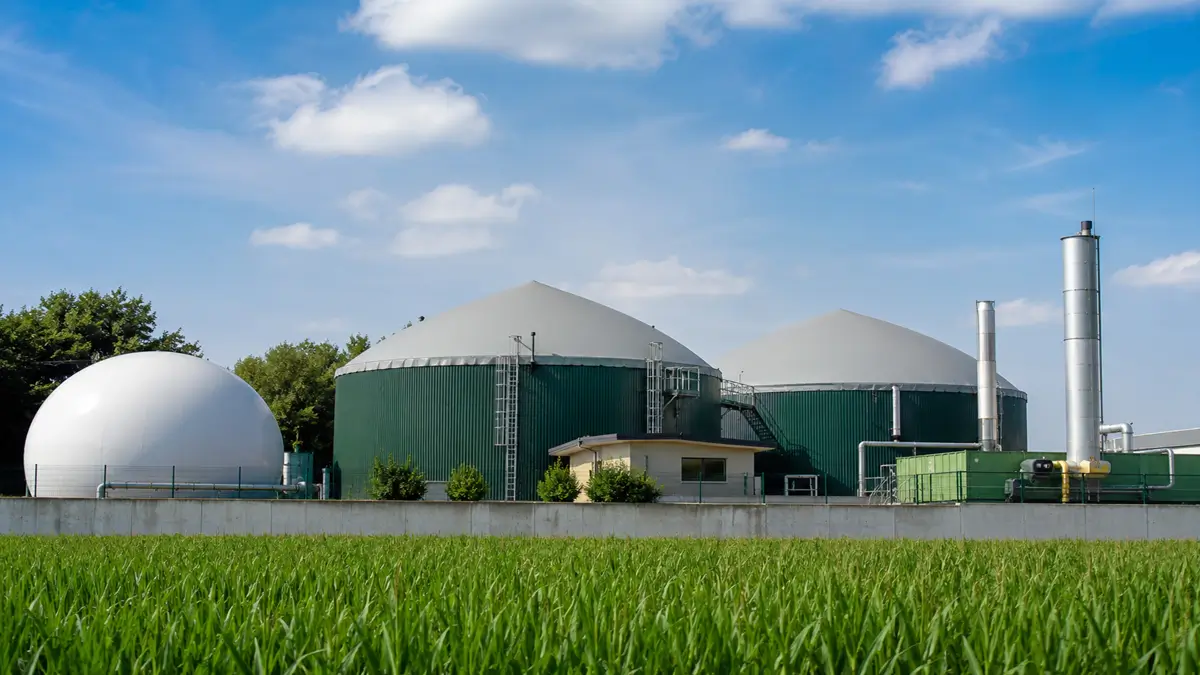
The Maharashtra government has approved the Compressed Biogas (CBG) Policy 2026 to promote renewable energy generation through waste management and agricultural residue processing. The policy was approved by the Maharashtra Cabinet on April 22, 2026, and officially released on May 5, 2026.
The state government has allocated ₹500 crore for the policy during the financial year 2026-27.
Why in News?
Maharashtra has launched a dedicated Compressed Biogas Policy aimed at establishing CBG projects across all districts of the state.
The policy focuses on converting municipal solid waste and agricultural residue into clean fuel while supporting India’s renewable energy and waste management goals.
Key Highlights
- Maharashtra approved CBG Policy 2026
- ₹500 crore allocated for 2026-27
- CBG projects planned in every district
- Policy linked to waste-to-energy systems
- Supports India’s Net-Zero 2070 target
- Uses PPP and hybrid annuity models
What is Compressed Biogas (CBG)?
Compressed Biogas is a purified form of biogas produced from organic waste through anaerobic digestion and purification processes.
Main Sources of CBG Production
- Municipal solid waste
- Agricultural residue
- Organic waste materials
CBG is used as:
- Transport fuel
- Industrial fuel
- Clean energy source
It is considered an important renewable fuel in India’s clean energy transition.
Maharashtra’s Waste and Biomass Potential
Maharashtra generates large quantities of waste and agricultural residue every year.
State Waste Data
| Category | Quantity |
|---|---|
| Municipal Solid Waste | Around 24,500 metric tonnes daily |
| Agricultural Residue | More than 20 million metric tonnes annually |
The policy aims to convert this waste into renewable energy through CBG plants.
Major Features of Maharashtra CBG Policy 2026
The policy includes district-level implementation and large-scale waste processing systems.
Key Provisions
- CBG projects to be established in every district
- Mandatory source segregation of waste
- Organic and inorganic waste to be separated
- Each project must process at least 200 tonnes of organic waste daily
The policy also promotes structured monitoring and coordination.
Implementation Structure
The Maharashtra government has introduced multiple administrative mechanisms for implementation.
Oversight Framework
- Steering Committee chaired by Chief Secretary
- District-level coordination committees
- Public-Private Partnership (PPP) model
- Hybrid annuity implementation structure
The framework is designed to support faster project execution and monitoring.
Financial Incentives Under the Policy
The policy includes financial assistance and infrastructure support for developers.
Major Incentives
| Incentive | Details |
|---|---|
| Viability Gap Funding | Up to ₹75 lakh per tonne capacity |
| Maximum Funding Cap | ₹15 crore per project |
| SGST Refund | 2.5% after production starts |
| Utilities Support | Priority electricity and water supply |
Important Condition
Land allocation will be cancelled if projects do not become operational within two years.
Linkages with National Schemes
The Maharashtra CBG Policy aligns with several national programmes related to renewable energy and waste management.
Linked National Initiatives
- SATAT
- GOBARdhan
- Swachh Bharat Mission
These programmes support:
- Waste-to-energy projects
- Sustainable fuel generation
- Solid waste management systems
Why the Policy Matters
The policy connects waste management with renewable energy production and environmental sustainability.
Expected Benefits
- Reduction in urban waste burden
- Better agricultural residue utilisation
- Increased renewable fuel production
- Lower carbon emissions
- Support for India’s Net-Zero goals
The policy may also encourage private investment in green energy infrastructure.






 Uttarakhand Becomes India’s 6th Fully ...
 Odisha Launches India’s First MICE Inc...
 UP Kamadhenu Pashu Bima Yojana 2026: Lat...