
The Maharashtra Freedom of Religion Act, 2026, which is referred to as the anti-conversion law of the state, has been given the approval of President Droupadi Murmu, which was fighting the last constitutional requirement for the law to be enforced. However, the law will be valid only when the Maharashtra Government has released an official notification that indicates the commencement of the Act. The meaning of the law shall be the prohibition of religious conversions made through coercion, deception, bribery, misrepresentation, or planned marriage, and it shall provide for severe punishment for the perpetrators of the Act.
President’s Assent Removes Last Constitutional Barrier
The Maharashtra Freedom of Religion Bill was enacted by the Maharashtra Legislative Assembly in March in the Budget Session and approved by the Legislative Council.
After getting clearance from the State Legislature, the Bill was sent to the Governor who sent it to the President for assent in compliance with the constitutional requirements.
The legislation has now returned to the state government for notification after Assent was received by President Murmu.
Key Provision of the Maharashtra Freedom of Religion Act, 2026
The legislation introduces several provisions aimed at preventing illegal religious conversions.
Illegal Conversion Methods
The law prohibits religious conversions conducted via,
- Violence or pressure
- Fraud
- Misrepresentation
- Attraction or incentive
- Promise of wedding.
The government clarified that voluntary religious conversion is allowed according to the law.
Advance Notification Requirement
Those who plan to convert to a different religion must notify the district magistrate at least 60 days before the conversion date.
This regulation is meant to allow authorities to check whether the conversion took place voluntarily.
Who Has the Right to File a Complaint?
According to the law, complaints can be lodged by,
- Parents
- Sibling
- Other close relatives of the person being converted.
This means more people are able to go to court about illegal conversions.
Proof Burden
An important part of the legislation is that it puts the burden of proving that the conversion was voluntary on the person performing the conversion.
This is contrary to the general rule of criminal justice according to which it is the prosecution that has to prove the guilt.
Sanctions as Per Law
The Act stands for severe penalties for infringing laws.
- Imprisonment for up to seven years for unlawful religious conversion offences.
- Imprisonment for maximum ten years for repeat offences.
- The enhanced penalty is seen as a way to discourage frequent violations.








 Lakshadweep Becomes India’s First 100%...
 Ayodhya Ram Temple Receives FSSAI’s â€...
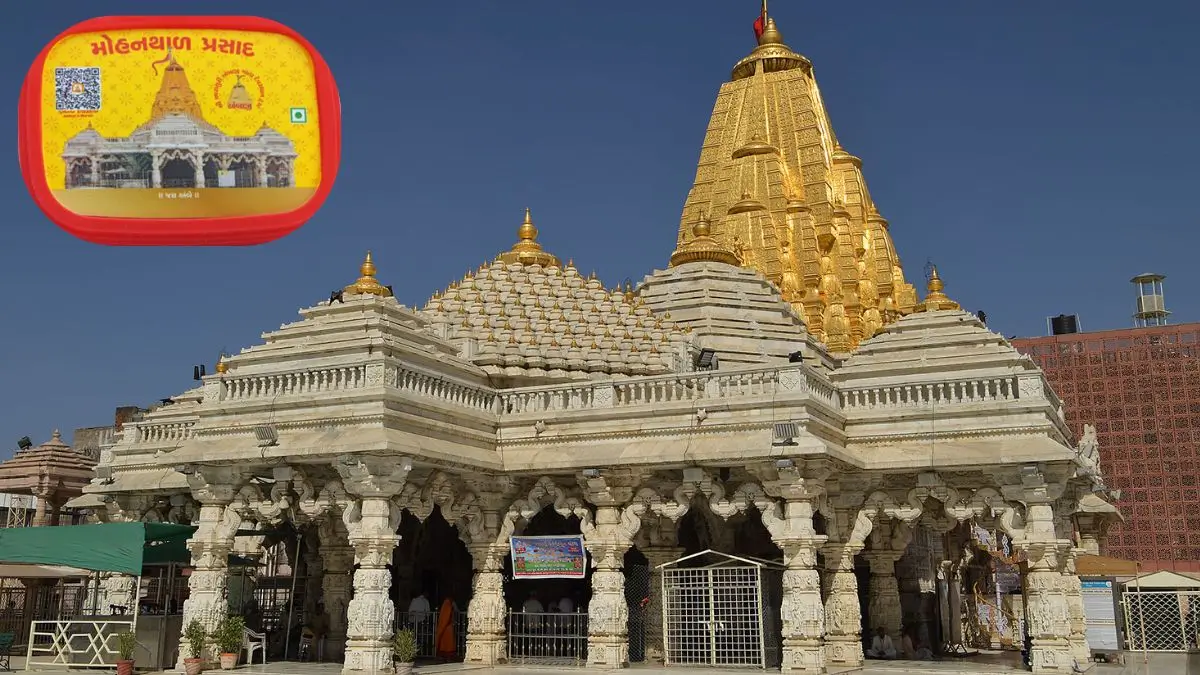 Ambaji Mohanthal Gets GI Tag: Gujarat’...