
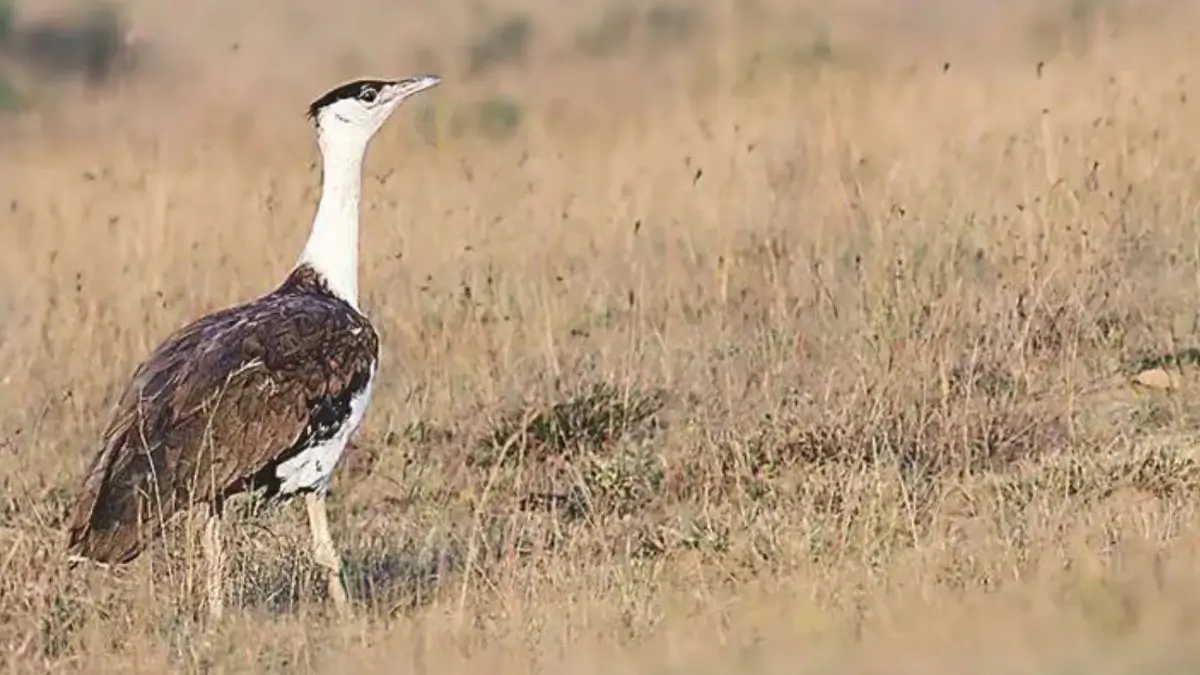
India’s efforts to save the critically endangered species The Great Indian Bustard (GIB) have achieved the another milestone as the Respectable Union Environment Minister Bhupender Yadav have announced that the three new chicks have recently been added to the Project Great Indian Bustard (GIB) conservation breeding program. With these inclusions, the captive population of the GIB has reached to the 94 birds and showcases the steady progress for conservation.
Project GIB Reaches New Milestone
The latest hatchlings include a one chick from a wild collected egg and two from captive laid eggs. Their arrival has increased the total number of the chicks hatched during the fourth year of the captive breeding program to 26.
According to the minister, these additional hatchings are expected during the current breeding season which could further strengthen the conservation population of this endangered species.
Success of the Captive Breeding Program
The fourth year of the breeding program has produced the encouraging results.
Out of the total 26 chicks hatched so far,
- There are 18 chicks were produced through artificial insemination.
- Around 4 chicks have hatched through natural breeding.
- And 4 chicks emerged from wild-collected eggs.
These achievements will demonstrates the effectiveness of the scientific breeding techniques which used to increase the population of the Great Indian Bustard.
Boosting Genetic Diversity Via Wild Interventions
An important aspect of the program involves the collecting selected eggs from the wild and it replacing them through a “jumpstart intervention” strategy.
This approach will helps to improve the founder genetic diversity while reducing the risk of the predation in natural habitats.
As part of this initiative, three chicks have successfully hatched in the wild in Rajasthan. The program therefore supports the both captive conservation and population recovery in natural ecosystems.
Why the Great Indian Bustard Matters
The Great Indian Bustard is one of the heaviest flying birds in the world and it is endemic to the Indian subcontinent.
Once it was found across the large parts of India and its population has declined drastically due to habitat loss, infrastructure development, collisions with power lines and other human-induced pressures.
Today, the Rajasthan hosts the largest remaining population of the species and making conservation efforts in the state crucial for the its long-term survival.








 Lakshadweep Becomes India’s First 100%...
 Ayodhya Ram Temple Receives FSSAI’s â€...
 Ambaji Mohanthal Gets GI Tag: Gujarat’...










