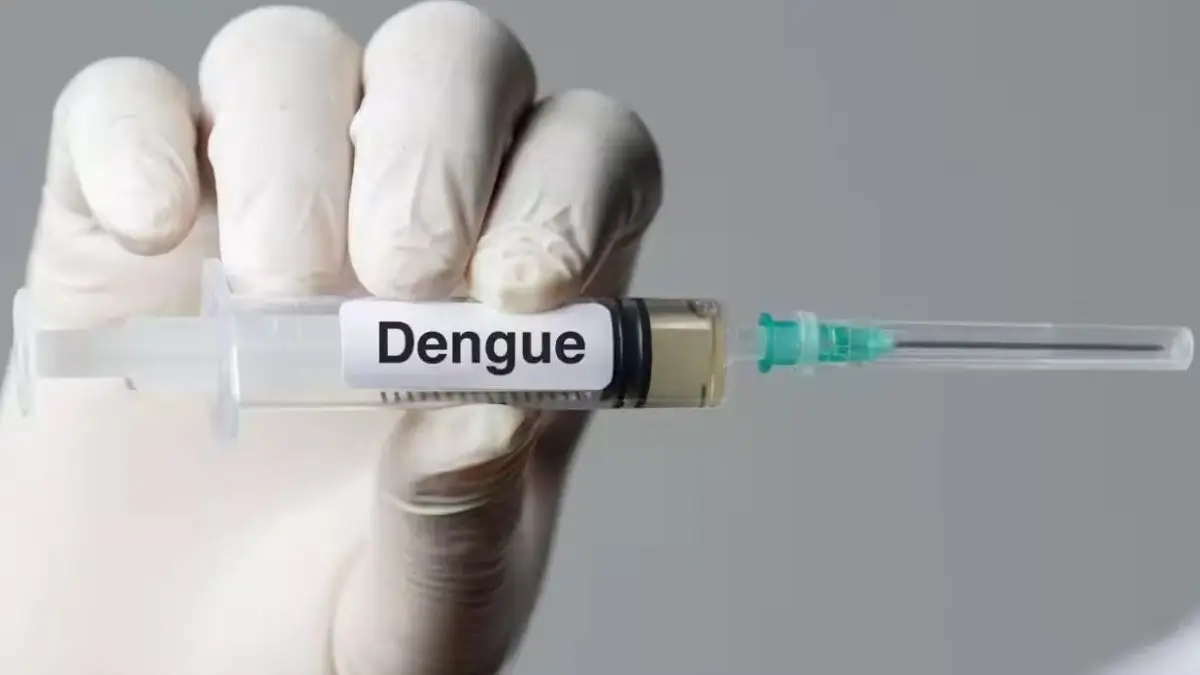
India has granted authorization for its first dengue vaccine to be used, which indicates a pivotal moment in its battle against one of the its most prevalent mosquito-borne ailments. The Drug Controller General of India has given its assent to QDENGA by Takeda Biopharmaceuticals, which can defend people from all four dengue virus strains.
This approval gives the QDENGA the eligibility to be given to people aged between 4-60 years irrespective of the fact that are already infected with future dengue virus strains or not. Unlike some older dengue vaccines, QDENGA does not have any requirement regarding pre-vaccination screening thus providing easier application in mode of immunization.
India Granted First Vaccine for Dengue
The Drug Controller General of India (DCGI) has approved QDENGA, the first vaccine against dengue in the country. Up until now, the following techniques have mostly been used for controlling dengue in India,
- Mosquito control methods
- Public education
- Disease surveillance
- Treatment of the infection
As there is no specific antiviral for dengue, the vaccine will be a major tool for prevention of the disease along with the already existing preventive measures.
What exactly is QDENGA?
QDENGA is a live attenuated vaccine developed by a Japanese pharmaceutical company, Takeda.
Main characteristics of the vaccine
- The vaccine is used to protect from all existing types (DENV-1, DENV-2, DENV-3 and DENV-4) of dengue virus.
- It is used for the people from ages of 4 to 60.
- People do not need to be tested before being vaccinated.
- There are two doses of the vaccine which have to be taken
Why is the Approval Important?
India continues to face a mounting dengue threat.
Important Information
- The number of reported dengue cases in this country has risen by more than 10 times in 20 years.
- In 2025, the number of confirmed cases reached over 113,000.
- Experts suggest that the numbers may be much higher than this officially reported figure every year.
The approval has given birth to an additional preventive method which combines with insecticide measures.
Clinical Trials Summary
The approval is based on Takeda’s global wide clinical trial program of Takeda which was conducted in more than 28000 patients around the world including 19 different Phase I, II, and III clinical trials and phase III study done in India.
TIDES Phase III Trial Results
The international TIDES trial conducted in 8 countries with more than 20000 subjects yielded the following results,
- 80.2% efficacy against laboratory-confirmed dengue infection was observed one year after the second dose
- 90.4% efficiency of dengue hospitalization prevention was observed 18 months after the second dose
- 84.1% protection against hospitalization for a period of 4.5 years
- Safety and efficacy were observed up to 7 years of follow up
WHO Endorsement
The World Health Organization (WHO) has approved the use of QDENGA in countries where there is dengue virus transmission without the need for screening prior to vaccination.
The vaccine has been prequalified by the WHO enabling international organizations like UNICEF to procure it.
Worldwide Distribution
QDENGA received its first approval in 2022 and is expanding at a rapid pace.
Worldwide Distribution
- Approved in 43 nations
- More than 32 million doses have been administered globally
Included in Brazil’s National Immunization Program
Accessible through public immunization programs in,
- Brazil
- Argentina
- Colombia
- Indonesia
Expected Price in India
Takeda has not disclosed the vaccine’s,
- Launch date in India
- Sale price
However, in some Asian markets the cost of the vaccine is around,
- US$80–115 per dose
- Two doses are required.








 TRISHNA Satellite Mission 2027: ISRO-Fra...
 World Bank Ranks India Among Top 10 Emer...
 Elon Musk to Rename SpaceXAI as SpaceXSI