
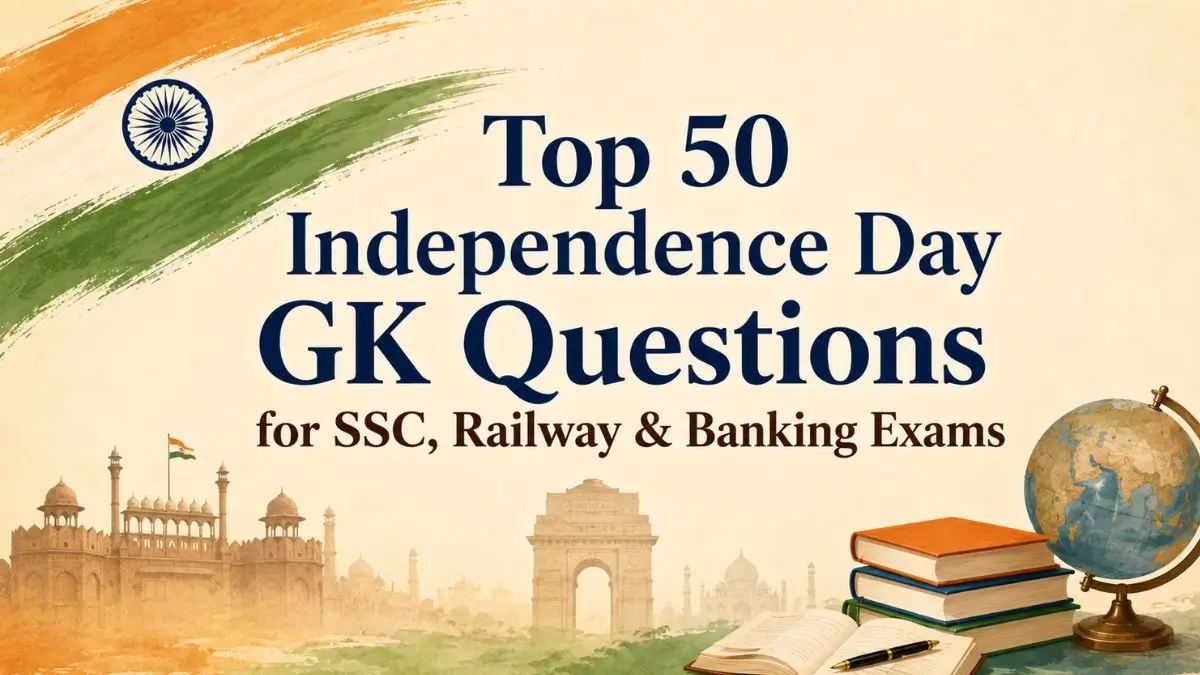
India celebrates its 80th Independence Day on August 15, 2026, after completing 79 years of independence after 1947. Independence Day is the day when India got its freedom from the British Empire, and this day celebrates those who have sacrificed their lives for the sake of freedom. Right from the Indian Independence Act and the national flag, to the Quit India Movement, Constitution and important events that have taken place after 1947, these 50 questions will provide you some crucial information.
Independence Day 2026: Top 50 MCQs
1. When did India gain independence from British rule?
(a) August 15, 1945
(b) August 15, 1946
(c) August 15, 1947
(d) January 26, 1950
Answer: (c) August 15, 1947
2. Which Independence Day will India celebrate on August 15, 2026?
(a) 78th
(b) 79th
(c) 80th
(d) 81st
Answer: (c) 80th
3. How many years of independence will India complete on August 15, 2026?
(a) 77 years
(b) 78 years
(c) 79 years
(d) 80 years
Answer: (c) 79 years
4. Who became the first Prime Minister of independent India?
(a) Sardar Vallabhbhai Patel
(b) Dr Rajendra Prasad
(c) Jawaharlal Nehru
(d) C. Rajagopalachari
Answer: (c) Jawaharlal Nehru
5. Where does the Prime Minister traditionally hoist the National Flag on Independence Day?
(a) India Gate
(b) Parliament House
(c) Red Fort
(d) Rashtrapati Bhavan
Answer: (c) Red Fort
6. At which gate of the Red Fort did Jawaharlal Nehru raise the National Flag on August 15, 1947?
(a) Delhi Gate
(b) Lahori Gate
(c) Kashmiri Gate
(d) Ajmeri Gate
Answer: (b) Lahori Gate
7. Who was the last Viceroy of British India?
(a) Lord Curzon
(b) Lord Wavell
(c) Lord Mountbatten
(d) Lord Irwin
Answer: (c) Lord Mountbatten
8. Who was the first Governor-General of independent India?
(a) C. Rajagopalachari
(b) Lord Mountbatten
(c) Jawaharlal Nehru
(d) Dr Rajendra Prasad
Answer: (b) Lord Mountbatten
9. Who was the first Indian Governor-General of India?
(a) Sardar Vallabhbhai Patel
(b) Dr Rajendra Prasad
(c) C. Rajagopalachari
(d) Maulana Abul Kalam Azad
Answer: (c) C. Rajagopalachari
10. Which Act provided for the creation of India and Pakistan as independent dominions?
(a) Government of India Act, 1935
(b) Indian Councils Act, 1909
(c) Indian Independence Act, 1947
(d) Rowlatt Act, 1919
Answer: (c) Indian Independence Act, 1947
11. In which month and year was the Indian Independence Act passed by the British Parliament?
(a) August 1947
(b) July 1947
(c) June 1947
(d) January 1947
Answer: (b) July 1947
12. Who gave the famous “Tryst with Destiny” speech?
(a) Mahatma Gandhi
(b) Jawaharlal Nehru
(c) Sardar Vallabhbhai Patel
(d) Subhas Chandra Bose
Answer: (b) Jawaharlal Nehru
13. Which plan became the basis for the Partition of British India?
(a) Macaulay Plan
(b) Atlee Plan
(c) Montagu-Chelmsford Plan
(d) Mountbatten Plan
Answer: (d) Mountbatten Plan
14. Who was the British Prime Minister when India became independent?
(a) Winston Churchill
(b) Clement Attlee
(c) Ramsay MacDonald
(d) Anthony Eden
Answer: (b) Clement Attlee
15. Who was the British monarch at the time of Indian Independence?
(a) George V
(b) Edward VII
(c) George VI
(d) Edward VIII
Answer: (c) George VI
16. Who designed the basic form of the Indian National Flag?
(a) Nandalal Bose
(b) Pingali Venkayya
(c) Abanindranath Tagore
(d) Mahatma Gandhi
Answer: (b) Pingali Venkayya
17. When did the Constituent Assembly adopt the National Flag?
(a) July 22, 1947
(b) August 15, 1947
(c) January 26, 1950
(d) November 26, 1949
Answer: (a) July 22, 1947
18. How many spokes does the Ashoka Chakra have?
(a) 12
(b) 18
(c) 24
(d) 32
Answer: (c) 24
19. What is the length-to-height ratio of the Indian National Flag?
(a) 2:1
(b) 3:2
(c) 4:3
(d) 5:3
Answer: (b) 3:2
20. Which colour forms the upper band of the Indian National Flag?
(a) Green
(b) White
(c) Saffron
(d) Blue
Answer: (c) Saffron
21. Who wrote “Vande Mataram”?
(a) Rabindranath Tagore
(b) Bankim Chandra Chattopadhyay
(c) Sarojini Naidu
(d) Subhas Chandra Bose
Answer: (b) Bankim Chandra Chattopadhyay
22. Who wrote the lyrics of India’s National Anthem, “Jana Gana Mana”?
(a) Bankim Chandra Chattopadhyay
(b) Rabindranath Tagore
(c) Subramania Bharati
(d) Sarojini Naidu
Answer: (b) Rabindranath Tagore
23. When was “Jana Gana Mana” adopted as India’s National Anthem?
(a) August 15, 1947
(b) November 26, 1949
(c) January 24, 1950
(d) January 26, 1950
Answer: (c) January 24, 1950
24. When did the Constitution of India come into force?
(a) August 15, 1947
(b) November 26, 1949
(c) January 24, 1950
(d) January 26, 1950
Answer: (d) January 26, 1950
25. Why is January 26 celebrated as Republic Day?
(a) India became independent on this date
(b) The Constitution was drafted on this date
(c) The Constitution came into force on this date
(d) The first general election was held on this date
Answer: (c) The Constitution came into force on this date
26. Who chaired the Drafting Committee of the Constituent Assembly?
(a) Dr Rajendra Prasad
(b) B.R. Ambedkar
(c) Jawaharlal Nehru
(d) Sardar Vallabhbhai Patel
Answer: (b) B.R. Ambedkar
27. Who presided over the Constituent Assembly?
(a) Dr Rajendra Prasad
(b) B.R. Ambedkar
(c) Jawaharlal Nehru
(d) Sardar Vallabhbhai Patel
Answer: (a) Dr Rajendra Prasad
28. On which date is Partition Horrors Remembrance Day observed?
(a) August 14
(b) August 15
(c) January 26
(d) November 26
Answer: (a) August 14
29. Which movement was launched by Mahatma Gandhi in 1942?
(a) Non-Cooperation Movement
(b) Civil Disobedience Movement
(c) Quit India Movement
(d) Swadeshi Movement
Answer: (c) Quit India Movement
30. What was the famous slogan associated with the Quit India Movement?
(a) Jai Jawan, Jai Kisan
(b) Do or Die
(c) Inquilab Zindabad
(d) Swaraj is my birthright
Answer: (b) Do or Die
31. Who gave the slogan “Give me blood, and I will give you freedom”?
(a) Bhagat Singh
(b) Mahatma Gandhi
(c) Subhas Chandra Bose
(d) Sardar Vallabhbhai Patel
Answer: (c) Subhas Chandra Bose
32. Who was the most prominent leader of the Indian National Army?
(a) Lala Lajpat Rai
(b) Subhas Chandra Bose
(c) Gopal Krishna Gokhale
(d) Dadabhai Naoroji
Answer: (b) Subhas Chandra Bose
33. What was another name for the Indian National Army?
(a) Bharat Sena
(b) Azad Hind Fauj
(c) Swaraj Army
(d) Hindustan Sena
Answer: (b) Azad Hind Fauj
34. Who is popularly known as “Netaji”?
(a) Jawaharlal Nehru
(b) Sardar Vallabhbhai Patel
(c) Subhas Chandra Bose
(d) Bal Gangadhar Tilak
Answer: (c) Subhas Chandra Bose
35. In which year was the Indian National Congress founded?
(a) 1885
(b) 1905
(c) 1919
(d) 1920
Answer: (a) 1885
36. Who played a key role in founding the Indian National Congress in 1885?
(a) A.O. Hume
(b) Mahatma Gandhi
(c) Bal Gangadhar Tilak
(d) Jawaharlal Nehru
Answer: (a) A.O. Hume
37. Who is associated with the slogan “Swaraj is my birthright”?
(a) Bal Gangadhar Tilak
(b) Mahatma Gandhi
(c) Subhas Chandra Bose
(d) Sardar Patel
Answer: (a) Bal Gangadhar Tilak
38. Which movement was launched to protest against the Partition of Bengal?
(a) Non-Cooperation Movement
(b) Swadeshi Movement
(c) Quit India Movement
(d) Civil Disobedience Movement
Answer: (b) Swadeshi Movement
39. Who presided over the 1905 Congress Session at Banaras?
(a) Gopal Krishna Gokhale
(b) Dadabhai Naoroji
(c) Bal Gangadhar Tilak
(d) Aurobindo Ghosh
Answer: (a) Gopal Krishna Gokhale
40. In which Congress session were the Moderates and Extremists reunited?
(a) Madras Session
(b) Lucknow Session
(c) Calcutta Session
(d) Banaras Session
Answer: (b) Lucknow Session
41. When did the Non-Cooperation Movement begin?
(a) 1919
(b) 1920
(c) 1921
(d) 1922
Answer: (b) 1920
42. When was the Gandhi-Irwin Pact signed?
(a) March 3, 1930
(b) March 5, 1931
(c) April 5, 1931
(d) April 15, 1930
Answer: (b) March 5, 1931
43. In which year did Mahatma Gandhi undertake the Dandi March?
(a) 1920
(b) 1928
(c) 1930
(d) 1942
Answer: (c) 1930
44. When did the Dandi March begin?
(a) March 12, 1930
(b) March 12, 1931
(c) April 12, 1930
(d) April 14, 1930
Answer: (a) March 12, 1930
45. When did the Jallianwala Bagh massacre take place?
(a) April 10, 1917
(b) April 13, 1918
(c) April 9, 1916
(d) April 13, 1919
Answer: (d) April 13, 1919
46. Where did the Jallianwala Bagh massacre take place?
(a) Delhi
(b) Lahore
(c) Amritsar
(d) Kolkata
Answer: (c) Amritsar
47. Who led the Bardoli Satyagraha of 1928?
(a) Mahatma Gandhi
(b) Subhas Chandra Bose
(c) Sardar Vallabhbhai Patel
(d) Jawaharlal Nehru
Answer: (c) Sardar Vallabhbhai Patel
48. In which year did the Indian National Congress declare Purna Swaraj?
(a) 1927
(b) 1928
(c) 1929
(d) 1930
Answer: (c) 1929
49. Who was popularly known as the “Frontier Gandhi”?
(a) Khan Abdul Ghaffar Khan
(b) Maulana Abul Kalam Azad
(c) Hasrat Mohani
(d) Muhammad Ali Jinnah
Answer: (a) Khan Abdul Ghaffar Khan
50. Which operation was launched in 1948 to integrate Hyderabad into the Indian Union?
(a) Operation Vijay
(b) Operation Polo
(c) Operation Meghdoot
(d) Operation Blue Star
Answer: (b) Operation Polo







 Dussehra 2026: Top 30 Most Important GK ...
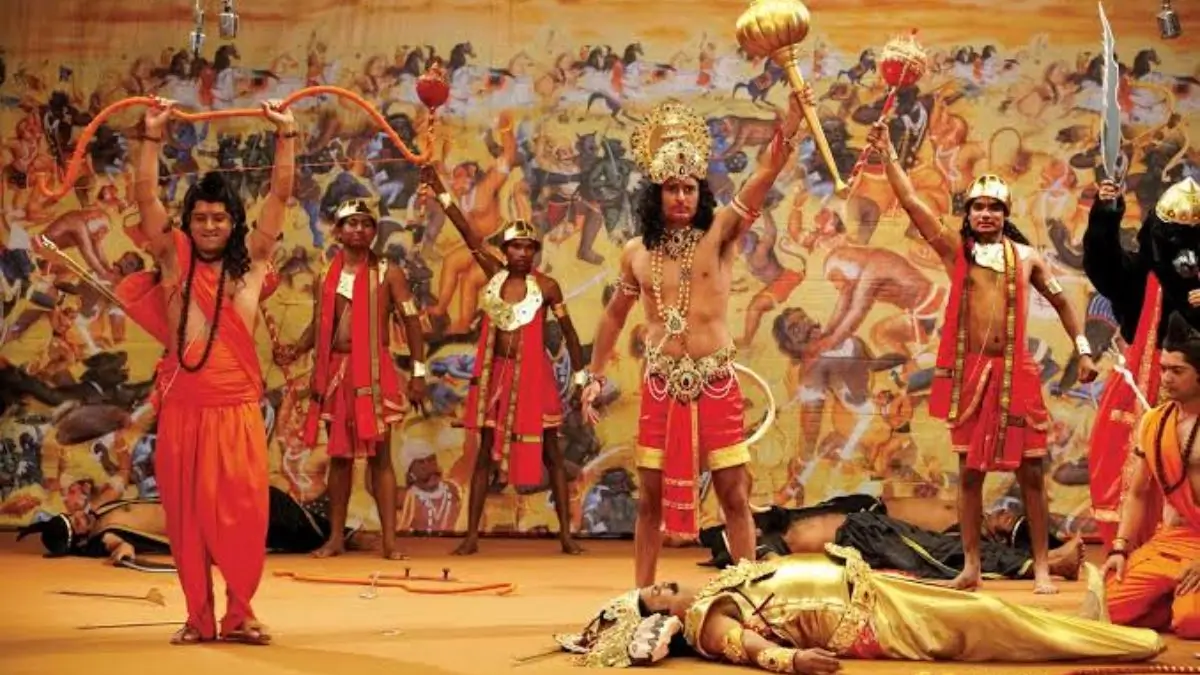 Dussehra and UNESCO: Ramlila, Durga Puja...
 Mysuru Dasara 2026: History, Jamboo Sava...










