
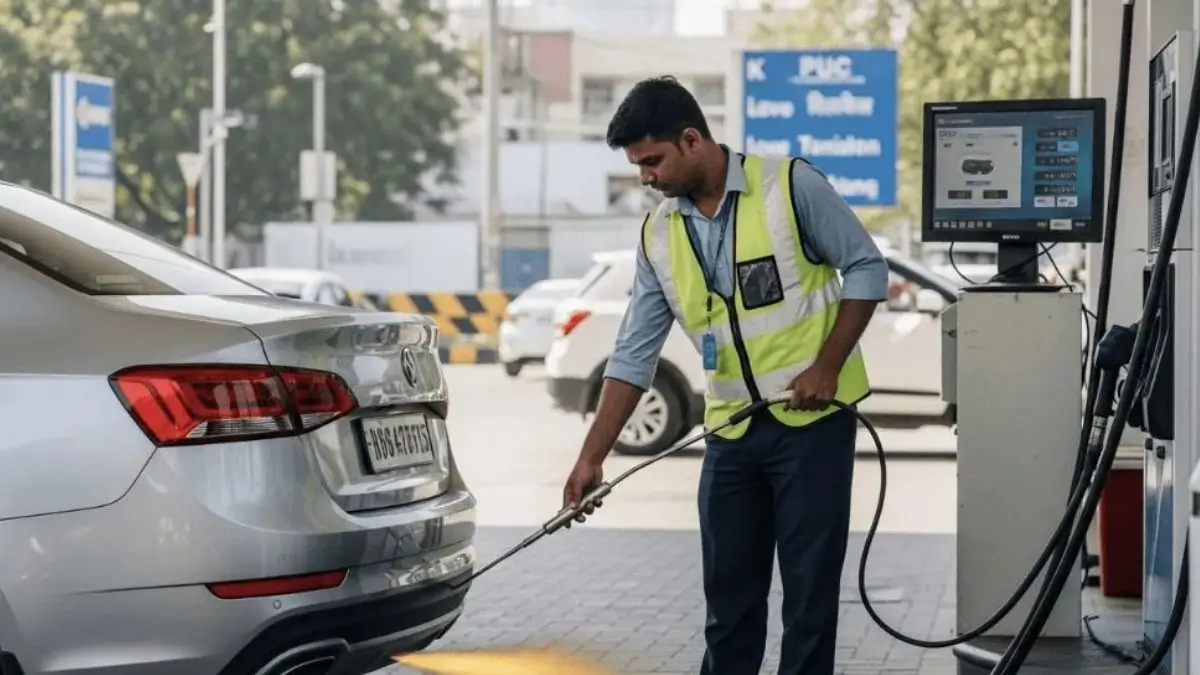
The Ministry of Road Transport and Highways has made changes to PUC certificate validity. New BS-VI non-transport vehicles may be issued a PUC certificate valid for 3 years. Eligible BS-VI transport vehicles may be given a PUC certificate valid for 2 years. In addition to the changes in PUC certificate validity for new vehicles, older vehicles may have a reduced re-validation period. Different validity periods have been specified for vehicles complying with BS-I to BS-IV standards. These changes in PUC certificate validity have been notified via G.S.R. 991(E) on 13 th November, 2026. These changes have become effective after publishing in the Official Gazette.
Changes in PUC Certificate Validity
Rule 115(7) in the Central Motor Vehicles Rules, 1989 has been amended. The period for re-validating a vehicle’s PUC certificate depends on,
- The emission standard it complies with (Bharat Stage)
- Whether it is a transport or non-transport vehicle
- The age of the vehicle since its initial registration
New PUC Certificate Validity Periods
PUC certificate validity periods are as follows,
| Category of vehicle | Age since initial registration | PUC Certificate Validity |
| BS-I, II, III | All ages | 3 Months |
| BS-IV | All ages | 6 Months |
| BS-VI non-transport | 6 Years or below | 3 Years |
| BS-VI non-transport | Over 6 years, up to 10 years | 1 Year |
| BS-VI non-transport | Over 10 years | 6 Months |
| BS-VI transport | 6 Years or below | 2 Years |
| BS-VI transport | Over 6 years, up to 10 years | 1 Year |
| BS-VI transport | Over 10 years | 6 Months |
Changes in PUC Certificate Validity for BS-VI Non-Transport Vehicles
The changes primarily affect BS-VI non-transport vehicles, which include BS-VI private vehicles and two-wheelers.
Under these changes,
- vehicles aged 6 years or under will be given a 3 year PUC certificate.
- vehicles aged between 6 and 10 years will be required to re-validate every year.
- vehicles older than 10 years will be required to re-validate every 6 months.
Thus, owners of newer BS-VI private vehicles will be required to re-validate their PUC certificates less often.
Changes in PUC Certificate Validity for BS-VI Transport Vehicles
There are age based changes to PUC certificate validity for BS-VI transport vehicles.
| Age of vehicle | New PUC Validity |
| Up to 6 years | 2 years |
| Over 6 years to 10 years | 1 year |
| Over 10 years | 6 Months |
Compared with non-transport vehicles, transport vehicles of the same age are given a shorter validity period. A BS-VI transport vehicle aged 6 years or under will be given a 2 year PUC certificate, whereas non-transport vehicles of the same age would be given a 3 year PUC certificate.
PUC Certificate Validity for BS-I, BS-II, BS-III and BS-IV Vehicles
Vehicles complying with older emission standards may be given the following PUC certificate validity periods.
- BS-I, II, and III: 3 Months.
- BS-IV: 6 Months.
These validity periods apply regardless of whether the vehicle is a transport or non-transport vehicle.
Existing PUC Certificates
With these changes in place, existing PUC certificates will not be automatically updated.
Instead,
- Existing PUC certificates will remain valid for the duration originally given.
- However, when re-validating the certificate for the first time after these changes in validity periods, the new validity period will come into effect.
- Owners of vehicles will not be required to obtain a new PUC certificate immediately.
This means that people holding existing PUC certificates can be given the new renewal requirements at their next renewal.
Validity Date of Renewed PUC Certificates
It has also been specified what date renewed PUC certificates will be valid from.
| Renewal Situation | Validity Date |
| Renewed within 10 days before expiry of existing certificate. | Same as date of existing expiry. |
| Renewed after expiry of existing certificate. | Date of renewal. |
For example, if a certificate is due to expire on 30th November, and the certificate is renewed within 10 days of this date, the renewed certificate will be valid from 30th November.
If the certificate is renewed after 30th November, the renewed certificate will be valid from the date of renewal.
PUC Certificate
- A PUC certificate confirms that a vehicle has passed an emissions test, and conforms to required emission standards.
- During this test, the amount of pollutants emitted by a vehicle’s exhaust is measured. This enables monitoring of emissions of vehicles in India.
- The Central Motor Vehicles Rules require vehicle owners to have a valid PUC certificate from a recognised authority within their respective states. If requested to do so by an authorised officer, vehicle owners must show their certificate.
Bharat Stage Emissions Standards
Bharat Stage Emissions Standards are standards set by the Government of India to reduce air pollution from vehicles.
They set limits on carbon monoxide, hydrocarbons, nitrogen oxides and particulate matter emissions.
| Emission Standard | Importance |
| BS-I | Initial Bharat Stage emissions standards. |
| BS-II | Stricter emissions standards for vehicles. |
| BS-III | Further reduction in permitted emissions. |
| BS-IV | Stricter emissions limits. |
| BS-VI | Advanced emissions standards, much stricter emissions limits. |
India implemented BS-VI emissions standards in April 2020, having jumped from BS-IV to BS-VI. BS-V standards were not implemented across the country.
Reasons for Changes to PUC Certificate Validity
As stated by the Ministry of Road Transport and Highways, these changes mean that vehicles may be tested for emissions more or less frequently depending on their age and emissions standard. Key reasons for these changes include,
- Making compliance easier – Newer and less polluting vehicles are given a longer validity period.
- Older vehicles are monitored more frequently – Older vehicles are given a shorter validity period.
- Different validity periods for transport and non-transport vehicles.
- Older vehicles and vehicles with older emissions standards will continue to be monitored.
These changes intend to make it easy for vehicle owners to comply with rules, whilst ensuring vehicle emissions are still closely monitored.






 Climate Risk Index 2027: India Ranks 10t...
 Cyclone Akvan 2026: Landfall Forecast, W...
 India Revises Maritime Flag Rules After ...