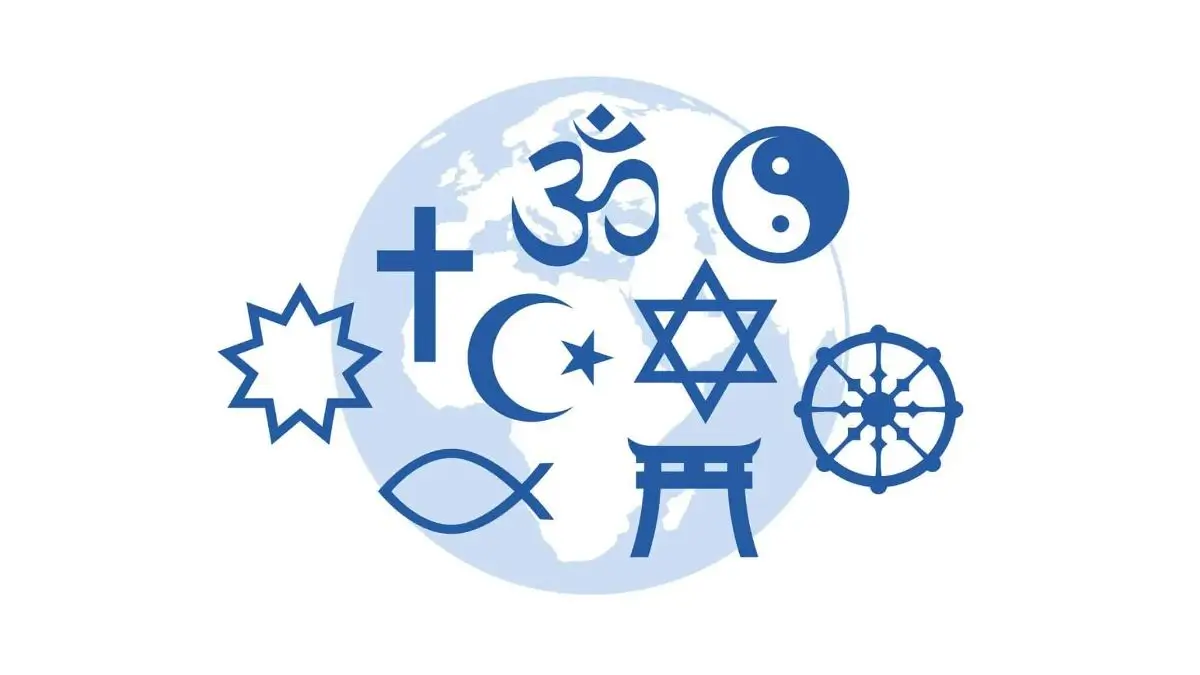
In 2035, Muslims are projected to become the largest religious group in the world. Although Christianity will still be increasing in population, there will be a greater increase in the Muslim population. In India, although the size of the Hindu population is projected to increase by 2070, it may decrease as a proportion of the population. The research looked at different demographic factors across 201 countries/territories. These factors include fertility, age, mortality, migration and religious changes.
Below Are The Key Findings From Report
Muslims May Overtake Christians as the largest religion by 2035
In 2020, Christians were the most common religion in the world (2.27 billion people). However, Muslims (2.02 billion people) are projected to overtake Christians by 2035. Both religions are projected to increase, but the Muslim population will increase at a faster rate.
| Religion | 2020 | 2070 |
| Muslims | 2.02 billion | 3.64 billion |
| Christians | 2.27 billion | 2.96 billion |
| Unaffiliated | 1.91 billion | 1.72 billion |
| Hindu | 1.18 billion | 1.38 billion |
| Buddhist | 320 million | 250 million |
| Other | 170 million | 190 million |
| Jewish | 10 million | 20 million |
By 2070, it is projected that 35.8% of people in the world will be Muslim. This is higher than the proportion of Christians (29.1%).
Why is the Muslim Population Increasing More?
Pew identifies 2 main reasons for this increase.
- Higher fertility rates: women within the Muslim community have an average of 3.1 children over 2020-2025. Within the Christian community women have an average number of 2.5 children.
- Younger age structure: The Muslim population has a lower average age. Therefore, more people within the population will be entering reproductive ages.
Other factors considered were mortality, migration and religious changes. Overall, population increases are not purely due to religious changes.
Pakistan May Overtake Indonesia Country With the largest Muslim population
At present, Indonesia has the largest number of Muslims in the world. Next are Pakistan and India. However, by 2070, this may have changed.
| Country | 2020 | 2070 |
| Indonesia | 239 million | Projected to drop |
| Pakistan | 227 million | 461 million |
| India | 213 million | 334 million |
| Bangladesh | 151 million | — |
| Nigeria | 120 million | Projected to be 3rd largest |
By 2070, Pakistan is projected to be the country with the largest Muslim population. After this, the largest Muslim populations will be in India and Nigeria.
India is projected to be the second largest in terms of Muslim population with approximately 334 million people.
Hindu population in India May Reduce as a Proportion by 2070
A key finding in this research was the changing religious demographics in India.
Although the Hindu population in India is projected to increase by about 176 million people between 2020 and 2070, as a proportion of the population it is projected to decrease.
| Religion | 2020 | 2070 |
| Hindu | 79.4% | 75.8% |
| Muslim | 15.2% | 19.6% |
| Christian | 2.2% | 2.2% |
| Other | 2.5% | 1.8% |
| Buddhist | 0.7% | 0.6% |
Despite this, Hindus will make up more than 3/4 of the population in India by 2070. As well as this, it is projected that India will still have the largest number of Hindus in the world.
Key point
- Note that just because the proportion of Hindus in the population is decreasing, this does not necessarily mean the population itself is decreasing.
- It is projected that the number of Hindus in India will increase by 176 million. However, as a proportion of the population, it is set to decrease from 79.4% to 75.8%.
Why are the Religious Demographics in India Projected to Change?
Differences in fertility rates and age structures were identified as key factors.
- Fertility rates: On average, Muslim women in India have more children than Hindu women. As a result, the Muslim population is projected to grow at a faster rate.
- Age structure: The average age of Muslims in India is lower. A younger population means a higher proportion of individuals will be entering reproductive years.
- Decreasing fertility rates: Across India fertility rates have decreased in recent decades. However, there are still disparities between religions.
Factors such as mortality, migration and religious changes have also been taken in consideration.
How was this research conducted?
This research looked at demographic changes in 201 countries/territories. This covers 99.98% of the world’s population.
It looked at demographic changes within 7 religious groups,
- Christian
- Muslim
- Hindu
- Buddhist
- Jewish
- People following other religions
- Unaffiliated
In the research, 5 factors were taken into consideration.
Factor Description
- Age structure Distribution of people within age groups
- Fertility Average number of children born to each female.
- Mortality Mortality rates and life expectancy.
- Migration Movement of people between countries.
- Religious changes Individuals changing religion or becoming unaffiliated.
Census data, survey data and population projections from the UN, along with estimates of migration have been used. In collaboration with researchers from the Center for Advanced Studies of Population and Religion (CASPAR), Krakow University of Economics (Poland).
Key issues with these Projections
These projections are not certain and depend on recent trends in fertility, mortality, migration and religious changes continuing.
A key issue with this data in India comes from the lack of recent census data. Due to delays to the 2021 census, the 2020 religious distribution in India was calculated by projecting from the 2011 census. Because this is the most recent completed census in India, this was the best source of data available for this research.
Other major events in The Future such as wars, disease outbreaks, natural disasters and changes in socio/economic conditions may also influence how populations change.








 China’s LineShine Supercomputer Retain...
 Cambridge Dictionary Word of the Year 20...
 Quad Summit 2026: Five Initiatives to St...