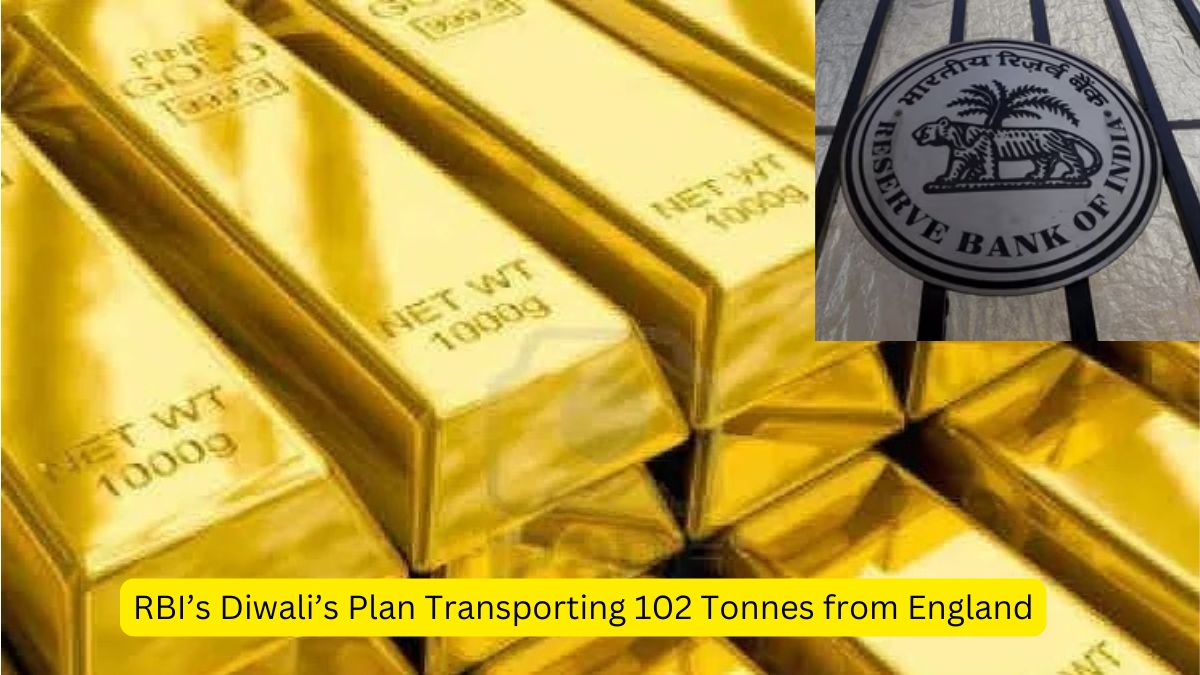
On Dhanteras, October 29, 2024, the Reserve Bank of India (RBI) revealed that it successfully transported an impressive 102 tonnes of gold from the Bank of England to secure storage facilities in India. This strategic move was part of the RBI’s meticulous planning to ensure the safe and discreet transfer of such a significant quantity of gold, reinforcing the nation’s reserves while aligning with the festive spirit of the occasion.
Announcement
- On Dhanteras (October 29, 2024), the Reserve Bank of India (RBI) disclosed the transportation of 102 tonnes of gold from the Bank of England to secure facilities in India.
Objective
- This transfer aimed to reinforce India’s gold reserves and ensure the safety of the nation’s financial assets amid global geopolitical tensions.
Transportation Strategy
- The RBI implemented a meticulous and discreet plan for the secure transfer of the gold, highlighting its commitment to safeguarding national resources.
Current Gold Holdings
- The RBI’s total gold reserves amounted to 854.73 metric tonnes as of the 43rd Half-Yearly Report on Management of Foreign Exchange Reserves (April-September 2024).
- 510.46 metric tonnes held domestically.
- 324.01 metric tonnes stored with the Bank of England and the Bank for International Settlements (BIS).
- 20.26 metric tonnes held as gold deposits.
Recent Trends
- Since September 2022, approximately 214 tonnes of gold have been repatriated to India, with 100 tonnes returned in May 2024.
Increase in Gold’s Share
- The share of gold in India’s total foreign exchange reserves rose from 8.15% at the end of March 2024 to 9.32% by the end of September 2024.
Reason for Storing Gold in England
- The RBI utilizes the Bank of England for gold storage primarily due to its immediate access to the London bullion market, where it remains the world’s second-largest gold custodian, following the New York Federal Reserve.
Importance of Gold Reserves
- The strategic management of gold reserves is crucial for India, providing a buffer against economic uncertainties and enhancing overall financial stability.
About Economic Significance of Gold
Historical Role as Reserve Currency
- Gold served as the world’s reserve currency until the US abandoned the gold standard in 1971. Its intrinsic value continues to make it relevant amid currency volatility.
Intrinsic Value and Inflation Hedge
- Gold retains its value better than currencies, particularly during inflationary periods, due to its limited supply.
Impact on Currency Strength
- A country with substantial gold reserves can bolster its currency value, especially when gold prices rise, enhancing its export competitiveness.
Key Reasons for RBI’s Gold Accumulation
Counteracting Negative Interest Rates
- The real interest rate on US government bonds has turned negative due to rising inflation, increasing demand for gold as a stable asset.
Geopolitical Hedge
- In light of geopolitical uncertainties (e.g., the Russia-Ukraine conflict), gold maintains its intrinsic value, providing a safeguard against potential currency depreciation.
Diversification of Forex Reserves
- Gold is viewed as a safer, liquid asset that performs well during crises, making it a valuable addition to forex reserves.
| Summary/Static | Details |
| Why in the news? | RBI’s Diwali’s Plan Transporting 102 Tonnes from England |
| Objective | Reinforce India’s gold reserves and ensure the safety of financial assets amid geopolitical tensions |
| Current Gold Holdings | Total gold reserves: 854.73 metric tonnes (as of April-September 2024 report)
– 510.46 metric tonnes held domestically – 324.01 metric tonnes stored with Bank of England and BIS – 20.26 metric tonnes held as gold deposits |
| Reason for Storing Gold in England | Access to the London bullion market and gold custodianship by the Bank of England and BIS |
| Economic Significance of Gold | – Historical role as reserve currency until 1971
– Acts as a hedge against inflation due to its intrinsic value – Strengthens currency value, especially when gold prices rise |
| Key Reasons for RBI’s Gold Accumulation | – Counteracts negative interest rates and rising inflation (US government bonds)
– Geopolitical hedge (e.g., Russia-Ukraine conflict) – Diversification of forex reserves as a safer, liquid asset |









 GST Council Removes Arrest Powers of Tax...
 World Bank Raises India’s GDP Growth F...
 Centre to Borrow ₹7.86 Trillion Throug...