Mysuru Dasara 2026: History, Jamboo Savari, Chamundeshwari Temple and Cultural Significance

Mysuru Dasara, also referred to as Nada Habba in Karnataka, is an annual event that encompasses various traditions in Hinduism, regal lineage, and Karnataka culture. This festival marks the victory of the goddess Chamundeshwari over the demon Mahishasura and ends with the famous Jamboo Savari procession on Vijayadashami. This tradition of celebrating the Mysuru Dasara began in 1610 with the initiation by Raja Wadiyar I. In 2026, the 11 days long Mysuru Dasara is planned for October 11 to October 21.

History of Mysuru Dasara: From Vijayanagara to the Wadiyars

The history of Mysuru Dasara dates back to over four hundred years ago. The rituals associated with the celebration are related to the Mahanavami rituals of the Vijayanagara Empire where royal rituals, parades, wrestling, music, and other public performances were held.

Following the fall of the Vijayanagara Empire in 1565, rulers of various regions upheld traditions of similar festivals in their regions. For instance, Raja Wadiyar I celebrated the festival in Srirangapatna in 1610 which is seen as the origin of the Mysuru Dasara tradition. Srirangapatna was the capital of the Wadiyars at that time.

In the ensuing centuries, the festival was celebrated under the rule of the Wadiyar dynasty. Royal performances and Durbar became significant aspects of the festival while later kings made it a grand festival comprising of public performances.

Currently, the Government of Karnataka and Mysuru district administer Dasara as the state festival.

Religious Importance: Goddess Chamundeshwari and Mahishasura

Religiously speaking, the origin of Mysuru Dasara lies in the mythological story of Goddess Chamundeshwari, an avatar of Goddess Durga, defeating Mahishasura. According to Hindu mythology, Mahishasura was an important personality who had the ability to take the form of a buffalo. Defeating Mahishasura by the Goddess means overcoming evil by good.

This legend is directly linked to Chamundi Hills, which overlook Mysuru and host the Sri Chamundeshwari Temple. The city’s name itself is related to Mahishasura while the Goddess is worshipped as the presiding deity of the city.

The legend is also associated with the religious importance of Navratri and Vijayadashami. As per Shakta tradition, the victory of the Goddess is celebrated on the tenth day following nine days of worship.

Chamundeshwari Temple and the Start of the Festival

The Sri Chamundeshwari Temple in the Chamundi Hills is important for starting the festival processions. People come to pray and get blessings from this place. Ceremonies related to the Goddess begin the festival.

Moreover, the festival includes royal ceremonies like the Durbar that have to do with the Mysuru Palace. The traditions mentioned above help to keep the link between the public festival today and the Wadiyar dynasty.

So, the Mysuru Dasara processions are not about one procession only.

The Jamboo Savari – The Great Vijayadashami Parade

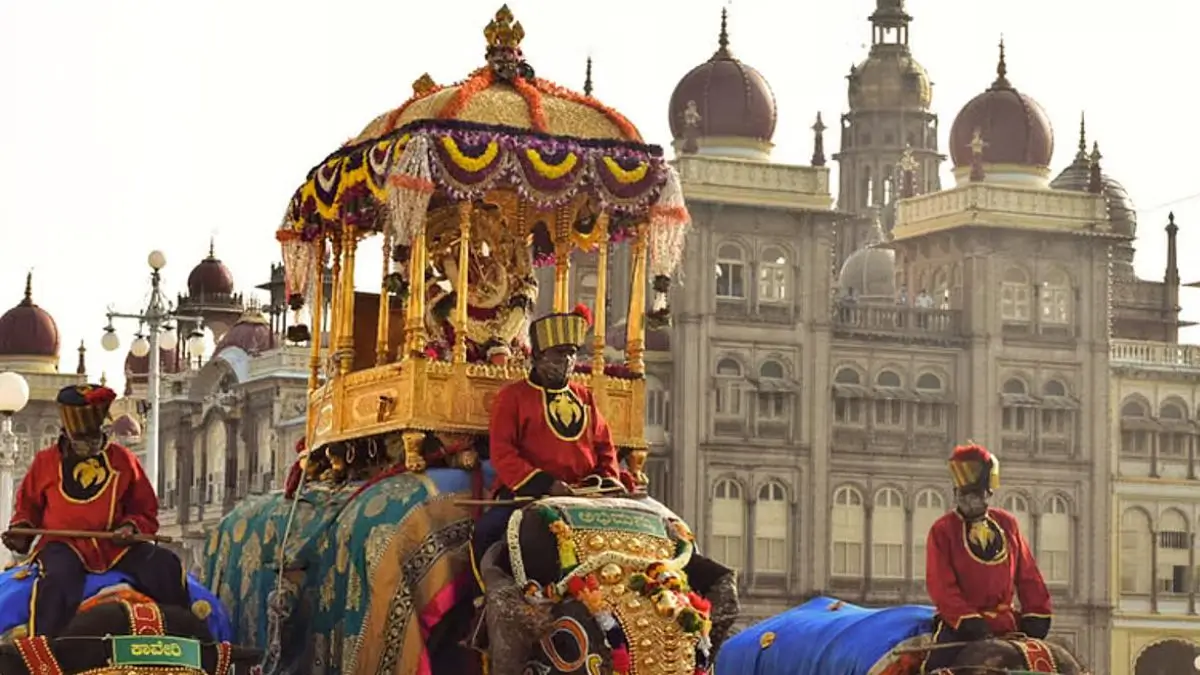
The main event of Mysuru Dasara is the Jamboo Savari parade that will take place on Vijayadashami, which falls on October 21, 2026. The idol of the Goddess Chamundeshwari will be placed in a golden howdah on top of the elephant.

The parade begins from Mysuru Palace and ends five kilometres away in Bannimantap. Elephants, folk artists, traditional musicians and tableaux participate in the parade, making the historical streets of Mysuru a place of celebration of Karnataka culture.

In addition to that, tableaux depicting various topics including the culture of region and the accomplishments of the citizens of Karnataka can be seen during the parade.

What is a Golden Howdah?

A howdah is a seat or platform built for use on top of an elephant. At the Jamboo Savari parade, the idol of the goddess Chamundeshwari is carried in a golden howdah.

Panjina Kavayathu: Torchlight Parade

The grand finale of the festival is the torchlight parade called “Panjina Kavayathu,” which takes place in Bannimantap. There are some ceremonial performances that mark the end of the day’s festivities.

The parade is one of the important traditions in terms of the connection of the celebration to the military and royalty. Both Jamboo Savari and Torchlight Parade are the most popular traditions of Vijayadashami in Mysuru.

Other Activities at Mysuru Dasara

This Dasara 2026 program offers something more than just the procession itself with more than 100 activities to be organized across various locations. They include both traditional activities and entertainment for the public.

Activity/Attraction and It’s Importance

  • Illumination of palace: The famous palace of Mysuru is illuminated during the festival period.
  • Cultural program: Cultural programs such as music, dance, folklore, etc., are organized during the event.
  • Aahara Mela: Food festival is organized at Mysuru Dasara festival.
  • Flower Show: Flowers also contribute to making this festival a popular attraction.
  • Kambala: Buffalo race is an important feature of this 2026 program.
  • Dasara Exhibition: A popular attraction in this festival.

Dussehra Celebrations Across India: 12 Unique Traditions, Regional Festivals and Cultural Significance

Dussehra, which can be alternatively called Vijayadashami or Dasara, is observed all over India in different kinds of religious observances, folk dances and processions. Although it is generally believed that Dussehra is a celebration of the victory of Lord Rama over demon king Ravana, it is also observed in many places as the victory of Goddess Durga over Mahishasura. Examples of some traditional celebrations include Dussehra at Mysuru, Durga Puja in West Bengal, deities’ processions in Kullu, and tribal observances in Bastar.

1. Durga Puja and Vijaya Dashami in West Bengal

In West Bengal, Dussehra falls on the occasion of Vijaya Dashami that marks the end of Durga Puja. The festival is celebrated for the victory of Goddess Durga over Mahishasura, signifying good defeating evil.

Pandals adorned with intricate designs, idols of the deity, devotional music and feasts are some important components of the celebration. In the last day of the event, many worshippers perform sindoor khela and take out idol in a procession to immerse it.

Cultural significance: Durga Puja of Kolkata was added to the UNESCO’s list of intangible cultural heritage in 2021.

2. Mysuru Dasara in Karnataka

Mysuru Dasara is marked with royal grandeur, the lighting of the palace, cultural shows and the celebrated Jamboo Savari procession. The festival is dedicated to Goddess Chamundeshwari, an incarnation of Goddess Durga who defeated Mahishasura.

The procession consists of an elephant decorated with the idol of the deity along with tableaus and performers playing devotional music and other participants. Mysuru Dasara has royal history since the 1610.
Important fact: The name Mysuru is connected with the demon Mahishasura, and the presiding deity is Chamundeshwari.

3. Madikeri Dasara in Karnataka

The city of Madikeri in Karnataka’s Kodagu district has its own unique version of Dasara, combining religious rituals with folk customs. The festival involves karaga processions, where dancers perform carrying decorated platforms related to worship of local goddesses.

It is associated with some local temples and includes folk performances and colorful tableaux. The nature of the celebration is different from Mysuru Dasara.

4. Garba and Navratri in Gujarat

In Gujarat, the nine days of Navratri festival involve devotion to worship, as well as vigorous performances of dances called Garba and Dandiya Raas. Participants assemble in their traditional clothes, forming a circle around an icon or symbol of the Goddess.

Garba dance is not just only an expression of the devotion but also an integral part of the culture of the state of Gujarat. It was included into the list of the Intangible Cultural Heritage of Humanity of UNESCO in 2023. The Navratri festival ends with Vijayadashami.

5. Kullu Dussehra in Himachal Pradesh

Kullu Dussehra is unique in that its main festivities take place after Vijayadashami. The one-week-long fair is focused on Lord Raghunath, an incarnation of Lord Rama, with hundreds of local gods from all over the valley coming to it in their palanquins and chariots.

Devotees come to Dhalpur Maidan for processions and musical and cultural activities. The festival is based on religious traditions of the area and patronage of its kings throughout the history.

What is so special about it? In contrast to many other Dussehra festivals, Kullu’s special ritual activity is the gathering of local gods and reverence of Lord Raghunath, but not the burning of the effigy of Ravana.

6. Ravan Dahan and Ramlila in Delhi

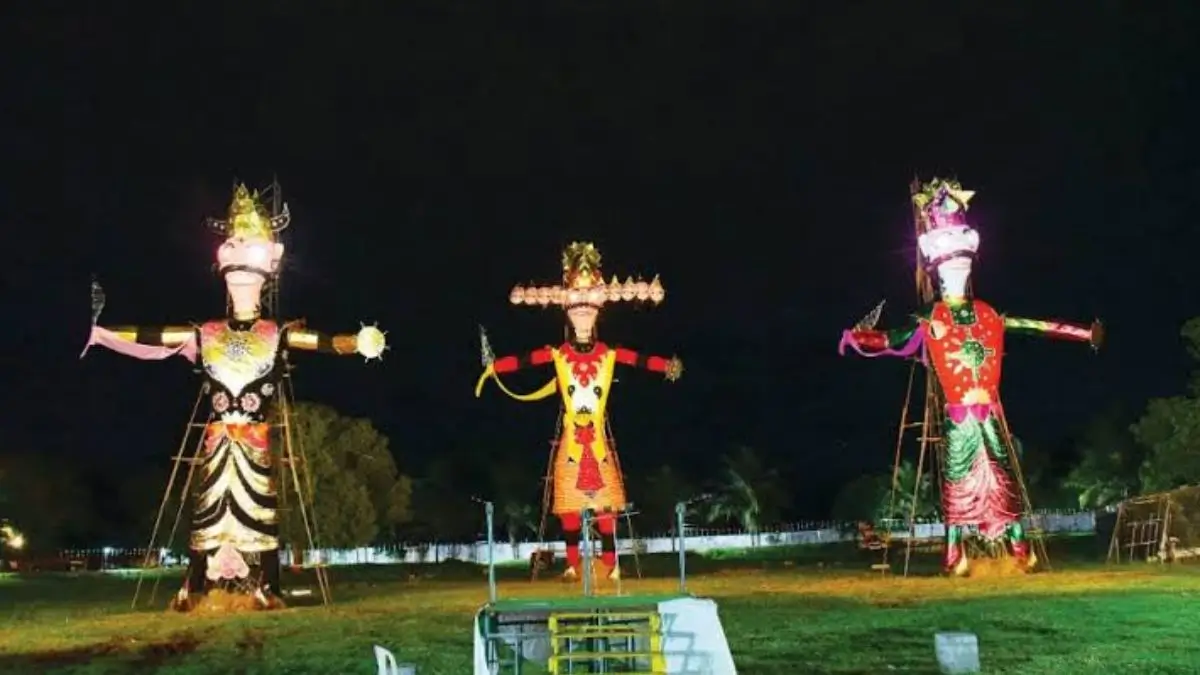
In Delhi, Dussehra is usually associated with the staging of Ramlilas and Ravan Dahan. Ramlila depicts scenes from the Ramayana, including the fight between Rama and Ravana. On Vijayadashami, traditionally huge effigies of Ravana, Meghnad and Kumbhakarna are burned in public.

It is the combination of religious story-telling, theatrical performance and communal festivities. The burning of effigies represents the victory of righteousness over evil.

7. Ramlila of Ramnagar, Uttar Pradesh

Ramnagar Ramlila, celebrated on the other side of the river Ganga in the Varanasi region, is amongst India’s most famous traditional drama-based renditions of the Ramayana. Instead of just one stage, this performance takes place at several places according to the scenes from the epic.

Ramlila makes use of dialogue, devotional songs, costumes, and processions to tell the story. This traditional performance form is distinguished by the active involvement of the community and is related to the Ramcharitmanas composed by Tulsidas in the 16th century.

The tradition of Ramlila – traditional performance of the Ramayana – was recognized by UNESCO and included in the list of Intangible Cultural Heritage in 2008.

8. Jagrata and Kanjak/Puja in Punjab

Jagrata is an aspect of the celebration of Navratri and Vijayadashami in Punjab, when people stay awake during the night singing hymns devoted to the Goddess.

Kanjak or Kanya Puja involves worshipping little girls as embodiments of divinity. Little girls are invited into the house for prayers and offered gifts.

9. Bommai Kolu in Tamil Nadu

Bommai Kolu or Golu is celebrated in Tamil Nadu as part of Navaratri. This involves display of dolls/figurines arranged on multiple shelves.

They could be figures of Hindu gods and goddesses or figures depicting stories of Ramayana and Mahabharata. Other themes could be historic personalities, life of village people, common professions etc.

Relatives and neighbours are invited to see the display and participate in singing of devotional songs and consuming of traditional foods. The number of tiers is not restricted and varies from family to family.

This festival is observed in other parts of southern India such as Bommala Koluvu in Andhra Pradesh and Bombe Habba in Karnataka.

10. Dussehra Mela in Kota, Rajasthan

The Dussehra Mela held in Kota involves both religious festivities and a big mela/fair involving performance of rituals. It has Ramlila, burning of the effigy of Ravana along with folk dances, crafts and other cultural performances.

It serves as an opportunity for local artists, performers and businessmen thus making it a social and economic event besides being a religious festival. Programmes may vary from one year to another.

11. Bathukamma in Telangana

Bathukamma is a significant flower festival of Telangana. This festival is celebrated in the Navratri period by arranging flowers into colorful tiers or Bathukammas and singing traditional songs around them while dancing.

Bathukamma festival celebrates the Goddess and highlights the connection between the people’s lives, seasonal flowers, and their regional identity. The Bathukamma festival ends with a concluding function where the Bathukammas are traditionally immersed in water.

Bathukamma festival takes place during the Navratri and Dussehra festival season but it has its own distinct customs and should not be considered as just another name for Dussehra.

12. Bastar Dussehra in Chhattisgarh

Bastar Dussehra, which is celebrated in Jagdalpur in Chhattisgarh, is one of the unique regional festivals of India. It lasts for about 75 days and is based on the worship of Maa Danteshwari and religious customs of Bastar region. The history of Bastar Dussehra can be dated back to 15th century.

It involves a series of rituals, processions, participation of local communities, and unique rituals such as Muria Darbar. Deities and the tribal culture play a crucial role in the celebration.

Ravana in the Ramayana: 10 Facts About the King of Lanka

Ravana is undoubtedly one of the most complicated characters in the Indian epic genre. While popularly known as the king of Lanka and the villain of the Ramayana, he is depicted in several traditions as an accomplished scholar, musician, ruler and devoted worshiper of the Lord Shiva. The tale of Ravana is an interlink between Indian mythology, Sanskrit literature, religion, morals, and even the Dussehra festival. Any study of the character of Ravana involves much more than analyzing him as a villain, but rather considering his lineage, abilities, accomplishments and actions.

Ten Interesting Facts About Ravana

1. Ravana Is Known as Dashanana

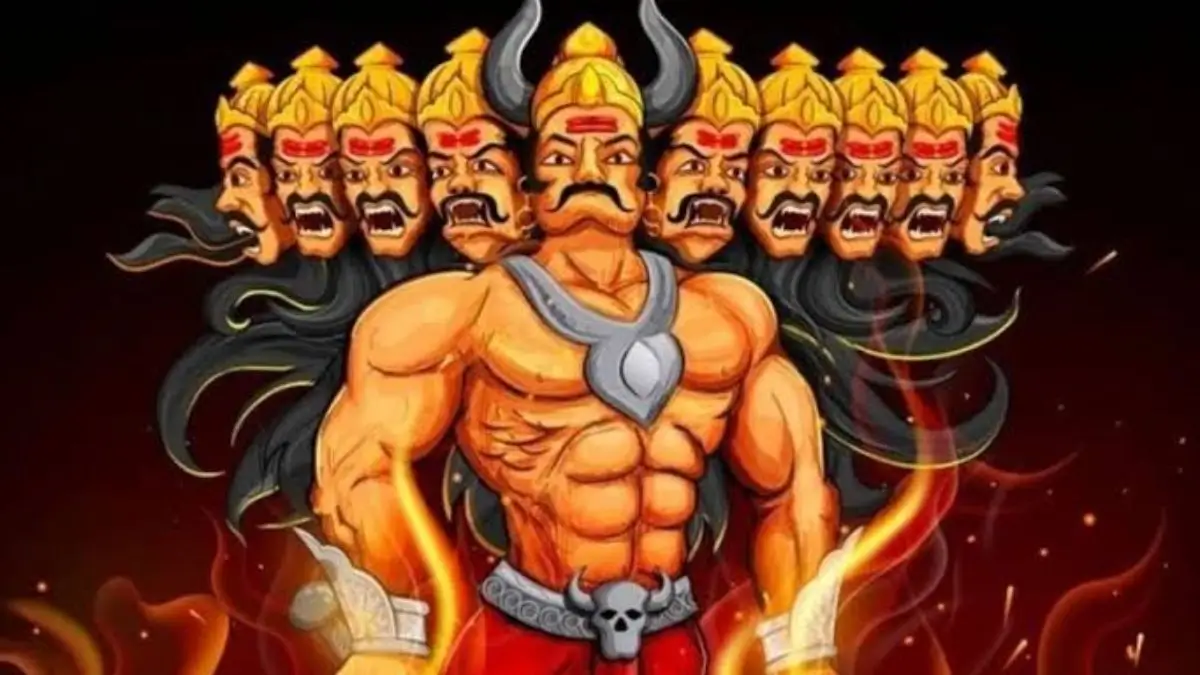
Ravana is often referred to as the Dashanana or Dashamukha, it means that “ten-faced” or “ten-headed.” Depictions of Ravana in mythology depict him with ten heads and usually with twenty arms, thus highlighting his immense strength.

According to some interpretations of today’s time, the ten heads denote knowledge of the four Vedas and the six Shastras. In some others, the ten heads symbolize the human traits of pride, anger, greed, and attachment. Interpretations differ from one another and cannot be said to be a singular explanation of every Ramayana tradition.

2. Ravana Was Known As a Scholar

Ravana is depicted in traditions as a man of immense learning who had knowledge of the sacred scriptures, rituals, and other areas of scholarship. His Brahmin descent was linked to his education.

His life story serves as an important teaching in the Ramayana – knowledge and skills do not always mean righteousness. It is possible for knowledge and intellect to go hand-in-hand with actions that lead to negative consequences.

3. Ravana was a devotee of Lord Shiva

In Shaiva traditions, Ravana is known as a devotee of Lord Shiva. Tales speak of him undertaking strict penances in order to earn the favor of God.

Shiva Tandava Stotram is a Sanskrit hymn that celebrates the cosmic dance of Lord Shiva. It is traditionally considered to have been composed by Ravana. The attribution is one of devotion; it must not be regarded as firmly established historical attribution.

4. He ruled the magnificent city of Lanka

Lanka is said to be a magnificent and prosperous city in the Ramayana epic. The capital city of Ravana is described as a magnificent palace and rich in wealth.

Later versions depict the city as a gold-filled city. The association is made in regard to the great material prosperity during his rule in addition to the moral lesson regarding power in the epic.

5. He is associated with music

He is said in religious traditions to be a master musician and worshipper of Lord Shiva through the medium of music. The Ravana veena is also associated with him in later traditions.

6. He Attained Very Powerful Boons

According to the Ramayana, Ravana undertook very strict austerities to attain boons from God Brahma which protected him and made him almost invincible.

In the legend, Ravana sought protection against many gods and supernatural beings but not human beings in particular. Lord Rama, who was an avatar of Lord Vishnu in the Hindu religion, finally defeated him as a human being.

7. He Was a Very Powerful Warrior

Ravana led a very powerful army and had great strength as a warrior in the story. He engaged in battles with mighty warriors and celestial beings.

As a powerful military leader, Lanka became a very powerful empire. However, in spite of having strength and military might, he was defeated since his opponent possessed more skillful strategy and alliance.

8. He Was the Son of Sage Vishrava and Kaikesi

The father of Ravana was Sage Vishrava, a learned sage and the mother was Kaikesi, who belonged to the Rakshasa family.

His brothers were Kumbhakarna and Vibhishana, who had very important roles in the story while his sister Surpanakha was an important character in the series of events leading to the battle of Ravana with Rama.

9. Abduction of Sita Resulted in War

Sita was kidnapped and taken to Lanka and imprisoned in Ashoka Vatika. This act started off the conflict that takes place in the Ramayana.

In the Valmiki tradition, Sita continuously rejects the advances made by Ravana and remains devoted to Rama alone. It is Ravana’s inability to respect this that leads to his fall from grace and the war that ensues.

10. His Defeat Is Celebrated on Dussehra Day

Lord Rama killed Ravana during the final battle in the Ramayana. His death is celebrated on the occasion of Dussehra, which is also called Vijayadashami, in many places across India.

The burning of Ravana’s idol depicts the victory of good over evil. Many local customs are practiced on the occasion, and it is also associated with the victory of Goddess Durga over Mahishasura.

Ravana and Importance of Dussehra

Dussehra is a famous Hindu festival that falls on the tenth day of the bright fortnight in the lunar month of Ashwin in the Hindu calendar and thus its date changes every year according to the Gregorian calendar.

In many parts of northern India, it celebrates the triumph of Lord Rama over Ravana and the re-establishment of dharma. Ramlila, the staging of the Ramayana epic in public, often ends with the burning of the effigies of Ravana, Kumbhakarna, and Meghnad.

In many other places, Vijayadashami represents the triumph of Goddess Durga over Mahishasura.

Both stories are part of the festival’s varied regional traditions.

The moral lesson that is often imparted through the story of the destruction of Ravana is that pride, misusing power, and neglecting morality could bring about ruin, even for one who has immense knowledge and power.

Ravana in Indian Literature and Culture

The Ramayana versions feature a varied Ravana character. The Sanskrit Ramayana associated with Valmiki, the Ramcharitmanas of Tulsidas and the Tamil Ramavataram of Kamban among others constitute the epic Ramayana from different literary and religious perspectives.

Although he is the antagonist in Rama-oriented stories, Ravana is sometimes depicted as an erudite scholar, a devotee of Lord Shiva, a king or a victim of flaws. In some places, the Ravana figure is of cultural significance according to some local traditions.

These are examples that show how the Ramayana is not just one literary work but a wider narrative tradition carried through language, performance, religion, sculpture, painting, and storytelling.

Dussehra 2026: Date, History, Significance and Important Facts

Dussehra or Vijayadashami to be celebrated on Tuesday, 20 October 2026, throughout most parts of India. The festival stands for the triumph of good over evil, and is marked by the victory of Lord Rama over Ravana and the triumph of Goddess Durga over Mahishasura. The festival celebrations include Ravana Dahan, performances of Ramlila, puja, and regional practices. Vijay Muhurat differs from city to city, but Dashami Tithi continues till 21 October as per the timings of New Delhi Panchang for the festival.

What will be the Timing for Ravana Dahan in 2026?

Ravana Dahan occurs following sunset on the day of Dussehra, and public celebration includes burning of effigies of Ravana, Meghnad, and Kumbhakarna along with Ramlila enactments from the story of Ramayana.

According to estimates in New Delhi, the sun will set on 20 October at around 5:47 PM. It does not mean that 5:47 PM is a confirmed time for Ravana Dahan.

History of Dussehra

There are two principal schools of Hinduism from which the significance of Dussehra is derived.

Victory of Lord Rama over Ravana

As per Ramayana, Ravana, the king of Lanka, had abducted the wife of Lord Rama, namely Sita. Lord Rama fought against Ravana with the help of his brother Lakshmana, Hanuman and Vanara Army to rescue Sita.

The victory over Ravana symbolizes the victory of righteousness over arrogance, evil and injustice.

Burning of Ravana’s effigy signifies the victory. Ramlilas are conducted throughout the northern part of India, which describe the events that take place before the battle of Rama and conclude with Ravana Dahan.

Victory of Goddess Durga over Mahishasura

From the Shakta school, the Vijayadashami commemorates the triumph of Goddess Durga over Mahishasura. This festival brings an end to the Durga Puja festival celebrated in eastern parts of India, especially in West Bengal.

The ritual associated with Durga Puja Vijayadashami consists of prayers and farewell ceremony of the Goddess known as Durga Visarjan.

In certain places, these rituals will continue till 21 October 2026 owing to local traditions and Dashami Tithi.

Dussehra: Spiritual and Cultural Value

Dussehra is a festival which signifies triumph of good over evil, of truth over lies and of justice over injustice. The customs of Dussehra vary from region to region in India due to its religious and cultural diversity.

  • In northern and central India, the custom of performing Ramlila and burning of Ravana are important.
  • In eastern India, the custom of Vijayadashami marks the end of Durga Puja and is dedicated to the victory of Goddess Durga over Mahishasura.
  • In western India, the customs of Shami Puja and worship of weapons are celebrated in various communities.
  • In southern India, Ayudha Puja and other customs relating to knowledge, art and crafts are performed as a part of larger Dussehra celebrations.

The festival also provides an opportunity for people to think about attributes like bravery, humility, self-control and mercy.

Important Rituals Associated With Vijayadashami

Vijay Muhurat: An auspicious time linked with religious practices or activities related to victory.

Shami Puja: Religious ritual performed in honor of the Shami tree and is generally considered to be auspicious and victorious.

Aparajita Puja: Religious worship performed in honor of Aparajita who is a goddess of victory and protection.

Shastra or Ayudha Puja: Ritual worship of arms, implements or equipment, signifying veneration for the means of performing one’s work.

Ravana Dahan: Burning of the idol of Ravana as a mark of celebration of the victory of Lord Rama.

Durga Visarjan: Ceremonial immersion of the idol of Durga at the end of the Durga Puja celebrations.

PM-VBRY Scheme: EPFO Offers Up to ₹15,000 to First-Time Employees

The Pradhan Mantri Viksit Bharat Rozgar Yojana (PM-VBRY) offers the employment incentive of up to ₹15,000 for eligible the first-time employees who joins India’s formal employment sector. The programme is run by the Employees’ Provident Fund Organisation (EPFO) and seeks to promote formal employment and social security coverage. For eligibility, employees have to meet certain criteria related to past provident fund membership, salary, joining date, and bank account information. The incentive is payable in two installments, where the second installment is conditional on undertaking a financial literacy course.

What Is the PM-VBRY Scheme?

Pradhan Mantri Viksit Bharat Rozgar Yojana (PM-VBRY) is an employment-linked incentive scheme that encourages employment creation and formal employment for workers.

There are two parts to this scheme:

  • Part A – Employee incentive: Offers incentive of up to ₹15,000 to eligible first-time employees.
  • Part B – Employer incentive: Promotes creation of more formal jobs by eligible employers through financial incentives for qualifying new employees.

Who qualifies for ₹15,000 incentive for employees?

Under Part A, the employee has to fulfill certain conditions to get the benefit.

Eligibility condition Requirement
First-time EPFO membership Has not contributed to any EPF membership prior to 1 August 2025, including from an exempted provident fund trust
Period of joining Should join the eligible establishment between 1 August 2025 to 31 July 2027, both dates inclusive
Monthly gross salary Should not exceed ₹1 lakh per month
Eligibility of employer Should be working with the EPFO registered establishment or an establishment having an exempted provident fund trust
Residency and bank account Should be an Indian resident with an Aadhaar linked bank account
Record of EPF contributions The first qualifying EPF contributions should be made for the wage month starting from 1 August 2025

Just changing the job doesn’t automatically make one a first-time employee. If one has already made any EPF contributions prior to 1 August 2025, he/she will not qualify for this benefit.

How Much Will Be Paid to the Employees?

An employee who meets the eligibility criteria is entitled to receive an amount of up to ₹15,000, depending on the wage-related formula and other conditions of the scheme. The incentive is given in two installments.

Installment Eligibility criterion  Maximum amount
First installment Six months of continuous service ₹7,500
Second installment Twelve months of continuous service and completion of the specified financial literacy course The rest of the amount eligible, subject to the total limit of ₹15,000

The maximum amount is not the guaranteed amount for all eligible employees. The incentive is calculated according to the applicable rules.

The scheme also includes provision of a certain part of the second installment to be deposited into the savings tool. Therefore, the employees should clarify the terms of payment of the incentive.

Why is the Financial Literacy Course Compulsory?

Apart from fulfilling the required period of employment, it may not suffice for getting the second installment. The employees are also supposed to complete the mandatory financial literacy course.

This is aimed at enhancing the knowledge of the employees regarding financial management, savings, and financial products. It may also assist new employees in understanding the provident fund contribution.

The employees need to verify the course requirements prescribed and ensure that the employment details, Universal Account Number (UAN), Aadhaar number, and bank details are correct.

What Should Be Verified by the Employees Before Receiving the Benefit?

The eligible employees must have to check the following information before receiving the benefit,

  • Past EPF membership: Whether there were any qualifying contributions before the 1st of August 2025, including through the exempted provident fund trust.
  • Joining date and salary: Whether the joining date was in the period of the scheme and the monthly gross salary is less than ₹1 lakh.
  • Establishment qualification: The establishment must have to satisfy the eligibility criteria of the scheme.
  • EPF contribution information: The establishment has also recorded the information related to the joining date and contributions.
  • Bank account and Aadhaar details: The details of the Aadhaar linked with the bank account and other details are needs to be accurate.
  • Service and training: Six months of continuous service for the first instalment and 12 months of service and financial literacy training for the second.

The benefit is different from the normal provident fund contribution. It must not be mistaken for the EPF account balance of the employee, which is created through contributions.

Para Asian Games 2026: Mona Agarwal Wins Gold, Avani Lekhara Takes Silver

India began their medal haul at the 2026 Para Asian Games held in Aichi-Nagoya, Japan, as the Indian athletes finished first and second in the women’s 10m air rifle category. Mona Agarwal won the gold medal after scoring 250 points, thus breaking an Asian Para Games record, while Tokyo and Paris Paralympian Avani Lekhara clinched the silver medal with 249.6 points. Mona also scored 629.1 points in the qualification round, thereby setting another Asian Para Games qualification record.

Mona Agarwal Secures Gold Medal with a New Asian Para Games Record

Indian para-shooter Mona Agarwal claimed the gold medal in the women’s 10m air rifle event with a total score of 250 points. She broke an Asian Para Games record in this event with this score, beating the previous record of 249.6 by Avani Lekhara.

Mona Agarwal had also secured the top position in the qualification round with 629.1 points, which was another new record for the Asian Para Games. This was a great improvement for Mona who had finished sixth at the 2022 Asian Para Games.

Avani Lekhara Takes Home Silver and Book LA28 Paralympics Quota

Avani Lekhara bagged the silver medal in the women’s 10m air rifle event with a score of 249.6 points.

This victory of Avani also ensured that she booked a quota place for India at the Los Angeles 2028 Paralympic Games (LA28). As per the report, a quota place had been secured by Mona at the World Championships.

Avani is one of India’s most recognized para-athletes having bagged medals in consecutive Paralympics.

Who Is Mona Agarwal?

Mona Agarwal is an Indian para-shooter hailing from Sikar, Rajasthan, who was born on 8 November 1987. She suffers from physical impairment due to polio suffered in her early years and went on to carve out a niche in para-sports.

Before turning into a rifle shooter, she was part of para-athletics and para-powerlifting and played for women’s sitting volleyball. In 2019, she led the women’s team of Rajasthan to win the first National Sitting Volleyball Championship.

She started the rifle shooting in the December 2021 and made quick progress as mentioned below,

  • 2022: National silver medal winner.
  • 2023: Bronze medalist in the mixed team competition in the World Shooting Para Sport World Cup held in Osijek, Croatia.
  • 2023: Gold medalist in the women’s 10m air rifle in SH1 competition at the World Cup in Changwon, South Korea.
  • 2024: Won gold medal at the World Shooting Para Sport World Cup held in New Delhi with a score of 250.7 and created an Asian record.
  • Paris Paralympics 2024: Won the bronze medal in the women’s 10m air rifle standing SH1 event.
  • 2024: Won the Arjuna Award for her sporting feats.
  • 2026: Gold medalist at the Para Asian Games.

Who is Avani Lekhara?

Avani Lekhara is an Indian para shooter from the state of Rajasthan who had a spinal cord injury as a result of a car accident in 2012 at the age of ten. Having been inspired by her father to participate in various sports during her rehabilitation, she started shooting in 2015.

Influenced by the autobiography of the Olympic shooting champion Abhinav Bindra, A Shot at History, Avani developed an interest in rifle shooting and reached the international level of competitions.

Avani Lekhara’s main accomplishments are,

  • Winning a gold medal in the women’s 10m air rifle standing SH1 event at the Tokyo 2020 Paralympic Games in 2021;
  • Winning a bronze medal in the women’s 50m rifle 3 positions SH1 event at the Tokyo Paralympics;
  • Winning a gold medal in the women’s 10m air rifle standing SH1 event at the Paris 2024 Paralympic Games;
  • Winning a bronze medal in the women’s 50m rifle 3 positions SH1 event at Paris 2024;
  • Winning a silver medal in the women’s 10m air rifle event at the 2026 Para Asian Games.

She studied for five years of law at the University of Rajasthan while continuing her sporting career.

Global Hunger Index 2026: India Ranks 100th Among 122 Countries

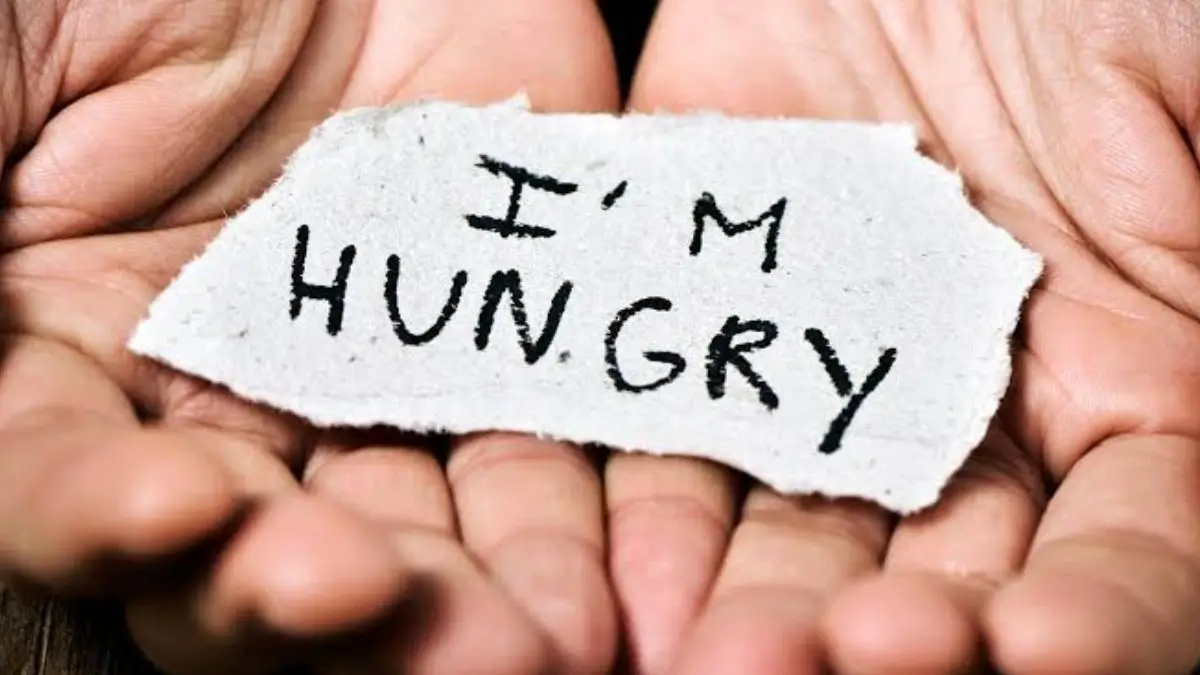
India is ranked 100 out of 122 countries in the Global Hunger Index (GHI) 2026 with a score of 24.1, whereas Pakistan stands 106th with 25.5. Both countries belong to the category of serious hunger. The report has been launched on the theme “No Security Without Food Security” and has reported a global hunger score of 18.1 with the warning that there is a slowdown in achieving the SDG of Zero Hunger by 2030 due to conflict, climate change and increasing food prices.

What Is the Global Hunger Index 2026?

The Global Hunger Index is an annual study and measurement of the hunger situation in various countries and regions around the world. The purpose of the index is to measure and compare hunger and to draw attention to the extent of hunger and to the need for action.

The 2026 report has been published by Welthungerhilfe (WHH), the Institute for International Law of Peace and Armed Conflict (IFHV) at Ruhr University Bochum, and Helvetas. The theme of the report is “No Security Without Food Security”.

The GHI scores range from 0 to 100, where lower scores show lower hunger levels, and higher scores show more severe hunger.

India’s Ranking in the Global Hunger Index 2026

India is ranked 100th out of 122 countries, having a GHI score of 24.1. The hunger situation in India continues to be in the serious state, but there is an observation of long-term progress in child stunting.

The key indicators for India are the,

  • Child stunting: 29.3% among children below the five years of age.
  • Child wasting: Nearly 19%, which is the highest percentage worldwide.
  • Undernourishment: It is an indicator of the proportion of people who cannot meet their dietary energy requirements.
  • Under-five mortality rate: 2.7%-2.9%, according to the report summary provided.

In India, child stunting decreased from 50% in 2000 to 29.3%. But the prevalence of child wasting is still a major problem. Stunting is a result of chronic malnutrition, whereas wasting refers to low weight to height ratio and acute malnutrition.

Global Hunger Index Ranking for Pakistan in 2026

Pakistan is ranked 106 out of 122 countries, having a score of 25.5, which categorizes it into serious hunger. The score has reduced from 36.2 in 2000; however, according to the report, there has been a deterioration of the situation since 2018.

Some of the indicators used in reporting include 16.1% of the population facing undernourishment, 33.6% stunted children, 9.8% of wasted children, and 5.6% of under-five mortality rate.

Food insecurity is affected by economic instability, high food prices, and climate factors. The score of Pakistan is higher than that of India; therefore, Pakistan faces a higher level of hunger.

Key Findings on Global Hunger Index 2026

The GHI score is 18.1, and the overall hunger is rated as moderate. This score reflects a deterioration in comparison with the previous score of 17.6 in 2018 which is methodologically comparable.

According to the report, there are about 645 million hungry people across the globe. Since 2018, out of the four indicators used for GHI calculation, three have become worse in the global scope including undernourishment, stunted children and wasted children. Child mortality rate has kept decreasing.

Other significant findings include,

  • Hunger situation has become worse in 32 countries since 2018.
  • There are eight countries that belong to the alarming group: Burundi, Chad, the Democratic Republic of the Congo, Madagascar, Somalia, South Sudan, Sudan and Yemen.
  • Thirty-six other countries are included in the serious category.
  • About 57 countries will fail to attain low hunger levels by 2030 if the trend remains unchanged.

Sub-Saharan Africa and South Asia are still the hardest hit areas.

How is the Global Hunger Index Calculated?

The Global Hunger Index comprises four indicators that assess hunger from various perspectives.

Indicator What it measures Importance
Undernourishment The percentage of people who suffer from insufficient dietary energy intake Measures insufficient availability of food at the population level
Child stunting The number of children under five years who are short for their age Measures chronic undernutrition
Child wasting The number of children under five years who are thin for their height Measures acute undernutrition
Child mortality The number of deaths among children under five years old Measures the consequences of undernutrition combined with other health hazards

These indicators relate to food deprivation of the population and nutritional status of children. A high GHI value means a worse hunger situation.

History of Student Protests in France: From the French Revolution of 1789 to the 2026 Unrest

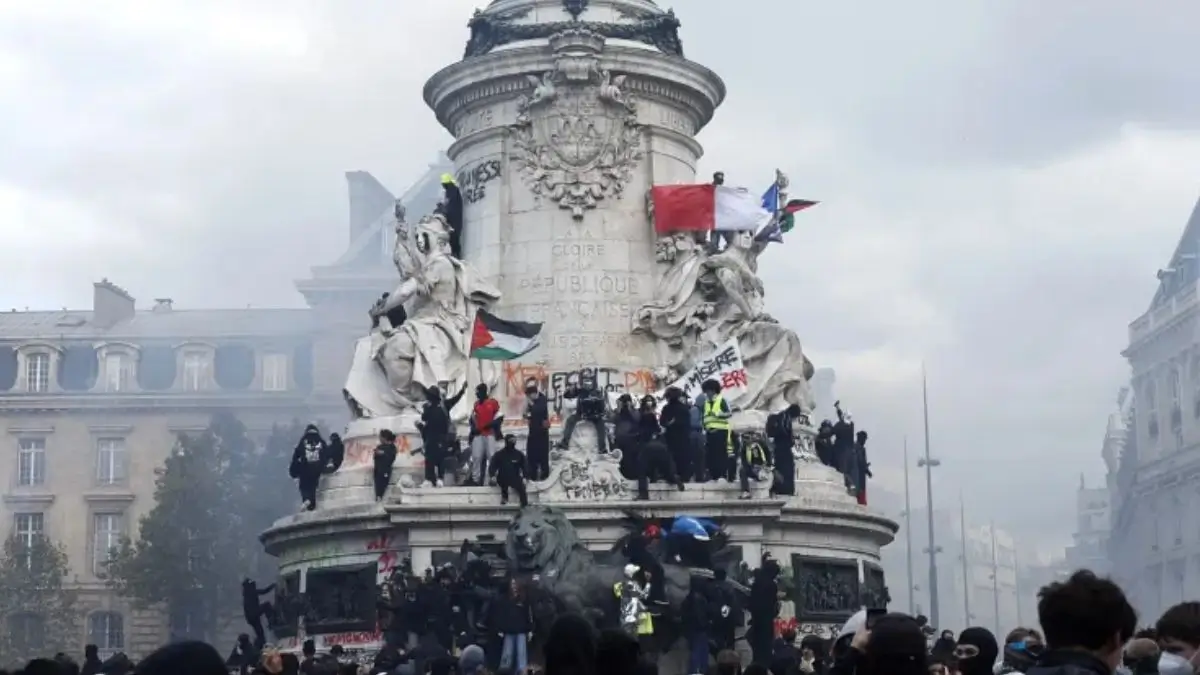
France has a long history of popular revolutions, students’ protests, workers’ strikes and mass movements that have shaped its political structures and social policies. Starting from the revolution of 1789 and the Paris Commune of 1871 and up to the protest actions of 2026, the May 1968 protests of students and the Yellow Vest movement, popular demonstrations have continuously opposed the political regime and demanded reforms.

The recent demonstrations, which started due to issues with the educational system and overcrowding in schools, are an opportunity for analyzing the political history of France, revolutionary movements, civil disobedience and the relations between the people and the state.

Why Do Protests Have Such an Important Place in French Politics?

Protests, strikes and demonstrations are regular phenomena in French politics. Protest movements have opposed royal power, called for political representation, criticized economic policies and called for reforms of labour, education and welfare policies.

Historically, one of the reasons for this phenomenon was the French revolution of 1789 that changed the relations between the monarchy, citizens and political power. Subsequent protest movements used revolutionary symbols like barricades, popular assemblies and citizens’ collective opposition to the government.

The country also has a developed tradition of organized labor and trade unions. Strikes can disrupt transportation, education, energy supply and other public services in order to put pressure on the government and employers.

However, it would be wrong to say that all protests bring changes. While some of the movements won certain concessions, others were suppressed, split or left their demands unfulfilled. Protest is an essential part of French political culture, but its results depend on many factors.

Major Protests and Revolutions in French History

Jacquerie Rebellion of 1358

Jacquerie was the significant peasant rebellion that occurred in northern France during the time of the Hundred Years War. This revolt was fueled by economic hardships and dissatisfaction with the aristocracy, who were supposed to offer protection during a time of military crisis.

The rebellion consisted of raids on the properties of the nobles and was violently suppressed. The Jacquerie did not result in a change in the political system, but it highlighted the conflict between peasants and the ruling class.

Jacquerie can be considered an early example of unrest caused by economic difficulties and social inequalities. However, it cannot be compared to modern-day protests by students and democratic movements.

French Revolution of 1789

French Revolution was an important landmark in the history of Europe. It occurred as a result of financial difficulties, social inequalities, shortage of food, dissatisfaction with privileges and the opposition to the concept of absolute monarchy.

On 14th July 1789, revolutionaries attacked the royal fortress of Bastille located in Paris. This event is considered to be an embodiment of the rebellion against the royal regime.

As a consequence, the Revolution overthrew the traditional social hierarchy, abolished feudal privileges and adopted the Declaration of the Rights of Man and of the Citizen in August 1789.

Furthermore, the Revolution resulted in the abolition of the monarchy in 1792, execution of Louis XVI in 1793 and the emergence of various revolutionary political movements.

General Studies importance: French Revolution gave rise to the political doctrines of liberty, equality, popular sovereignty and citizenship.

The July Revolution of 1830

The July Revolution, which is also referred to as the Three Glorious Days, happened from 27 July through 29 July 1830. The revolutionary action followed the restrictive ordinances issued by King Charles X that limited political rights and press freedom.

Journalists, students, workers and political opponents participated in the revolt in Paris. Barricades were set up throughout Paris, and the monarchy was overthrown.

Louis-Philippe succeeded King Charles X and became the king of France under a constitutional monarchy, referred to as the July Monarchy.

The July Revolution illustrated how political repression and restrictions on press freedom can bring together various social classes in opposition to the existing government.

The Revolution of 1848

The February Revolution of 1848 saw the overthrow of the July Monarchy and the creation of the Second French Republic.

The revolution arose in times of economic difficulties, political demands and dissatisfaction with the restricted electoral system. The workers and the republicans played an important part in the revolution.

Universal male suffrage was established in the Second French Republic. Nevertheless, disagreement over employment, social welfare and the functions of the state led to another revolt.

The Paris Commune of 1871

The Paris Commune came into being as a result of France’s defeat in the Franco-Prussian war and the subsequent political turmoil following the siege of Paris.

The outbreak of an uprising in March 1871, which was caused by the government’s effort to confiscate the National Guard artillery, led to the establishment of a revolutionary municipal government in Paris.

The Paris Commune existed for about two months and took up drastic political and social actions. The Paris Commune was repressed during the Bloody Week of 21-28 May 1871.

May 1968: The Student Protests

Protests of May 1968 started with student demonstrations against poor university conditions and the social hierarchy and authority of President Charles de Gaulle. The protests led to clashes with the police especially in the Latin Quarter of Paris.

The protests gained momentum as industrial workers joined them, leading to strikes all over France. At its height, about 10 million workers were on strike affecting most of the French economy.

In the latter part of May, there were negotiations known as Grenelle between the government, employers and trade unions discussing wage increases and better working conditions. However, the proposals were not acceptable to everyone.

De Gaulle remained in power but the protests affected debates on education, employment issues, individual freedoms and social authority.

The 2005 Suburban Riots: Youth, Inequality and Policing

Unrest broke out in France in the October 2005 following the electrocution death of two youths, Zyed Benna and Bouna Traoré, who were hiding in an electrical substation during a confrontation with the police.

The deaths sparked outrage in communities affected by unemployment, discrimination, social exclusion, and distrust of the police. The unrest lasted for a number of weeks and included car burnings, property destruction, and confrontations with police forces.

The unrest put the situation of the banlieues of France, which are suburban areas of cities, especially the disadvantaged ones, on the national agenda. Unlike May 1968, the unrest did not escalate to a nationwide general strike.

Gilets Jaunes, 2018-2020

The Gilets Jaunes movement was started in the year 2018 in protest against the proposed hike in fuel tax but was later extended to cover issues relating to cost of living and inequality.

The term gilets jaunes refers to the highly visible yellow vests that were worn by the protestors. The movement consisted of individuals from varied political backgrounds especially in the countryside and suburbs.

The protestors believed that fuel taxes affected those who had to travel using their own cars.

Violent acts, clashes with the police and destruction of property were part of this movement.

The larger significance of this movement was that it showed how an issue related to a particular policy could be used to show discontent with living conditions and political representation.

Pension Reform Protests in 2023

In 2023, France saw large protests and strikes due to President Emmanuel Macron’s pension reforms that increased the statutory retirement age to 64 from 62 years.

The trade unions and workers were against this reform, while the government believed that such a reform was necessary to make sure that the pension system would be financially sustainable in the long run. The protesters were also not happy with the invocation of Article 49.3 of the French Constitution, according to which legislation can be passed without being voted on by parliament.

Protest issues: Pensions, social security, labour and executive powers.

Static polity link: Article 49.3 is an important element of the Fifth Republic of France.

Student Protest in France in 2026

Student protests in 2026 were initially triggered by issues related to education, such as lack of teachers, overcrowding of schools, and poor condition of school facilities.

Following that, protests and school blockades took place, involving teachers, parents, university students, and trade unions.

Economic factors and discontentment with government-provided services were among other reasons behind the protests, while social networks were used for organizing demonstrators.

In October, there were riots in several cities. On 17 October 2026, demonstrations took place in all the country, including both peaceful actions and riots, fights with police, looting, and arson. The historic town hall of Limoges was burned down.

How Do the 2026 Protests Compare with Earlier Movements?

Movement Main trigger or grievance  Main participants Historical significance
French Revolution, 1789 Social inequality, fiscal crisis and opposition to absolute monarchy Urban crowds, peasants and political groups Transformed the monarchy and political order
July Revolution, 1830 Restrictions on political freedoms Students, workers, journalists and opposition groups Overthrew Charles X
Paris Commune, 1871 Post-war crisis and conflict over political authority Workers, National Guard and revolutionary groups Established a short-lived revolutionary municipal government
May 1968 University grievances and wider opposition to social authority Students and millions of striking workers Produced a major social and political crisis
Suburban riots, 2005 Youth exclusion, inequality and policing concerns Young people in urban suburbs Highlighted marginalisation and distrust of police
Yellow Vests, 2018-2020 Fuel taxation and cost-of-living pressures Decentralised groups of the citizens Expanded into wider economic and political demands
Pension protests, 2023 Raising the statutory retirement age Workers, unions and citizens Intensified debate over pensions and executive power

Student protests, 2026 Education conditions and wider public-service grievances School students, teachers, parents and supporters Renewed debate over education, inequality and political responsiveness

Why Is Limoges Famous? Porcelain, Kaolin and UNESCO Creative Cities Network

Limoges is a French city renowned for the production of porcelain and the ancient artistry associated with making ceramics, enamels, and glassware. This shows the importance of craft-based skills in driving industrial growth, cultural tourism, innovations, and employment. Limoges being named a UNESCO Creative City of Crafts and Folk Art demonstrates the value of creative industries in the sustainable development of cities. From the perspective of General Studies, Limoges relates to the UNESCO Creative Cities Network, cultural heritage, traditional industries, and local economic development.

Limoges and UNESCO Designation

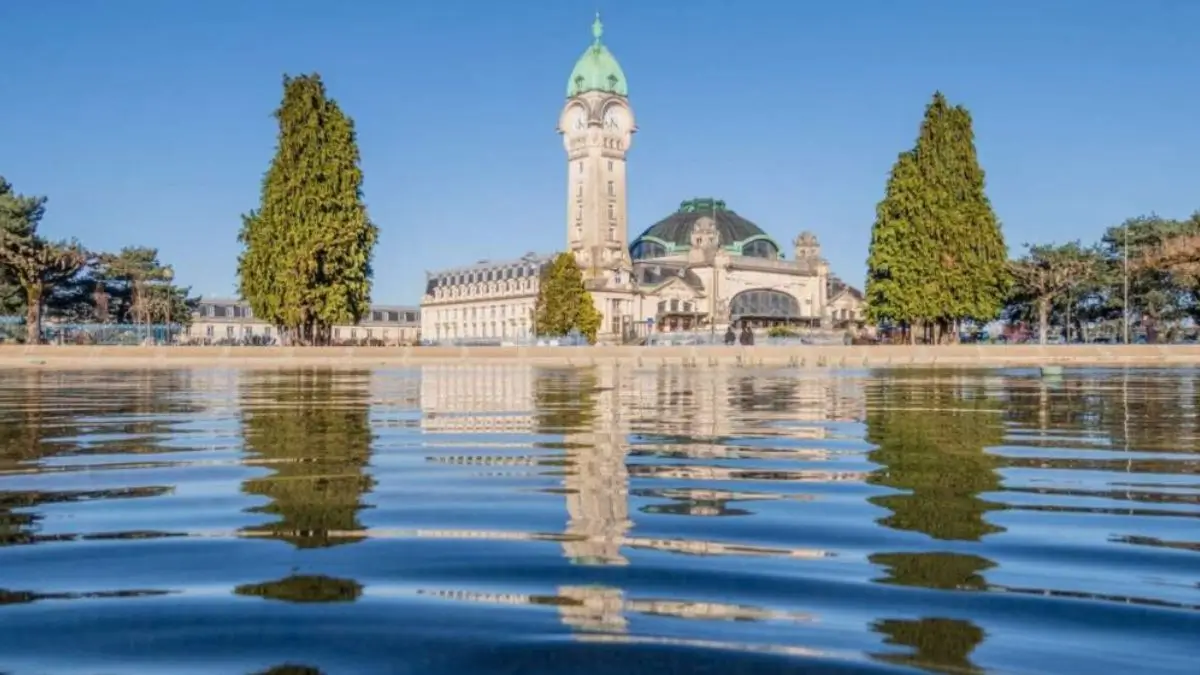
Limoges is a French city which is situated in the south-west central region of France, it is known worldwide for the its porcelain, ceramics, enamels, and glass industry. The city has been designated as a UNESCO Creative City in the category of Craft and Folk Art since 2017.

This is a designation that acknowledges the craft heritage and initiatives made by the city in using creativity in urban development.
As opposed to the UNESCO World Heritage designation, the UNESCO Creative City designation is about creativity and the utilization of creative industries in sustainable urban development.

Why Is Limoges Known for Porcelain?

Limoges is widely known as the French capital of ceramics. The reason why Limoges is associated with porcelain is the discovery of kaolin deposits close to the city in the 18th century.

Kaolin is a white type of clay that is used for making porcelain. Properties of kaolin, especially its colour and behaviour during firing processes with other materials, make it an important resource for making ceramics.

Discovery of kaolin helped to establish Limoges as an important city for porcelain production. Over the years, traditional crafts in the city have evolved along with manufacturing, specialized training, design and research activities.

Creative community in the city includes artisan studios, porcelain manufacturers, educational institutions, research centers and museums. All this makes it possible to preserve traditional crafts while evolving them in the context of contemporary manufacturing and design.

Key terms associated with Limoges mentioned below,

Term Meaning
Porcelain A ceramic material produced by the firing processes
Kaolin A mineral clay used as the raw material for porcelain production
Ceramics Objects made of inorganic non-metallic materials through heating process
Enamel A glass coating that fuses to a surface such as metal or ceramic
Glass-making Process of producing glass objects by means of heating and shaping materials

UNESCO Creative Cities Network

UNESCO Creative Cities Network (UCCN) was founded in 2004 with the aim to foster cooperation between cities which regard creativity and cultural industries as the key components of their sustainable development.

The main aims of the network are to encourage the exchange of knowledge and experience, the development of cultural industries, increased participation in cultural life and international cooperation.

Creative domains of the network include,

  • Crafts and Folk Art
  • Design
  • Film
  • Gastronomy
  • Literature
  • Media Arts
  • Music

Limoges was chosen as a member of the network in the Crafts and Folk Art domain in 2017.

Important note: Membership in the UNESCO Creative Cities Network does not imply the inclusion of a city or its craft traditions in the UNESCO World Heritage List or the UNESCO Intangible Cultural Heritage lists. These are two different UNESCO programs.

How Limoges Integrates Traditional Craftsmanship with Modern Developments

Limoges shows how traditional craftsmanship can be integrated into the modern creative economy. The city does not confine the importance of crafts within its historical framework but rather encourages connections between craftspeople, researchers, designers, educational establishments and public spaces.

The measures adopted by Limoges include,

  • Creative public spaces: Utilisation of public space for creative experiments, demonstrations and craft-oriented projects.
  • Help for craftspeople: Encouragement of creative markets and provision of affordable workshop spaces.
  • Skills development: Promotion of the workshops, internships, seminars and extra-curricular activities for young people.
  • International exchanges: Establishment of residencies for artists and craftspeople to foster collaboration between Creative Cities.
  • Cultural activities: Hosting of events that bridge craftsmanship with other areas like gastronomy.

One such event hosted by Limoges is the biannual Toques & Porcelaine event.

Traditional Crafts and the Creative Economy

Creative economy is defined as economic activity which derives value from creativity, culture, artistry, designs and intellect.

An example of the creative economy can be found in Limoges. The porcelain making industry along with craft-related industries can provide employment, keep alive the specialized skills required for the work, help small business enterprises and build the image of the city.

Several policy issues are addressed by this approach to the development of the city, including,

  • Transfer of traditional skills to younger generation from skilled artisans.
  • Helping craft enterprises to succeed in the contemporary market environment.
  • Integration of traditional techniques with science, technology and design.
  • Cultural tourism that should benefit the local community.

Limoges Town Hall, France: History, Architecture & Historical Significance

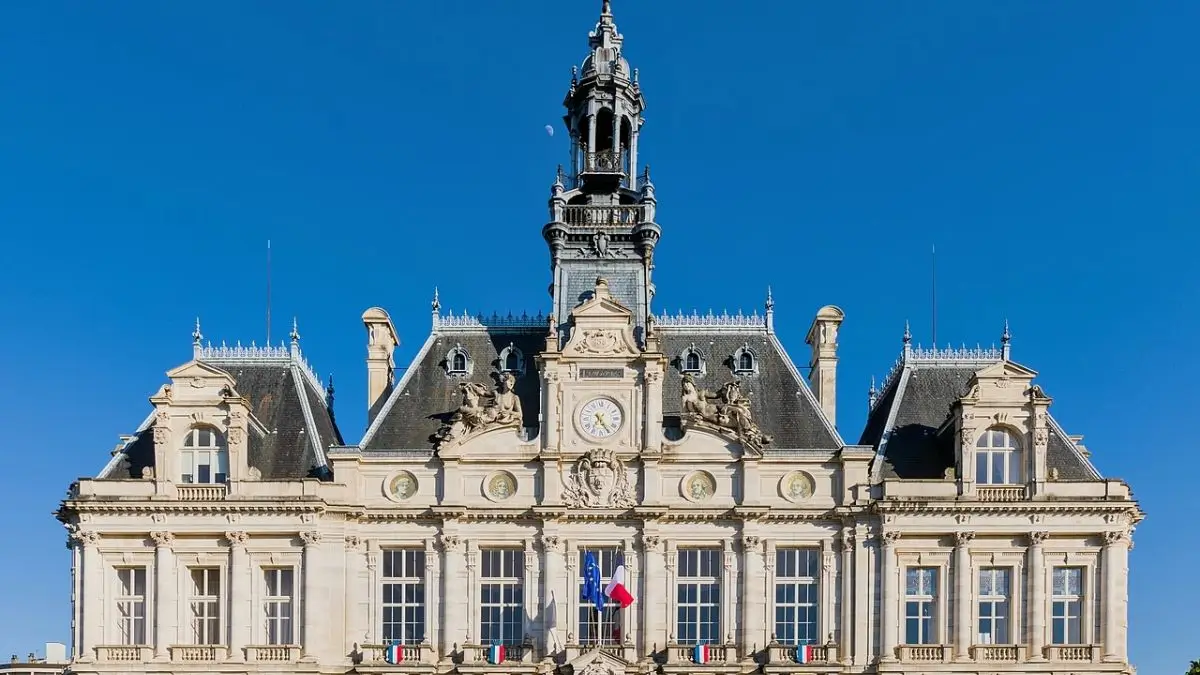
On the 17th of October 2026, the old town hall of Limoges caught fire in the midst of the riots taking place throughout France. According to the local authorities, this incident was a premeditated one and it resulted in to the major damage being inflicted on the roof and the main building. The famous clock tower of this landmark came down, but it appears that parts of the building were spared, including the west wing of the structure. Further investigations into the damages caused need to be made.

The riots broke out across France owing to the high cost of living, public services, and education. While most protests were peaceful, there have been violent outbreaks in other towns, and public buildings became the targets of such actions.

History of the Limoges Town Hall

The Hôtel de Ville de Limoges, otherwise known as the Limoges Town Hall, is an historical civic building located in Limoges, in the Haute-Vienne department of southwestern France.

The construction of the building began in 1879 and was opened to the public on 14th July 1883.

The town engaged renowned architect Charles-Alfred Leclerc, who won the Grand Prix de Rome and was formerly the chief architect at the Palace of Versailles for designing the building. This project took place shortly after the demise of a local resident, Alfred Fournier, who bequeathed his wealth to the city in 1875.

This civic building is supposed to symbolize the civic pride and prosperity of the town. Its architectural designs were inspired by the Hôtel de Ville in Paris, thus giving the city a magnificent civic building during the French Third Republic era.

  • City: Limoges
  • Country: France
  • Region: Nouvelle-Aquitaine
  • Department: Haute-Vienne
  • Major historical association: Porcelain manufacturing
  • Municipal landmark: Hôtel de Ville de Limoges

Architectural Features of Limoges Town Hall

Limoges town hall incorporated Neo-Renaissance and Louis XIII architectural styles. The symmetrical façade, decorations, clock tower and roof contributed to making it one of the most significant buildings in the city.

Key architectural elements were,

  • Clock tower: The tower and belfry is measured about the 43 meters in the height before the October 2026 fire.
  • Sculptural medallions: Four medallions also featured important individuals related to the Limoges and French history.
  • Pediment sculptures: Sculptures of craftsmen practicing goldsmithing and enamelling art were present.
  • Decoration of the interior: The building had a reception hall, a staircase, marble flooring and historical paintings.
  • Fountain: A stone fountain created by Charles Genuys was placed at the entrance of the building in 1893.

The decoration of the building expressed the centuries-long tradition of Limoges porcelain and enamel.

Why is Limoges Town Hall Historically Significant?

The town hall building functioned as a place of administration and was also a symbol of the local community’s pride for more than 140 years. The building also played host to several events in the history of France and Europe.

In April 1871, the town hall saw a revolution where the masses occupied the building demanding the creation of a commune in Limoges amidst the general turmoil that happened due to the Paris Commune.

In May 1940, during the Second World War, Limoges Mayor Léon Betoulle received Belgian Prime Minister Hubert Pierlot and the members of the Belgian government-in-exile in the town hall.

The building gained the status of an important historical monument in 1975, making its destruction in October 2026 an important loss for more than just an ordinary municipal structure.

_12.1
October 2026
M T W T F S S
 1234
567891011
12131415161718
19202122232425
262728293031