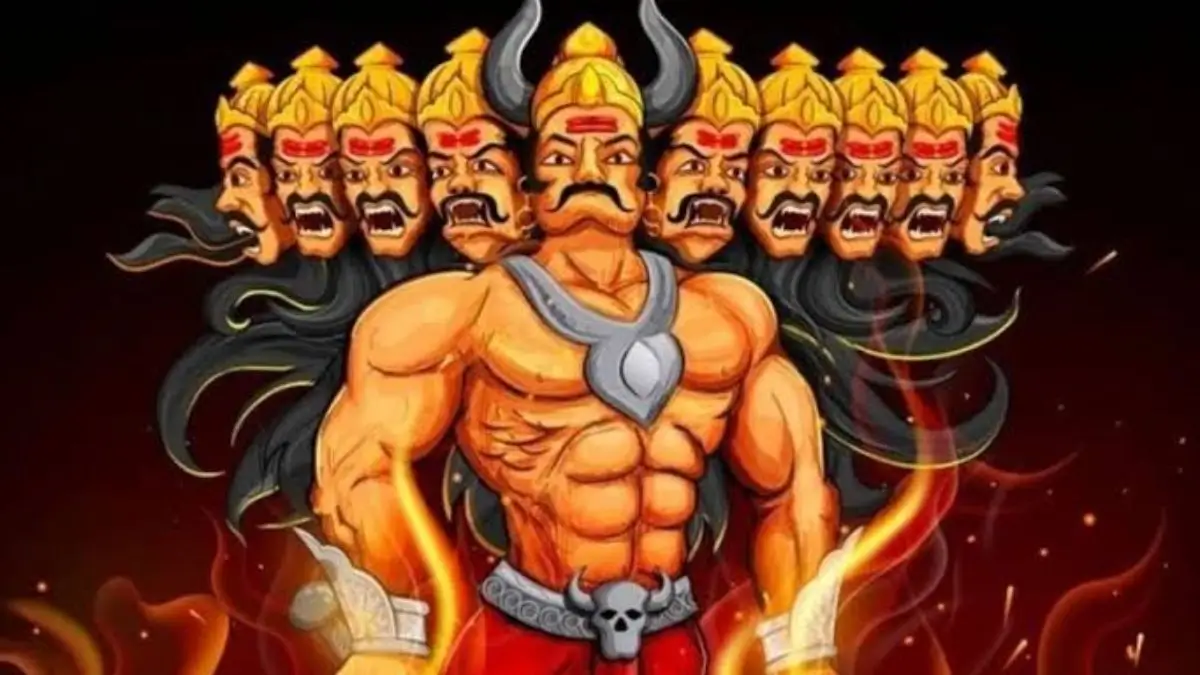
Ravana is undoubtedly one of the most complicated characters in the Indian epic genre. While popularly known as the king of Lanka and the villain of the Ramayana, he is depicted in several traditions as an accomplished scholar, musician, ruler and devoted worshiper of the Lord Shiva. The tale of Ravana is an interlink between Indian mythology, Sanskrit literature, religion, morals, and even the Dussehra festival. Any study of the character of Ravana involves much more than analyzing him as a villain, but rather considering his lineage, abilities, accomplishments and actions.
Ten Interesting Facts About Ravana
1. Ravana Is Known as Dashanana
Ravana is often referred to as the Dashanana or Dashamukha, it means that “ten-faced” or “ten-headed.” Depictions of Ravana in mythology depict him with ten heads and usually with twenty arms, thus highlighting his immense strength.
According to some interpretations of today’s time, the ten heads denote knowledge of the four Vedas and the six Shastras. In some others, the ten heads symbolize the human traits of pride, anger, greed, and attachment. Interpretations differ from one another and cannot be said to be a singular explanation of every Ramayana tradition.
2. Ravana Was Known As a Scholar
Ravana is depicted in traditions as a man of immense learning who had knowledge of the sacred scriptures, rituals, and other areas of scholarship. His Brahmin descent was linked to his education.
His life story serves as an important teaching in the Ramayana – knowledge and skills do not always mean righteousness. It is possible for knowledge and intellect to go hand-in-hand with actions that lead to negative consequences.
3. Ravana was a devotee of Lord Shiva
In Shaiva traditions, Ravana is known as a devotee of Lord Shiva. Tales speak of him undertaking strict penances in order to earn the favor of God.
Shiva Tandava Stotram is a Sanskrit hymn that celebrates the cosmic dance of Lord Shiva. It is traditionally considered to have been composed by Ravana. The attribution is one of devotion; it must not be regarded as firmly established historical attribution.
4. He ruled the magnificent city of Lanka
Lanka is said to be a magnificent and prosperous city in the Ramayana epic. The capital city of Ravana is described as a magnificent palace and rich in wealth.
Later versions depict the city as a gold-filled city. The association is made in regard to the great material prosperity during his rule in addition to the moral lesson regarding power in the epic.
5. He is associated with music
He is said in religious traditions to be a master musician and worshipper of Lord Shiva through the medium of music. The Ravana veena is also associated with him in later traditions.
6. He Attained Very Powerful Boons
According to the Ramayana, Ravana undertook very strict austerities to attain boons from God Brahma which protected him and made him almost invincible.
In the legend, Ravana sought protection against many gods and supernatural beings but not human beings in particular. Lord Rama, who was an avatar of Lord Vishnu in the Hindu religion, finally defeated him as a human being.
7. He Was a Very Powerful Warrior
Ravana led a very powerful army and had great strength as a warrior in the story. He engaged in battles with mighty warriors and celestial beings.
As a powerful military leader, Lanka became a very powerful empire. However, in spite of having strength and military might, he was defeated since his opponent possessed more skillful strategy and alliance.
8. He Was the Son of Sage Vishrava and Kaikesi
The father of Ravana was Sage Vishrava, a learned sage and the mother was Kaikesi, who belonged to the Rakshasa family.
His brothers were Kumbhakarna and Vibhishana, who had very important roles in the story while his sister Surpanakha was an important character in the series of events leading to the battle of Ravana with Rama.
9. Abduction of Sita Resulted in War
Sita was kidnapped and taken to Lanka and imprisoned in Ashoka Vatika. This act started off the conflict that takes place in the Ramayana.
In the Valmiki tradition, Sita continuously rejects the advances made by Ravana and remains devoted to Rama alone. It is Ravana’s inability to respect this that leads to his fall from grace and the war that ensues.
10. His Defeat Is Celebrated on Dussehra Day
Lord Rama killed Ravana during the final battle in the Ramayana. His death is celebrated on the occasion of Dussehra, which is also called Vijayadashami, in many places across India.
The burning of Ravana’s idol depicts the victory of good over evil. Many local customs are practiced on the occasion, and it is also associated with the victory of Goddess Durga over Mahishasura.
Ravana and Importance of Dussehra
Dussehra is a famous Hindu festival that falls on the tenth day of the bright fortnight in the lunar month of Ashwin in the Hindu calendar and thus its date changes every year according to the Gregorian calendar.
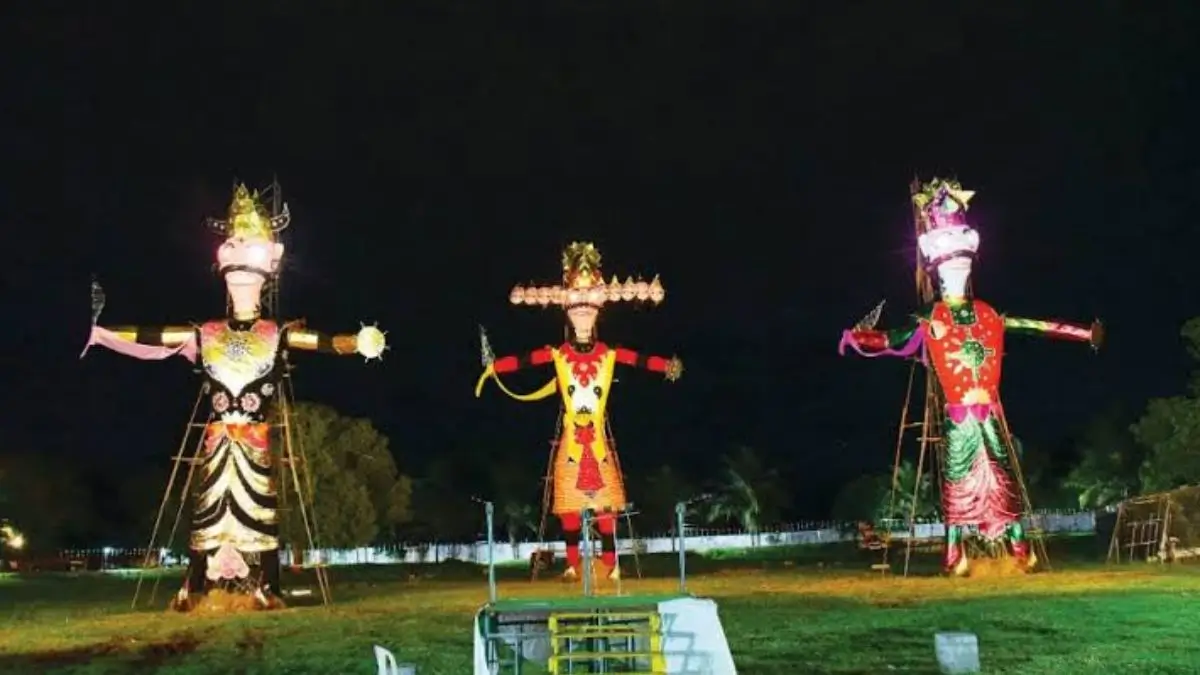
In many parts of northern India, it celebrates the triumph of Lord Rama over Ravana and the re-establishment of dharma. Ramlila, the staging of the Ramayana epic in public, often ends with the burning of the effigies of Ravana, Kumbhakarna, and Meghnad.
In many other places, Vijayadashami represents the triumph of Goddess Durga over Mahishasura.
Both stories are part of the festival’s varied regional traditions.
The moral lesson that is often imparted through the story of the destruction of Ravana is that pride, misusing power, and neglecting morality could bring about ruin, even for one who has immense knowledge and power.
Ravana in Indian Literature and Culture
The Ramayana versions feature a varied Ravana character. The Sanskrit Ramayana associated with Valmiki, the Ramcharitmanas of Tulsidas and the Tamil Ramavataram of Kamban among others constitute the epic Ramayana from different literary and religious perspectives.
Although he is the antagonist in Rama-oriented stories, Ravana is sometimes depicted as an erudite scholar, a devotee of Lord Shiva, a king or a victim of flaws. In some places, the Ravana figure is of cultural significance according to some local traditions.
These are examples that show how the Ramayana is not just one literary work but a wider narrative tradition carried through language, performance, religion, sculpture, painting, and storytelling.







 Dussehra Celebrations Across India: 12 U...
 History of Student Protests in France: F...
 Why Is Limoges Famous? Porcelain, Kaolin...