Jamnagar Refinery: Why India’s Oil Hub Matters to the World

Jamnagar is a coastal city in the state of the Gujarat and it is emerging as a key location for the world’s petroleum refining industry. The importance of this region has received international focus after the recent visit to Reliance Industries’ refinery complex by the U.S. Secretary of State Marco Rubio on October 21st 2026, against the backdrop of the Venezuelan crude oil and energy security discussions between India and the United States.

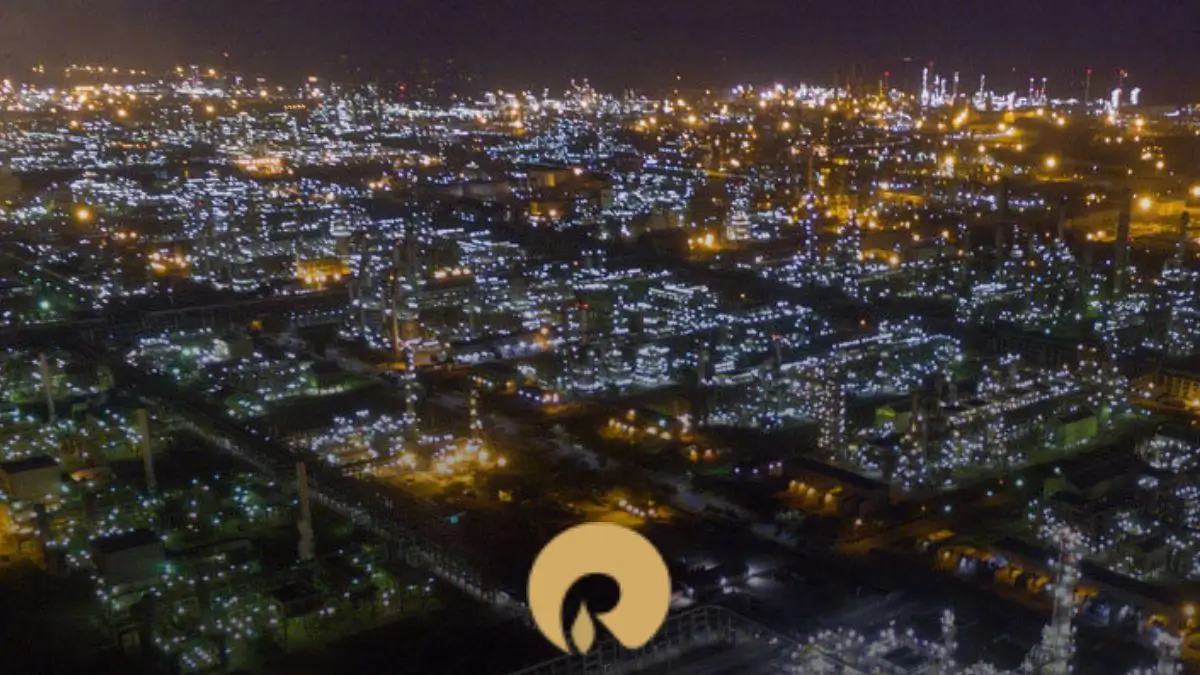
Reliance Industries Limited (RIL)-operated Jamnagar complex is considered to be the largest integrated single-site refinery complex in the world by Reliance Industries, with a crude processing capacity of around 1.4 million barrels per day.

Where Is the Jamnagar Refinery Located?

The Jamnagar refinery is situated at Jamnagar district on the western coastline of Gujarat state of India. The coastal location of the plant facilitates transportation through sea routes and crude oil imports along with international sales of the refined products.

The facility is made up of two refineries run by Reliance Industries and together have an installed capacity to process about 1.4 million barrels of crude oil per day (MMBPD) which is around 70 million tons per year (depending on the density of the crude oil). The company claims the capacity to be 1.4 MMBPD.

The refinery came into production in 1999 with expansion making it much larger and technologically more advanced.

Why Is Marco Rubio Visiting Jamnagar?

Visit of U.S. Secretary of State Marco Rubio on October 21, 2026, marks the increasing role of energy collaboration between India and the United States.

From the available information on the visit, the possibility of Reliance processing additional Venezuelan crude oil is being discussed. The USA is looking for the market for the rising Venezuelan oil production, while the refining capacity in India provides an option for the processing of this type of crude. India is referred to as a refining superpower by Rubio due to its ability to refine various grades of crude oil.

In addition, the discussions are held under certain geopolitical considerations. Conflicts influencing the Middle East and the danger to the transport of oil through important maritime routes cause the worries concerning the energy supply, transport costs, and international oil prices.

It is important to note that the possible increase in the processing of Venezuelan crude does not mean a guaranteed long-term supply of oil from Venezuela. Purchasing of the crude depends on various commercial factors.

What Sets the Jamnagar Refinery Apart?

Jamnagar’s refinery is characterized by large-scale refining of crude oil along with conversion technology and petrochemical manufacturing.

According to Reliance Industries, the refinery’s complexity index is 21.1, and more than 216 grades of crude have been refined there. It means that the company has the ability to deal with many types of crude oil and manufacture products intended for various markets.

Crude oil consists of hydrocarbons of different molecular sizes and structures. Refineries isolate them from crude oil using further chemical processes of converting them into other products.

Specialized facilities in Jamnagar include fluidized catalytic cracking, coking, alkylation, paraxylene, polypropylene, refinery off gas cracking and petroleum coke gasification.

The ability to work with different crude oil is especially important when the crude’s supply, price or composition changes due to geopolitical factors or changes in the world market demands.

Technologies at Jamnagar

1. Petcoke gasification

Petroleum coke, which is rich in carbon content and obtained as a by-product of the refinery process, is gasified to synthesize gas known as ‘syngas’. This synthesized gas may help meet the energy needs of the complex.

2. Refinery Off-gas Cracker (ROGC)

This is a technology which utilizes gases produced in the refinery process as feedstock to produce ethylene, a basic building block chemical used to make various kinds of petrochemicals. The commissioning of the world’s largest ROGC facility was made public by Reliance Industries in January 2018.

3. Paraxylene production

Paraxylene is an important chemical feedstock which can be used to make purified terephthalic acid (PTA).

What is Heavy Crude Oil and How is it Significant?

Heavy crude oil is a kind of petroleum that usually has higher density and viscosity compared to light crude oil. Processing of heavy crude oil may need special refinery equipment that will transform its heavy components into economically viable products.

Venezuela has large heavy oil reserves. With the help of refineries that have special conversion capabilities, it is possible to produce economically valuable products using proper heavy crude oils.

The capability of Jamnagar to accept various types of crude oil makes it relevant in the context of Venezuelan oil exports. The economic viability of such export depends on many factors like the quality of the crude oil, its price, costs of transport and processing, and the value of the product.
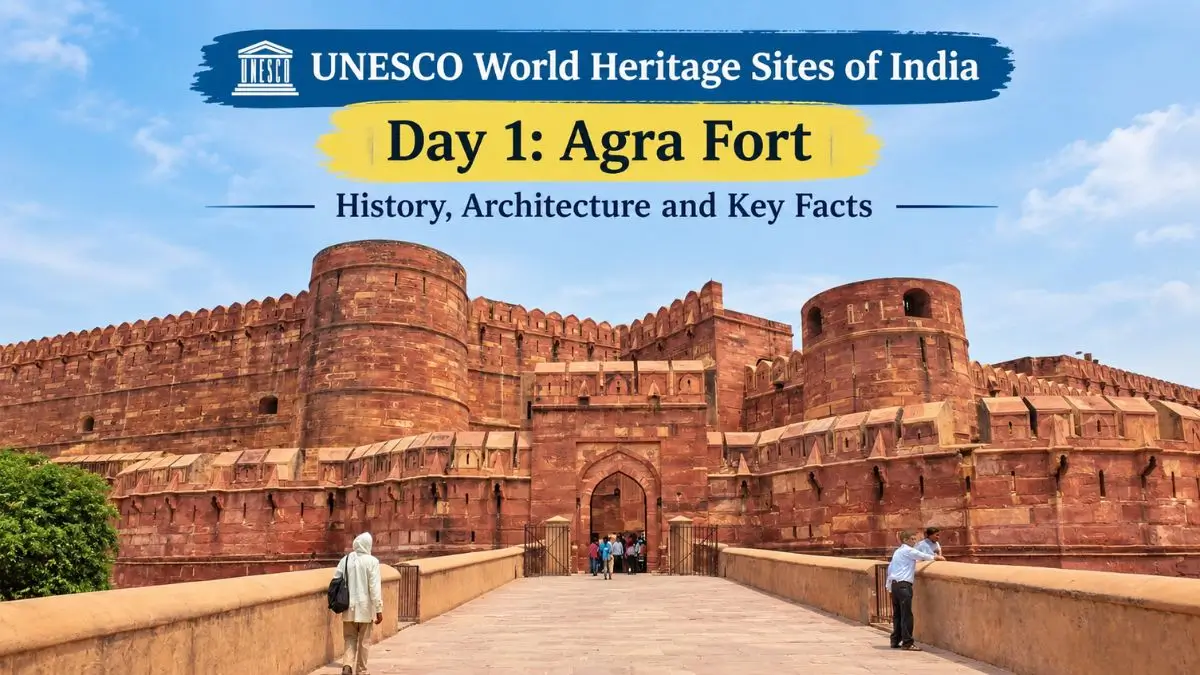
UNESCO World Heritage Sites of India – Day 1: Agra Fort | History, Architecture and Key Facts

Situated along the banks of the River Yamuna in Agra, Uttar Pradesh, Agra Fort is one of the major landmarks of the Mughal era. Agra Fort is popularly known as the “Red Fort of Agra” owing to its huge walls of red sandstone and its magnificent Mughal architecture comprising royal palaces and audience chambers.

The Agra Fort was extensively rebuilt and modified by Emperor Akbar during the 16th Century and then later renovated by Emperor Shah Jahan. The Agra Fort was an important administrative center of Mughals along with being the seat of the Mughal Kings. In view of its historical and architectural importance, Agra Fort was added to the list of World Heritage Sites by UNESCO in 1983.

Location of Agra Fort

Agra Fort is situated at Agra, in the state of Uttar Pradesh, India, adjacent to the Yamuna River and roughly 2.5 kilometers away from the Taj Mahal.

This is a typical specimen of Mughal military architecture mixed with the imperial living and administrative quarters within it. The fort walls stretch for about 2.5 kilometers.

Agra Fort History

While there existed a fort in the past, its renovation by Emperor Akbar turned it into an important imperial citadel after the emperor chose Agra as one of the important centres of his empire. Construction of the fort commenced in 1565 using red sandstone as the main building material.

During the rule of Akbar, Agra Fort had a dual role, acting as both a military fort and an administration centre in addition to serving the residential needs of the ruling class. It facilitated security of the imperial centre and enabled expansion of the Mughal Empire.

Emperor Shah Jahan renovated the fort in later periods by adding new buildings that used marble and decorations as an expression of changing tastes and preferences of the Mughal Empire.

Moreover, Agra Fort is significant in the context of the end of reign of Shah Jahan since after taking over power, Aurangzeb confined Shah Jahan in Agra Fort until his death in 1666.

Architecture of Agra Fort

Agra Fort is a fortress built along with palatial buildings to reflect the grandeur of Mughal architectural style. The huge red sandstone walls, gates, courtyards, and royal structures of the fort highlight the architecture of the Mughal period.

Following buildings in the Agra Fort are important,

Jahangir Palace

  • It is an important palace in the fort complex and is related to the imperial residential complex. It is famous because of its red sandstone and ornate architectural features.

Khas Mahal

  • It is a royal palace related to Shah Jahan and is well-known for its elegant architecture and white marble.

Diwan-i-Khas

  • This is the Hall of Private Audience and is related to formal meetings with the emperor and some of his courtiers.

Moti Masjid

  • It is a white marble mosque in the Agra Fort and shows the elegant religious architecture of the Mughal period.

The above buildings indicate that Mughal forts not only served defensive purposes but also political and governmental purposes.

Why Is Agra Fort a UNESCO World Heritage Site?

Agra Fort is a UNESCO World Heritage Site, added to the list in 1983 under Criterion (iii).

Criterion (iii) relates to properties that represent a unique or at least exceptional testimony to a cultural tradition or civilization either extant or disappeared.

Agra Fort serves as a reflection of the political power, architectural style and court culture of the Mughal Empire. The fusion of strong defense structures and lavish architecture makes the monument one of the most representative monuments of Mughal architecture.

UNESCO has identified Agra Fort as a cultural heritage site. Not only do the physical elements hold significance but the information provided through these elements is equally important.

Connection Between Agra Fort and the Taj Mahal

The Agra Fort and the Taj Mahal are two separate World Heritage Sites of UNESCO situated in the city of Agra.

While the Agra Fort stands for the military, political, and residential aspects of the rule of the Mughals, the Taj Mahal has been renowned mostly for its architecture and connection to Mumtaz Mahal, wife of the emperor Shah Jahan.

Both the monuments were added to the UNESCO World Heritage List in 1983.

Can a Place with Heavy Rainfall Be Called a Desert? The Mystery of Lençóis Maranhenses

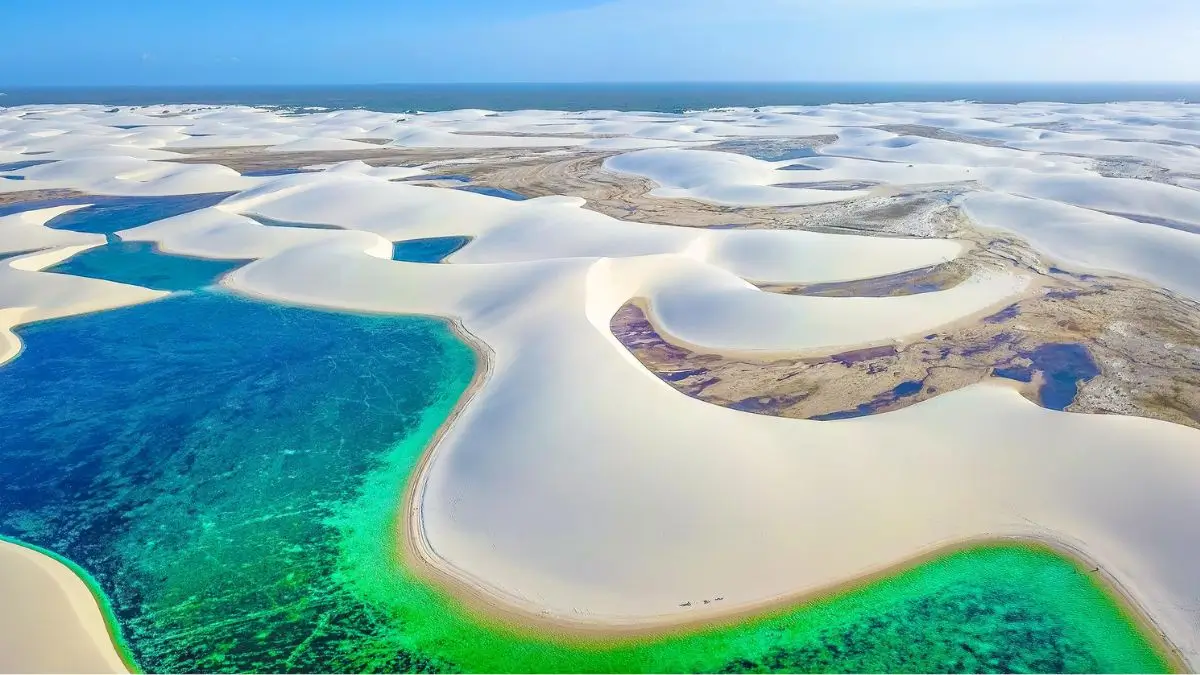
The Lençóis Maranhenses National Park lies in northeastern Brazil and is famous for its white sand dunes and lakes of fresh water. In the rainy season, rainwater pools in basins formed in the ever-changing sands to form thousands of temporary lagoons, which dry out as the dry season advances. Though it looks like a desert, this national park is not technically a desert since it gets abundant rains during some seasons. It was included in the UNESCO World Heritage list in 2024.

Where Is Lençóis Maranhenses National Park Found?

Lençóis Maranhenses National Park can be found in Maranhão state on the northeastern coast of Brazil in South America. The national park is located within the Barreirinhas basin, where there are extensive stretches of white sand dunes and lagoons.

Lençóis Maranhenses National Park has an area of about 156,562 hectares, which is equivalent to about 1,566 km². There are about 90,000 hectares of dune fields in the national park, while about 40,000 hectares have restinga vegetation.

There are about 80 kilometers of coastal land in the park. This national park is renowned internationally due to its spectacular natural scenery and dune formation, which occurred thousands of years ago.

Why Is the Park Desert-Like but Has Freshwater Lagoons?

Lençóis Maranhenses looks like a desert because of the presence of vast white sand dunes. However, this park does not belong to the class of deserts since it is characterized by a semi-humid climate with a wet season.

The rainfall received during the wet season fills up the hollows between the dunes, resulting in lagoons with diverse shapes, sizes, depths, and colors. The lagoons are supplied by rainwater only, with no traditional sources or drains.

As the dry season advances, many temporary lagoons dry out due to the process of evaporation or fluctuation in the groundwater level. The lagoons resurface in new locations and different shapes in the next wet season.

This natural phenomenon highlights the link between climate, hydrology, and topography of the park.

Formation of the Sand Dunes

The formation of Lençóis Maranhenses has been a result of sedimentation and the action of wind in the Quaternary period that started about 2.58 million years ago.

Coastal sediments are deposited by the marine forces, and winds act upon them, forming dunes. Winds that blow in one direction cause the formation of crescent-shaped dunes referred to as barchans.

The dunes are formed in long chains stretching inland. As indicated by UNESCO, a dune chain can be as long as 75 kilometers, and some of the dunes grow up to 30 meters tall.

Dune mobility is another unique aspect. As indicated by UNESCO, the speed of dune migration is up to 4 to 25 meters per year. This indicates that the landscape keeps changing as a result of the wind and other forces of nature.

The interaction between mobile dunes, seasonal lagoons and coastal sediments creates a unique natural environment for geomorphology studies.

UNESCO World Heritage Site: Why Does It Matter?

Lençóis Maranhenses National Park was included in the UNESCO World Heritage List in 2024 due to its outstanding natural value.

The park received World Heritage status due to two criteria for natural heritage:

  • Criterion (vii): Natural beauty – Lençóis Maranhenses National Park features an exceptionally beautiful landscape that includes huge white sand dunes with freshwater lakes.
  • Criterion (viii): Geological value – Lençóis Maranhenses National Park exhibits important geological processes in the formation of coastal formations in the Quaternary period.

This site is especially important due to the widespread development of dynamic coastal dunes and freshwater lakes.

It shows the global significance of the park and emphasizes the need for its conservation and management.

Park Protection and Management

Lençóis Maranhenses National Park was founded in 1981 and is managed by the Chico Mendes Institute for Biodiversity Conservation (ICMBio). ICMBio is the federal institution responsible for Brazil’s protected areas.

It constitutes a protected area within the National System of Conservation Units in Brazil. The park is classified as integral protection unit where natural resources are subject to conservation regulations and exploitation is prohibited.

A buffer zone of about 268,231 hectares provides a further level of protection for the natural ecosystems found within the national park.

The management focuses on biodiversity conservation, environmental pressures, regulation of tourism activities, and involving local/ traditional communities in decision-making processes. This is essential since increasing tourism can have an impact on the fragile ecosystems of the dunes and lagoons.

India-Australia Joint Military Exercise AUSTRAHIND 2026 Begins in Kerala

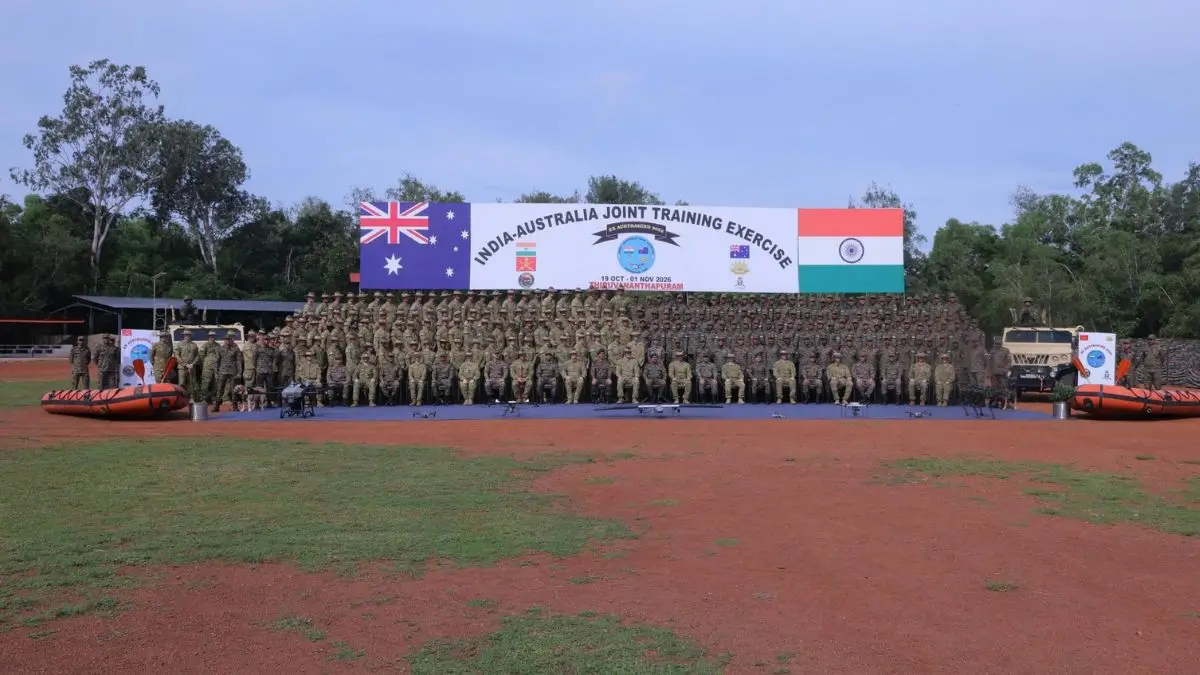
The fifth edition of the exercise AUSTRAHIND 2026, a bilateral military exercise involving the Indian Army and the Australian Army, began on 19 October 2026 in the Foreign Training Node located in Thiruvananthapuram, Kerala. About 240 participants from both nations, around 120 each, will take part in the exercise, which will end on 1 November 2026. This year’s exercise will involve joint sub-conventional operations in an island/coastal environment. An observer team from New Zealand will participate for the first time in the exercise.

Theme and Objectives of the Exercise

AUSTRAHIND 2026 exercise is being held based on the theme “Joint Sub-Conventional Operations in Island and Coastal Environment under Chapter VII of the UN Mandate.”

The objective of the exercise is to enhance interoperability, jointmanship and operational coordination between the Indian and Australian armies. The exercise is also meant to facilitate a shared understanding of Tactics Techniques and Procedures for conducting operations in island and coastal terrains.

The training program includes,

  • Joint planning and tactical drills: Joint planning and conduct of the military operations.
  • Surveillance and reconnaissance: Enhancement of surveillance and assessment of the operational environment.
  • Protection of vital installations: Practice in defending strategically significant installations.
  • Operations in coastal and islands: Conduct of coordinated military operations in difficult terrain which include aerial and maritime elements.
  • Humanitarian Assistance and Disaster Relief (HADR): Preparations for the troops to respond to the humanitarian disasters and natural disasters.
  • Professional exchanges: Exchange of experiences and knowledge between the armies.

Importance of AUSTRAHIND 2026

Enhancing Defense Cooperation between India and Australia

  • AUSTRAHIND allows Indian and Australian armies to engage in joint military operations, share professional experience and become better acquainted with each other’s operational processes. Such exercises help to build military to military relationships and enhance interoperability.

Fostering Security in the Indo-Pacific Region

  • There is common interest of India and Australia in ensuring peace and security in the Indo-Pacific region. Exercises in such environment are important to cope with security concerns and challenges related to that region.

Participation of New Zealand as an Observer

  • It is the first time when New Zealand observers will take part in the exercise. This fact means that there will be an observer aspect of the exercise and an opportunity to understand training processes of the armies involved in the exercise.

Earlier Edition of Exercise AUSTRAHIND

AUSTRAHIND fourth edition took place at Irwin Barracks, Perth, Australia between 13-26 October 2025. However, for the fifth edition of AUSTRAHIND, the exercise has come back to India, and this time the chosen place is Thiruvananthapuram.

Asian Para Games 2026: Ayush Verma Wins Shot Put Gold as India’s Medal Tally Reaches 38

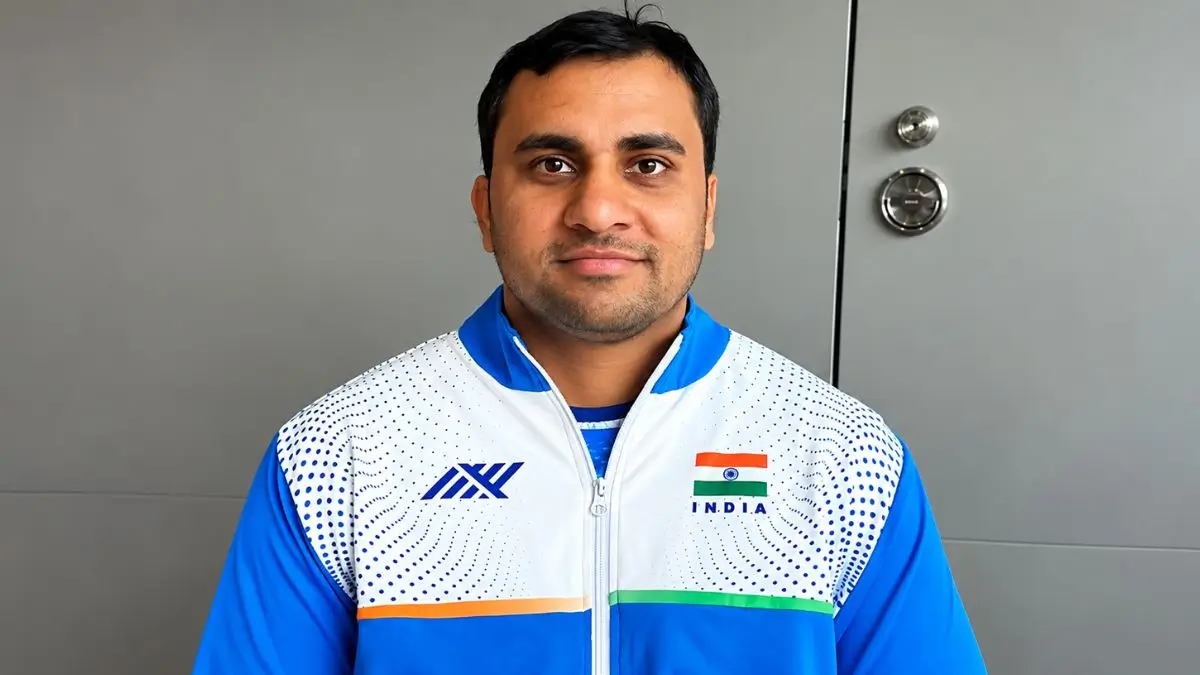
The Indian para-athlete, Ayush Verma bagged the gold medal in the men’s shot put F53 category at the Asian Para Games 2026 held in Nagoya, Japan on 21st October. The throw distance of 8.16 meters on the fifth try of Ayush contributed towards making India’s total number of gold medals to ten and the total count of medals to 38 as per the provided report. Ayush also won the bronze medal in the men’s javelin F53/54 event. The para-badminton player Suhas Yathiraj made it to the semi-finals and assured India’s other medal.

Ayush Verma Bags Gold in Men’s Shot Put F53 Event

Ayush Verma won the gold medal by achieving the throw distance of total 8.16 meters on his fifth attempt in the seated throwing competition. He emerged victorious against the silver medalist Alireza Hemami from Iran, whose throw distance was 8.09 meters, and bronze medalist Makhambet Serikkaliyev from Kazakhstan, whose throw distance was 6.81 meters.

It is the second medal that Ayush Verma won at the games. Earlier, he had won the bronze medal in the men’s javelin F53/54 event.

Men’s Shot Put F53: Medals

Place Player Nationality Throw
Gold Ayush Verma India 8.16 m
Silver Alireza Hemami Iran 8.09 m
Bronze Makhambet Serikkaliyev Kazakhstan 6.81 m

What Does the F53 Class Mean in Paralympic Sports?

The F53 class represents a classification of paralympic sports involving a high degree of difficulty in movements of the trunk and legs, but with a relatively lesser disability of the hands.

The competition takes place in a seated position, with throwing power coming from the use of trunk, shoulder, and upper body movements.

This classification ensures that paralympians compete within classes based on their specific impairment. The letter F is an abbreviation for field event classification, which includes such events as shot put, discus, and javelin.

Suhas Yathiraj Qualifies for Para-Badminton Semifinals

Para-badminton player of India, Suhas Lalinakere Yathiraj, qualified for the men’s singles SL4 semi-finals after beating N. Cho from South Korea in two games by scores of 21-12, 21-16.

His qualification for the semi-finals ensured that India wins a minimum bronze medal according to the medal system of the tournament. Being a Paralympic medal winner, Suhas continued the quest of India in para-badminton.

However, other players from India had different fortunes,

  • Sukant Kadam lost to Fredy Setiawan from Indonesia in the SL4 quarterfinals with scores of 17-21, 21-18, 15-21.
  • Prem Kumar Ale lost to Haeseong Park from South Korea in the men’s singles WH1 quarterfinals with scores of 13-21, 12-21.
  • Pallavi Kaluvehalli lost her match in the women’s singles WH1 with scores of 4-21, 4-21 to Sena Tomoyose from Japan.

UNESCO Adds Three Indian Sites to World Heritage Tentative List in 2026

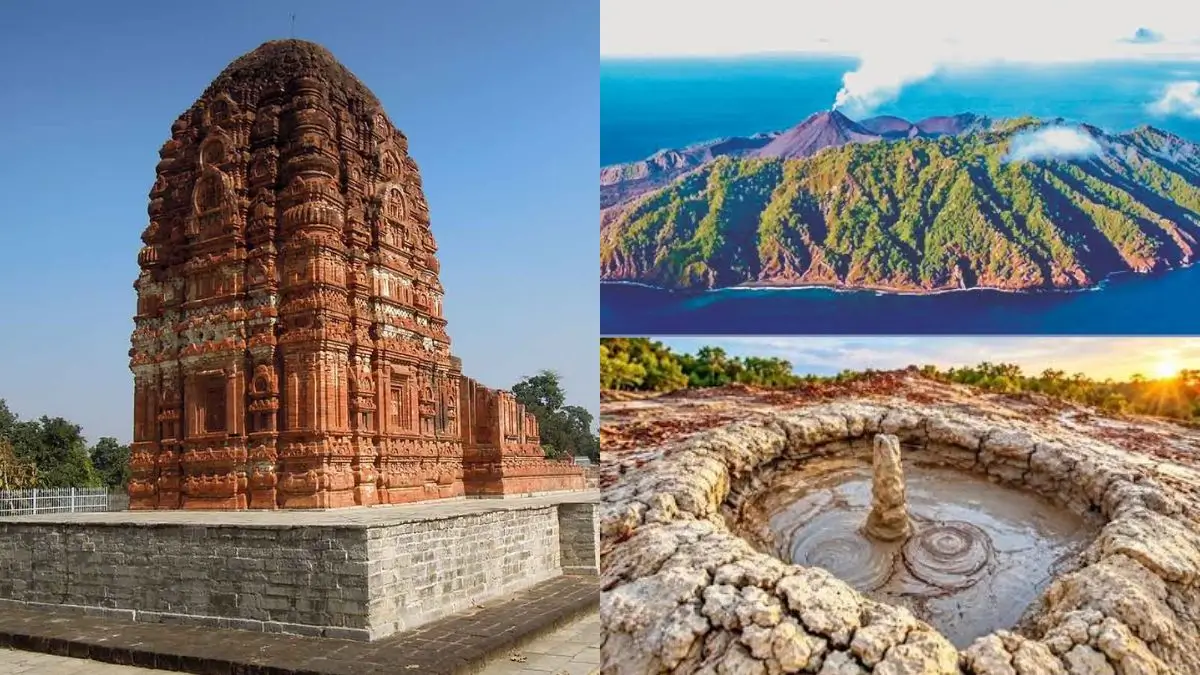
Three new sites have been added to India’s Tentative List by UNESCO’s World Heritage Centre, marking an essential step toward formal nomination for World Heritage status. As per the latest press release issued by the Permanent Delegation of India to the UNESCO, the newly included sites cover key geological and archaeological landscapes, namely the Karst-mud-volcano Complex of Baratang and Andaman Subduction Volcanoes in Andaman & Nicobar Islands and the Sirpur Cultural and Archaeological Landscape in Chhattisgarh.

Which Are The Three Properties That Have Been Listed In The Tentative List Of UNESCO?

The three properties have been proposed by the Permanent Delegation of India to UNESCO on September 28, 2026. As per UNESCO, the first two properties are natural properties while the third is cultural property.

Property State/Union Territory Type Significance
Karst-Mud-Volcano Complex of Baratang Andaman and Nicobar Islands Natural Limestone Caves, Karst features & Mud Volcanoes
Andaman Subduction Volcanoes Andaman and Nicobar Islands Natural Volcanic geological formations, Tectonic processes & Biodiversity
Sirpur Cultural and Archaeological Landscape Chhattisgarh Cultural Archaeological site, Historic Trade Routes & Multi-faith heritage landscape

1. Baratang Mud-Karst-Volcano Complex

The island of Baratang is one of the islands of Andaman and Nicobar group of islands in Bay of Bengal. It is nominated as a heritage site due to its limestone caves, karst formations, and mud volcanoes.

The limestone caves were created by means of the dissolution of soluble rocks by water. The landscape includes such elements as fissures, underground caves and speleothems – mineral deposits in the form of stalactites and stalagmites.

The mud volcanoes on Baratang, which are called “Jalki” locally, are not typical of volcanic formations as they expel mud, water and gas, not lava. The phenomenon is related to the presence of compressed underground sediments and seismic processes. According to the nomination document by UNESCO, the mud volcanoes have become active once more in 2025 after 20 years of inactivity.

2. Andaman Subduction Volcanoes

The proposed site for the Andaman Subduction Volcanoes property is Barren Island and Narcondam Island, which are two volcanic islands located in the Andaman Sea. They serve as a representation of volcanic activity in connection with the subduction of the Indian Plate under the Burma microplate.

Even though they both belong to the same volcanic arc, there are some differences between the two islands,

  • Barren Island: Characterized by its active volcano, basaltic and basaltic-andesite lava, and a caldera due to the collapse of an older volcanic edifice.
  • Narcondam Island: Known for its unique volcanic geology and its rich biodiversity. Narcondam Island is known to be an Important Bird Area and Key Biodiversity Area as well.

This property proposal is concerned about the land mass of both of these islands.

3. Sirpur Cultural and Archaeological Landscape

Sirpur is situated in Mahasamund District of Chhattisgarh, near the eastern banks of Mahanadi River and about 78 kilometres away from Raipur. This historic site has evidence of ancient trade and urbanisation activities along with inter-religious interactions.

Some of the historic monuments found here belong to various religions, such as Hindus and Buddhists, and show the links between commerce, religion and growth of settlements. Sirpur’s location is also an indicator that the culture of this historic place is related to the natural surroundings.

The nomination document submitted by UNESCO states that Sirpur lies in the Proterozoic Chhattisgarh Basin and also mentions the geology of stromatolites, which are laminated sediments created due to activities of microorganisms, like cyanobacteria. This property can be categorized as cultural since it holds archaeological importance.

What Is the World Heritage Tentative List of UNESCO?

Tentative List is a list of cultural or natural properties that a country considers eligible for nomination to the UNESCO World Heritage List. Listing on this list is a compulsory preliminary stage, although this does not imply that the property is already a World Heritage.

In general, the procedure looks like this,

  • 1. Tentative List – Identification by the country of properties that have potential Outstanding Universal Value.
  • 2. Nomination – submission of a nomination dossier by the country.
  • 3. Evaluation – evaluation of the nomination.
  • 4. Inscription – decision by the World Heritage Committee about inscription of the property into the World Heritage List.

The Tentative List may be updated by the country as new properties are identified. There are 81 properties listed for India according to UNESCO.

Police Commemoration Day 2026: History, Significance and National Police Memorial

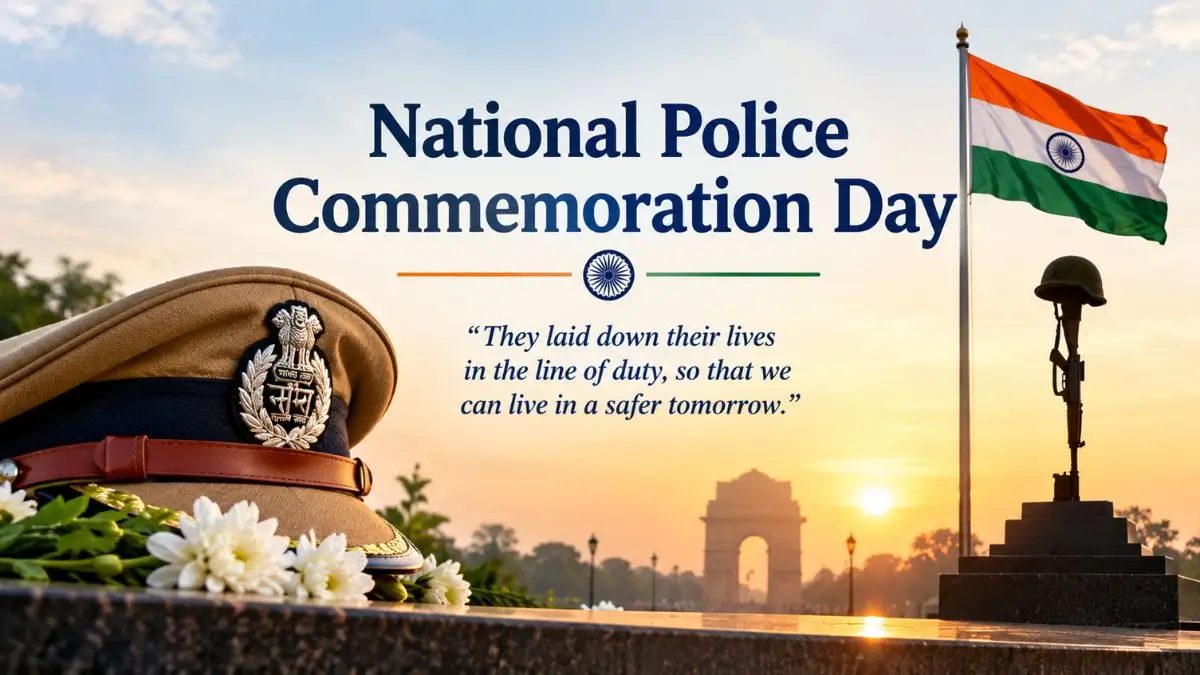
India marks Police Commemoration Day every year on October 21 in the memory of police officers who gave their lives while performing their duties. This day is in commemoration of the death of ten CRPF officers at Hot Springs in Ladakh in 1959, who were murdered by the Chinese forces. The main ceremony will take place at the National Police Memorial, Chanakyapuri, New Delhi in 2026. There is also going to be a motorcycle rally program with the theme of “Fight Against Drugs.”

Police Commemoration Day 2026: Key Highlights

Police Commemoration Day honors the bravery and sacrifices of the police personnel who are belongs to state/Union Territory police forces, CAPFs and other police departments.

As per the above-mentioned program for 2026, the main event will take place at the National Police Memorial in New Delhi. The main event consists of a joint parade of CAPFs and Delhi Police along with a wreath laying ceremony and honoring the personnel who gave their lives while performing their duties.

Besides the above event, there is also an event called “Motorcycle Rally.” It includes about 90 police personnel participating in the rally themed “Fight against Drugs” and traveling to Ekta Nagar in Gujarat for the Ekta Parade on October 31. These are tentative programs and should be taken as complete after the post-event report.

History of Police Commemoration Day

Police Commemoration Day is derived from the events of the October 21, 1959, when a CRPF convoy faced an attack by the Chinese army at Hot Springs in Ladakh.

These ten CRPF members sacrificed their lives on that day while performing their duties close to the India-China border. This sacrifice was a landmark event in the annals of India’s police services.

The day was selected to remember the sacrifice of these ten police members and other martyred policemen.

For that, October 21 is celebrated across the India by various police units as a tribute to those who laid down their lives while discharging their duties.

National Police Memorial, New Delhi

The National Police Memorial is located in Chanakyapuri, New Delhi. This memorial pays tribute to those members of the police force that lost their lives while serving the country and its people.

The National Police Memorial was unveiled to the nation by Prime Minister Narendra Modi during the Police Commemoration Day celebrations on October 21, 2018. The monument symbolizes the service and sacrifice of police forces from all states and union territories of India and of central police forces.

Its key elements are,

  • Central Sculpture: Symbolizing the bravery and capability of the Indian police forces.
  • Wall of Valour: Paying respect to those police personnel who died on duty.
  • Police Museum: Reflecting the past history, service and sacrifices of the Indian police forces.

Police Commemoration Day 2026: Anti-Drug Motorcycle Ride

The “Fight Against Drugs” motorcycle ride is an important event that will be organised in the year 2026. Around 90 police riders from the selected states/Union Territories, Central Armed Police Forces, and other central police organisations will participate in the ride.

The police riders will ride motorcycles to Ekta Nagar, Gujarat, to participate in Ekta Parade on October 31, on the occasion of Rashtriya Ekta Diwas (National Unity Day), celebrated on the birth anniversary of Sardar Vallabhbhai Patel.

The anti-drug motorcycle ride includes both police public relation exercise and creation of awareness about the ill effects of drugs.

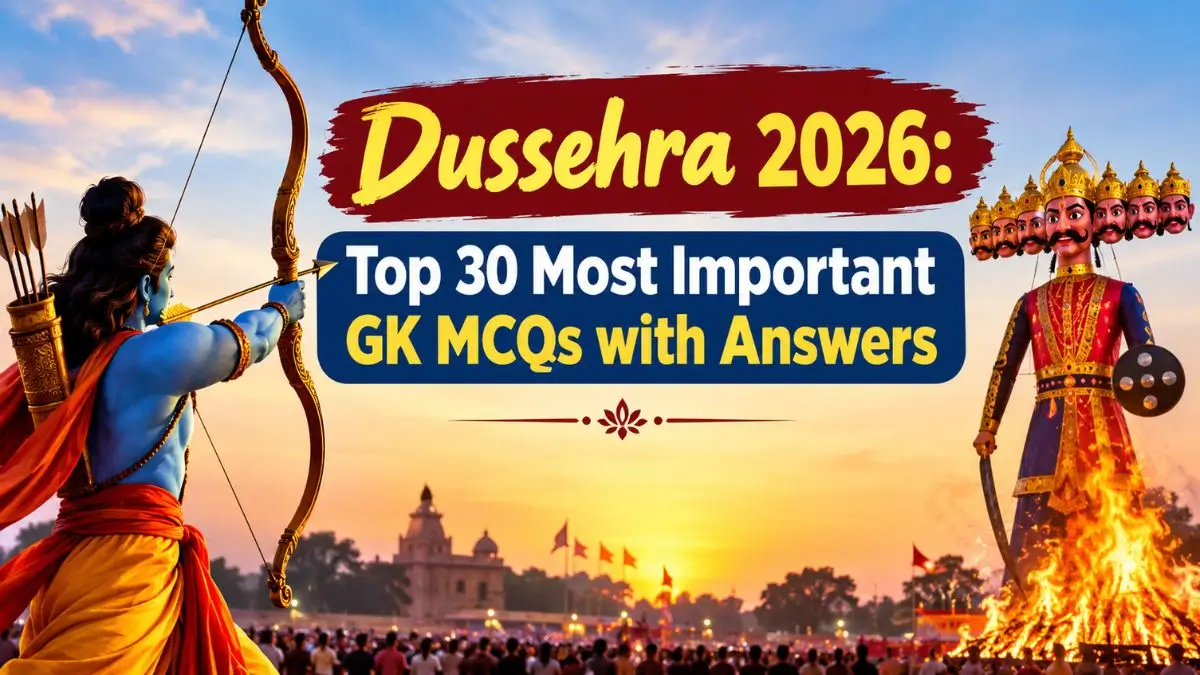
Dussehra 2026: Top 30 Most Important GK MCQs with Answers

Dussehra, also known as Vijayadashami, is a major Hindu festival that symbolises the victory of good over evil. It is associated with Lord Rama’s victory over Ravana and, in several traditions, Goddess Durga’s victory over Mahishasura. These 30 Dussehra GK questions with answers cover mythology, religious traditions, regional celebrations and cultural significance, making them useful for school quizzes, general knowledge competitions and cultural programmes.

Dussehra GK Quiz with Answers

Basic Questions on Dussehra

Q1. Dussehra is also known as which festival?

a) Holi

b) Vijayadashami

c) Diwali

d) Navratri

Answer: b) Vijayadashami

Q2. What does Dussehra primarily symbolise?

a) Victory of evil over good

b) Victory of good over evil

c) The arrival of spring

d) The beginning of winter

Answer: b) Victory of good over evil

Q3. According to the Ramayana, who defeated Ravana?

a) Lord Krishna

b) Lord Rama

c) Lord Shiva

d) Lord Hanuman

Answer: b) Lord Rama

Q4. How many heads is Ravana traditionally depicted with?

a) Five

b) Seven

c) Ten

d) Twelve

Answer: c) Ten

Q5. Who was Lord Rama’s wife?

a) Sita

b) Radha

c) Draupadi

d) Parvati

Answer: a) Sita

Q6. Which bird attempted to rescue Sita when Ravana abducted her?

a) Garuda

b) Jatayu

c) Peacock

d) Swan

Answer: b) Jatayu

Q7. What does the burning of Ravana’s effigy commonly represent?

a) The end of summer

b) The victory of good over evil

c) The worship of Ravana

d) The beginning of Holi

Answer: b) The victory of good over evil

Q8. Who were Ravana’s brothers?

a) Vibhishana

b) Kumbhakarna

c) Both a and b

d) Neither a nor b

Answer: c) Both a and b

Q9. Who helped Lord Rama build the bridge to Lanka, according to the Ramayana?

a) Humans alone

b) The Vanara army and its allies

c) Birds

d) Demons alone

Answer: b) The Vanara army and its allies

Q10. What is the traditional name of the bridge associated with Lord Rama’s journey to Lanka?

a) Ram Setu

b) Sita Setu

c) Hanuman Setu

d) Lanka Bridge

Answer: a) Ram Setu

Mythology and Religious Significance

Q11. Which sage is traditionally associated with introducing Lord Rama to divine weapons and martial knowledge?

a) Agastya

b) Sage Vishwamitra

c) Sage Valmiki

d) Sage Bharadwaja

Answer: b) Sage Vishwamitra

Q12. How many nights are celebrated during Navratri?

a) Five

b) Seven

c) Nine

d) Ten

Answer: c) Nine

Q13. On which day of the Hindu lunar calendar is Dussehra observed?

a) Chaitra Pratipada

b) Ashwin Shukla Dashami

c) Kartik Purnima

d) Phalguna Purnima

Answer: b) Ashwin Shukla Dashami

Q14. Which demon did Goddess Durga defeat in the traditional account associated with Vijayadashami?

a) Ravana

b) Mahishasura

c) Hiranyakashipu

d) Bhasmasura

Answer: b) Mahishasura

Q15. Which Indian state is especially famous for Mysuru Dasara?

a) Tamil Nadu

b) Karnataka

c) Kerala

d) Gujarat

Answer: b) Karnataka

Q16. In which epic is the story of Lord Rama and Ravana principally narrated?

a) Mahabharata

b) Ramayana

c) Rigveda

d) Arthashastra

Answer: b) Ramayana

Q17. Who was Ravana’s father according to the Ramayana tradition?

a) King Dasharatha

b) Sage Vishrava

c) Sage Valmiki

d) Indra

Answer: b) Sage Vishrava

Q18. What was the name of Ravana’s son who was also known as Indrajit?

a) Meghnad

b) Bharata

c) Lakshmana

d) Sugriva

Answer: a) Meghnad

Q19. Which city is famous for the traditional Ramnagar Ramlila performances near Varanasi?

a) Delhi

b) Mumbai

c) Ramnagar

d) Jaipur

Answer: c) Ramnagar

Q20. What is Dussehra known as in West Bengal in the context of Durga Puja celebrations?

a) Durga Ashtami

b) Kali Puja

c) Bijoya Dashami

d) Maha Shivaratri

Answer: c) Bijoya Dashami

Traditions and Regional Celebrations

Q21. What was Lakshmana’s relationship with Lord Rama?

a) Cousin

b) Younger brother

c) Uncle

d) Friend

Answer: b) Younger brother

Q22. Lord Hanuman is especially known for his devotion to whom?

a) Goddess Sita alone

b) Lord Rama

c) Lord Shiva alone

d) Lakshmana alone

Answer: b) Lord Rama

Q23. Which activity is commonly associated with Dussehra celebrations in many parts of northern India?

a) Playing Holi

b) Burning Ravana effigies

c) Flying kites as the main ritual

d) Celebrating the harvest of Pongal

Answer: b) Burning Ravana effigies

Q24. Who was Bharata in the Ramayana?

a) Lord Rama’s brother

b) Ravana’s son

c) Hanuman’s son

d) Sita’s brother

Answer: a) Lord Rama’s brother

Q25. What is one of the central moral lessons associated with Dussehra?

a) Wealth is the greatest achievement

b) Power always guarantees victory

c) Good ultimately triumphs over evil

d) Conflict is always unavoidable

Answer: c) Good ultimately triumphs over evil

Q26. Which goddess is worshipped prominently during Navratri?

a) Goddess Saraswati only

b) Goddess Durga

c) Goddess Lakshmi only

d) Goddess Ganga

Answer: b) Goddess Durga

Q27. Which food combination is particularly popular during Navratri-season celebrations in Gujarat?

a) Idli and sambar

b) Dhokla and khichdi only

c) Fafda and jalebi

d) Pongal and payasam

Answer: c) Fafda and jalebi

Q28. Who was Lord Rama’s mother?

a) Kaikeyi

b) Kausalya

c) Sumitra

d) Mandodari

Answer: b) Kausalya

Q29. During which period of the Gregorian calendar is Dussehra usually celebrated?

a) January–February

b) March–April

c) September–October

d) December–January

Answer: c) September–October

Q30. Which ruler is traditionally associated with the establishment of the Mysuru Dasara celebration in 1610?

a) Krishnadevaraya

b) Raja Wadiyar I

c) Ashoka

d) Tipu Sultan

Answer: b) Raja Wadiyar I

Dussehra and UNESCO: Ramlila, Durga Puja, Garba and India’s Intangible Cultural Heritage

Both Dussehra and Navaratri are celebrated along with some very unique forms of culture of India, which include Ramlila plays, Durga Puja in Kolkata and the festival of Garba in Gujarat. This involves religious activities as well as theatre, music, dance, craft and community participation. Such cultural practices have been included by UNESCO in its Representative List of the Intangible Cultural Heritage of Humanity in order to preserve their cultural significance and also because of the necessity of keeping the traditions of the past alive for the generations to come.

UNESCO and Intangible Cultural Heritage: What Is the Meaning of Inscription?

UNESCO Representative List of the Intangible Cultural Heritage of Humanity consists of elements which are regarded by communities as an integral part of their cultural heritage. Such elements include performance arts, festivities, rituals, traditional crafts and various forms of oral expression.

In contrast to such objects as historical monuments and archaeological sites, intangible cultural heritage needs continuous practice and transmission from one generation to another. It exists because there are people who continue practicing and adapting traditions within the community.

The UNESCO Convention on the Protection of the Intangible Cultural Heritage came into effect in 2003; the convention entered into force in 2006. The Indian state ratified the Convention in 2005.

The important difference: UNESCO did not list Dussehra as one unified tradition in its Representative List. Instead, UNESCO recognized certain cultural practices that are held during Navratri-Dussehra season: Ramlila, Durga Puja in Calcutta and Garba in Gujarat.

1. Ramlila: The Traditional Performance of the Ramayana

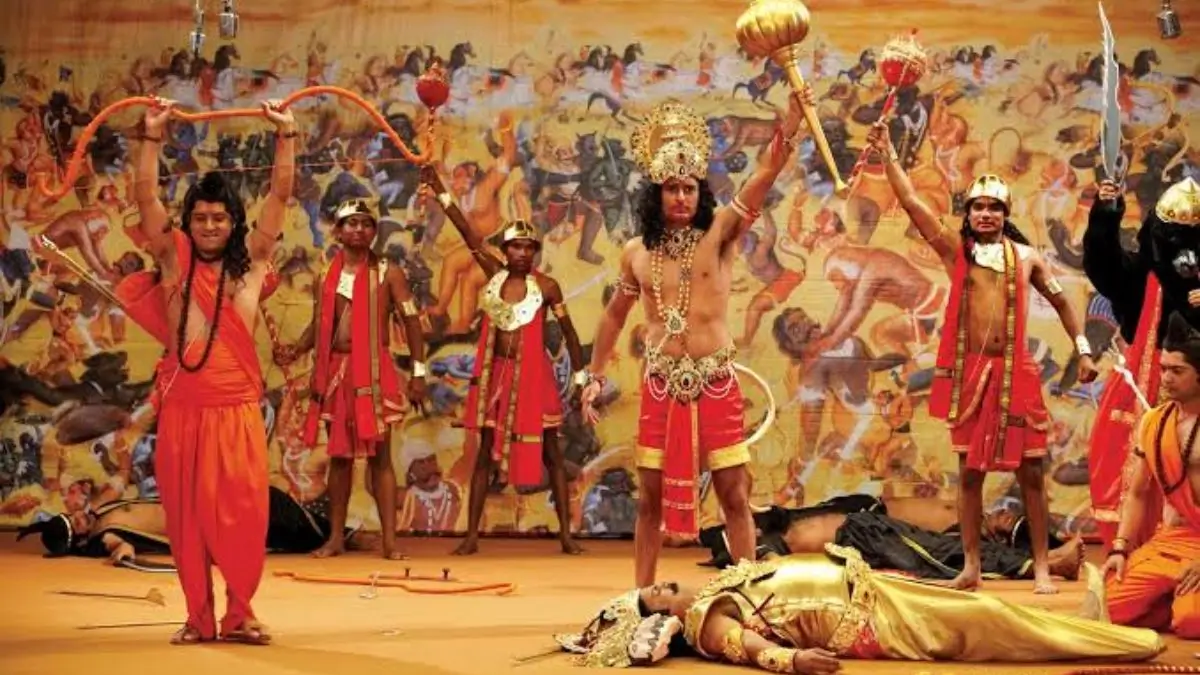
Ramlila, which means “play of Rama,” is the name for the traditional enactment of scenes from the epic Ramayana through a combination of acting, narration, singing, recitation, and dialogue.

A number of northern Indian Ramlilas are based on the Ramcharitmanas, an epic poem written in the 16th century by poet-saint Tulsidas in Awadhi, thus making the story of Lord Rama accessible to people who are not versed in Sanskrit literary heritage.

These enactments take place throughout northern India. There are important Ramlila traditions associated with Ayodhya, Ramnagar, Varanasi, Vrindavan, Almora, Satna, and Madhubani. While most Ramlilas last several days, there is the famous Ramnagar Ramlila that lasts for about one month.

Why is Ramlila culturally important?

  • Community involvement: Local residents participate in Ramlilas as actors, organizers, makers of costumes and artifacts.
  • Oral and dramatic transmission of history: The epic of Ramayana is conveyed orally and dramatically.
  • Intergenerational transmission: Young and old learn this tradition by taking part in or watching performances.
  • Collective identity formation: Ramlila gives people a common cultural story to unite around.
  • Originally recognized as a Masterpiece of the Oral and Intangible Heritage of Humanity in 2005.

2. Durga Puja in Kolkata: Religion, Art and Community Participation

Durga Puja is an annual event celebrated in honor of goddess Durga. The festival is especially celebrated in Kolkata and West Bengal. The festival combines the aspects of religion, sculpture, visual arts, music and festivities.

The preparations for the festival take place some time before the actual event. The artisans construct the image of goddess Durga and her family members through the clay from the Ganges basin region. The festival sees the construction of temporary structures called pandals in which the images are housed. Traditional drumming by Bengalis is a part of this festival.

The festival ends with the immersion of the images. This festival is also a symbolic festival for Bengalis as the goddess is considered to have returned to her ancestral home.

What made UNESCO choose to recognize Durga Puja?

The UNESCO considers Durga Puja as one of the illustrations of how religion combines with public art. The importance of the culture is not only in religious activities held in temples but also in the following aspects,

  • Artisan traditions: Sculptors, painters, decorators, and other artisans creates the idols and installations for the festival.
  • Creative cooperation: artists, designers, organizers, and local community members collaborate to make the durga pandals.
  • Public engagement: people from the diverse backgrounds attend the festivals and become participants of the celebrations.
  • Transmission of culture: religions, artisanal skills, and arts are passed down through generations.

The Durga Puja of Kolkata was included in UNESCO’s list of Representative Elements in 2021. The UNESCO recognition concentrates on the living tradition of the festival and its communities, and not on each Durga Puja festival celebrated in India.

3. Garba of Gujarat: Devotional Dance and Navaratri

Garba is a devotional dance which takes place during the festival of the Navratri to worship the goddess Shakti. Traditionally, this dance consists of spinning around an earthen lamp or a picture of the goddess Shakti with chanting and clapping.

Garba starts from slow, controlled dancing around in circles after which there is an increase in speed and energy. Even today, Garba dancing takes place not only with large music groups and well-choreographed dances, but with community involvement.

The transmission of Garba occurs by learning, watching, practicing, and performing it. It is passed on by dancers, musicians, people who make costumes, craftsmen, organizers, and religious leaders.

Cultural importance of Garba

The recognition by the UNESCO reveals how the Garba preserves social ties and transmits to the cultural traditions.

  • Religious importance: This dance form is linked with the worship of Shakti at Navratri festival.
  • Community involvement: Dancing in the groups connects all the members of different generations and societies.
  • Traditional craftsmanship: Music, dance, design of the costumes and ornaments is also an integral part of this tradition.
  • Social cohesion: Social equality and unity can be achieved through the Garba according to UNESCO.

Garba of Gujarat was added to the Representative List in 2023. The recognition by UNESCO revealed the significance of this tradition for promoting social equality and unity in diversity.

From Hampi to Mysuru: History of Dasara and the Vijayanagara Empire

While Mysuru Dasara includes aspects of worship and regal pageantry, it also embodies the tradition of South Indian courts that reached their zenith during the period of the Vijayanagara Empire. The celebrations of Mahanavami at Hampi in the 16th century were characterized by not only religious rites but also included military parades, wrestling bouts, music, dance, and ceremonies that reinforced the power of kings. The tradition continued after the political fall of the Vijayanagara Empire in the kingdoms of its successors and took a distinct shape under the reign of the Wadiyar dynasty of Mysuru.

Mahanavami at Hampi: The Background of Royal Dasara

The origins of Mysuru Dasara date back to the festival of Mahanavami that marked the festivities of the Vijayanagara Empire that ruled most of south India from the 14th century onwards. The capital of Vijayanagara was located at what is today Hampi in Karnataka.

Mahanavami was one of the nine nights of Navaratri festival. During the rule of the Vijayanagara kings, this festival developed into an elaborate celebration that was a combination of religious rituals and martial displays along with court performances, music, dance, and wrestling. It was a time when the king received tribute from his subordinate chiefs and troops.

It was not merely a religious festival but was also meant to project the glory of the king.

Mahanavami Dibba: The Focus of Royal Celebrations

The Mahanavami Dibba, sometimes called Dasara Dibba, is one of the most important surviving buildings linked with the royal rituals of Vijayanagara. Situated in the Royal Enclosure of Hampi, this raised stone platform has reliefs depicting processions, animals, performers and others that give clues about the rituals at the royal court of Vijayanagara.

Activities at Mahanavami,

Some of the reported activities that took place on the occasion of this festival include the following,

  • Royal rituals: The king appeared in front of his court, along with dignitaries from all over the empire.
  • Military parades: Military prowess was exhibited through the means of soldiers, horses, and elephants.
  • Performance: Music, dance, and performance was included as part of the celebration.
  • Physical games: Wrestling and physical strength demonstration to entertained the audience.
  • Fireworks: Rockets and fireworks were used during celebrations as seen by Europeans who visited the empire.
  • Political rituals: Chiefs and subordinate kings appeared in front of the king of the empire.

This is how Mahanavami turned out to be such a political event for the Vijayanagara Empire.

Mahanavami as a Political Festival

One of the unique aspects of Mahanavami at Vijayanagara was the relationship of religious festival with political power.

The empire depended upon the relations between the king and regional military chieftains. Chieftains had territorial powers, controlled armies, and were answerable to the king. The festival was an opportunity for the chieftains to come to the capital and declare loyalty.

Parading of soldiers, tributes, and presents gave the festival a political character by showing the organization of the empire through the power pyramid in which the king was at the top.

How the Dasara Tradition Survived after Vijayanagara

While the fall of the capital did not entail the disappearance of all forms of court traditions, succeeding states developed their own customs with regard to their own political and religious events, performances of music and dances and athletic competitions.

For instance, the Nayaka kings of Tanjore established an important court culture that promoted music and performing arts. There were other rulers in different regions who had their own forms of politics and religion.

The Wadiyars of Mysore emerged as another center of royal patronage, whose tradition of Dasara festival is generally seen to be based on the Mahanavami tradition of the previous era.

Raja Wadiyar I and the Origin of Mysuru Dasara in 1610

The origin of the Mysuru Dasara tradition is said to be in the year 1610 when Raja Wadiyar I celebrated the festival in Srirangapatna, which was an important place in the kingdom of Mysuru during that time period. This origin has been acknowledged in the history of Mysuru Dasara.

The choice of the Dasara festival shows how the politics of Wadiyars and their affiliation to the royal culture of South India played a role. The festival helped promote the glory of Mysuru court through religious rituals and other performances.

It is because of the importance of Srirangapatna from a political and cultural point of view that the festival came into practice there. The festival soon turned into one of the most prestigious ceremonies of Wadiyars.

Modern Mysuru Dasara: A Continuing Cultural Tradition

In today’s times, Mysuru Dasara is celebrated as Nada Habba, the state festival of Karnataka. The programs associated with the festivities are organized by the Government of Karnataka and the District Administration of Mysuru, whereas the private rituals for the festival are continued by the members of the Wadiyar family.

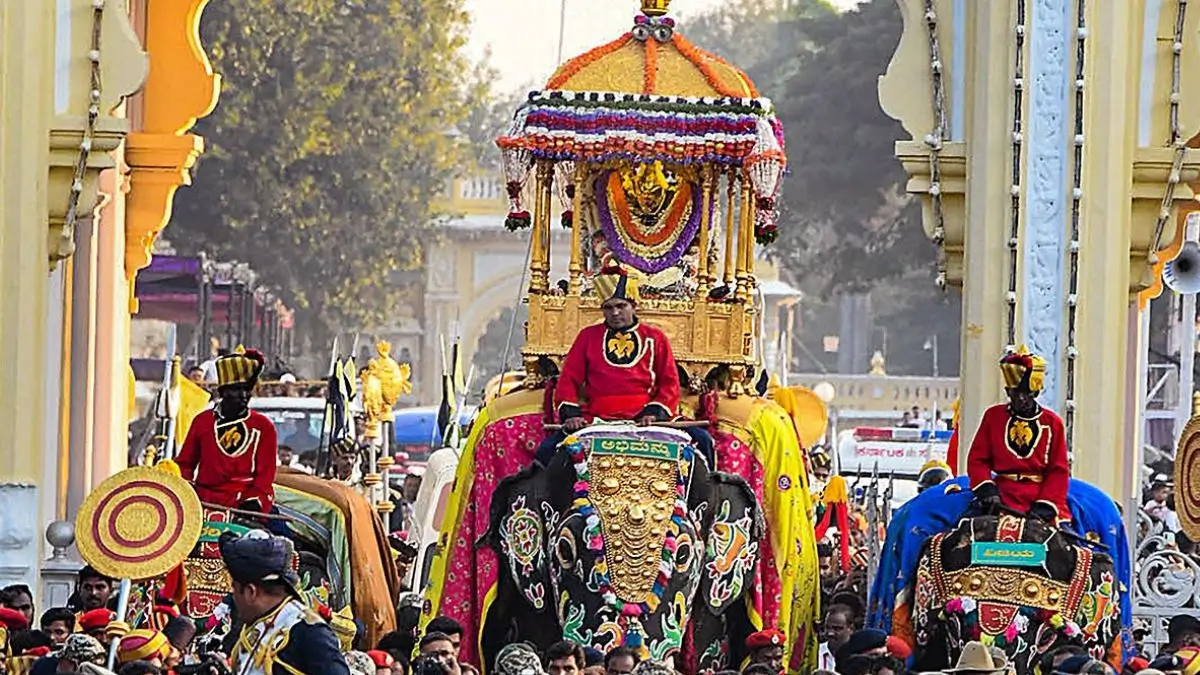
The most prominent event of this festival is the Jamboo Savari, which is conducted on Vijayadashami day. The idol of Goddess Chamundeshwari is taken in an elaborately decorated howdah of gold that rides atop an elephant in a procession starting from the Mysuru Palace to reach Bannimantap. Cultural programs, tableaux, musical events and torchlight parade are also part of the program.

The religious aspect has also retained its significance in this festivity. Mysuru Dasara is celebrated in honour of Goddess Chamundeshwari who is one of the forms of Goddess Durga and defeated Mahishasura, an essential part of Mysuru’s traditional history.

_12.1
October 2026
M T W T F S S
 1234
567891011
12131415161718
19202122232425
262728293031