
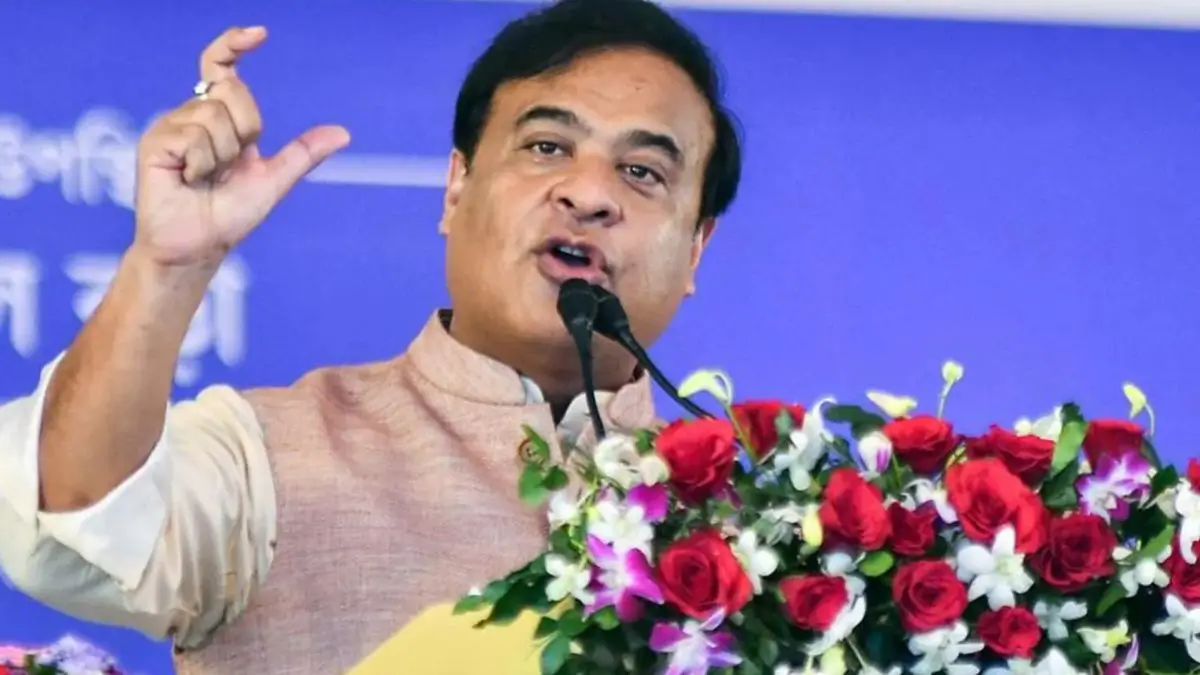
The Assam Legislative Assembly has passed the Uniform Civil Code (UCC) Bill, 2026 and became the first state in Northeast India and third state in the country to adopt the UCC legislation. This bill aims to establish the common set of civil legal framework for all the residents of the state in matters related to marriage, divorce, succession and live in relationships.
Assam Becomes First Northeast State to Pass UCC
After the passage of the bill, Assam has become the first state in Northeast India to adopt UCC legislation. And it also becomes the third state in India to pass such legislation after Uttarakhand and Gujarat.
This bill was passed during the first session of the 16th Assam Legislative Assembly.
The bill was introduced by the Atul Bora who is the Assam Parliamentary Affairs Minister on the behalf of Chief Minister Himanta Biswa Sarma.
Mandatory Registration for Live in Relationships
One of the most debated provisions of the bill is concerns related to live-in relationships.
Under the newly proposed law, couples who are live in relationships will be required to officially register their relationship with the Sub-Registrar in their jurisdiction.
If they fail to register within one month may attract legal consequences.
Key Provisions Are
- Up to 3 months imprisonment
- Fine of ₹10,000
- False declarations may attract the ₹25,000 fine
- Up to 3 months jail for the concealment of facts
If either partner is below the 21 years of age , parents or guardians must be informed.
The Bill also legally recognizes those children who are born from registered live-in relationships as legitimate.
If the relationship of live in couple ends mutually, separation is simple. But if disputes arise the female partner can seek the maintenance and legal remedies through court.
New Marriage Age Rules Under the Bill
The Bill has also standardizes marriage age rules.
The proposed minimum legal age,
- 18 years for women
- 21 years for men
The law also takes the tough position against child marriage.
Anyone involved in conducting or facilitating child marriage could face the,
- Up to 2 years imprisonment
- Fine
- Or both
This move also aligns with broader legal efforts to curb underage marriage practices.
Polygamy and Bigamy to Become Punishable
The Bill clearly bans the polygamy and bigamy.
This means that,
- A person cannot have the multiple spouses simultaneously
- A person cannot remarry while the first marriage remains as legally valid
Violations would attract the punishment under Section 82 of Bharatiya Nyaya Sanhita (BNS), 2023.
Penalty,
Up to 7 years of the imprisonment
This provision also seeks to create uniform marital accountability across communities.
Strict Action Against Forced or Fraudulent Marriages
The Assam UCC Bill also targets those marriages which are conducted through the,
- Force
- Threat
- Coercion
- Concealment of an existing marriage
- Fraudulent information
If the marriages are proven guilty, the punishment can includes the,
- Up to 7 years jail
- Monetary fine
The provision are also aims to strengthen the consent-based marriage protections.
Rules on Prohibited Relationships
This Bill prohibits the marriages between close blood relatives.
This includes the,
- Brother and sister
- Parent and child
- Uncle and niece
- Aunt and nephew
However, the exceptions may be allowed for such communities where such marriages are legally accepted under valid customary traditions.
Violation without the legal customary exemption can attract the,
- Up to 6 months imprisonment
- Fine up to ₹50,000
Marriage and Divorce Registration Made Mandatory
The Bill also makes the official registration compulsory.
Both marriage and divorce must be registered within the 60 days.
Intentional failure may attract the ₹10,000 penalty.
Providing the forged documents, fake certificates or false declarations during registration of the,
- Marriage
- Divorce
Live-in relationships
Can result in,
- Up to 3 months imprisonment
- Fine up to ₹25,000
- Or both
This provision aims to improve the legal documentation and reduce disputes.
Divorce and Remarriage Protections
The newly proposed law prevents the individuals from imposing unlawful or exploitative conditions on divorced persons seeking remarriage.
If someone forces such conditions, punishment may includes the,
- Up to 3 years imprisonment
- Fine up to ₹1 lakh
The clause is also intended to protect the divorced individuals from coercive practices.
Child Custody Rule: Mother Gets Priority
A notable family law provision has relates to child custody.
Under the proposed law,
Children below the five years of age will remain in the custody of the mother.
This aims to create the clear default custody framework for young children.
Tribal Communities and Religious Customs Exempted
One of the most significant aspects of the Assam’s proposed UCC is its exemption framework.
The Chief Minister clarified that the Tribal communities will be fully exempted.
Additionally, the following will remain outside the UCC’s scope,
- Religious rituals
- Traditional customs
- Cultural practices
- Community traditions








 Lakshadweep Becomes India’s First 100%...
 Ayodhya Ram Temple Receives FSSAI’s â€...
 Ambaji Mohanthal Gets GI Tag: Gujarat’...










