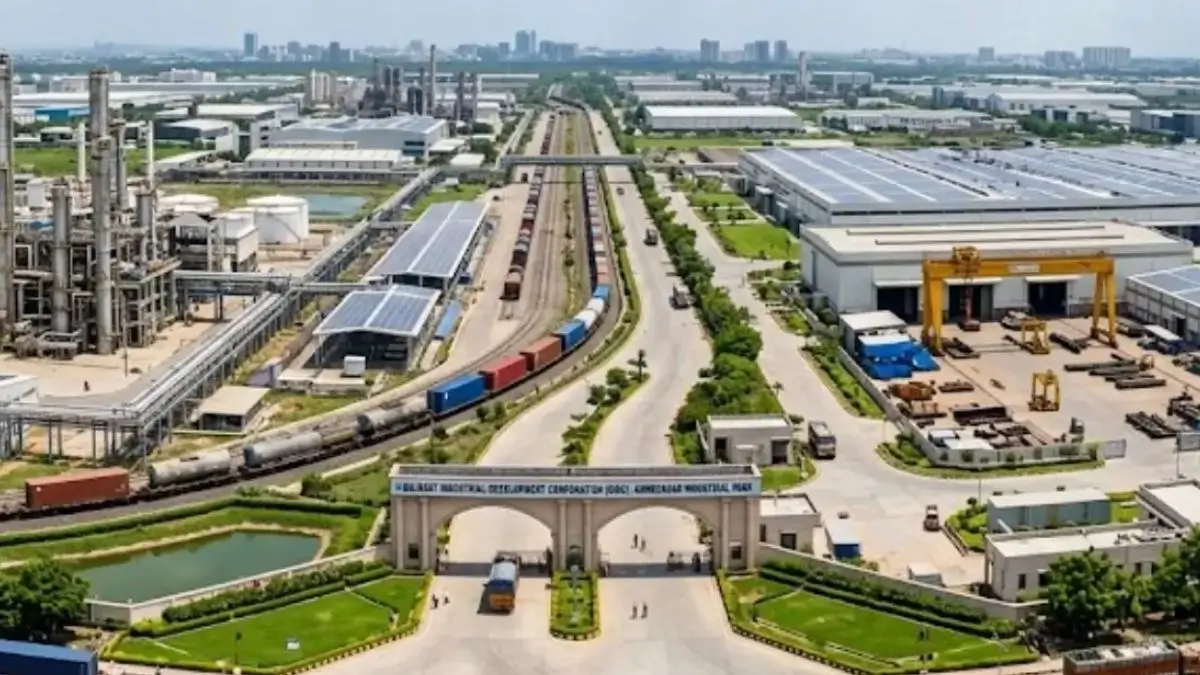
The Union Government of India has released the detailed guidelines for the BHAVYA Scheme. This scheme which aims to build the 100 world class industrial park across pan India. This guidelines are announced by the Department for Promotion of Industry and Internal Trade (DPIIT) and the total financial outlay for this scheme around the ₹33,660 crore.
What Is the BHAVYA Scheme?
The BHAVYA Scheme is the Central Sector Scheme which put main focused on to creating integrated industrial ecosystems that are ready to attract domestic and global manufacturers.
The scheme aligns with the major national initiatives like Make in India, PM Gati Shakti and manufacturing growth strategy.
The main goal around this scheme is to make the industrial investment easier, faster and globally competitive.
100 Industrial Parks Planned Across India
Under the scheme, total 100 industrial parks will be developed between the 2026-27 and 2031-32.
The first phase will focus on up to 50 industrial parks, which are selected through a competitive challenge based process.
All the States-UTS and eligible agencies will compete based on the infrastructure quality, connectivity and investment potential.
The competitive model is also expected to improve project quality and execution speed.
Key Features of BHAVYA Scheme
The major highlight of BHAVYA is its strong focus on to the plug-and-play industrial infrastructure.
This means that investors can start operations quickly without waiting years for basic facilities.
The industrial parks will includes the,
- Multimodal logistics connectivity
- Reliable water and electricity supply
- Underground utility systems
- Renewable energy infrastructure
- Worker housing facilities
- Skill development centres
- Waste management and treatment systems
- Testing laboratories
The idea is to create the complete industrial ecosystems not just on land parcels.
Greenfield and Brownfield Development Allowed
The scheme supports the both greenfield and eligible brownfield industrial parks.
Minimum land requirements includes the,
- 100 acres for non-hilly states
- 25 acres for hilly states, northeastern states, Union Territories and smaller states
Larger industrial parks up to 1000 acres can also be considered.
This flexibility allows the wider regional participation.
How Will BHAVYA Be Implemented?
Each industrial park will be developed through the Special Purpose Vehicle (SPV) under the Companies Act, 2013.
These SPVs will manage the areas like planning, development, investor support and long-term operations.
The National Industrial Corridor Development Corporation (NICDC) will act as the Project Management Agency (PMA).
Monitoring will include the,
- GIS-based tracking
- Audit systems
- Progress reporting
- Oversight by a National Steering Committee
This structure is designed to improve accountability and transparency.








 Prime Minister Dhan-Dhaanya Krishi Yojan...
 Bhagini Nivedita Scheme 2027: West Benga...
 Delhi Doubles ASHA Incentives, Launches ...