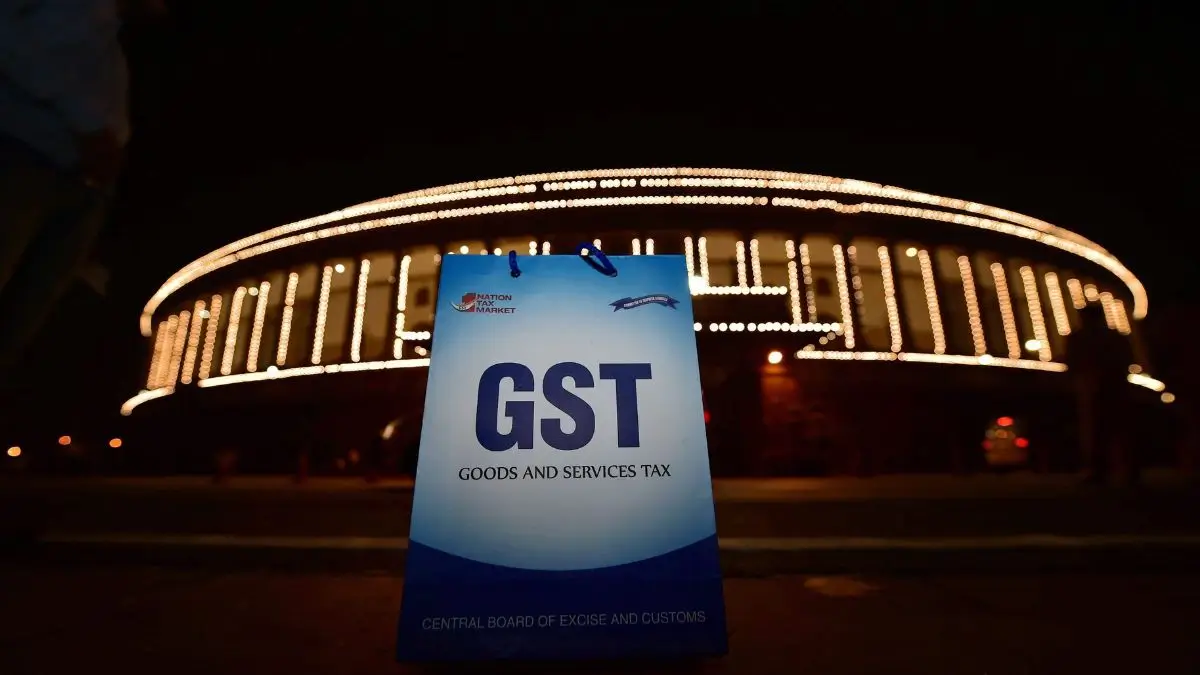
As the Goods and Services Tax (GST) completes nine years after its launch on 1st of July in the year 2017. GST has also transformed the India’s indirect tax system by replacing the multiple central and state taxes with the unified framework. It introduced under the vision of the “One Nation, One Tax,” and GST has simplified taxation and it has strengthened the cooperative federalism and it also improved the tax compliance through digital governance. In the year 2025, GST 2.0 brings the major reforms aimed at to simplifying tax rates, reducing the compliance burdens and supporting the consumers, MSMEs, exporters, and farmers.
What Is GST and Why Was It Introduced?
GST is a destination-based indirect tax which is levied on the supply of the goods and services. Before the its implementation, businesses had to deal with the multiple taxes imposed by the Centre and States and it often resulting in cascading taxation or “tax on tax.”
GST has also replaced the 17 indirect taxes and 13 cesses and created a common national market with the uniform tax procedures across India.
This reform has significantly improved the transparency, reduced logistical barriers and it has strengthened the ease of doing business.
Key Features of the GST Framework
GST introduced the several structural changes which continue to shape India’s tax administration,
- Tax is levied on the supply of goods and services.
- Operates as the destination-based consumption tax.
- It follows the Dual GST Model comprising CGST, SGST, and IGST.
- And it is guided by the GST Council, which ensures coordination between Centre-State.
- Supported by the Goods and Services Tax Network (GSTN) and it providing the fully digital tax ecosystem.
These features have also helped to establish the transparent and technology-driven indirect tax system.
GST 2.0 and Next Generation Reforms
During the 56th GST Council Meeting, the GST 2.0 reforms were approved and already effective from 22nd September 2025 and it also introduced the several taxpayer-friendly measures.
Major reforms includes the,
- Simplified tax structure with the 5% and 18% as the primary GST slabs.
- 40% GST on luxury and sin goods such as tobacco, online gaming, luxury cars, yachts, and private aircraft.
- Faster registration and refund processes.
- Easier return filing and it also lowers the compliance costs and particularly for MSMEs and startups.
How GST Has Benefited Consumers and Businesses
GST has delivered the wide-ranging benefits across sectors.
Benefits for Consumers
- Lower prices on the several goods and services.
- GST exemptions on important things like insurance and essential medicines.
- Also increased the affordability and improved household savings.
- Better access to the healthcare through tax relief on critical products.
Benefits for the MSMEs and Industry
- It reduced the GST rates on important industrial inputs and handicrafts.
- It has simplified the tax compliance and fewer classification disputes.
- Improved export competitiveness through the correction of inverted duty structures.
- Lower compliance costs for the startups and small enterprises.
These measures have also strengthened the country’s manufacturing ecosystem while encouraging the formal economic activity.
Digital Transformation of Tax Administration
One of GST’s major achievements has been the digitization of the tax administration.
Technology-driven initiatives includes the,
- GSTN online portal.
- E-invoice system.
- Pre-filled GST returns.
- Automated Input Tax Credit (ITC) matching.
- Real-time invoice validation.
These digital reforms have significantly reduced the manual intervention, improved transparency and also helped to detect tax evasion more efficiently.
GST by the Numbers
GST collections and taxpayer registrations have has also witnessed the remarkable growth since the year 2017.
Key highlights includes the,
- Total registered GST taxpayers has been also increased from 66.5 lakh in 2017 to 1.65 crore by May 2026.
- Gross GST collections rose from approximately ₹7.4 lakh crore in the cycle of 2017-18 to ₹22.27 lakh crore in the year 2025-26.
- During the April-May 2026, GST collections has also reached nearly to the ₹4.37 lakh crore which showcases the strong economic activity and improved tax compliance.
These figures signals the expanding formal economy and growing tax base of the country.








 India's Industrial Output Growth Hits Fi...
 India's Green Economy Is Growing Faster ...
 S&P Forecasts India's GDP Growth at ...