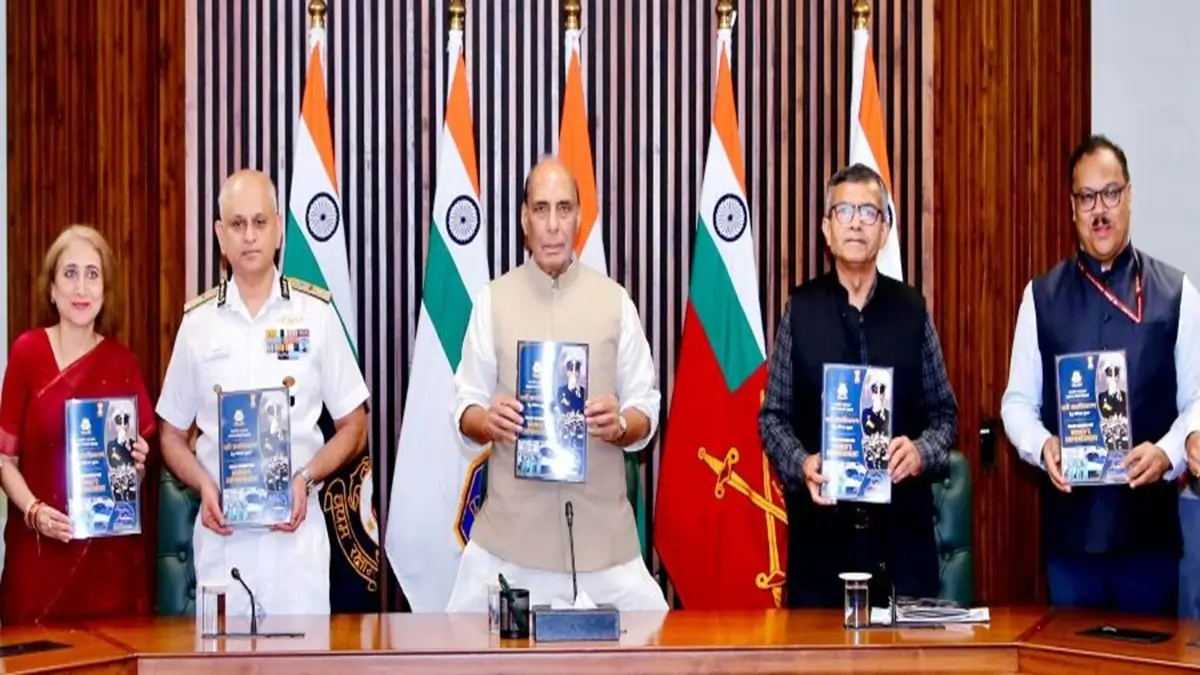
In a landmark move to promote gender equality and improve the welfare of personnel, Defence Minister Rajnath Singh unveiled two major policy reforms for the Indian Coast Guard (ICG) on 29 July 2026. The reforms introduce a gender-neutral framework for officer induction and streamline the process of providing ex gratia compensation to the families of personnel who go missing at sea while on duty.
The policy announcements were made during an event held at Kartavya Bhavan-2, New Delhi, in the presence of Defence Secretary Rajesh Kumar Singh, Director General of the Indian Coast Guard Paramesh Sivamani, and other senior officials.
Gender-Neutral Framework for Indian Coast Guard Officers
The first policy reform establishes a comprehensive, women-centric yet gender-neutral framework for the induction and career progression of officers in the Indian Coast Guard.
Under the new policy:
- Women candidates will now be inducted into both Short Service Appointments (SSA) and Permanent Appointments (PA) on par with male officers.
- Short Service Appointments (SSA) have also been opened for male candidates, ensuring equal opportunities for both genders.
- The policy provides equal opportunities for career progression, beginning from the initial training stage.
- Existing Permanent Appointment (PA) women officers will be eligible for promotion to higher ranks, subject to fulfilling the prescribed eligibility criteria.
- Women officers currently serving under Short Service Appointment (SSA) will have the option to convert their service into Permanent Appointment (PA), subject to the stipulated conditions.
The Ministry of Defence stated that the reform reflects the Government of India’s commitment to “Nari Shakti” and equal opportunity in India’s maritime security framework.
Faster Ex Gratia Benefits for Families of Missing Personnel
The second policy reform focuses on improving the welfare of families of Coast Guard personnel who go missing during operational duties at sea.
Key Features
- The Indian Coast Guard will have the authority to declare personnel “presumed dead” for the purpose of granting ex gratia compensation if they go missing at sea while on duty.
- The reform significantly simplifies and accelerates the process of providing:
- Ex gratia compensation
- Terminal benefits
- Financial assistance to the Next of Kin (NoK)
- The initiative aims to eliminate prolonged administrative delays and provide timely financial support to families during difficult circumstances.
Rajnath Singh Highlights Government’s Commitment
Speaking on the occasion, Defence Minister Rajnath Singh praised the Indian Coast Guard for its outstanding service over the past five decades and expressed confidence that these reforms would further strengthen the force’s morale and operational effectiveness as it approaches its Golden Jubilee in 2027.
He also reaffirmed the Prime Minister Narendra Modi-led Government’s commitment to building a modern, capable, technologically advanced, and future-ready Indian Coast Guard.
Why These Reforms Are Important
The newly announced reforms are expected to:
- Promote gender equality in India’s maritime security forces.
- Expand career opportunities for women officers.
- Ensure fair and transparent recruitment and promotion policies.
- Provide quicker financial relief to families of personnel missing during duty.
- Enhance morale, operational efficiency, and inclusiveness within the Indian Coast Guard.








 What Is the JWALA Missile? IG Defence De...
 Assam Regiment Wins Gold Medal at Exerci...
 DRDO Successfully Tests Quantum Key Dist...