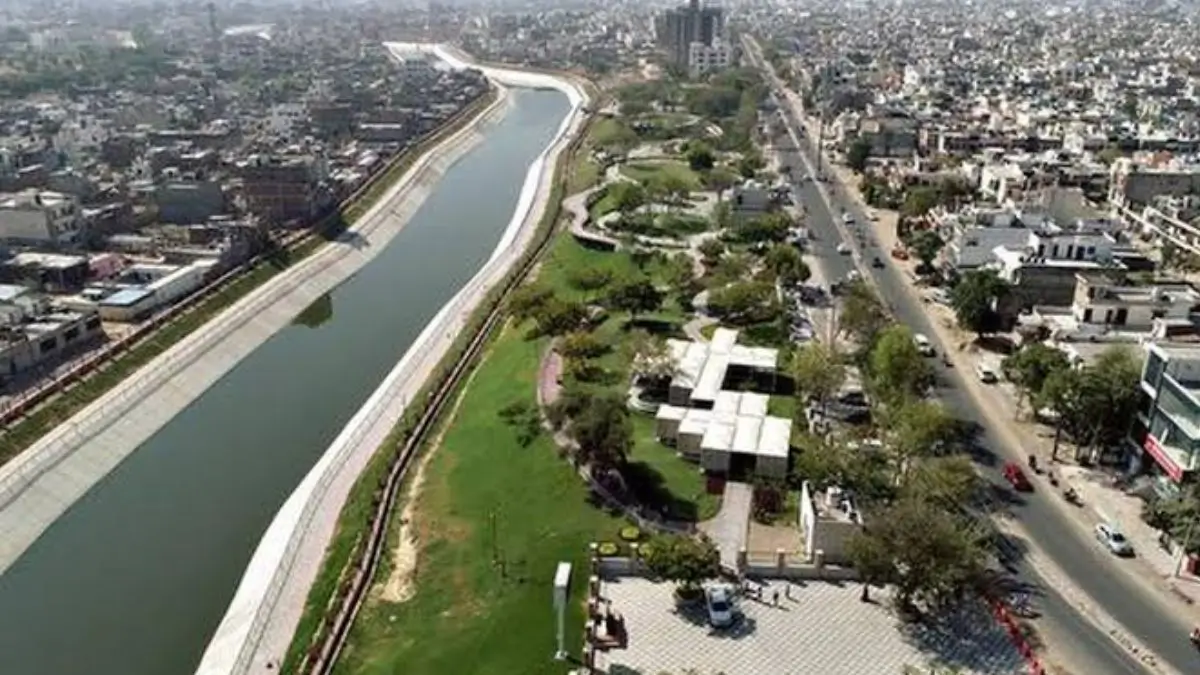
Jaipur is the capital of Rajasthan, located in the semi-arid zone of Northwestern India. Although the area is characterized by low levels of precipitation, there are several rivers in the region, which play an important role in agriculture, groundwater recharge processes, irrigating the land and maintaining the natural environment. Most of these rivers are characterized by seasonal activity, providing their waters mainly during the southwest monsoon.
Among these rivers Banganga is the biggest and the most important of the rivers flowing in Jaipur district. There are also other rivers. Thus, Morel, Dhund, Sabi (Sahibi), Bandi, Masi, Dai and Sakha rivers join the river system of the region, contributing to the lives of rural population.
Key Rivers of Jaipur
Jaipur district is home to a number of rivers that mainly originate from the Aravalli hills and pass through some portions of eastern Rajasthan.
| Rivers | Approximate Length | Origin | Significance |
| Banganga River | 380 Km | Aravalli Hills around Bairath (Viratnagar) | The longest river in Jaipur district |
| Morel River | 300 Km | Aravalli Hills of Jaipur | A tributary of Banas river |
| Dhund River | 120 Km | Jaipur Region | Significant river for local drainage |
| Sabi (Sahibi) River | 300 Km | Aravalli hills | Flows to Haryana and Delhi |
| Bandi River | 45 Km | Jaipur district | Helps in groundwater recharge |
| Masi River | 95 Km | Phagi region | Very important for agriculture |
| Dai River | 90 Km | Aravalli region | Key to rural villages and farming |
| Sakha River | 60 Km | Jaipur district | Seasonal river which regulates local ecosystems |
1. Banganga River
The Banganga River is the largest and most important river in Jaipur district. It originates in the Aravalli Hills near Bairath (Viratnagar) and runs through Jaipur, Dausa, and Bharatpur before draining into the Yamuna river system.
Although it is mainly a rain-fed river, it is important in providing irrigation, recharging ground water and supporting rural economies during monsoon.
Key Facts
- Approximate Length: 380 km
- Origin: Aravalli Hills near Bairath (Viratnagar)
- The major districts: Jaipur, Dausa, Bharatpur
- Drainage: Drains into the Yamuna river system
- Type: Temporal river
2. Morel River
The Morel River is a major tributary of the Banas River and plays an integral role in the drainage system of eastern Rajasthan.
The river originates in the Aravalli Hills, near Jaipur and flows through the districts of Jaipur, Dausa, and Sawai Madhopur. It receives its water mainly during the monsoon period and enables agricultural activities to flourish in its basin.
Key facts
- Approximate length: 300 km
- Point of origin: Aravalli Hills near Jaipur
- Tributary of Banas River
3. Dhund River
The Dhund River is considered one of the most significant rivers in Jaipur. Apart from flowing through various areas in the district, it mainly acts as a natural drainage path during monsoon season.
Though it is only seasonal in nature, it plays an important role in preventing flooding and promoting groundwater recharge.
Key facts
- Approximate length: 120 km
- Seasonal river
- Receives water from the southwest monsoon
- Important for local drainage and groundwater recharge
4. Sabi River (Sahibi River)
Sabi River (also known as Sahibi River) starts in Aravalli Hills and crosses through Rajasthan to reach Haryana and finally empty into Najafgarh Lake basin close to Delhi.
Sabi river is known as one of the significant seasonal rivers of the north western part of India that contributes in the drainage of various states.
Interesting facts about Sabi River
- Length: about 300 km
- Source: Aravalli Hills
- Flows through Rajasthan and Haryana.
- Empties into Najafgarh basin close to Delhi.
5. Bandi River
Bandi River is a small seasonal river in Phulera, Phagi, and surrounding areas of Jaipur district. Although it stays dry throughout the year, it is crucial for groundwater recharge and the sustenance of the nearby villages during the monsoons.
Important Facts
- Estimating length: 45 km
- Passes through Phulera and Phagi
- Seasonal river
- Aiding in water recharge
6. Masi River
Masi River runs through the Phagi area of the Jaipur district and serves as an important water supply for nearby farming communities.
The river acts as a source of replenishment for the groundwater and helps in agriculture despite being a seasonal river.
Key details
- Approximate Length: 95 km
- Runs through the Phagi region
- Assists agriculture and irrigation
- Replenishes water reserves
7. The river Dai
This river begins in Aravalli region and flows through countryside of Jaipur district.
The river provides support for agriculture, close villages, and groundwater replenishment, mainly during monsoons.
Important Information
- Approximate length: 90 km
- Origin: Aravalli region
- Seasonal river
- Supports farming and villages
8. The Sakha River
The Sakha River is a small river in the Jaipur district that collects most of its water during the southwest monsoon season.
While it may be a small river, it plays a vital part in maintaining local ecosystems and biodiversity when it rains.
Important Details
- Length of River: approximately 60 kilometers
- Season river
- Maintain ecosystems
Interesting Facts About Rivers of Jaipur
- The Banganga River claims the title of the longest river in the Jaipur region.
- Most of the rivers in Jaipur get their starting point from the Aravalli mountains.
- Almost all the major rivers in the area are seasonal rivers, mainly flowing down during the southwest monsoon.
- The Morel River is one of the important tributaries of the Banas River.
- The Sabi (Sahibi) River flows out of Rajasthan into Haryana and Delhi.
- Seasonal rivers are important for groundwater recharge in the eastern part of Rajasthan.








 Ramsar Sites in India 2026: State-Wise L...
 Who Is Navi Pillay? Nobel Peace Prize 20...
 Vande Bharat vs Amrit Bharat Express: Ke...