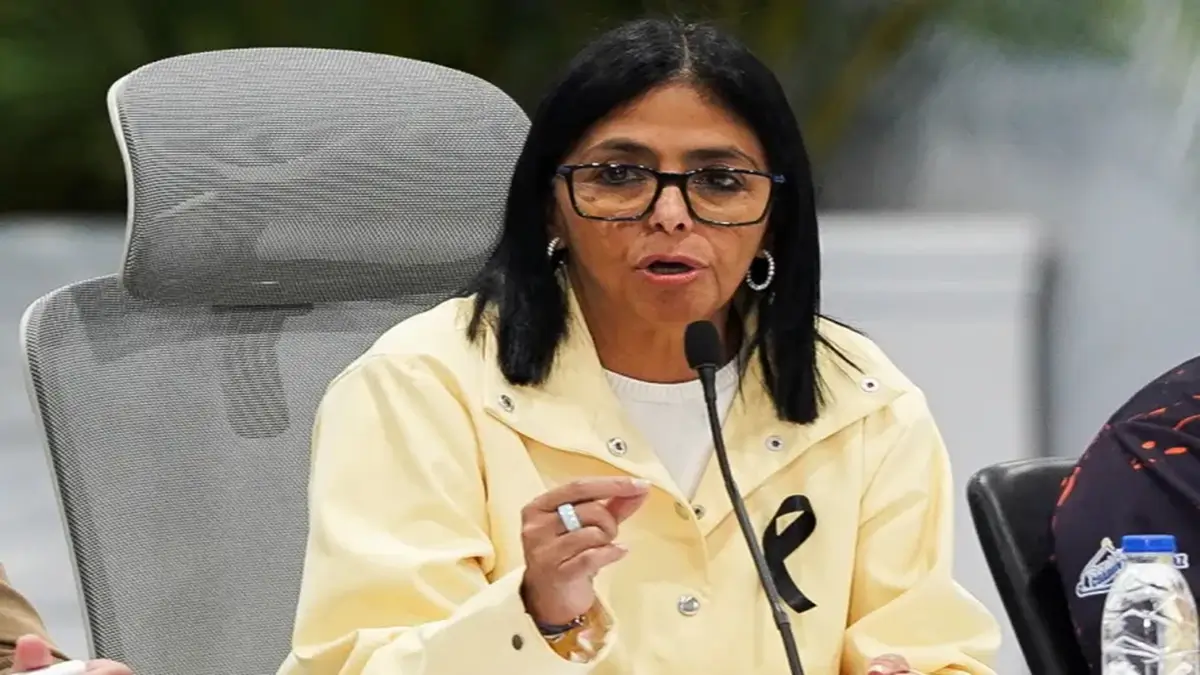
Venezuela has formally notified the United Nations (UN) of its decision to withdraw from the Rome Statute, the treaty that established the International Criminal Court (ICC). The announcement was made by Foreign Minister Felix Plasencia, who described the decision as “firm and irrevocable” and said it was taken on the instructions of Interim President Delcy Rodríguez.
The move comes amid growing criticism of the ICC by several countries and adds to the challenges facing the Hague-based court.
Why Has Venezuela Withdrawn from the ICC?
According to the Venezuelan government, the decision was based on concerns that the ICC has shown a “geographical bias” by disproportionately targeting countries in Africa and Latin America.
The government argued that the court has not treated all regions equally and questioned its impartiality in investigating international crimes.
What Is the International Criminal Court (ICC)?
The International Criminal Court (ICC) is an independent international judicial institution established under the Rome Statute, which came into force in 2002.
The court investigates and prosecutes individuals accused of the world’s most serious crimes, including:
- Genocide
- Crimes against humanity
- War crimes
- Crime of aggression
Headquarters
- Location: The Hague, Netherlands
Will Venezuela’s Withdrawal Stop the ICC Investigation?
No.
Under Article 127 of the Rome Statute, a country’s withdrawal becomes effective one year after the formal notification is received by the United Nations.
More importantly, withdrawal does not affect investigations or legal proceedings that have already begun before the withdrawal takes effect.
Therefore, the ICC can continue its ongoing investigation into alleged crimes against humanity in Venezuela, which was officially opened in 2021.
Background of the ICC Investigation
The ICC launched an investigation after finding a reasonable basis to believe that Venezuelan security forces and pro-government groups may have committed crimes against humanity during the crackdown on anti-government protests that began in 2017.
Relations between Venezuela and the ICC have remained strained in recent years. In 2025, the court closed its office in Venezuela, citing insufficient progress by national authorities in investigating the alleged crimes.
United States Welcomes the Decision
The United States welcomed Venezuela’s withdrawal and reiterated its longstanding criticism of the ICC.
The U.S. State Department argued that the court had spent years investigating former Venezuelan President Nicolás Maduro without reaching meaningful conclusions and urged other ICC member states to consider withdrawing from the Rome Statute.
Growing Challenges for the ICC
Venezuela’s withdrawal comes at a time when the ICC is facing increasing political and institutional challenges.
Recent developments include:
- Several countries have questioned the court’s impartiality.
- Chad has also announced plans to withdraw from the ICC, citing concerns over unequal treatment.
- Burkina Faso, Mali, and Niger had previously taken similar steps.
- The ICC recently lost its elected Chief Prosecutor Karim Khan, following his dismissal by member states over allegations that he denies.
These developments have intensified debates over the future effectiveness and legitimacy of the International Criminal Court.
Why Is This Development Important?
Although Venezuela’s withdrawal is unlikely to halt ongoing investigations, it carries significant diplomatic and political implications.
The decision:
- Signals a major shift in Venezuela’s foreign policy.
- Raises questions about future cooperation with the ICC.
- Adds pressure on the international justice system.
- Highlights ongoing debates regarding the court’s impartiality and effectiveness.








 World Health Summit 2026: Key Initiative...
 Putin Ratifies India–Russia Agreement ...
 India Hosts First BIMSTEC Home Ministers...