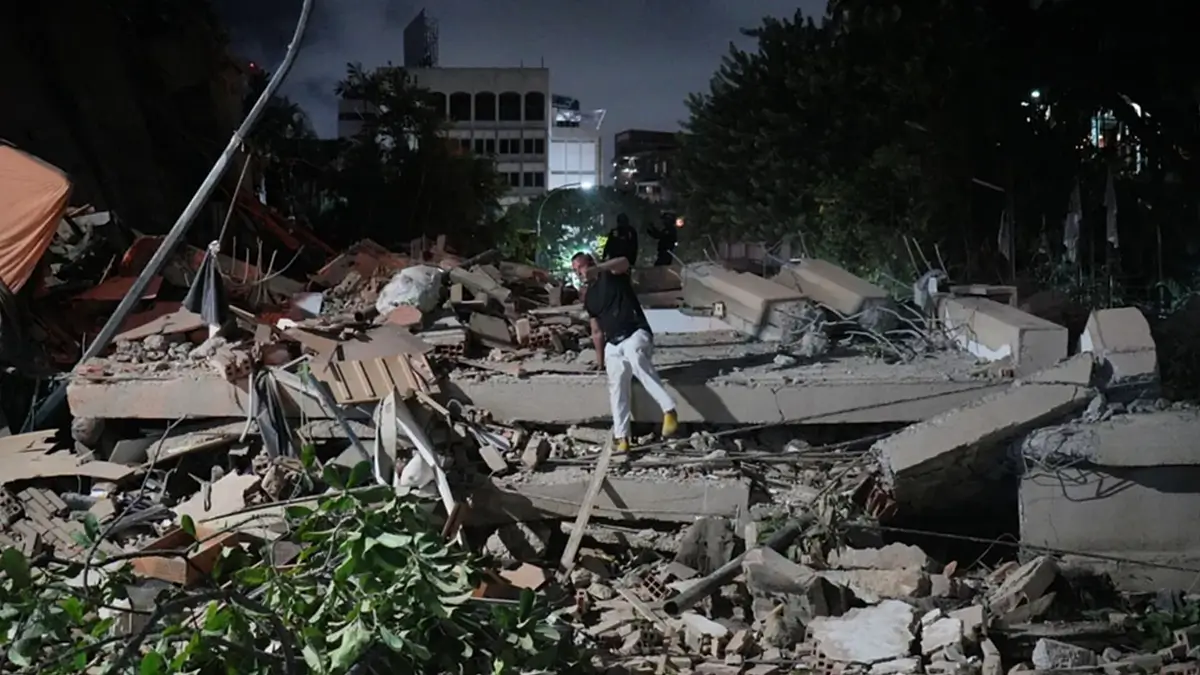
Recent seismic activity across the world has once again brought earthquakes into global headlines. On 24 June 2026, powerful back-to-back earthquakes reportedly struck Venezuela, while earlier in June, a major offshore earthquake near the Philippines triggered tsunami alerts across the region.
Earthquakes remain among the most destructive natural disasters on Earth. They occur due to the sudden release of energy beneath the Earth’s crust and can result in devastating humanitarian and economic losses.
Here is a detailed look at some of the most significant and destructive earthquakes recorded globally during the last decade.
What Is an Earthquake?
An earthquake is the sudden shaking of the Earth’s surface caused by movements beneath the Earth’s outer layer.
These movements occur because Earth’s crust is divided into large tectonic plates that constantly move. When stress builds up and releases suddenly along fault lines, seismic waves are generated, producing earthquakes.
Top 10 Deadliest Earthquakes in the Past 10 Years
| Rank | Earthquake | Magnitude (Mw) | Date |
|---|---|---|---|
| 1 | Kamchatka, Russia | 8.8 | 29 July 2025 |
| 2 | Philippines | 7.8 | 08 June 2026 |
| 3 | Venezuela | 7.5 & 7.2 | 24 June 2026 |
| 4 | Turkey–Syria | 7.8 | 06 February 2023 |
| 5 | Nepal | 7.8 | 25 April 2015 |
| 6 | Myanmar | 7.7 | 28 March 2025 |
| 7 | Indonesia (Sulawesi) | 7.5 | 28 September 2018 |
| 8 | Iran (Kermanshah) | 7.3 | 12 November 2017 |
| 9 | Haiti | 7.2 | 14 August 2021 |
| 10 | California | 7.1 | 06 July 2019 |
1. Kamchatka, Russia Earthquake (2025)
Date: 29 July 2025
Magnitude: 8.8 Mw
Epicentre: East of Petropavlovsk-Kamchatsky
One of the strongest seismic events of recent decades struck offshore near Russia’s Kamchatka Peninsula. The event followed an intense sequence of earthquakes over ten days.
Key Highlights:
- Triggered by activity in the Kuril–Kamchatka subduction zone
- Followed dozens of major aftershocks
- Released one of the largest seismic energy bursts in recent regional history
2. Philippines Earthquake (2026)
Date: 08 June 2026
Magnitude: 7.8 Mw
Epicentre: Near Sarangani Province
A major offshore earthquake hit Mindanao and led to tsunami warnings across the region.
Key Highlights:
- Triggered waves and emergency evacuations
- Caused infrastructure damage and casualties
- Associated with tectonic activity near the Cotabato Trench
3. Venezuela Earthquake (2026)
Date: 24 June 2026
Magnitude: 7.5 & 7.2 Mw
Two powerful earthquakes occurred close together near Venezuela, creating concerns over regional infrastructure and emergency preparedness.
Key Highlights:
- Rare twin-earthquake sequence
- Strong tremors felt across surrounding regions
- Raised concerns over aftershocks and public safety
4. Turkey–Syria Earthquake (2023)
Date: 06 February 2023
Magnitude: 7.8 Mw
One of the deadliest disasters of the century devastated southern Turkey and northern Syria.
Key Highlights:
- Tens of thousands lost their lives
- Massive structural destruction
- Triggered a global humanitarian response
5. Nepal Earthquake (2015)
Date: 25 April 2015
Magnitude: 7.8 Mw
Nepal witnessed one of its worst natural disasters in modern history.
Key Highlights:
- Nearly 9,000 fatalities
- Historic monuments destroyed
- India launched Operation Maitri for relief efforts
6. Myanmar Earthquake (2025)
Date: 28 March 2025
Magnitude: 7.7 Mw
A shallow earthquake struck central Myanmar causing severe destruction.
Key Highlights:
- Impacted millions of residents
- Relief operations slowed due to ongoing conflict
- Tremors reached neighbouring countries
7. Indonesia Sulawesi Earthquake and Tsunami (2018)
Date: 28 September 2018
Magnitude: 7.5 Mw
The earthquake triggered both tsunami waves and large-scale soil liquefaction.
Key Highlights:
- Thousands of casualties
- Severe urban destruction
- Occurred in the Pacific Ring of Fire
8. Iran Kermanshah Earthquake (2017)
Date: 12 November 2017
Magnitude: 7.3 Mw
A powerful earthquake struck western Iran near the Iraq border.
Key Highlights:
- Large-scale displacement
- Damage extended beyond national borders
- One of the strongest earthquakes recorded that year
Why Do Earthquakes Happen?
Earth’s outer shell, known as the lithosphere, is broken into tectonic plates.
These plates constantly move over the mantle. Over time, stress accumulates along fault lines and is suddenly released, generating seismic waves.
This process causes earthquakes.
What Is Lithosphere?
The lithosphere is Earth’s rigid outer layer consisting of:
- Crust
- Uppermost mantle
It is divided into multiple tectonic plates that move continuously.
How Are Earthquakes Measured?
Earthquakes are measured using seismometers.
These instruments detect seismic waves and help scientists calculate:
- Magnitude
- Epicentre
- Depth
- Intensity
Magnitude is commonly represented using the Moment Magnitude Scale (Mw).
India’s Seismic Vulnerability
India is divided into four major seismic zones:
- Zone II – Low Risk
- Zone III – Moderate Risk
- Zone IV – High Risk
- Zone V – Very High Risk
High-risk regions include:
- Jammu & Kashmir
- Himachal Pradesh
- Uttarakhand
- Northeast India
- Parts of Gujarat and Bihar
The Himalayan belt remains highly vulnerable due to ongoing tectonic collision between the Indian and Eurasian plates.








 Guava Capital of India: Which Place Is K...
 7 Most Beautiful Train Stations in the W...
 World Architecture Day 2026: 8 Clever Fe...