
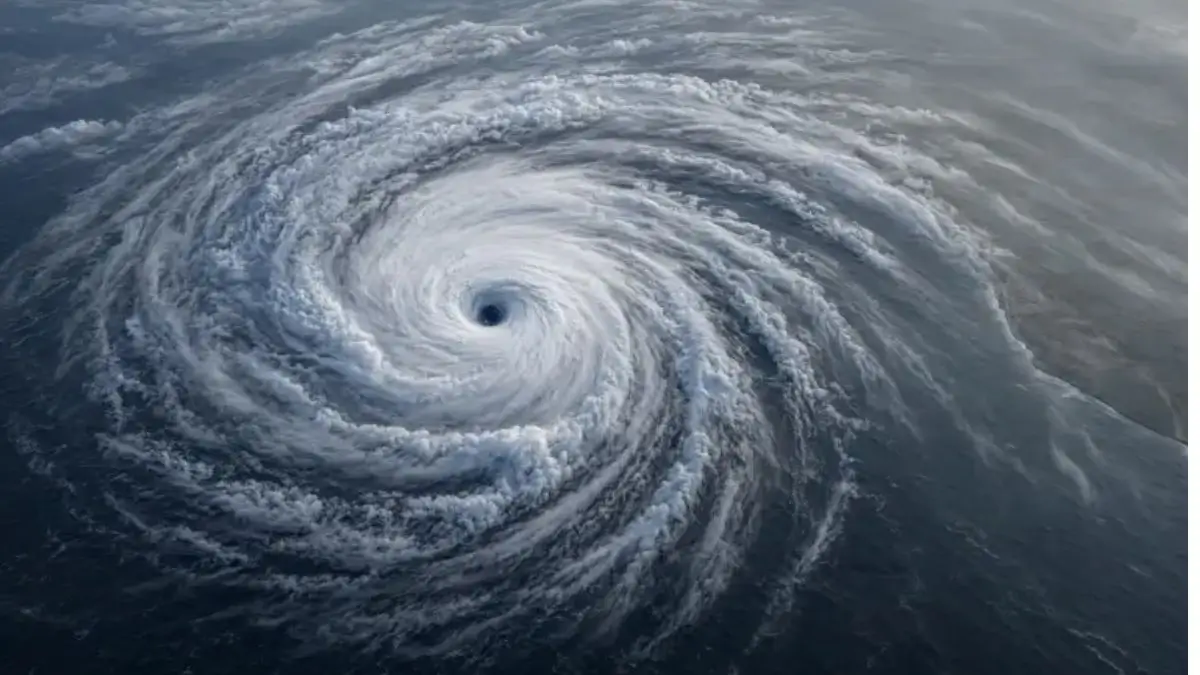
The name Arnab, associated with the cyclone that originated over the Bay of Bengal in the October 2026, has highlighted the naming system given for the tropical cyclones in the North Indian Ocean. The name has been provided by the Bangladesh to the regional cyclone naming system operated by the World Meteorological Organization (WMO) and UN Economic and Social Commission for Asia and the Pacific (UN ESCAP). It is the task of India’s Meteorological Department, based in New Delhi, to assign names to the qualifying cyclones in the Bay of Bengal and Arabian Sea.
Cyclone Arnab – Whose Name Is This?
The name ‘Arnab’ for a tropical cyclone was suggested by Bangladesh. The list of names of tropical cyclones was prepared by WMO/ESCAP Panel on Tropical Cyclones in April 2020 for the region. The Regional Specialized Meteorological Centre in New Delhi of the IMD gives the name to a cyclone once it meets the required criteria.
The name doesn’t refer to the country of origination, the direction of its course or the country where it is going to make a landfall. The name of a cyclone proposed by Bangladesh could be used for a storm affecting India or any other country in the region.
Meaning of the Name Arnab
Arnab means sea or ocean in Bengali language. It is important to note that according to the official list of cyclone names, there is no formal definition of the name and only its pronunciation is listed. Hence, the meaning should be viewed from linguistic perspective.
According to the IMD, the pronunciation of the cyclone’s name is “Ornab.”
Cyclone Names in India
IMD is the Regional Specialised Meteorological Centre that is responsible for naming tropical cyclones over the North Indian Ocean, including the Bay of Bengal and Arabian Sea.
The naming is carried out from the predefined regional list instead of being based on choosing of the name by authorities depending on the storm track. Once the system attains the required intensity to name it, the next name from the list is used.
Naming of the cyclones in the North Indian Ocean started in September 2004. New list of names was introduced in April 2020.
Who Are the Participating Countries in Cyclone Nomenclature?
There are currently 13 participating countries, with each country submitting 13 names to make up 169 names in total.
- Bangladesh
- India
- Iran
- Maldives
- Myanmar
- Oman
- Pakistan
- Qatar
- Saudi Arabia
- Sri Lanka
- Thailand
- United Arab Emirates
- Yemen
The names are organized according to participating country and go down the column in that order on the approved list. The names will not be repeated once used for a North Indian Ocean cyclone.
Why are cyclones named?
Names of cyclones have various practical uses,
- Effective communication: The name makes it easy to refer to a specific cyclone.
- Public knowledge: Names make it easier to recall information about cyclones.
- Disaster management: Evacuation warnings and instructions can be communicated more effectively.
- Avoiding confusion: Names help in differentiating between various weather systems in an area.
- Coordination on an international level: A uniform naming system ensures effective communication between meteorological departments, governments and news agencies.
As stated by the WMO, names need to be easy to pronounce and use in effective communication within the region.








 Ballon d’Or 2026: All You Need to Know...
 UNESCO World Heritage Sites of India - D...
 Jamnagar Refinery: Why India's Oil Hub M...