
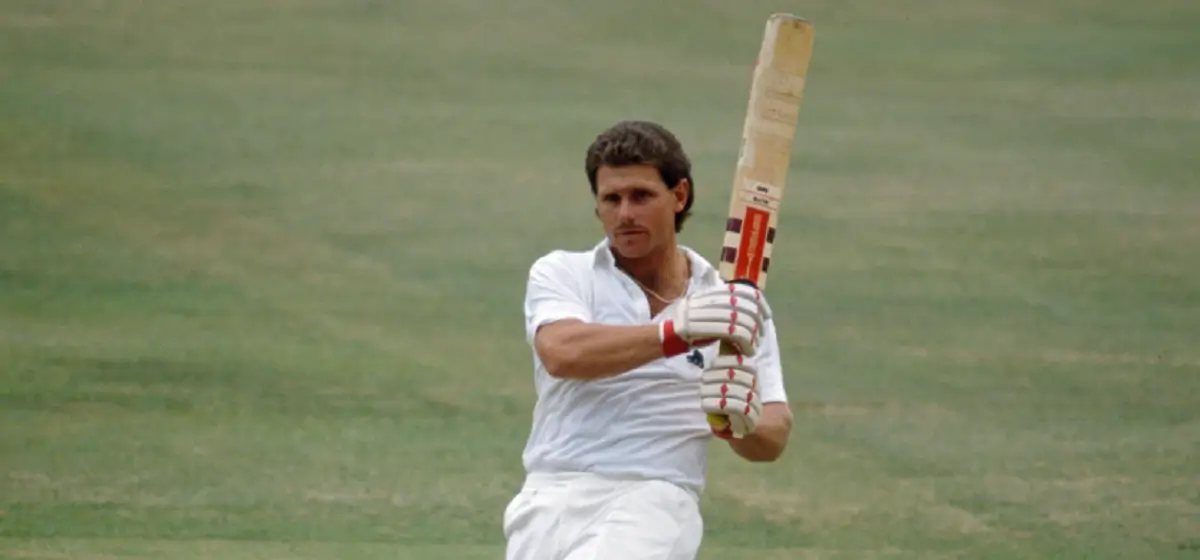
Former England cricketer Robin Smith, widely regarded as one of the bravest and most stylish batters of the late 1980s and 1990s, has died at his home in South Perth, Australia, at the age of 62. Smith was renowned for his fearless batting against some of history’s fastest bowlers and leaves behind a remarkable legacy in international cricket.
International Career and Batting Reputation
Robin Smith represented England in 62 Test matches between 1988 and 1996, scoring 4,236 runs at an impressive average of 43.67, including nine centuries. He particularly excelled against the dominant West Indies pace attack, scoring three hundreds against them — a team famed for unleashing the era’s fiercest quick bowlers.
His trademark front-foot square cut became one of cricket’s most admired strokes, reflecting his confidence and natural aggression at the crease. Smith’s resilience shone on England’s 1990 Caribbean tour, where his performances helped secure a famous Test victory in Jamaica, and again in the drawn series against West Indies in 1991 and 1995.
Record-Breaking ODI Innings
Smith’s finest limited-overs innings came at Edgbaston in 1993, where he smashed 167 against Australia* — an England ODI record that stood for 23 years, only broken by Alex Hales in 2016.
Challenges and Turning Points
Despite being a superb player of fast bowling, Smith’s perceived weakness against spin worked against him, especially following Shane Warne’s rise in 1993. His omission from England’s subsequent Ashes tour marked a turning point in his international career — although, in an ironic twist, Smith and Warne later formed a lifelong friendship, influencing Warne’s decision to join Hampshire County Cricket Club in his later years.
Early Life and Rise
Born in Durban, South Africa, in 1963, Smith grew up training in a purpose-built backyard net where legends such as Barry Richards and Mike Procter honed their skills. Richards’ ties with Hampshire helped pave Smith’s path to England, and both Robin and his brother Chris Smith went on to represent their adopted nation.
Smith debuted for England at Headingley in 1988 against West Indies, forging an early century stand with Allan Lamb before England collapsed to a heavy defeat.
Retirement and Personal Struggles
Smith played his final Test in 1996 against South Africa, aged 32, despite maintaining one of England’s best batting averages among his contemporaries. Post-retirement, he openly battled alcoholism and mental health challenges, candidly narrated in his 2019 autobiography, “The Judge: More Than Just a Game.”
Only a week before his passing, Smith:
- Attended the first Ashes Test in Perth
- Spoke publicly about his recovery journey
- Visited England Lions training at Lilac Hill, invited by Andrew Flintoff
His family confirmed he died unexpectedly, adding that the cause of death remains unknown pending investigation and urged privacy during their grief.








 RJ Mitte Dies at 34: Breaking Bad Actorâ...
 Veteran Actor Nana Patekar Passes Away a...
 Veteran Filmmaker Singeetham Srinivasa R...










