Seawalls are strong barriers built along the coast to protect land from sea waves, storms and floods. They help keep homes, roads and farms near the ocean safe from damage. Many countries build seawalls for protection and safety. Some seawalls are short, while others are very long. One seawall in the world is the longest ever made. Let’s explore more about this amazing seawall and why is it important.
Longest Seawall in the World
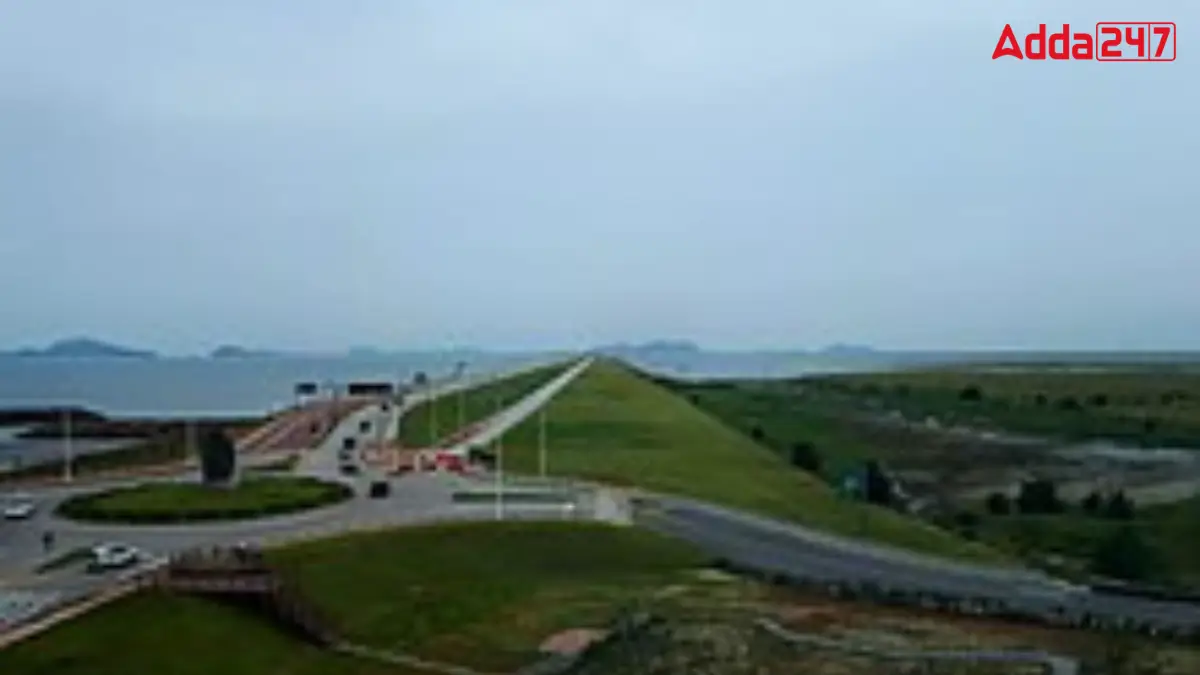
The Saemangeum Seawall in South Korea is the longest man-made seawall in the world. It stretches about 33 kilometres (21 miles) along the coast. The seawall separates the Yellow Sea from the former Saemangeum estuary. It was built to reclaim land for agriculture, industrial development, and urban projects, and also to form a large freshwater lake for future use.
Where is it Located?
The Saemangeum Seawall is on the south-west coast of South Korea, near the city of Gunsan. It connects Buan Country to Gunsan and is part of National Route 77.
Why was Saemangeum Seawall Built?
The South Korean government wanted to turn part of the sea into land. The goal was to grow crops, build factories and create a freshwater lake. The project aimed to add about 401 square kilometers of new area. This land was expected to help produce nearly 10% of South Korea’s rice.
How was it Made?
Construction started in 1991 and took many years. The seawall was completed in 2006 and officially opened in 2010. It cost billions of Korean won and involved massive amounts of work. The wall is about 36 meters high and up to 535 meters wide at its largest point.
Environmental Impact
The project caused serious damage to nature. Over 400 square kilometers of tidal mudflats were lost. These mudflats were important resting places for thousands of birds that fly long distances every year. Because of the seawall, many bird species, like the Far Eastern Curlew, are now in danger.
Water quality inside the seawall got worse. Red tides (harmful algae) became common. Fish and shellfish populations dropped. Even the soil and water started to show signs of pollution from chemicals.
Protests and Court Cases
From teh beginning, many people, especially environmental groups, were against the project. They went to court to try to stop the building, but they were not successful. However, their efforts led to the creation of the Wetland Conservation Act in 1999, which helps protect wetlands in South Korea today.
Saemangeum Seawall, In Modern Times
Today, the area is being used for new developmental projects. A floating solar power is also being planned in the seawall’s freshwater lake area. The seawall is now seen as an important part of South Korea’s economy, though the damage to nature still raises concern.








 Which Indian State Has the Most GI-Tagge...
 QDENGA Dengue Vaccine: India’s First A...
 Asian Games 2026 Mascot: HONOHON, Meanin...