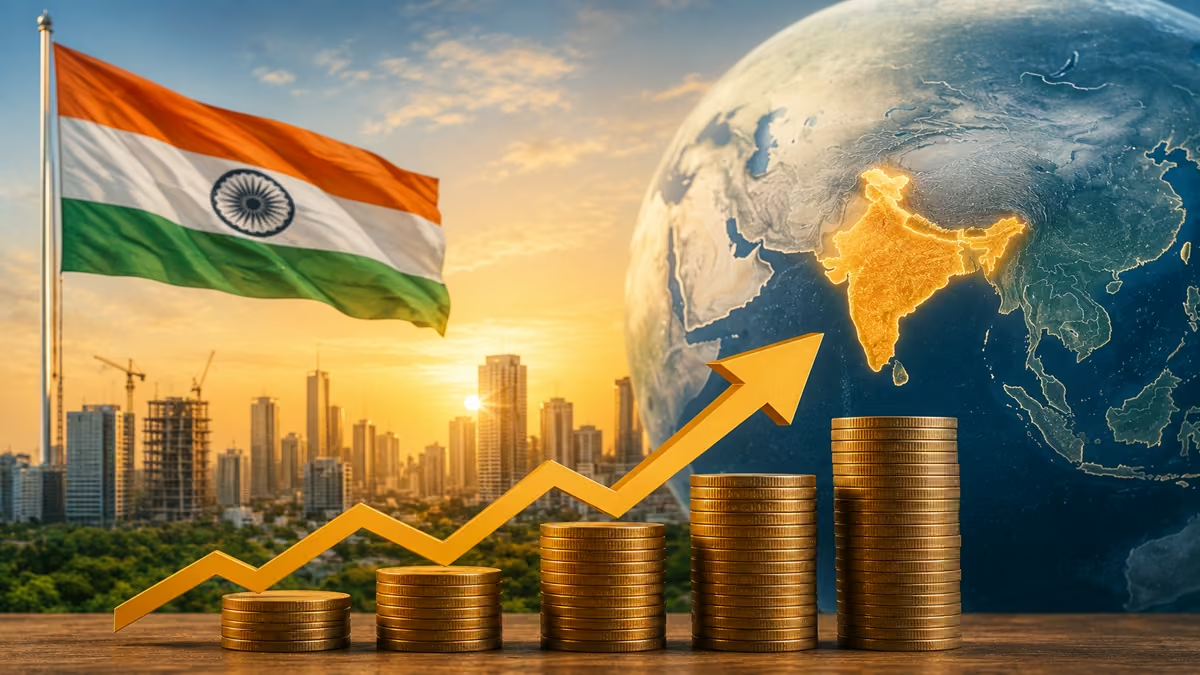
At a time when several major economies are slowing down, India continues to grow at a surprisingly strong pace.
According to recent estimates, India’s GDP growth could reach around 7.2% in the final quarter of FY26, making it one of the fastest-growing major economies in the world. While countries across Europe and parts of Asia are dealing with weak demand, inflation pressure, and slower industrial activity, India’s economy has remained relatively resilient.
But what is helping India grow faster than many other countries right now?
The answer goes far beyond GDP numbers.
First, What Does GDP Growth Actually Mean?
GDP, or Gross Domestic Product, measures the total value of goods and services produced within a country.
When GDP grows:
- businesses usually sell more,
- consumers spend more,
- investments increase,
- and economic activity expands.
Strong GDP growth often signals confidence in the economy.
For ordinary people, this can eventually influence:
- job opportunities,
- salary growth,
- business expansion,
- startup activity,
- and overall financial stability.
India’s Biggest Strength Right Now: Domestic Demand
One of the biggest reasons India’s economy is performing well is strong domestic demand.
In simple terms, people are still spending money.
Consumers across both urban and rural India continue spending on:
- housing,
- travel,
- electronics,
- food services,
- vehicles,
- online shopping,
- and lifestyle products.
This internal demand helps businesses continue growing even when global markets become uncertain.
Unlike export-heavy economies that depend heavily on international demand, India benefits from its massive domestic consumer base.
With more than 1.4 billion people, internal consumption itself becomes a powerful economic engine.
Rural India Is Recovering
Another important factor is the improving rural economy.
Better agricultural activity, government support programs, and improved rural spending are helping demand recover outside major cities.
When rural incomes improve:
- FMCG sales increase,
- transportation demand rises,
- small businesses benefit,
- and overall economic activity expands.
A healthy rural economy is especially important in India because a large part of the population still depends directly or indirectly on agriculture.
Government Infrastructure Spending Is Fueling Growth
India has also been investing heavily in infrastructure.
Large-scale spending on:
- highways,
- railways,
- airports,
- ports,
- renewable energy,
- and digital infrastructure
has supported economic activity across multiple industries.
Infrastructure projects create:
- construction jobs,
- industrial demand,
- logistics growth,
- and long-term productivity improvements.
This government spending has become one of the major growth drivers in recent years.
India’s Digital Economy Is Expanding Rapidly
India’s digital transformation is also contributing to economic growth.
Today, millions of people use:
- UPI payments,
- online banking,
- e-commerce platforms,
- digital education,
- app-based services,
- and online financial tools.
The rapid growth of digital systems has:
- improved financial access,
- increased business efficiency,
- supported startups,
- and created new economic opportunities.
India’s digital payment ecosystem has become one of the largest in the world.
Strong Banking and Financial Stability Help
India’s banking system is currently in a healthier position compared to previous years.
Banks have improved:
- loan recovery,
- asset quality,
- profitability,
- and capital strength.
This matters because stable banks are more capable of:
- supporting businesses,
- offering loans,
- financing infrastructure,
- and encouraging investment activity.
Financial stability becomes especially important during periods of global uncertainty.
Why Other Major Economies Are Slowing Down
While India continues growing strongly, many global economies are facing challenges such as:
- high inflation,
- weak consumer demand,
- aging populations,
- geopolitical tensions,
- supply chain disruptions,
- and slower industrial growth.
Several developed economies are also struggling with:
- higher interest rates,
- lower spending,
- and slowing manufacturing activity.
India is not completely protected from global problems, but its strong domestic market gives it an advantage.
Foreign Investors Still See India as a Growth Market
Global investors continue watching India closely because:
- consumption remains strong,
- the population is young,
- technology adoption is rising,
- and long-term growth potential remains high.
India is increasingly seen as:
- a manufacturing alternative,
- a startup hub,
- a digital economy leader,
- and a large consumer market.
This helps attract investment despite global uncertainty.
But Challenges Still Exist
Strong growth does not mean India is free from economic risks.
The country still faces important challenges:
- inflation pressure,
- rising oil prices,
- unemployment concerns,
- income inequality,
- and global geopolitical risks.
If global conflicts worsen or oil prices rise sharply, India’s economy could also face pressure because the country imports a large amount of crude oil.
Sustaining high growth consistently will require:
- job creation,
- productivity improvements,
- skill development,
- and stable inflation management.
How This Growth Could Affect Ordinary People
Economic growth eventually influences daily life in multiple ways.
A stronger economy can help:
- businesses expand,
- startups hire more employees,
- salaries improve gradually,
- infrastructure improve,
- and consumer confidence increase.
However, growth alone does not guarantee immediate financial improvement for every household.
The real long-term success depends on whether economic expansion creates enough opportunities across different income groups.
Why India’s Growth Story Matters Globally
India’s performance is attracting attention because global economic conditions remain uncertain.
As many countries struggle with slower growth, India is increasingly viewed as:
- one of the world’s major future growth engines,
- a large consumer market,
- and an important geopolitical and economic player.
This is one reason international companies, investors, and governments are paying close attention to India’s economic trajectory.








 India’s Wholesale Inflation Rises to 1...
 India’s Retail Inflation Rises to 5.54...
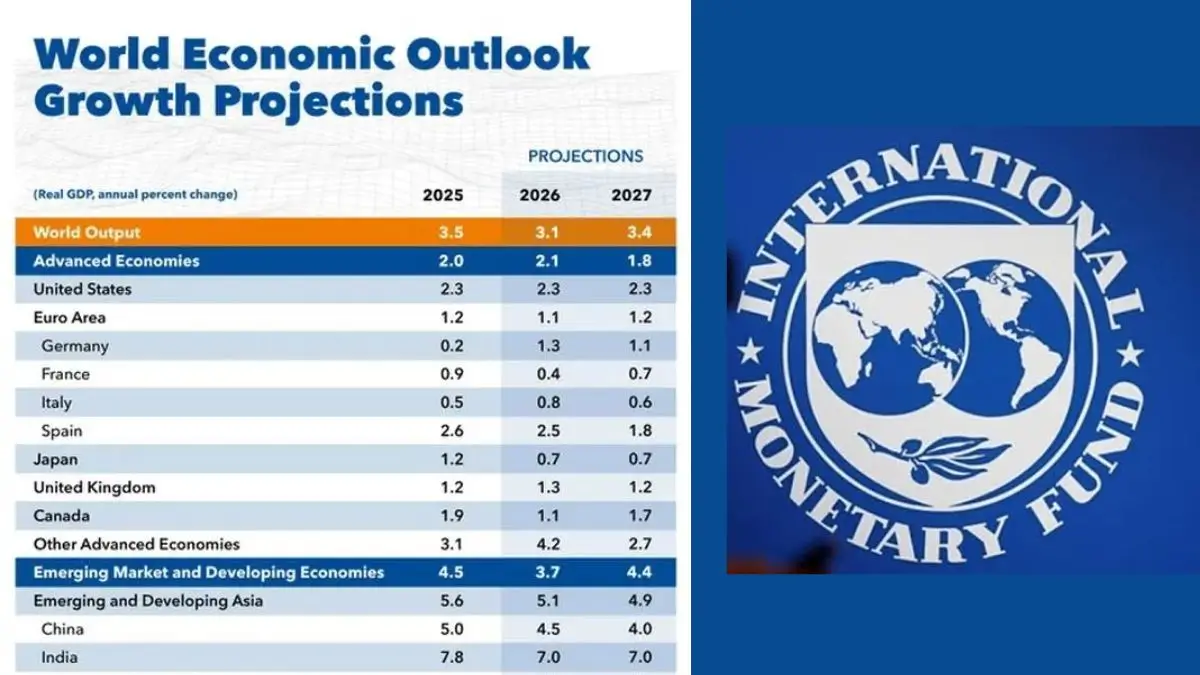 IMF Raises India’s FY27 GDP Growth For...