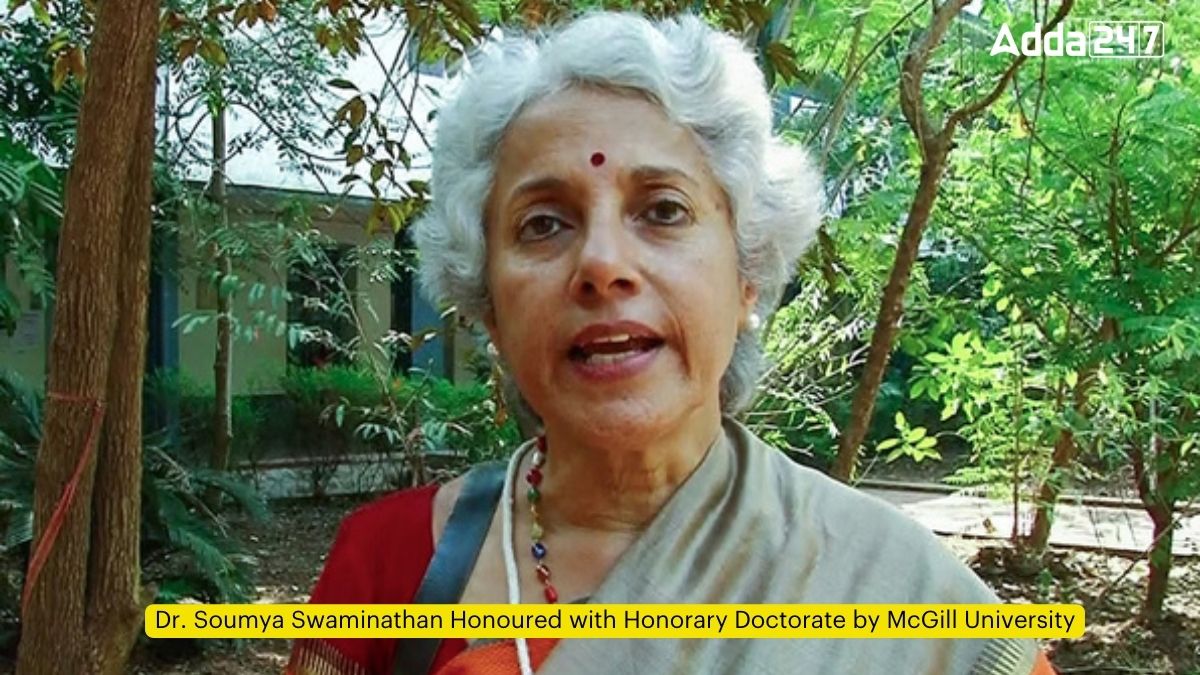
Dr. Soumya Swaminathan, a globally renowned leader in public health and infectious diseases, has been named among the 10 exceptional individuals to receive an honorary degree from Canada’s prestigious McGill University during the Spring 2024 Convocation ceremonies.
A Remarkable Journey
Swaminathan, 65, has had an illustrious career spanning over 40 years in clinical care and research. She joined the World Health Organization (WHO) in 2017 as the Deputy Director-General (Programmes) and was appointed as the organization’s first Chief Scientist in March 2019, a role she served through the COVID-19 pandemic until late 2022.
Honoring Outstanding Achievements
McGill University, a public research institution in Montreal with a history spanning more than two centuries, grants honorary degrees to individuals “who have lifetime records of outstanding scholarly, scientific, or artistic achievement, or of exceptional contributions to the public good through professional or philanthropic activity.”
A Celebration of Excellence
The Spring 2024 Convocation ceremonies, scheduled from May 28 to June 5, will witness Swaminathan being awarded the Doctor of Science, honoris causa (D Sc) in Health Sciences on May 28. This honor recognizes her transformative impact and exceptional contributions to the field of public health.
A Leader in the Fight Against COVID-19
“Dr. Soumya Swaminathan’s leadership at the forefront of the global response to the COVID-19 pandemic was instrumental in coordinating research efforts, disseminating crucial information, and advising policymakers on effective strategies to control the spread of the virus,” the McGill University announcement stated.
A Beacon of Inspiration
Describing Swaminathan as “a globally recognized leader in public health and infectious diseases,” the announcement highlighted her remarkable career as a pediatrician and a renowned researcher on tuberculosis and HIV, working tirelessly to translate research into effective programs.









 Sangeet Natak Akademi Awards 2024-25: Pr...
 India Wins 1 Gold, 3 Bronze at Linguisti...
 Indian Physicist Deepak Dhar Wins 2026 D...