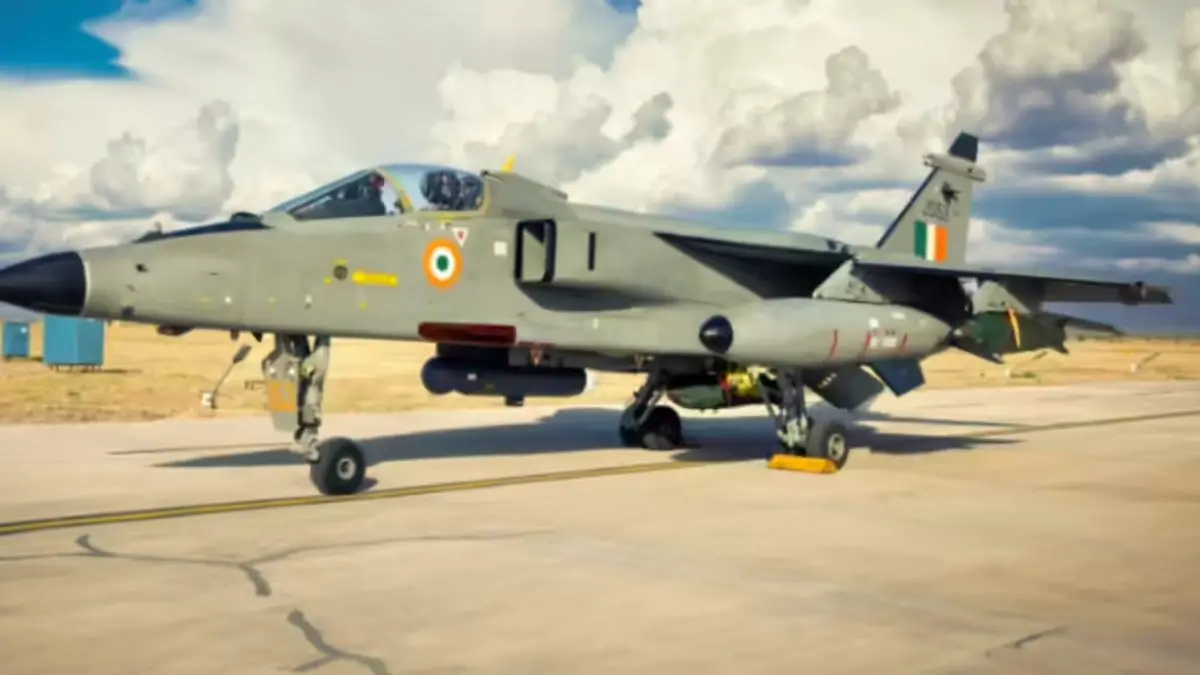
The Indian Air Force (IAF) has decided to acquire the nine retired SEPECAT Jaguar fighter aircraft from the United Kingdom and this strategic move aimed at to sustaining the its aging Jaguar fleet. Rather than being inducted into the active service, these aircraft will be used as the source of spare parts and reusable components to keep the existing Jaguar squadrons operational.
Why Is the IAF Acquiring Retired Jaguars?
The Jaguar fighter aircraft is no longer in the production and India is currently the only country in the world which continues to operate the aircraft in the frontline service.
As the global operators have retired their Jaguar fleets to obtaining the spare parts has become increasingly difficult.
The retired British aircraft will be cannibalized for the,
- Engines and engine components
- Airframe structures
- Avionics systems
- Critical sub-assemblies
- Maintenance and repair spares
This approach allows the IAF to extend the operational life of the its existing fleet without investing in to the expensive new production lines or redesign program.
The Importance of the Jaguar Fleet
The Jaguar is the deep penetration strike aircraft which is designed for the low-level attack missions and precision strikes against enemy targets.
The aircraft has served as the Indian Air Force since the year 1979 and it continues to perform critical roles such as the,
- Ground attack operations
- Deep strike missions
- Maritime strike roles
- Tactical battlefield support
Despite the its age, the Jaguar remains as an important part of the India’s air combat capability and particularly after the extensive modernization program.
Previous Efforts to Source Jaguar Spare Parts
This is not the first time India has turned to the retired Jaguar operators for the support.
The IAF has previously acquired the retired Jaguar aircraft and components from the countries like,
- France
- Oman
- United Kingdom
Reports has also indicated that France supplied dozens of the retired airframes while Oman also transferred the retired Jaguars for spare parts and maintenance support.
Fighter Squadron Shortage Driving the Decision
One of the big reasons behind this move is the IAF’s declining fighter squadron strength.
The Air Force currently operates around total 29 fighter squadrons against the sanctioned strength of 42 squadrons and creating the capability gaps that cannot be filled immediately.
While the indigenous fighters and future acquisitions are expected to strengthen the fleet several years may pass before the sufficient numbers become operational.
As a result of this legacy aircraft such as the Jaguar continue to play the important role in maintaining combat capability.
Challenges Facing the Jaguar Fleet
Despite the its modernization efforts to maintain the aging fleet remains difficult.
The IAF has encountered challenges including the,
- Shortage of spare parts
- Aging airframes
- Maintenance complexities
- Obsolete supply chains
- Availability of critical safety components
Recent reports have highlighted the difficulties in sourcing components for systems such as the ejection seats and other critical equipment.
How Long Will Jaguars Remain in Service?
The IAF expects the substantial portion of its Jaguar fleet to remain operational until approximately 2030-2032, with the some assessments suggest service life could be extended further depending on the fleet health and modernization progress.
This aircraft are expected to gradually retire as the newer platforms enter service, including the,
- Indigenous Tejas variants
- Future MRFA fighters
- Additional Rafale aircraft
- Advanced indigenous combat aircraft program.








 India Unveils First Fleet Support Ship â...
 Sanjay Seth to Inaugurate SAREX-2026 off...
 Air Marshal Ashutosh Dixit Appointed Nex...