India Biennale 2026, the second version of the India Art, Architecture and Design Biennale, is set to be organized in New Delhi between 4 December 2026 and 21 March 2027. This cultural event will feature exhibitions, performances, and many other cultural activities at historic landmarks, museums, galleries, and other locations. With India and over 20 other nations participating in the Biennale, it seeks to link contemporary artistic efforts with Delhi’s architectural and cultural heritage.
What Is India Biennale 2026?
The India Biennale 2026 is a national and international cultural festival that is concerned with art, architecture and design. This cultural event is being planned according to the vision of the Ministry of Culture, Government of India.
This event is the second version of the India Art, Architecture and Design Biennale. While the first version was held at Red Fort in 2023, the 2026 version is going to be organized on a larger scale at different historic and cultural locations in Delhi.
Its key idea is to unite the artists, architects, designers and cultural communities from India and other countries through exhibitions, performances and many other interactions.
India Biennale 2026: Dates and Countries Participating
- Date of Start: December 4, 2026.
- Date of End: March 21, 2027.
- Duration of the Biennale: 108 days.
- Place of the occasion: New Delhi.
- Key Theme: Art and design.
- Involvement of foreign countries: More than twenty countries are set to join.
According to the vision of the Biennale, Delhi monuments will serve as the platform for cultural display for 108 days.
Important Venue Locations of India Biennale 2026
The India Biennale is set to make use of the various heritage monuments and cultural institutes of Delhi for its exhibits and performances.
Heritage Monuments and open spaces
Here are the full list of the venues mentioned,
- Red Fort
- Purana Qila
- Qutub Minar
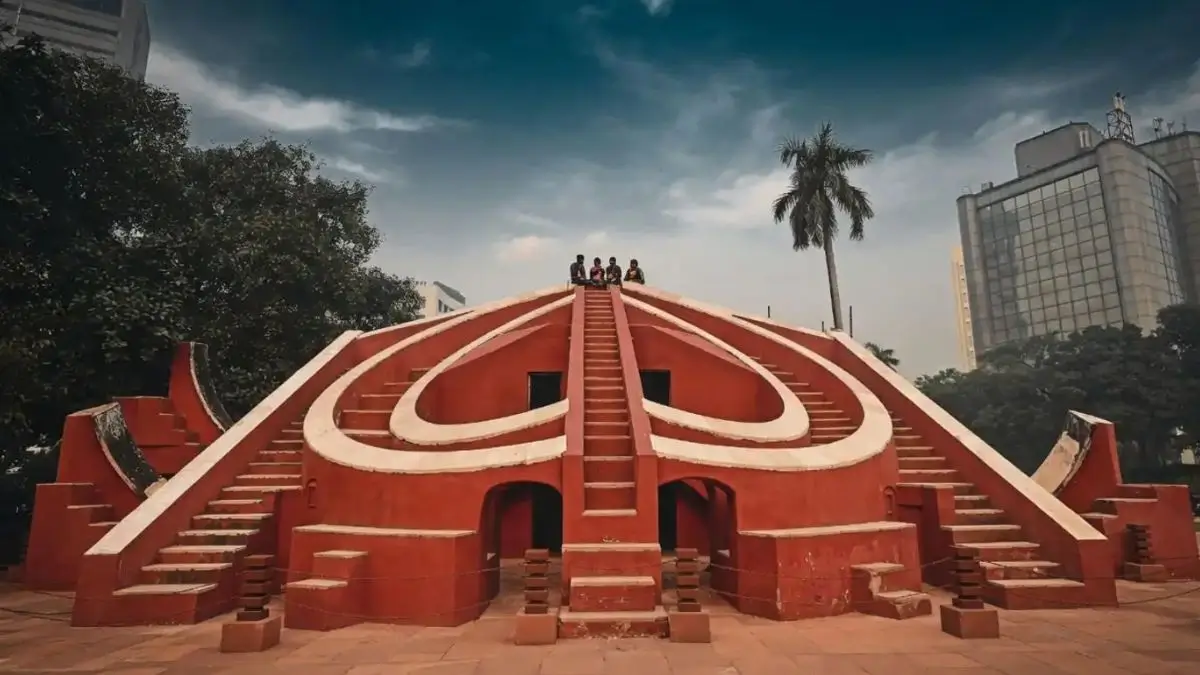
- Jantar Mantar
- Humayun’s Tomb
- Safdarjung Tomb
- Hauz Khas
- Agrasen Ki Baoli
- Lodhi Garden
- Mehrauli
- Qila Rai Pithora
- Firoz Shah Kotla
- Sabz Burj
- Sakri Ghumti
- Choti Ghumti
Museums and Cultural institutions
- National Museum
- Indira Gandhi National Centre for the Arts (IGNCA)
- National Gallery of Modern Art (NGMA)
- Lalit Kala Akademi
- Sangeet Natak Akademi
According to the news report, Jantar Mantar would be included in the venue list of the Biennale.
Jantar Mantar: Significance in History and Science
Jantar Mantar, New Delhi is an astronomical observatory that dates back to the 18th century. It was erected by Maharaja Sawai Jai Singh II of Jaipur for purposes of observing the movements of celestial bodies and conducting astronomical calculations with large stationary instruments.
Jantar Mantar is one of the five observatories that were created by Jai Singh II in Delhi, Jaipur, Ujjain, Mathura, and Varanasi. The Delhi observatory was constructed in 1724.
Red Fort and the First India Biennale
2023 saw the inaugural India Art, Architecture and Design Biennale at the Red Fort. 2026 looks like a bigger affair, with the program happening across historic locations, art galleries and museums.
The Red Fort itself is an important historical structure from the Mughal era. It was constructed by the Mughal emperor Shah Jahan in the seventeenth century and functioned as Shahjahanabad’s palace forts—Shah Jahan’s new capital city.
The Red Fort and its complex were designated a UNESCO World Heritage property in 2007. It is also where India’s prime minister delivers his address on Independence Day.








 UNEP Recognises India’s Ganges River D...
 Supreme Court Asks RBI to Make Banks Com...
 Bihar Museum Ranks 9th Globally, Tops As...