
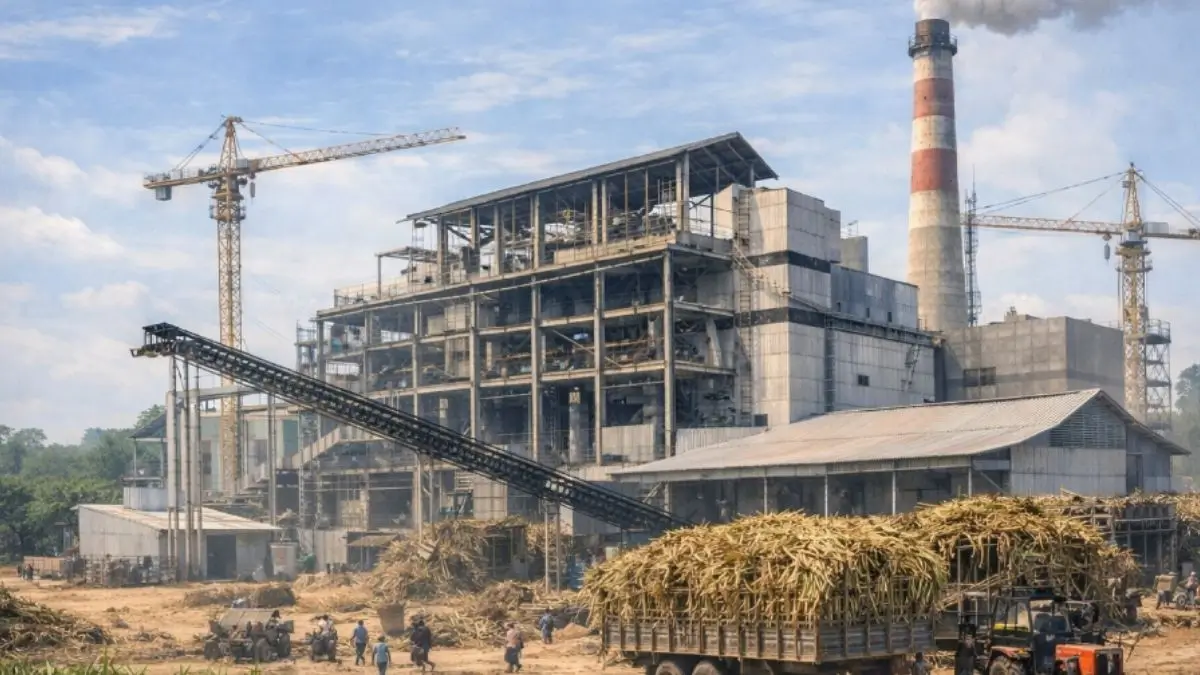
The government has proposed the increasing the minimum distance between the new sugar mills from 15 km to 25 km under the draft Sugarcane Control Order 2026. This proposal comes at that time when the stagnating sugar consumption and shifting demand patterns around. This decision aims to ensure the better resource distribution will protect farmers interests and maintain the balance in the sugar sector.
New 25 km Rule: Key Proposal Explained
The draft policy states that,
No new sugar factory can be established within the 25 km radius of an existing or proposed mill and which replaced the earlier 15 km limit.
State governments may increase this distance further based as per the regional requirements and with the approval from the central government.
This move is designed to prevent excessive clustering of the mills and also to ensure fair access to sugarcane resources.
Regulation of Existing Sugar Mills
The proposal also introduces the stricter norms for the expansion of existing sugar mills.
Before increasing the production capacity authorities will evaluate the availability of sugarcane, cultivable area, average yield, operational days of mills and the impact on neighboring units.
This have ensures that expansion does not disrupt the supply chain or to create competition for raw materials among the nearby mills.
Why the Government is Taking This Step
The decision is driven by changing trends in the sugar consumption and production.
India’s sugar consumption for 2025-26 is estimated at around the 280 lakh tonnes and which is slightly lower than previous years.
Experts attributed this trend to growing health awareness, reduced sugar intake and increased preference for alternatives like jaggery.
The policy aims to align the production capacity with demand and avoid oversupply in the market.
Rising Demand for Jaggery and Alternatives
One of the important shifts in the sugar sector is the increasing demand for jaggery and the traditional sweeteners.
Consumers are gradually moving towards the healthier alternatives and which has impacted sugar consumption growth.
This shift highlights the need for diversification in the sugar industry and also the better planning of production capacities.
Role of Khandsari Units in the Sector
The government has also brought the Khandsari units which are traditional sugar processing units under the regulatory oversight.
Under this the units with capacity above 500 tonnes per day are now required to follow the same rules as sugar mills and including the payment to farmers and reporting obligations.
India has over the 370 Khandsari units with around the 66 large units falling under these regulations.
This will ensures the fair competition and transparency across the sector.








 International Toy Fair To Begin On July ...
 Urban-Rural Consumption Expenditure Diff...
 BharatPe Introduces BharatPe One: Revolu...










