Weekly Current Affairs One Liners (3rd to 9th August, 2026)

Weekly Current Affairs One-Liners

Current Affairs 2026 plays a very important role in competitive examinations and hence, aspirants have to give their undivided attention to it while preparing for the government examinations. The banking, SSC, Railways or insurance examinations comprise a section of “General Awareness” to evaluate how much the aspirant is aware of the daily happenings taking place around the world. To complement your preparation, we are providing you with a compilation of the current affairs of the last week.

The Weekly One-Liners provides all-important news from 3rd to 9th August, 2026. Here is the list of some of the most important news of the last week:

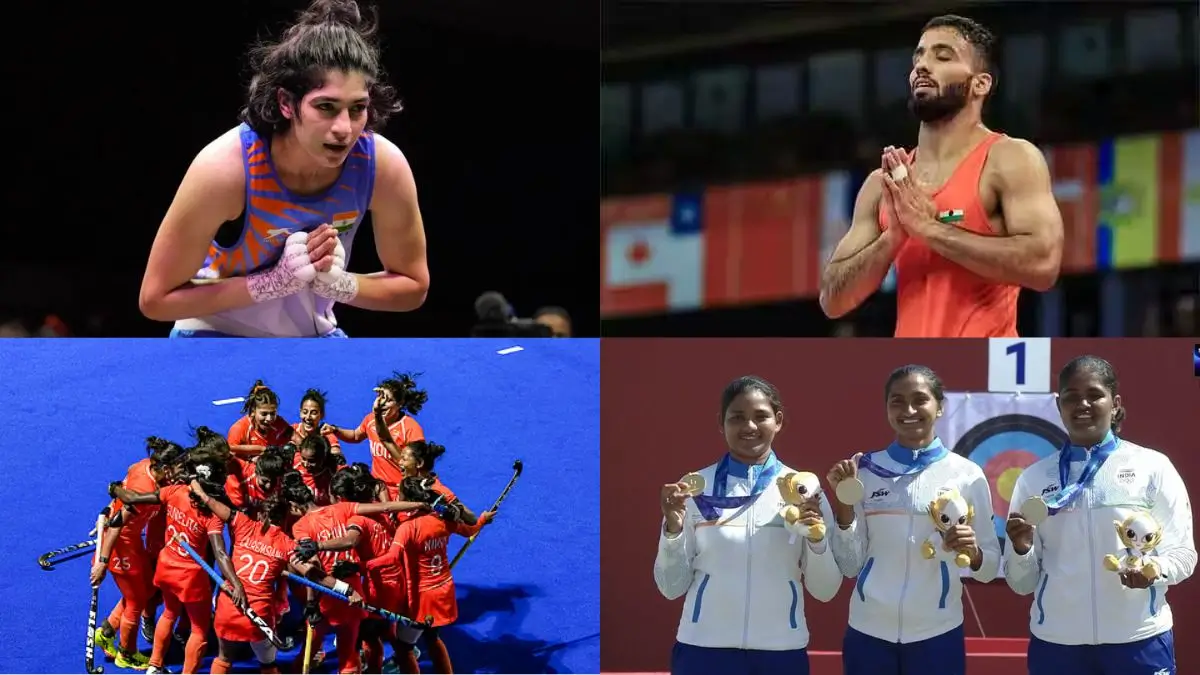
  • Commonwealth Games 2026 Medals List
  • Cabinet Approves Revamped GoBARDhan Scheme
  • Hurun India Women Leaders List 2026

The inclusion of current affairs in these examinations highlights the importance of being well-informed about both national and international events. It tests the aspirants’ understanding of their environment and their ability to interpret and analyze global trends. These topics often cover a wide range of subjects, from political developments and economic changes to scientific advancements and cultural shifts.

Our weekly compilation aims to provide a concise yet thorough overview of significant events, enabling aspirants to efficiently grasp key details necessary for their exam preparation. By integrating current affairs into their study regimen, candidates can significantly enhance their General Awareness, a critical factor in achieving success in competitive exams. This approach not only prepares them for the specific requirements of the exam but also broadens their overall perspective, an essential attribute in today’s interconnected world.

To revise the current affairs of 3rd to 9th August,  2026 click on the link below to download the PDF.

Download The Weekly One Liners 3rd to 9th August, 2026

Har Ghar Tiranga 2026 Campaign: Dates, Theme, Vande Mataram, Suryapath Tiranga & Key Facts

The Ministry of Culture launched the Har Ghar Tiranga 2026 campaign on 6 August 2026 in New Delhi. The nationwide campaign will be conducted from 9 August to 17 August 2026 as part of the Independence Day celebrations.

The 2026 edition marks the fifth year of the Har Ghar Tiranga initiative, which was launched in 2022 under Azadi Ka Amrit Mahotsav to encourage citizens to participate in Independence Day celebrations by displaying the national flag.

This year’s campaign has a special focus on the 150th anniversary of Vande Mataram, India’s National Song. The campaign will also include mass singing of Vande Mataram, digital participation, flag-hoisting activities and the Suryapath Tiranga global relay initiative.

Har Ghar Tiranga 2026: Key Details

Particular Details
Campaign Har Ghar Tiranga 2026
Launched by Ministry of Culture
Launch Date 6 August 2026
Launch Place New Delhi
Campaign Dates 9 August to 17 August 2026
Initiative Started 2022
Launched under Azadi Ka Amrit Mahotsav
2026 Theme/Focus 150th Anniversary of Vande Mataram
National Song Vande Mataram
Partition Horrors Remembrance Day 14 August
Global Initiative Suryapath Tiranga
Participation Feature Selfie with Tiranga

What is Har Ghar Tiranga?

Har Ghar Tiranga is a nationwide public participation campaign centred around the Indian national flag, the Tiranga.

The initiative was launched in 2022 under Azadi Ka Amrit Mahotsav to encourage citizens to display the national flag at their homes and participate actively in Independence Day celebrations.

The campaign has since become an important part of India’s Independence Day observances in August.

Citizens can participate in the campaign by displaying the Tiranga and sharing their participation through the official campaign platform.

Har Ghar Tiranga 2026 and Vande Mataram

The 2026 edition of Har Ghar Tiranga has a special connection with Vande Mataram, India’s National Song, as the country marks its 150th anniversary.

As part of the campaign, the Ministry of Culture is promoting the mass singing of Vande Mataram.

A five-step online tutorial has also been made available through the Har Ghar Tiranga portal to help citizens learn the correct vocal rendition of the National Song.

This initiative aims to increase public participation while highlighting the historical and cultural significance of Vande Mataram.

Suryapath Tiranga: Global Flag Relay

Another major initiative associated with the 2026 Independence Day celebrations is Suryapath Tiranga.

The initiative has been announced by the Ministry of External Affairs and involves Indian embassies and consulates across 54 countries.

Under the initiative, flag-hoisting ceremonies will be digitally tracked and broadcast globally from 14 August to 15 August 2026.

Suryapath Tiranga is intended to connect Indians and Indian missions around the world with India’s Independence Day celebrations.

Partition Horrors Remembrance Day 2026

Partition Horrors Remembrance Day will be observed on 14 August 2026 as part of the campaign schedule.

The day is observed to remember the suffering, displacement and loss experienced by people during the Partition of India in 1947.

Its inclusion in the Har Ghar Tiranga campaign provides an opportunity to remember the historical experiences associated with India’s Independence.

Selfie with Tiranga Campaign

Citizen participation is also being encouraged through the “Selfie with Tiranga” initiative.

The Har Ghar Tiranga website allows citizens to upload their selfies with the national flag and participate digitally in the campaign.

The initiative has generated significant public participation in previous editions, with more than 10 crore selfies reportedly uploaded during the previous year’s campaign.

Important Facts About Har Ghar Tiranga 2026

  • Har Ghar Tiranga 2026 was launched on 6 August 2026.
  • The campaign will run from 9 August to 17 August 2026.
  • The initiative began in 2022.
  • It was launched under Azadi Ka Amrit Mahotsav.
  • The Ministry of Culture is associated with the campaign.
  • The 2026 edition focuses on the 150th anniversary of Vande Mataram.
  • Vande Mataram is India’s National Song.
  • A five-step online tutorial has been introduced for the correct rendition of Vande Mataram.
  • Partition Horrors Remembrance Day is observed on 14 August.
  • Suryapath Tiranga involves Indian embassies and consulates across 54 countries.
  • Suryapath Tiranga will digitally track and broadcast flag-hoisting ceremonies from 14–15 August 2026.
  • Citizens can participate through the Selfie with Tiranga campaign.
  • The Tiranga consists of saffron, white and green bands with the Ashoka Chakra.

Har Ghar Tiranga 2026: Exam-Oriented Questions

Q1. When was the Har Ghar Tiranga 2026 campaign launched?

Answer: 6 August 2026

Q2. From which date will the Har Ghar Tiranga 2026 campaign run?

Answer: 9 August to 17 August 2026

Q3. In which year was the Har Ghar Tiranga initiative launched?

Answer: 2022

Q4. Under which initiative was Har Ghar Tiranga launched?

Answer: Azadi Ka Amrit Mahotsav

Q5. What is the special focus of Har Ghar Tiranga 2026?

Answer: The 150th anniversary of Vande Mataram

Q6. When is Partition Horrors Remembrance Day observed?

Answer: 14 August

Q7. What is Suryapath Tiranga?

Answer: A global relay initiative involving Indian embassies and consulates for digitally tracking and broadcasting flag-hoisting ceremonies.

Q8. How many countries are involved in Suryapath Tiranga?

Answer: 54 countries

Q9. What digital participation feature is available under Har Ghar Tiranga?

Answer: Selfie with Tiranga

Current Affairs Capsule PDF (8th August, 2026)

National News

Centre Opposes Extending Creamy Layer Principle to SCs

The Union government has told the Supreme Court that the creamy layer principle should not be extended to Scheduled Castes and Scheduled Tribes. The Centre argued that reservation for SCs and STs is based on historical and social disadvantage, caste, tribal identity and representation, rather than economic status alone. It said any income-based exclusion would require a holistic review and detailed empirical study. The issue follows the Supreme Court’s 2024 6:1 majority judgment permitting evidence-based sub-classification within SCs and STs. The Court stressed quantifiable data, greater disadvantage and inadequate representation. The creamy layer principle originated in the 1992 Indra Sawhney judgment for OBCs. Articles 14, 15(4), 16, 16(4A), 335 and 341 remain central to the debate.

Lok Sabha Passes MSME Bill To Address Delayed Payments

The Lok Sabha passed the Micro, Small and Medium Enterprises Development (Amendment) Bill, 2026 on August 7 without debate amid opposition protests. The Rajya Sabha had already passed the Bill on August 3. The legislation seeks to address delayed payments to MSMEs by establishing timelines for faster dispute adjudication, enabling recovery of settlement agreements and improving liquidity. Courts may also order payment of at least 50% of the awarded amount to an MSME supplier when an application to set aside an order remains pending for more than six months. MSMEs contribute around 31% of India’s GDP, 36% of manufacturing and 41% of exports. Outstanding MSME credit has increased from ₹10 trillion in 2014-15 to over ₹38.35 trillion.

Digital Health Service Crosses 25 Crore OPD Registrations

The Scan and Register Service under the Ayushman Bharat Digital Mission (ABDM) has crossed 25 crore OPD registrations, marking a major milestone in India’s digital healthcare transformation. Launched in October 2022, the service enables patients to register for hospital OPD services through a simple QR-code scan, reducing waiting times and improving hospital efficiency. It operates across 30,800 healthcare facilities in 36 States and Union Territories and 756 districts, including 24,323 public and 6,481 private facilities. Nearly 4 lakh patients use the service daily, with patient details automatically fetched through their ABHA accounts. Bihar leads with over 7.30 crore transactions, followed by Uttar Pradesh, Andhra Pradesh and Jammu & Kashmir. AIIMS New Delhi has the highest registrations among government facilities.

GI Tagged Mithila Makhana Makes First Sea Export To Australia

India completed its first-ever sea shipment of GI-tagged Mithila Makhana from Bihar to Australia in August 2026. The consignment originated from farmers in Darbhanga district, was packed in seven containers and transported from Bihta near Patna to Kolkata by rail before being shipped by sea. The product underwent scientific testing, irradiation and international-standard packaging. APEDA, under the Ministry of Commerce and Industry, supported the export process. The sea route is expected to reduce transportation costs compared with air freight and improve export viability. The shipment reportedly provided local cultivators with around 18% higher profit margins than prevailing local market rates. Mithila Makhana is also known as fox nut or lotus seed. Bihar is India’s leading Makhana-producing state, with Darbhanga an important cultivation centre.

State News

Punjab Claims Top Position In NITI Aayog School Education Index

Punjab Education Minister Harjot Singh Bains said Punjab has secured the top position in the NITI Aayog School Education Quality Index 2026, overtaking Kerala. He highlighted major improvements in government schools since 2022, including better infrastructure, timely textbook distribution and extensive school inspections. The state’s Mission Samarth foundational learning programme covers nearly 12 lakh students and over 70,000 teachers annually, grouping students according to learning levels rather than classes. Punjab has also become the first state to introduce Artificial Intelligence as a core subject from Class 1 to Class 12. Government-school NEET qualifiers increased from 80 in 2021 to 882 in 2026, supported by the Punjab Academic Coaching for Excellence (PACE) initiative.

Wayanad To Receive X Band Doppler Weather Radar

The India Meteorological Department (IMD) plans to commission an X-Band Doppler Weather Radar at Pulpally in Kerala’s Wayanad district by December 2026. The radar will provide high-resolution weather monitoring within a 100-km radius, improving surveillance of rainfall, cloudbursts and severe weather. X-Band radars operate at higher frequencies than S-Band and C-Band systems and are particularly useful for short-range, high-resolution observations. The installation is important for Wayanad, located in the Western Ghats, a region vulnerable to heavy rainfall and landslides. Land has been provided by Pazhassi Raja College, while the Kerala State Disaster Management Authority has coordinated support. IMD personnel will operate and maintain the radar under the Ministry of Earth Sciences.

Andhra Pradesh Notifies Pedestrian Safety And Accessibility Policy

Andhra Pradesh notified the Pedestrian Safety and Universal Accessibility Policy, 2026 on August 7 after Cabinet approval a day earlier. The statewide framework covers urban areas, rural stretches, satellite towns and urban fringes, requiring authorities to create safer and obstruction-free pedestrian infrastructure. The policy follows directions linked to the Supreme Court’s S. Rajaseekaran vs Union of India judgment of October 7, 2025, which recognised safe and obstruction-free footpaths as part of the Right to Life under Article 21. Infrastructure must provide a minimum two-metre clear walking zone, slip-resistant surfaces, tactile indicators, wheelchair ramps, Braille and audible signals. The state will prioritise 15–20 high-fatality blackspots and conduct road-safety audits covering at least 20% of roads in the first year.

HAL Airport Operationalises India’s First RNP CAT H Helicopter Approach

HAL Airport in Bengaluru became India’s first airport to operationalise the Required Navigation Performance–Category H (RNP CAT H) satellite-guided helicopter approach procedure on August 7, 2026. The precision navigation system was developed by the Airports Authority of India (AAI) and validated through flight trials by HAL test pilots before approval by the Directorate General of Civil Aviation (DGCA). RNP uses satellite guidance and onboard avionics to maintain a specified flight path, while CAT H refers specifically to helicopter operations. The procedure improves navigation accuracy in adverse weather, urban areas and terrain-constrained locations. It reduces helicopter approach time from about 12 minutes to four minutes and supports nearly 50 daily helicopter movements at Bengaluru.

Bengaluru Police Launch Operation Mukta Against Illegal Immigrants

The Bengaluru City Police launched Operation Mukta on August 8, 2026, to identify and verify suspected illegal immigrants, particularly suspected Bangladeshi nationals. The operation involved early-morning raids beginning around 5 AM across multiple locations. More than 500 police personnel were deployed in the Whitefield division, covering over 30 locations under six police station limits. Police teams searched migrant settlements and checked identity documents, including Aadhaar and Voter ID cards, in Whitefield, Kadugodi, Marathahalli, Bellandur, Varthur, Mahadevapura and Electronic City. Around 40 suspicious individuals were detained in Whitefield for verification, with four identified as Bangladeshi nationals allegedly staying illegally after foreign documents were recovered. Police planned coordination with the FRRO for further legal action and deportation under applicable immigration laws.

International News

World Food Prices Reach Three Year High In July

The FAO Food Price Index rose to 131.1 points in July 2026, up from 130.3 in June and reaching its highest level since January 2023. The United Nations Food and Agriculture Organization attributed the increase to adverse weather conditions and escalating conflicts affecting major agricultural markets. The cereal price index increased 3.4%, led by a 5.8% rise in wheat prices amid concerns over Black Sea export disruptions and heat damage. Vegetable oil prices climbed 2%, reaching their highest level since June 2022, while sugar prices increased 5.6% due to weather concerns and stronger ethanol demand expectations. Meat prices declined 2.8%, while dairy prices fell 0.7%. The July index remained 18.2% below its March 2022 peak.

Abelardo de la Espriella Sworn In as Colombia’s 36th President

Abelardo de la Espriella was sworn in as the 36th President of Colombia on August 7, 2026, beginning his 2026–2030 term after succeeding Gustavo Petro, Colombia’s first left-wing president. De la Espriella won the June 21 runoff with 12,960,166 votes (49.66%), defeating Iván Cepeda, who secured 48.70%. The inauguration was held at Santiago de Cali University in Cali, rather than Bogotá. Senate President Honorio Henríquez administered the oath. In his address, De la Espriella adopted a hardline stance against drug trafficking and said peace talks with armed groups were exhausted. King Felipe VI, Javier Milei, Daniel Noboa and FIFA President Gianni Infantino attended. The US announced $1 billion security assistance for Colombia.

Banking News

RBI Revises Loan Recovery Rules For Lenders

The Reserve Bank of India (RBI) issued nine circulars on August 6, 2026, introducing a unified framework for loan recovery practices. The revised directions will take effect from January 1, 2027, after the implementation date was deferred from October 1, 2026. Recovery-related calls and physical visits will be permitted only between 8 AM and 7 PM, and borrowers must receive at least one day’s notice before a recovery agent’s first physical visit. Lenders must record recovery calls and retain recordings for at least six months. The framework also regulates remote locking of financed devices such as phones and tablets. Locking cannot begin before an account is 30 days overdue, while complete locking is permitted only after 60 days, with emergency and communication services preserved.

Economy News

India Forex Reserves Rise Over Ten Billion Dollars

India’s foreign exchange reserves increased by $10.51 billion to $692.87 billion in the week ended July 31, 2026, according to RBI data. The reserves reached their highest level in more than two months, following a $6.1 billion increase in the previous reporting week. Foreign Currency Assets (FCAs), the largest component, rose by $8.75 billion to $564.68 billion. Gold reserves increased by $1.69 billion to $104.74 billion. India’s Special Drawing Rights with the IMF rose by $48 million to $18.67 billion, while its reserve position with the IMF increased by $28 million to $4.78 billion. India’s record forex reserves stood at $728.494 billion in February 2026, before declining amid geopolitical tensions and pressure on the rupee.

Appointments News

Anand Prakash Appointed India’s High Commissioner to Eswatini

Anand Prakash, a 2009-batch Indian Foreign Service (IFS) officer, has been appointed as India’s next High Commissioner to the Kingdom of Eswatini. He is currently serving as a Director in the Ministry of External Affairs (MEA). In his new diplomatic assignment, Prakash will represent India in Eswatini and work to strengthen bilateral relations across political, economic, development, education, capacity-building and people-to-people cooperation. Eswatini is a landlocked country in southern Africa, bordered by South Africa and Mozambique. Formerly known as Swaziland, the country officially adopted the name Eswatini in 2018. The appointment is significant for India’s continued diplomatic and development engagement with African nations.

Awards News

President Murmu Marks 12th National Handloom Day Celebrations

President Droupadi Murmu graced the 12th National Handloom Day celebrations in New Delhi and presented the Sant Kabir Handloom Awards and National Handloom Awards 2025. Four commemorative postage stamps celebrating India’s diverse handloom traditions were also released. The President highlighted handloom’s contribution to employment, women’s empowerment, culture, self-reliance and environmental sustainability. She recalled that the Swadeshi Movement began on August 7, 1905, following the Partition of Bengal, and the government has observed August 7 as National Handloom Day since 2015. Murmu stressed that new technologies, e-commerce and modern training are essential for sustainable growth. She also encouraged young entrepreneurs, designers and startups to connect traditional crafts with modern brands and global value chains.

Science & Technology News

IIT Guwahati Develops Low Cost E Eye Toxicant Detector

IIT Guwahati has developed E-Eye, a low-cost portable optical sensing device designed for rapid detection of toxicants and cancer-causing heavy metals in water and biological samples. Announced on August 6, 2026, the device uses the Beer-Lambert law to convert chemical colour intensity into digital readings. It costs approximately ₹3,500, while each test costs around ₹2. Laboratory validation covered more than 2,700 samples, with the device detecting arsenic, lead, iron, chromium, fluoride and Escherichia coli. The research was led by Prof. Tapas K. Mandal and Prof. Harshal B. Nemade, with researchers from KIIT Bhubaneswar and Ramakrishna Mission Residential College, Kolkata. The work was published in the IEEE Sensors Journal and supported by MeitY-linked funding.

IIT Madras And Indonesia Sign MoU For Deep Tech Cooperation

IIT Madras Global Research Foundation (IITM Global) and Indonesia’s Ministry of Higher Education, Science and Technology signed a landmark MoU to strengthen cooperation in higher education, research, innovation, deep technology, entrepreneurship and talent development. The agreement seeks to build collaborative research ecosystems, accelerate deep-tech commercialisation and strengthen the India-Indonesia South-South Strategic Partnership. The MoU was signed in the presence of Indonesian Minister Prof Brian Yuliarto, IIT Madras Director Prof V. Kamakoti, Indian Ambassador Sandeep Chakravorty and other officials. The partnership aims to help Indonesian universities participate in joint research, technology commercialisation, talent development and innovation programmes. It follows recent bilateral discussions between Prime Minister Narendra Modi and Indonesian President Prabowo Subianto.

PM Modi Inaugurates Param Pragya Supercomputing Facility at IIT Delhi

Prime Minister Narendra Modi inaugurated Param Pragya, an AI-powered high-performance supercomputing facility, at IIT Delhi’s Sonipat Campus on August 8, 2026. The inauguration took place during IIT Delhi’s 57th Convocation Ceremony, where Modi served as chief guest. Param Pragya is designed to support artificial intelligence, data science, advanced computing and interdisciplinary research. More than 3,000 students graduated during the convocation, including 587 doctoral scholars. The institute also awarded its major academic honours, including the President’s Gold Medal and Director’s Gold Medal. The graduating batches included the first students of B.Des., Executive MBA, M.Sc. Biological Sciences and MA in Culture, Society, Thought. IIT Delhi operates under the Institutes of Technology Act, 1961.

Sports News

Suraj Kumar Chand Creates History With FISU Squash Gold

Indian squash player Suraj Kumar Chand created history by becoming the first Indian to win the FISU World University Squash Championship title. Chand defeated Hungary’s Takács Benedek 3-2 in a thrilling final to secure the historic gold medal for India. His victory marks a significant milestone for Indian university-level squash and adds to the country’s growing international presence in the sport. The achievement also highlights Chand’s competitive resilience, as he successfully negotiated a closely contested championship match against a strong opponent. His gold medal represents a breakthrough at the FISU World University Squash Championships and provides an important moment for Indian squash. The victory is expected to inspire greater participation and recognition of university-level squash in India.

Ashish Yadav Wins India’s Second World U20 Javelin Medal

Indian athlete Ashish Yadav won silver in the men’s javelin throw at the World Athletics U20 Championships 2026 in Eugene, Oregon. His best throw measured 74.09 metres, achieved during his third attempt in the final on August 7. South Africa’s Jan-Hendrik Heymans won gold with 80.50 metres, while Dominica’s Addison James secured bronze with 73.89 metres, a national record. India’s other finalist, T. Dharanidharan, finished sixth with 72.35 metres. Ashish became India’s second medallist in the men’s U20 javelin and the country’s first silver medallist in the event. He was 19 years old and competed despite a recent knee injury. Neeraj Chopra won India’s previous U20 javelin gold in 2016.

Ariha Pangambam Wins India’s First Senior Aerobic Gymnastics Gold

Indian gymnast Ariha Pangambam of Imphal, Manipur, created history by winning India’s first senior gold medal in the individual women’s category at the Aerobic Gymnastics Asian Championships. The competition was held in Tagaytay City, Philippines, from August 4 to 7, 2026, under the Asian Gymnastics Union. Pangambam won the final with a score of 19.100, comprising 8.650 in artistry, 7.600 in execution and 2.850 in difficulty. More than 400 athletes and officials from 11 countries participated. Ariha trains under coach Yumnam Ranjan Singh and studies sports leadership at AISTS India. She had finished fourth in the 2022 and 2024 Asian Championships, making her historic 2026 victory a major milestone for Indian aerobic gymnastics.

Important Days News

World Brain Tumour Day Raises Awareness About Early Detection

World Brain Tumour Day is observed annually on June 8 to raise awareness about brain tumours, early detection, diagnosis, treatment and patient support. The observance was initiated by Germany’s Deutsche Hirntumorhilfe e.V., or German Brain Tumour Association, and has been marked globally since 2000. A brain tumour is an abnormal tissue growth in the brain or its surrounding structures and may be benign or malignant, with effects depending on location and size. Possible warning signs include persistent headaches, seizures, speech difficulties, behavioural changes, weakness, balance problems, blurred vision, hearing loss, facial numbness, vomiting and confusion. Risk-reduction measures include avoiding unnecessary ionising radiation, smoking, harmful chemical exposure and preventable head injuries.

World Oceans Day History And 2026 Reimagine Theme

World Oceans Day is observed annually on June 8 to raise awareness about oceans and promote their conservation and sustainable use. Its origins date to June 8, 1992, when Oceans Day was declared at the Global Forum in Rio de Janeiro during the UN Conference on Environment and Development. In 2008, the UN General Assembly officially designated June 8 as World Oceans Day through Resolution 63/111, and the first UN observance was held in 2009 with the theme “Our Oceans, Our Responsibility.” The 2026 theme is “Reimagine: Beyond the world we know, a new relationship with our ocean.” Oceans cover over 70% of Earth, produce at least 50% of its oxygen and support biodiversity, food security and livelihoods. SDG 14 focuses on ocean conservation.

Nagasaki Day 2026 Highlights Nuclear War’s Human Cost

Nagasaki Day 2026 will be observed on August 9 to remember victims of the atomic bombing of Nagasaki on August 9, 1945. The United States dropped the plutonium-based Fat Man bomb from the B-29 Bockscar after poor weather prevented the original target, Kokura, from being attacked. The approximately 21-kiloton explosion caused massive destruction and tens of thousands of deaths, while radiation produced long-term health consequences. Survivors, known as Hibakusha, continue advocating for nuclear disarmament. Nagasaki Day promotes peace, diplomacy and awareness of nuclear warfare’s humanitarian consequences. Global disarmament efforts include the NPT, CTBT, TPNW, IAEA safeguards and arms-control agreements. Japan announced surrender on August 15, 1945, ending World War II.

International Day of the World’s Indigenous Peoples 2026: Theme, History and Significance

The International Day of the World’s Indigenous Peoples 2026 will be observed on August 9th as to recognize the rights, culture, traditions and contributions of Indigenous Peoples across the world. It was declared by the United Nations General Assembly in the year 1994, the observation serves as a global platform to raise awareness about Indigenous peoples’ rights and concerns. This year’s theme, “Honouring Indigenous Midwives: Safeguarding Life and Well-being”, raises awareness about traditional medicine practices and significance of indigenous midwives. The International Day of the World’s Indigenous Peoples 2026 also brings into light several concerns that include cultural preservation, land rights, equality, education, healthcare and protection of traditional knowledge.

International Day of the World’s Indigenous Peoples 2026 Theme

The theme for 2026 is “Honouring Indigenous Midwives: Safeguarding Life and Well-being”. It recognizes the vital role played by indigenous midwives as guardians of traditional knowledge about pregnancy, childbirth, motherhood and community well-being.

The theme also emphasizes the necessity to respect indigenous cultural medical practices and provision of safe and quality healthcare services to indigenous communities.

What Is Special About August 9?

There is a historical background to the day. The United Nations Working Group on Indigenous Populations held its first session on August 9, 1982.

In December 1994, the UN General Assembly declared August 9 as the International Day of the World’s Indigenous Peoples. Since that day, it has been marked by awareness campaigns, cultural events and discussions.

The purpose of observing this day is to increase visibility of indigenous peoples and make sure their rights and culture are protected by governments and other institutions.

Objectives of the International Day

The following objectives can be distinguished in connection with the observation of this day,

  • Protection of indigenous rights: Promotion of rights, dignity and freedoms
  • Self-determination support: Promotion of indigenous peoples’ involvement in decision-making processes related to their communities
  • Protection of culture: Protection of languages, traditions, art and culture
  • Protection of traditional knowledge: Recognition of the traditional knowledge transferred between many generations
  • Protection of land and resources: Recognition of the indigenous peoples relationship to traditional territories and natural resources
  • Equality promotion: Elimination of the discrimination and marginalization
  • Health improvement: Promotion of the accessible and culturally appropriate health care
  • Education improvement: Promotion of quality education taking into consideration the language and culture of indigenous peoples.

Challenges Facing Indigenous Peoples

In spite of their substantial contributions to culture and environment, indigenous peoples are facing numerous challenges. Disputes regarding land and resources might undermine their livelihoods, whereas development and environmental degradation could affect their ancestral lands.

Loss of traditions and disappearance of languages are serious threats to indigenous cultures, especially if the young generation is unable to learn these traditions. Lack of access to healthcare, education and employment opportunities is another challenge faced by indigenous peoples in remote areas.

Climate change, deforestation and pollution are additional factors that pose threats to indigenous people’s livelihoods. Preserving traditional knowledge is thus closely associated with protecting their culture, environment and communities.

Role of the United Nations General Assembly

The United Nations General Assembly (UNGA) is the main deliberative body within the UN system. The UNGA consists of 193 UN member states, each of which has one vote.

Founded in 1945, the General Assembly addresses international questions concerning peace, security, development and human rights. It decides on the UN budget and selects UN bodies’ membership.

The UNGA decision of 1994 to proclaim the International Day of the World’s Indigenous Peoples has contributed to promoting Indigenous peoples’ rights and culture preservation on the international level.

Operation Safed Sagar: How the IAF Dominated the Skies During the Kargil War

Operation Safed Sagar took place in the year 1999, which witnessed one of the most challenging military operations for India. In the context of the Kargil War, Pakistani troops had occupied key locations in the mountains, which posed a major challenge to the Indian Army. With a view to assisting the land force attacks, the Indian Air Force undertook Operation Safed Sagar. The operation started from the month of May 1999.

Operation Safed Sagar: An Overview

Aspect Details
Battle Kargil War, 1999
Country India
Military force involved Indian Air Force
Commenced May 1999
Associated with Operation Vijay
Principal areas Mushko Valley, Drass, Kaksar, Batalik and Turtok
Primary aircraft Mirage-2000
Weapons used Laser-Guided Bombs and Precision Weaponry
Altitude of target About 16,000-18,000 feet
Primary limitation Flyers were prohibited from crossing the Line of Control

These figures, however, speak for themselves. The real challenge was carrying out the mission over the world’s most formidable mountains.

Background Of Operation Safed Sagar

The Kargil dispute arose following the occupation by Pakistani troops and military personnel of some vital positions along the Line of Control.

From these high grounds, they had the tactical advantage over some important passes such as the Srinagar-Leh highway.

India started Operation Vijay for reclaiming these occupied positions.

But there was another challenge which the terrain posed to them.

These were enemy positions that were positioned at a height of about 16,000-18,000 feet. The troops had to climb uphill from the bottom while the enemy had positions overlooking their position.

Thus came in the need for air support from the Indian Air Force.

Operation Safed Sagar was thus born.

Inside the Mission: The Role of Safed Sagar

Contrary to what may seem initially, Safed Sagar was not just another bombing operation, but a series of air operations that comprised several stages.

01 – Reconnaissance

  • Prior to an attack, the IAF needed to know where the enemy was deployed.
  • For this purpose, various planes conducted aerial reconnaissance and electronic intelligence (ELINT) flights.

The problem

  • Terrain, camouflage, and weather conditions might have made locating the enemy a very complicated task.

The solution

  • Reconnaissance and intelligence gathering allowed to obtain a more detailed understanding of the battlefield before any strikes.

02 – Precision Strikes

  • Having located important targets, fighter planes could be launched against enemy positions.
  • During the course of the operation, the Mirage-2000 became especially valuable for the IAF. It allowed the use of laser-guided bombs and laser designators which enabled the Indian Air Force to launch more effective strikes against the targets in the mountains.

The problem

  • It is one thing to bomb a regular target. Bombing a mountain installation is completely another matter.

The solution

  • Using precision-guided weapons reduced the importance of conventional bomb drops and allowed the IAF to launch strikes against the chosen targets.

03 – Disruption of Logistics

  • However, there was more to the battle than destruction of enemy fighting positions.
  • In order to occupy the heights in the mountains, the enemy needed supplies, such as ammo, food, equipment and other.
  • Thus, IAF had to interfere with enemy logistics as well.
  • The goal was clear to decrease the enemy’s ability to hold out while Indian forces would continue their advance.
  • This air-ground coordination became one of the most important elements of Safed Sagar.

04 – Air Defence and Escorts

  • The aircraft operating in the war theatre would also need protection.
  • The Indian Air Force carried out escorting and air defence operations to provide protection to the aircraft participating in the operation and control of the airspace.
  • Thus, Safed Sagar became a larger air operation instead of separate bombing missions.

05 – Helicopter Support

  • The other major requirement of the operation was helicopters.
  • The helicopters were utilized for the following purposes which is Casualty evacuation → Air transport → Logistics → Operational support
  • Over 2,000 helicopter missions were conducted during the operation.
  • The importance of the use of helicopters was due to the fact that the mountainous terrain rendered conventional modes of transport very difficult.

The Biggest Limitation: Don’t Go Across the LoC

Another one of the truly amazing things about Operation Safed Sagar was that the level of operational limitation imposed on Indian fighter jets.

IAF fighters were asked not to go across the LoC.

This created a huge tactical dilemma.

Because enemy positions were near the LoC and usually at commanding heights, pilots had to plan their flight trajectories, angles and points of attack.

It was not a case of,

  • Identify the target → Attack it.

It was more like,

  • Identify the target → Identify the position of the target → Compute safe angle of approach → Do not cross the LoC → Attack accurately → Come back safely.

Why Kargil Proved to be Tough for Airplanes?

In high-altitude areas, the surroundings themselves pose a military problem.

Problem & Its Consequence

  • Rarity of air: Affects performance of the planes
  • High altitude: Affects carrying capacity and maneuvering capability
  • Mountainous terrain: Makes navigation and targeting difficult
  • Camouflage Makes it hard to spot the enemy’s location
  • Low visibility Less accurate targeting
  • Anti-aircraft defense Increased threat to aircrafts and helicopters
  • LoC constraint Limited attacking routes

The IAF had to fight not just the enemy but also the terrain of the battle area.

It was important to note that it was the first time that the IAF had undertaken combat operations in such high altitudes.

Mirage-2000: The Advantage of Precision Strikes

  • Among all the planes used in the Kargil conflict, the Mirage-2000 got special attention.
  • Precision weapons capability turned out to be especially helpful in attacking well-defended objects in the mountains.
  • The employment of Laser-Guided Bombs and Laser Designator Pods is a significant step towards the use of precision weaponry.
  • Instead of using conventional bombers, the IAF began to focus more on the precision strikes at targets.
  • Thus Kargil experience has revealed another important principle:
  • Accuracy may be more useful than the sheer quantity of explosives thrown at the enemy in mountain warfare.
  • The mission showed the increasing value of precision weapons, targeting systems and intelligence-driven air strikes.

28 May 1999: The Message of the Battlefield

  • Operation Safed Sagar also made clear the danger that was hidden in flying of helicopters in Kargil area.
  • On 28 May 1999, one IAF Mi-17 helicopter was shot down by a Stinger missile.
  • This showed that helicopters used in mountain warfare can be vulnerable to the shoulder-fired surface-to-air missiles.
  • It became one of the lessons of the battle and affected the further helicopter use in the war.
  • Flying in Kargil, pilots had little room for mistakes.

Suraj Kumar Chand Becomes First Indian to Win FISU World University Squash Title

India’s Suraj Kumar Chand as he became the first Indian to win the gold medal in men’s individual category of FISU World University Squash Championship. The 25-year-old squash player based in Mumbai displayed a remarkable performance on August 6, 2026, by beating the Hungarian, Benedek Takacs in a thrilling five game final. It makes it more special is that this historic win came at his home turf – Somaiya Vidyavihar University, Mumbai where Suraj is studying.

Who Is Suraj Kumar Chand?

He is born on December 4, 1981, Suraj Kumar Chand is a 25-year-old squash player and is a student of Somaiya Vidyavihar University of Mumbai. Known for his composure under pressure and the ability to recover from tough situations, Suraj showed his skills in the historic championship of FISU.

The success of Suraj is the result of long years of playing competitive squash. He already had made a mark in domestic and international squash prior to his historic win at FISU in 2026.

As a school boy, Suraj bagged the gold at the National School Games Squash Championship.

Major Milestones of Suraj Kumar Chand

Suraj’s win at FISU Championship is preceded by a few major achievements.

He bagged a bronze in men’s singles and team bronze at the 2024 World University Championships held in Johannesburg, South Africa.

He also qualified for the quarter-finals of the Asian Mixed Doubles Squash Championship in Malaysia.

Suraj won the HCL PSA Indian Tour event in April 2026 in Chennai without losing a game in the tournament, thereby boosting his credentials as a professional player.

His performance has led to his selection to participate in the 2026 Asian Games to be held in Aichi-Nagoya, Japan in men’s team and mixed doubles categories.

Historic Gold Medal Performance at the FISU Championship by Suraj

Suraj’s path to the historic achievement has seen him clinch many close contests.

Suraj opened his campaign with an emphatic 3-game victory over Simon Rynt of Czechia, winning 11-8, 11-4, 11-4.

He then went ahead to beat Matteo Carrouget of France in the quarter-final 11-6, 5-11, 11-7, 11-6.

The semi-final was perhaps the most difficult contest of Suraj’s career so far. He came back strongly from 2 games down to defeat Joshua Jacques-Phinera of France 9-11, 10-12, 11-5, 11-2, 12-10.

This comeback gave him an opportunity to play the final against Benedek Takacs of Hungary.

Suraj Kumar Chand vs Benedek Takacs: The Historic Final

It was an exciting encounter in which both players won three games each, making it an intense five-game match.

The Hungarian beat Suraj in the first game, scoring 11-5. Suraj bounced back by winning the second game with 11-8.

He maintained his pace by winning the third game 11-5. Benedek took the fourth game 11-6, leveling the score at 2-2.

But with the championship on the line, Suraj played his best squash, beating Benedek 11-4 and emerging victorius in the end.

Why Suraj’s FISU Triumph Is a Historic One

It is a remarkable feat as Indian athletes had never before brought home a gold medal in individual category from the FISU World University Squash Championship.

Indians had won other types of medals at the tournament, but the men’s singles medal had eluded them.

Suraj has broken this curse.

The feat becomes even more noteworthy because the championship took place in Mumbai, where Suraj got a chance to bring home the medal on home ground and from the very institution where he studies.

The fact also points towards the increasing pool of Indian squash players who can beat international oppositions on their turf.

Gujarat’s 100-House Village Produces 16 FIDE-Rated Chess Players: How One Teacher Is Building a Rural Chess Powerhouse

There is a small village in the district of Mahisagar in Gujarat which is building an interesting story about chess. Ratusinh Na Muvada is a village with about 100 families and it has been a great source of producing FIDE rated chess players, with 16 players becoming the same.

This success story is brought by Sandip Upadhyay, the mathematics teacher of the village, who introduced chess games to his students back in 2021. What started as a way of entertaining local kids has developed into a bigger project with an idea to give talented kids from poor families the opportunity of professional chess training.

The village might soon host one of the largest government schools for chess in India.

How Small a Gujarat Village Became a Chess Centre

Ratusinh Na Muvada is not your usual sport centre. There are a lot of kids in the village whose parents work as daily wage earners and farm workers; hence, getting professional training was impossible for them.

But things changed in 2021 when mathematics teacher of the village, Sandip Upadhyay introduced the kids to the game of chess. This program got popularity among the students and finally, almost 200 children started learning chess from their teacher.

16 FIDE-Rated Players Identified at the Rural School

The most noticeable success story that can be attributed to the initiative is the emergence of 16 FIDE-rated players at the rural school.

Being a FIDE-rated player is an indication that the player has played recognised chess games using the international chess system and has got an official rating. In a small rural school like the one mentioned, 16 such players are an amazing achievement.

The programme has also facilitated admission of 21 other students to the Gujarat District Level Sports School (DLSS), which is where the students get training in sports as well as education in a boarding environment.

These have been some of the accomplishments that have facilitated putting Ratusinh Na Muvada on Gujarat’s chess map.

Government Chess School to Be Built in Mahisagar

With more and more students taking up chess, there is a need for better infrastructure in the rural school. Currently, the school occupies a small cement-roofed building that has only five rooms with just two being functional.

The Mahisagar district administration has been trying to look for appropriate government land to build a new chess school campus.

The school is expected to be about 8.5 times larger than the current school, with an additional chess coaching hall. It is expected that the project will be implemented through the Samagra Shiksha Abhiyan.

There was earlier land identified, but it turned out that there were ravines in the area, which meant extensive landfilling. Therefore, the administration is trying to find other government land for the project.

Dreams of Sandip Upadhyay Go Beyond Chess

For Sandip Upadhyay, the goal is not to train only a handful of chess experts. His goal is to create as many as 50 grandmasters and 10 world champion players.

A larger vision of Upadhyay is to create a platform that can offer a chance to talented kids coming from poor financial background.

The upcoming model may later attract needy kids from other areas in India as well. Apart from training in chess, Upadhyay also intends to train students for competitive exams such as GPSC and UPSC.

Thus, it will differentiate itself from being just another sports academy. The idea behind the program is not only to promote sports but also education and future career development.

Ankit Rajpara, Gujarat Chess Grandmaster Offers Free Training to Villagers

The progress of the village has caught the eye of Ankit Rajpara who happens to be one of Gujarat’s chess grandmasters.

According to reports, he offers a free coaching class to the village kids every month and has done so for the last seven months.

For kids coming from poor villages, it is a great advantage to have a grandmaster coaching them regularly. It can help the young kids in knowing what the challenges of the competitive world of chess are.

FAO Food Price Index Hits 3-Year High in July 2026

Food prices in the world reached the highest mark in over three years in July 2026 due to poor weather conditions, geopolitical situation, and crop supply concerns which resulted in the growth of several commodities. The Food and Agriculture Organization (FAO) of the United Nations reports that its index Food Price Index in July rose to 131.1 points compared to 130.3 points in June. This is the highest rate since January 2023. Growth was due to increases in wheat, vegetable oil and sugar prices while meat and dairy prices fell in July.

Rise of the FAO Food Price Index in July

The FAO Food Price Index provides estimates of changes in the international prices of a number of food commodities.

The rise was observed in July when the index was at 131.1 points and rose to 0.6% on a month-over-month basis.

The July result was marginally higher compared to the previous three-year high which was recorded in April. The current level is the highest since January 2023.

It should be noted that despite the recent growth, the index still stood 18.2% lower than the peak observed in March 2022, which was caused by the impact of the economic repercussions of the Russia’s full-scale invasion of Ukraine on global food markets.

Cereal Price Rise Driven by Wheat Prices

One of the most considerable contributions to the overall increase in the index was made by the FAO Cereal Price Index which grew by 3.4% in July.

The increase in wheat prices by 5.8% contributed to the above-mentioned increase greatly.

The rise in prices was linked to supply concerns caused by possible disruptions to Black Sea exports and poor weather conditions for crops in producing regions.

The Black Sea region is one of the key sources of globally traded grains and export disruptions may significantly affect international wheat market and food prices.

Vegetable Oil Prices Up to Four Year Highest Level

FAO Vegetable Oil Price Index was up by 2% in July, reaching four-year-high levels compared to June 2022.

There were several reasons why prices were higher.

High crude oil prices amid growing geopolitical tensions helped the vegetable oil market. Increasing demand for biodiesel was another factor behind stronger prices of palm and soybean oils.

However, rapeseed and sunflower oil prices decreased.

Sugar Prices Up Due to Weather Factors

In addition to that, there was another commodity whose prices increased significantly.

FAO Sugar Price Index was up by 5.6% due to weather concerns regarding production in Europe and Asia.

Growing expectations of higher ethanol demand in Brazil also positively affected the price.

Brazil is a major producer and exporter of sugar, while also being a major player in ethanol production from sugarcane. Therefore, any shifts in balance between production of ethanol and sugar may influence global supply of sugar and prices accordingly.

Prices of Meat and Dairy Products Decreased

Not all agricultural commodities became more expensive in July.

FAO Meat Price Index was down by 2.8% from record level in June.

Poultry, pig and bovine meat prices decreased in July, while sheep meat prices went up to record high level due to limited export supplies from Oceania.

Similarly, FAO Dairy Price Index was down 0.7% in July.

Thus, its demonstrates that there are multiple factors influencing price of particular agricultural commodity.

Why Are International Food Prices Increasing?

There are several issues at present that are affecting international food markets.

  • Adverse Weather
  • Geopolitical Instability
  • Concerns About Black Sea Exports
  • Energy and Biofuel Consumption

What Does the Increase Imply for Consumers?

International increases in the prices of food commodity prices could affect food inflation, consumer spending and agriculture market at some point, but the extent of impact will differ among countries.

Countries dependent on imports would be highly affected by international prices.

However, the local production, government policy, foreign exchange rate and the availability of food in stock will affect the extent of price increases due to international food prices.

Battle of Buxar (1764): How One Battle Made the British a Major Power in India

The Battle of Buxar took place in the year 1764 and it is one of the most important battles which contributed to the growth of the British Empire in India. While the Battle of Plassey in the year 1757 made the East India Company a major player in the Bengal politics, the Battle of Buxar helped the Company transform the influence in the region into a greater political and administrative power.

The battle witnessed the British East India Company face a coalition of the powerful enemies. The alliance that included Mir Qasim, the Nawab of Bengal, Shuja-ud-Daula, the Nawab of Awadh, and Shah Alam II, the Mughal emperor. The British won under Major Hector Munro and established a new balance of power in the northern part of India.

However, the effects of the battle extended far beyond the battlefield. In particular, as a result of the Battle of Buxar, the British got the Diwani rights to collect revenue in Bengal, Bihar and Orissa through the Treaty of Allahabad signed in 1765. It marked the beginning of the territorial administration of the Company in the regions and contributed to the growth of the Company as a political force.

Background to the Battle of Buxar

The causes of the Battle of Buxar are related to the increasing disagreements between the British East India Company and Mir Qasim who became Nawab of Bengal in 1760.

The British believed that Mir Qasim would be dependent on them. Nevertheless, he decided to consolidate the power in the region and limit British interference in its affairs.

In particular, Mir Qasim wanted the Company to cease using dastaks to do business in Bengal. It was a problem because the East India Company had received the privilege of duty-free trade. However, the officials began to use the right for the Company and Indian merchants’ benefit.

Abolishment of internal duties by Mir Qasim

Mir Qasim reacted by abolishing all kinds of internal duties. He did this in an attempt to level the playing ground for Indian traders as well as traders from the Company.

However, the British were not happy with his move as they would not be able to enjoy their trade privileges. It soon turned into a military conflict which occurred in 1763.

Finally, Mir Qasim was defeated in several battles and ran away from the battlefields. At Awadh, he united with Shuja-ud-Daula and Shah Alam II to form an alliance against the rising power of the East India Company.

It would end up in a war called the Battle of Buxar.

Battle of Buxar 1764

On 22 October 1764, the battle took place in Buxar, Bihar.

The allied armies of Mir Qasim, Shuja-ud-Daula and Shah Alam II fought with the army of the East India Company under Major Hector Munro.

Even though it was a battle between the army with large numbers of soldiers on both sides, the Company troops emerged victorious. This proved to the world that even with an alliance of Nawab of Bengal, Nawab of Awadh and the Mughal Emperor, the East India Company could challenge any opposition.

The significance of the Battle of Buxar thus went beyond its immediate outcome.

Was the Battle of Buxar More Significant than that of Plassey?

The Battle of Plassey in 1757 and that of Buxar in 1764 have been associated with each other, but have had distinct consequences.

While the Battle of Plassey gave the Company an opportunity to establish its dominance in Bengal by engaging in politics and forming a coalition with dissatisfied persons in the court of Siraj-ud-Daulah,

the Battle of Buxar showed the Company’s military strength and dominance against a powerful political alliance. The consequences of this battle included granting to the Company the right to collect revenue from extensive lands.

To summarize, Plassey made a way for political influence of the British, while Buxar helped the Company to establish its political and economic dominance.

Consequences of the Battle of Buxar

The consequences of the Battle of Buxar came clear in 1765 when Robert Clive concluded a series of settlements with Shuja-ud-Daula and Shah Alam II in Allahabad.

According to the agreement with Shah Alam II, the Mughal Emperor granted to the East India Company the Diwani right of Bengal, Bihar and Orissa. It means that the Company received the authority to collect revenue from these regions.

It was significant, because revenue formed the basis for political and military power. With the revenue from Bengal, the Company could sustain its administration and army and extend further its territories.

Also, this settlement is connected with Clive’s policy of not annexing Awadh, but leaving it as a buffer state.

What Was Dual Government of Bengal?

When the Diwani was acquired by Robert Clive, the dual government of Bengal came into existence.

This means that the Company had control over the Diwani, which included revenue collection, while the Nawab was supposed to look after the Nizamat, including administration, law and order, and criminal justice.

It meant that the system had the Nawab as the nominal ruler, whereas the Company had all the financial as well as military power.

Thus the Company could exercise authority without assuming full responsibility for administration at once.

However, the problem with this arrangement was serious.

Problem With the Dual Government

The dual government meant an administrative vacuum. The Company collected revenue but did not assume any responsibility for welfare and administration of the subjects, while the Nawab did not have financial and military power to rule effectively.

Moreover, the officials of the Company were increasingly misusing their commercial powers.

The Indian merchants could not compete with the Company officials, while the industries of Bengal were being exploited. The artisans were under pressure for production, prices and quality of the products, and agricultural communities were under pressure for revenue collection.

In this way the system led to deterioration of administration as well as economic hardship in Bengal.

One of the results of this situation was the Bengal famine of 1770, in which thousands of people died.

Abolition of Dual Government by Warren Hastings

Dual Government system existed till 1772, when Warren Hastings took steps to abolish dual government.

Company assumed direct responsibility for revenue administration and even became directly involved in civil and criminal administration.

Nawab lost much of his powers and became a puppet in hands of the Company. Thus, Company became the dominant political power in Bengal, Bihar and Orissa.

Consequently, the process that started at the Battle of Plassey and gained momentum at the Battle of Buxar came to fruition with Company becoming direct ruler.

Significance of the Battle of Buxar

Battle of Buxar proved to be the turning point of Indian history, as it made East India Company from the commercial company into the political power.

The most significant result of Buxar was the Company receiving Diwani of Bengal, Bihar and Orissa. The ability to collect the revenue provided financial base to have army and to spread the British power.

Moreover, the Battle of Buxar diminished the authority of Mughal Emperor and regional rulers, as Company managed to defeat such powerful alliance.

However, most significant consequence of Buxar was the creation of conditions for the Company further expansion.

Nagasaki Day 2026: History, Impact, Significance and Global Efforts

This Nagasaki Day 2026 will be observed on 9th August to honour the victims of the atomic bomb dropped on the city of Nagasaki towards the end of World War II and to draw attention to the terrible humanitarian impact of nuclear weaponry. On 9th August, 1945, an atomic bomb code named Fat Man was dropped by the United States on Nagasaki which had been bombed at Hiroshima three days before. It resulted in a huge loss of life and destruction and constituted the second and last nuclear attack ever used in war.

What is Nagasaki Day?

Nagasaki Day is celebrated every year on 9th August in memory of the atomic bombing of Nagasaki in 1945.

It is largely a day of remembrance. It is a tribute to the victims who lost their lives and recognition of the suffering endured by the survivors to raise awareness about the catastrophic impact of nuclear warfare.

Memorial activities in Nagasaki consist of gatherings of survivors along with representatives from all walks of life and from all over the world.

What Happened in Nagasaki on August 9, 1945?

On August 9, 1945, an atomic bomb was dropped by the US forces on Nagasaki in the World War II.

The atomic bomb was named as Fat Man and it consisted of an implosion-type nuclear weapon with a plutonium core and an explosive power of 21 kilotons of TNT.

The bomb was delivered to its target on a B-29 Superfortress bomber named Bockscar which was piloted by Major Charles W. Sweeney.

Initially, the city of Kokura was targeted for bombing, but due to visibility problems, the mission could not be accomplished, and another target, Nagasaki, was chosen.

The bomb exploded in approximately 11:02 a.m. There was a huge damage inflicted on industrial and military facilities, residential districts and infrastructure in the city.

The Fat Man Atomic Bomb

The atomic bomb used to destroy Nagasaki was different from the bomb dropped on Hiroshima.

It consisted of plutonium-239 and had an explosive power of 21 kilotons.

Unlike the previous bomb, Fat Man was detonated above the city and thus inflicted additional damage due to blast, heat and radiation.

The geography of Nagasaki also played an important role because of the hills that were able to limit the impact of the explosion unlike flatter Hiroshima.

Consequences of the Atomic Bombing on Humans

There were numerous victims of the bombing.

The exact number of casualties varied from tens of thousands of deaths during the event itself, through the following period because of the consequences of injuries, burns, and radiation.

Besides death toll, the consequences of bombing included,

  • Destruction of residential buildings and public infrastructure
  • Damage to hospitals and schools
  • Industrial damage
  • Burns and injuries
  • Radiation
  • Psychological consequences
  • Displacement of local inhabitants
  • Long-term consequences of the bombing

The consequences of being exposed to nuclear radiation of survivors were widely used for further advocacy of nuclear disarmament in the international community.

What Effect Has the Nagasaki Bombing Had on World War II?

The Nagasaki bombing took place few days after the atomic bombing of Hiroshima that occurred on August 6, 1945.

These events, together with fast changes in the political and military situation in the area, led to the decision of the Japanese side to capitulate.

Japan signed the instrument of surrender on August 15, 1945, which ended World War II.

Also, the Nagasaki bombing was one of the events which affected significantly the post-war international relations.

Comparison of Hiroshima and Nagasaki Bombs: Key Points

Hiroshima and Nagasaki explosions represented the only wartime usage of nuclear weapons.

Basis Hiroshima Nagasaki
Date August 6, 1945 August 9, 1945
Bomb Little Boy Fat Man
Type of bomb Uranium-235 gun-type Plutonium-239 implosion
Approximate yield 15 kilotons 21 kilotons
Aircraft B-29 Enola Gay B-29 Bockscar
Target Hiroshima Kokura
Actual target Hiroshima Nagasaki
Height About 600 metres About 503 metres
Terrain Relatively flat Hilly

Geographical factors influenced the pattern of destruction caused by these explosions as well.

Significance of Nagasaki Day: Definition and Explanation

The Nagasaki Day is a symbol of the long-term consequences of using nuclear weapons as they affect not only the moment of explosion.

This day allows future generations to remember the victims and realize the historical consequences of nuclear weapons.

Major points of significance include the following,

  • Remembering Victims
  • Hibakusha Recognition
  • Encouraging Peace
  • Increasing Public Awareness
  • Nuclear Disarmament Support
_12.1
August 2026
M T W T F S S
 12
3456789
10111213141516
17181920212223
24252627282930
31