
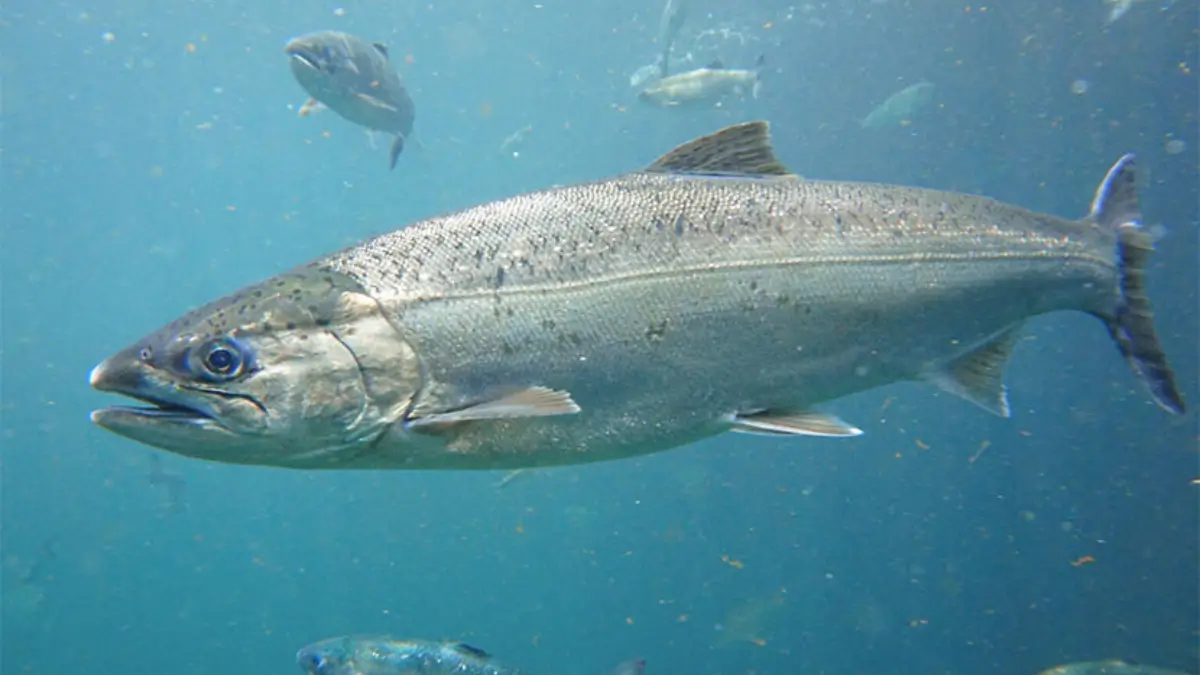
The world’s oceans and rivers are home to many amazing fish, each known for its own beauty, strength, and special qualities. Some fish are valued for their taste, while others are admired for their speed and power. Among these, one particular fish is given a royal title because people see it as strong, unique, and highly important in nature and human life.
King of Fishes
Salmon is called the King of Fishes because of its powerful swimming ability, long migration routes, and big role in nature and the fishing industry. It can travel against fast-flowing water and even jump high waterfalls, making it one of the most impressive fish on Earth.
Why is Salmon called the King of Fishes?
Salmon receives this title for several strong reasons:
- Long-Distance Migration: Salmon travels thousands of kilometres from the ocean to rivers to lay eggs. This journey requires great strength and stamina.
- Strong Ecological Role: Salmon supports river health, provides food for many animals, and helps maintain balance in freshwater ecosystems.
- High Global Demand: It is one of the most commonly eaten fish across Europe, North America, and Asia, making it very important for fishing industries.
Where is Salmon Found?
Salmon lives mainly in the North Atlantic and Pacific Oceans. It migrates into rivers found in:
- Canada
- Alaska
- Norway
- Russia
- Japan
- Scotland
- Northern European countries
These places have some of the world’s largest salmon farms, hatcheries, and natural populations.
Important Characteristics of Salmon
Salmon has several unique features:
- Streamlined Body: Its smooth body helps it swim fast in strong currents.
- Extraordinary Strength: It can leap high obstacles and swim against rushing water.
- Anadromous Nature: Salmon lives in the ocean but returns to freshwater rivers to reproduce, ensuring the species continues.
Nutritional Value of Salmon
Salmon is known as one of the healthiest fish because it contains:
- Omega-3 fatty acids (good for the heart)
- High-quality protein
- Vitamin B12
- Selenium
- Very low saturated fat
Due to these nutrients, health experts recommend salmon for heart health and overall wellbeing.
Interesting Facts About the King of Fishes
- Longest Fish Migration: Some salmon travel 3,000–5,000 km, making their journey one of the longest among fish that return to freshwater.
- Incredible Jumping Ability: Salmon can jump up to 12 feet, allowing them to pass waterfalls and rapids.
- Colour Change: During breeding season, salmon change colour to shades of red, green, or darker tones to show maturity.
- Natural Navigation: Salmon can find their home river using Earth’s magnetic field, the position of sunlight, and their strong sense of smell.
- Cultural Importance: For thousands of years, salmon has been a traditional food for Indigenous communities and coastal cultures, symbolising life, strength, and survival.








 Weekly Current Affairs One Liners (5th t...
 Who Is Navi Pillay? Nobel Peace Prize 20...
 Vande Bharat vs Amrit Bharat Express: Ke...










