
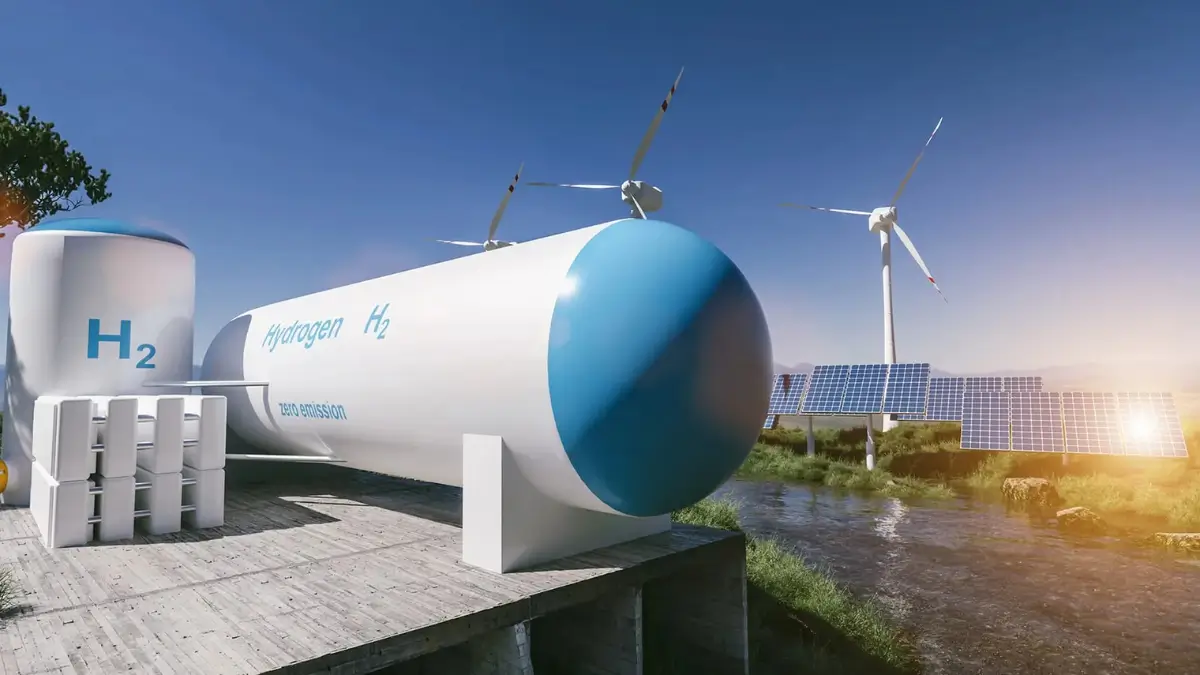
What is Green Hydrogen Revolution?
The Green Hydrogen Revolution is reshaping the global energy landscape, offering a promising solution to combat climate change and transition towards a sustainable future. Unlike traditional hydrogen production methods, which rely on fossil fuels and emit significant amounts of carbon dioxide, green hydrogen is produced using renewable energy sources like solar, wind, and hydropower. This clean energy carrier has the potential to decarbonize industries, transportation, and energy storage, making it a cornerstone of the global effort to achieve net-zero emissions.
What is Green Hydrogen?
Green hydrogen is produced through a process called electrolysis, where water (H₂O) is split into hydrogen (H₂) and oxygen (O₂) using electricity generated from renewable sources. This method produces no greenhouse gas emissions, making it an environmentally friendly alternative to gray hydrogen (produced from natural gas) and blue hydrogen (produced from fossil fuels with carbon capture).
Why is Green Hydrogen Important?
- Decarbonizing Hard-to-Abate Sectors: Industries like steel, cement, and chemicals, which are difficult to electrify, can use green hydrogen as a clean fuel or feedstock.
- Clean Transportation: Hydrogen fuel cells can power vehicles, including trucks, ships, and airplanes, reducing reliance on fossil fuels.
- Energy Storage: Green hydrogen can store excess renewable energy, solving intermittency issues and ensuring a stable energy supply.
- Global Climate Goals: It aligns with international efforts to limit global warming to 1.5°C, as outlined in the Paris Agreement.
Key Drivers of the Green Hydrogen Revolution
- Falling Renewable Energy Costs: The declining cost of solar and wind energy makes green hydrogen production more economically viable.
- Government Policies: Countries like the EU, Japan, and Australia are investing heavily in green hydrogen projects and setting ambitious targets.
- Corporate Commitments: Major companies are adopting green hydrogen to meet sustainability goals and reduce carbon footprints.
- Technological Advancements: Innovations in electrolyzers and hydrogen storage are improving efficiency and scalability.
Challenges to Overcome
- High Production Costs: Green hydrogen is currently more expensive than fossil fuel-based hydrogen, though costs are expected to drop with scaling.
- Infrastructure Development: Building pipelines, storage facilities, and refueling stations requires significant investment.
- Energy Intensity: Electrolysis requires large amounts of renewable energy, which could strain existing grids.
- Public Awareness: Greater education and awareness are needed to drive adoption and policy support.
Global Progress and Projects
- Europe: The EU’s Hydrogen Strategy aims to install 40 GW of electrolyzers by 2030.
- Australia: Projects like the Asian Renewable Energy Hub aim to export green hydrogen to Asia.
- Middle East: Saudi Arabia’s NEOM project is building the world’s largest green hydrogen plant.
- India: The National Hydrogen Mission targets 5 million tons of green hydrogen production by 2030.
The Future of Green Hydrogen
The Green Hydrogen Revolution is still in its early stages, but its potential is immense. As technology advances, costs decrease, and global collaboration intensifies, green hydrogen could become a cornerstone of the clean energy transition. By replacing fossil fuels in critical sectors, it offers a pathway to a sustainable, low-carbon future.








 World Bank Ranks India Among Top 10 Emer...
 Elon Musk to Rename SpaceXAI as SpaceXSI
 Kerala Develops AI-Based Dengue Early Wa...










