National News
Qadian–Beas Railway Line Revived After Nearly 100 Years
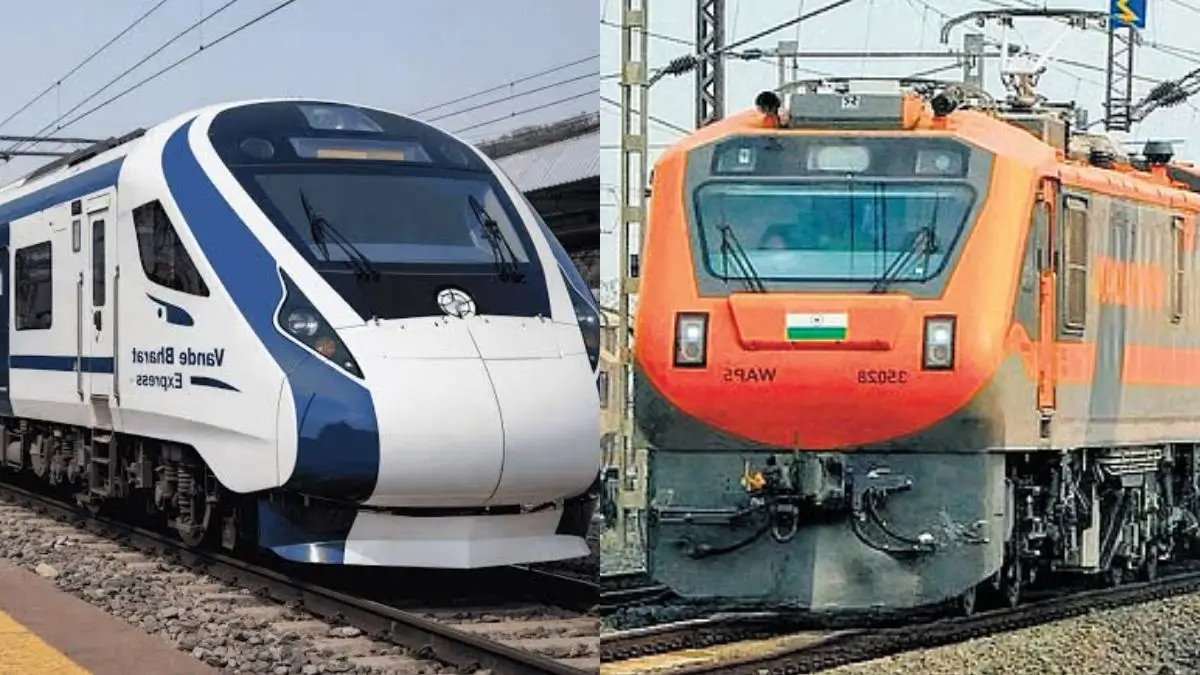
The long-pending Qadian–Beas Railway Line Project has been revived, marking a significant boost to infrastructure development in Punjab. Announced by Ravneet Singh Bittu, the project involves the construction of a 39.68-km broad-gauge rail corridor connecting Qadian and Beas through Dhapai, Ghuman, Butala, and Sathiala. Originally approved during 1928–29 under the North-Western Railway, the project remained stalled for decades despite being included in the Railway Budget 2010–11. The corridor will feature two crossing stations, 11 major bridges, 121 minor bridges, 54 Road Under Bridges, advanced signalling systems, and the Kavach safety system. Besides improving regional connectivity, the line will serve as an alternative route to the Amritsar–Pathankot section and enhance access to major religious destinations, boosting tourism and economic activity across Punjab’s Majha region.
Bharat Buildcon 2026 Inaugurated in New Delhi Under ‘One Nation, One Expo’
Bharat Buildcon 2026 was inaugurated at Yashobhoomi Convention Centre, New Delhi, under the theme “One Nation, One Expo.” The event was inaugurated by Jitin Prasada, Manohar Lal, and Parshottam Rupala. Recognized as one of India’s largest construction and building materials exhibitions, it has attracted participants from over 90 countries and more than 100 Indian cities, with over 25,000 visitors attending on the opening day. The expo showcases innovations across 24 sectors, including cement, steel, ceramics, furniture, sanitaryware, electrical systems, paints, and smart construction technologies. The event aims to promote innovation, strengthen domestic and international trade, encourage technology adoption, and support India’s vision of becoming a global manufacturing and sourcing hub. During the inauguration, Jitin Prasada highlighted the importance of free trade agreements, including the India–UK CETA, in enhancing export opportunities and global competitiveness for Indian industries.
QS World University Rankings 2027: India Rises to 5th Spot Globally
India achieved a significant milestone in global higher education by securing the fifth position worldwide in the QS World University Rankings 2027, with 52 Indian institutions featured among more than 1,500 universities across 106 countries. This represents a remarkable increase from 14 institutions in 2017, making India the fifth most represented higher education system globally after the United States, United Kingdom, China, and Germany. Indian Institute of Technology Delhi emerged as India’s highest-ranked institution at 118th globally, while Indian Institute of Technology Bombay, Indian Institute of Technology Madras, Indian Institute of Technology Kharagpur, and Indian Institute of Science also performed strongly. The rankings highlighted India’s growing academic and research strength, with 11 universities among the world’s top 100 for Citations per Faculty and six institutions in the global top 100 for Employer Reputation. Supported by rising research output, stronger industry collaboration, and reforms under the National Education Policy 2020, India continues to strengthen its global reputation as a leading education and research hub.
Banking News
RBI Cancels Licence of Karnataka’s Shree Mahalaxmi Co-operative Credit Bank
The Reserve Bank of India has cancelled the licence of the Karnataka-based Shree Mahalaxmi Urban Co-operative Credit Bank, citing its deteriorating financial condition and non-compliance with regulatory requirements under the Banking Regulation Act, 1949. The bank was found to have inadequate capital, weak earning prospects, and an inability to repay depositors in full. Following the cancellation, the RBI has directed the Registrar of Co-operative Societies, Karnataka, to initiate winding-up proceedings and appoint a liquidator to manage the bank’s assets and liabilities. The bank is now barred from accepting deposits or conducting any banking operations. To protect customers, the Deposit Insurance and Credit Guarantee Corporation (DICGC) will provide insurance coverage, with around 97.9% of depositors expected to receive full repayment under the ₹5 lakh insurance limit per depositor. This move highlights regulatory action to safeguard financial stability and depositor interests in India’s banking system.
HDFC Bank Extends Keki Mistry’s Tenure as Interim Chairman by 3 Months
The Reserve Bank of India has approved a three-month extension of Keki Mistry as the interim part-time chairman of HDFC Bank. According to the bank’s regulatory filing, Mistry will continue in the role until 18 September 2026 or until a regular chairman is appointed, whichever occurs earlier. The extension was granted as HDFC Bank continues its search for a permanent successor following the resignation of former chairman Atanu Chakraborty on 18 March 2026. Mistry, a veteran financial sector leader with a long association with the HDFC Group, was initially appointed interim chairman on 19 March 2026 for a three-month term. His continued leadership is expected to provide stability and continuity in the bank’s governance during the transition period while the board finalizes the appointment of a permanent chairman.
State News
Delhi Inaugurates First All-Women Police Station
Delhi’s first-ever all-women police station was inaugurated on 19 June 2026 in the Subzi Mandi area of North Delhi by Lieutenant Governor Taranjit Singh Sandhu in the presence of Satish Golchha. Established within the Subzi Mandi police station complex, it is the first police station in the national capital to be staffed entirely by women, including investigating officers and support personnel. The initiative aims to strengthen women’s safety and create a more gender-sensitive policing system. The station will focus on the prevention, investigation, and resolution of crimes against women, including domestic violence, sexual harassment, stalking, and assault cases. In addition to law enforcement functions, it will organize awareness campaigns, counseling services, and community outreach programs to educate women about their rights, legal protections, and available support mechanisms. This step is expected to improve accessibility, trust, and responsiveness for women seeking police assistance in Delhi.
International News
India Is Emerging as a Trusted Partner to the World, Says PM Modi
Prime Minister Narendra Modi, addressing the Indian diaspora in Paris, stated that India is increasingly being recognized as a trusted global partner, emphasizing that trust has become as important as trade in modern international relations. He highlighted that amid geopolitical uncertainties, supply-chain disruptions, and technological changes, countries are seeking reliable long-term partners, and India is emerging as one through its democratic values, economic reforms, innovation, and responsible global engagement. Referring to discussions at the G7 Summit 2026, he stressed the need for inclusive global governance, shared growth, responsible use of technology, and greater representation of developing nations in international decision-making. The Prime Minister also highlighted India’s progress over the past 12 years in digital transformation, infrastructure development, startup innovation, and human development. He described India–France relations as a pillar of trust and cooperation, spanning defence, space, trade, climate action, and education, and noted the upcoming TRISHNA Satellite mission, which will support water resource management, agriculture, food security, and climate studies through advanced scientific collaboration.
Russia Considers BrahMos Missile for Its Own Arsenal: What It Means for India-Russia Defence Cooperation
The BrahMos missile, jointly developed by Defence Research and Development Organisation and NPO Mashinostroyenia through BrahMos Aerospace, has emerged as a symbol of successful India–Russia defence cooperation and is now being considered for induction into Russia’s armed forces. Discussions held in June 2026 focused on procuring the missile for the Russian Navy and ground forces, along with expanding production capabilities. Named after the Brahmaputra and Moskva rivers, BrahMos is one of the world’s fastest operational supersonic cruise missiles, capable of speeds between Mach 2.8 and Mach 3, precision strikes against land and sea targets, low-altitude radar-evading flight, and deployment from land, sea, and air platforms. Its proven performance, including use during Operation Sindoor, has enhanced its global reputation. India and Russia are also developing BrahMos-NG, a lighter next-generation version, and exploring hypersonic variants exceeding Mach 5, further strengthening their long-standing strategic and defence partnership while expanding the missile’s role in global defence markets.
India Advocates Human-Centric AI Approach at VivaTech 2026 and G7 Summit
India strongly advocated a human-centric and inclusive approach to artificial intelligence at VivaTech 2026 and the G7 Summit 2026, with Narendra Modi promoting the vision of “AI for All.” India emphasized that AI should improve quality of life, support economic growth, enhance public services, and remain accessible to all sections of society. As the AI Country Partner at VivaTech 2026, India highlighted the role of AI in digital inclusion, innovation, and sustainable development. At the G7 Summit, India proposed four key measures for responsible AI governance: developing safe-by-design AI systems, establishing common global standards, promoting regulatory sandboxes for innovation, and strengthening international cooperation against deepfakes, cyber fraud, and misinformation. India also stressed equitable AI access for developing nations and promoted its M.A.N.A.V. framework—Moral and Ethical Systems, Accountable Governance, National Sovereignty, Accessible and Inclusive AI, and Valid and Legitimate Systems—as a guiding model for trustworthy, transparent, and responsible AI development worldwide.
Uzbekistan Becomes First Central Asian Member of New Development Bank
Uzbekistan has officially become the first Central Asian nation to join the New Development Bank (NDB), marking a significant milestone in the institution’s expansion. The country formally became a shareholder on 5 June 2026 after completing all accession procedures and ratifying the bank’s Articles of Agreement. Announcing the development, Andrey Bokarev stated that Uzbekistan is now the 10th member of the NDB. Established in 2015 by the BRICS nations—Brazil, Russia, India, China, and South Africa—the bank finances infrastructure and sustainable development projects across emerging economies. Since its inception, the NDB has approved 139 projects worth nearly US$43 billion. Uzbekistan’s membership is expected to support its modernization and infrastructure goals through access to long-term development financing. The accession was approved by President Shavkat Mirziyoyev on 21 May 2026, reflecting the country’s growing economic significance and international engagement.
France to Get First Traditional Hindu Temple Built with Indian Stones
France is set to witness the inauguration of its first traditional Hindu temple in September 2026, marking a historic milestone for the Hindu community and a symbol of growing cultural ties between France and India. The temple has been built using stones sourced from India and crafted by skilled Indian artisans following traditional Hindu architectural principles before being transported and assembled in France. This unique process has preserved the temple’s authentic design and cultural heritage. The inauguration will feature a 15-day religious and cultural celebration, including prayers, ceremonies, and community events, attracting devotees and visitors from across Europe and beyond. For the Indian diaspora, the temple will serve as a spiritual center, a hub for cultural preservation, and a venue for community gatherings, festivals, and educational activities, helping future generations remain connected to Indian traditions and values while strengthening India–France cultural relations.
UAE Sets 15 as Minimum Age for Social Media Use, Introduces AI-Based Age Verification
The United Arab Emirates has introduced a landmark regulation to strengthen online child safety by setting 15 years as the minimum age for social media use. Under the new framework, children below 15 will not be allowed to create, manage, or operate personal social media accounts, and platforms will be required to identify and remove underage accounts. A key feature of the policy is the mandatory adoption of advanced age-verification measures, including digital identity checks, AI-based age estimation tools, and enhanced account authentication systems, replacing reliance on self-declared ages. Teenagers aged 15–16 will still have access to social media but with additional safeguards such as age-appropriate content recommendations, stronger privacy settings, parental supervision tools, communication restrictions with strangers, and screen-time controls. The UAE is the first Arab nation to introduce such a nationwide minimum-age requirement, reflecting growing concerns over harmful content exposure, online safety risks, excessive screen time, and data privacy issues affecting children.
Economy News
Net Direct Tax Collections Rise 14.6% to ₹5.21 Trillion in FY27
According to the latest data released by the Income Tax Department, India’s net direct tax collections grew by 14.64% year-on-year to ₹5.21 trillion during the period from 1 April to 17 June 2026, compared with ₹4.5 trillion in the corresponding period of the previous financial year. Gross direct tax collections, before refunds, increased by 12.46% to ₹6.1 trillion from ₹5.4 trillion. Tax refunds worth ₹89,025.71 crore were issued during the period, slightly higher than last year. The growth was driven primarily by strong corporate tax collections, which rose to ₹2.08 trillion from ₹1.7 trillion, reflecting healthy corporate profitability and improved compliance. Non-corporate tax collections also increased to ₹2.93 trillion from ₹2.71 trillion, supported by higher contributions from individuals, firms, and other entities. The robust tax performance indicates resilient economic activity, better compliance, increased advance tax payments, and continued formalization of the Indian economy in the early months of FY27.
Appointments News
Bata India Appoints Sanjay Rao as MD & CEO to Lead Next Phase of Growth
Bata India has appointed Sanjay Rao as its new Managing Director and Chief Executive Officer, succeeding Gunjan Shah, who will complete his five-year tenure with the company. Rao will assume CEO responsibilities on 24 August 2026, while his term as Managing Director will officially begin on 1 October 2026 and continue until 23 August 2031. With over two decades of experience in global retail and consumer businesses across India, South Asia, China, and Europe, Rao brings extensive expertise in retail operations, brand management, consumer engagement, and business expansion. Before joining Bata India, he served as Senior Director of Retail at Nike for France and the Benelux region. He also played a key role in expanding Zara in India through the Inditex–Tata joint venture. The appointment is expected to strengthen innovation, enhance customer experience, and support Bata India’s long-term growth strategy.
Defense News
Indian Army to Participate in Multinational Exercise Khaan Quest 2026
An Indian Army contingent is set to participate in Exercise Khaan Quest 2026, scheduled from 20 June to 3 July 2026 at the Five Hills Training Area. Hosted in Ulaanbaatar, the exercise aims to enhance interoperability among participating militaries in conducting peace support operations under Chapter VII of the United Nations Charter. The Indian contingent comprises 40 personnel, primarily from a battalion of the Jat Regiment, along with members from other arms and services. Originally launched in 2003 as a bilateral exercise between the United States and Mongolia, Khaan Quest became a multinational peacekeeping exercise in 2006, with the 2026 edition being its 23rd iteration. The exercise will focus on joint planning, patrolling, search operations, civilian evacuation, counter-IED drills, combat first aid, and casualty evacuation. India’s participation underscores its commitment to global peacekeeping and its strategic partnership with Mongolia.
Spots News
Neeraj Chopra Joins IOA to Launch Clean Sports Campaign Against Doping
India’s anti-doping efforts received a major boost as Olympic champion Neeraj Chopra joined hands with the Indian Olympic Association to launch the Clean Sports Campaign. Announced during the second Athletes Forum, the initiative follows an MoU between the IOA and the Neeraj Chopra Foundation to promote awareness about doping, banned substances, and ethical sporting practices. Through a recorded message from Doha, Chopra stressed that sporting success requires patience, discipline, and hard work, warning young athletes against seeking shortcuts through performance-enhancing drugs. The campaign comes as India faces growing concerns over doping violations and seeks to strengthen its global sporting reputation, especially amid its bid to host the 2036 Summer Olympics. Key components include athlete-led storytelling, digital education tools, workshops, and grassroots outreach programs.
Important Days News
World Sickle Cell Day 2026: Theme, Causes, Symptoms and Government Initiatives
World Sickle Cell Day is observed on 19 June 2026 to raise awareness about Sickle Cell Disease, a common hereditary blood disorder affecting millions worldwide. Established by the United Nations General Assembly in 2008, the day highlights the need for early diagnosis, treatment access, research, and reduced stigma. The theme for 2026 is “Closing the Survival Gap: Equity in Sickle Cell Disease,” emphasizing equal healthcare access and improved survival outcomes regardless of geography or socio-economic status. SCD is caused by a mutation in the HBB gene leading to abnormal hemoglobin (HbS), which distorts red blood cells into a sickle shape, causing anemia, pain crises, infections, and organ complications. In India, the disease is widespread in tribal regions, and the government aims to eliminate it as a public health problem by 2047 through the National Sickle Cell Anaemia Elimination Mission (2023), large-scale screening, awareness drives, and genetic counselling programs.


Current Affairs Capsule PDF (18 June 202...
Which Indian City is known as the City o...
Which Place is known as the Glass Capita...