
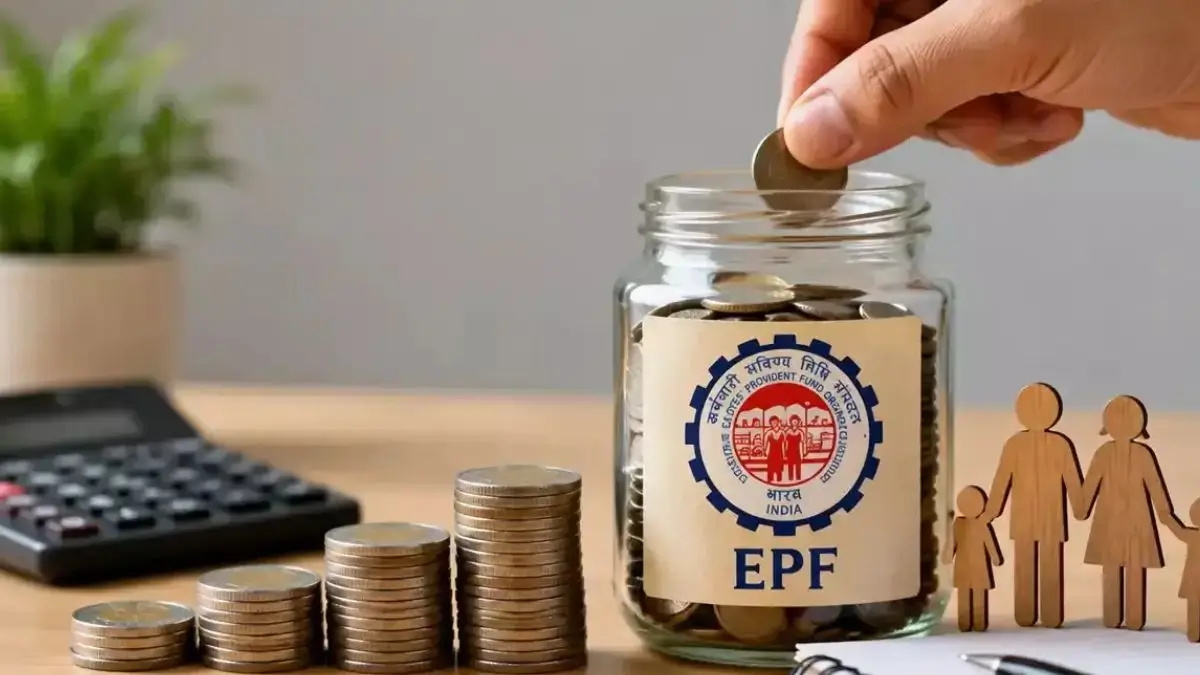
The Central Government has notified the Employees Provident Fund (EPF) Scheme, 2026, it introduced the important changes to the partial withdrawal rules for the Employees Provident Fund Organisation (EPFO) members. The new scheme will be effective from 29th June, 2026. The revised scheme requires subscribers to maintain a minimum balance in their respective EPF accounts before making any partial withdrawals and it also expands the list of eligible purposes for accessing provident fund savings. Alongside with these reforms, EPFO is also preparing to launch UPI-based withdrawals and WhatsApp-enabled member services to improve convenience for the members.
What is the EPF Scheme 2026?
The EPF Scheme 2026 is the latest framework which governs provident fund contributions and withdrawals for members of the Employees Provident Fund Organisation (EPFO).
The new revised scheme introduces new safeguards to preserve retirement savings, providing greater flexibility for members who are facing genuine financial needs.
It also supports the government’s broader digital transformation agenda by integrating the faster and more accessible member services.
About New 25% Minimum Balance Rule
One of the major changes is the introduction of a mandatory minimum balance requirement.
Under the new rules, EPFO members must retain at least 25% of their balance in their EPF account before making any partial withdrawal.
This minimum balance criterion applies to both,
- Employee contributions
- Employer contributions
For example, if an EPF account has an eligible balance of around ₹1 lakh, then member must retain ₹25,000 in the account and it making up to ₹75,000 available for withdrawal and it is also subject to the applicable conditions.
The scheme defines the eligible member balance as the amount available after already setting aside the mandatory 25% balance.
Expanded Reasons for Partial Withdrawals
The new revised EPF Scheme 2026 broadens the list of situations in which members can withdraw their savings.
1. Housing Related Purposes.
Eligible members can now withdraw funds for,
Purchasing a house or flat, buying land for house construction, constructing a residential property, repaying the loan amount of house and home repairs and family needs.
2. Personal and Family Needs
In this circumstances, members may withdraw up to 100% of the eligible balance for,
Medical treatment, higher education and marriage related expenses. These provisions provides greater financial flexibility during the major tough life events.
Easier Eligibility for Withdrawals
The new revised scheme has also simplified the withdrawal conditions.
Key changes includes the,
- Partial withdrawals are allowed after 12 months of service.
- Withdrawals under the specified special circumstances are no longer require additional explanations.
- Also the streamlined procedures are aimed at for faster claim processing.
These measures are also expected to improve access to provident fund savings along with maintaining adequate retirement security.
EPFO to Introduce UPI-Based PF Withdrawals
As part of the digital modernisation in the organisation, EPFO has also completed testing for a facility which will allow members to transfer provident fund money directly to their bank accounts by using the Unified Payments Interface (UPI).
Once it gets launched, subscribers will benefit from,
- Faster claim settlements
- Instant fund transfers
- Simplified withdrawal process
- Improved digital access
The initiative is expected to significantly reduce the processing time for eligible claims.
WhatsApp Services for EPFO Members
EPFO is also preparing to launch member services through WhatsApp.
Subscribers will be able to start using the service by sending a simple “Hello” message to the EPFO’s verified WhatsApp number.
This platform will enable members to,
- Check PF balance
- View the last five account transactions
- Track claim status
- Access services in the regional languages
The move also aims to improve the accessibility, grievance redressal and customer experience.








 Prime Minister Dhan-Dhaanya Krishi Yojan...
 Bhagini Nivedita Scheme 2027: West Benga...
 Delhi Doubles ASHA Incentives, Launches ...










