
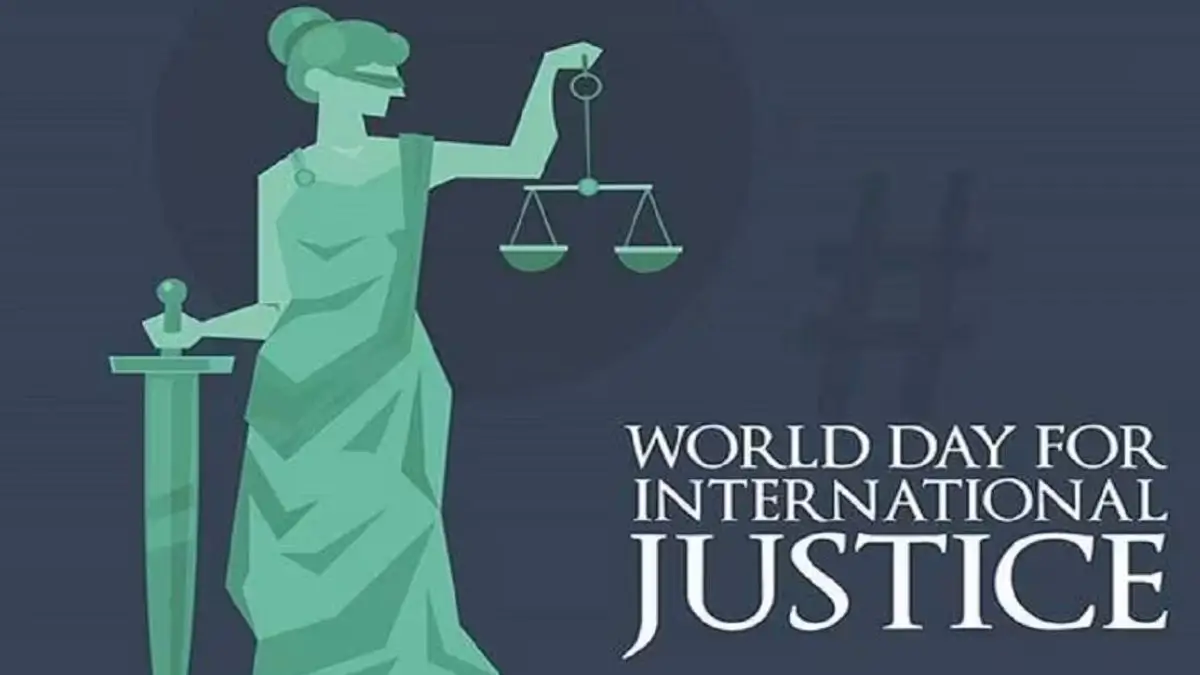
World Day for International Justice is observed every 17th day of July each year. It is aimed towards ensuring justice is served and the vital necessity of human rights and rule of law is recognized. This day was established as a mark of the signing of the Rome Statute in 1998 that founded the ICC (International Criminal Court). World Day for International Justice 2026 serves the purpose of reminding mankind of the global commitment towards stopping the impunity of war crimes, genocide, and crimes against humanity.
What is World Day for International Justice?
World Day for International Justice, often referred to as International Justice Day, is celebrated 17 July every year.
This day, acknowledge the importance of international criminal justice along with the necessity of bringing those behind serious crimes of humanity to justice.
The day marks the implementation of the Rome Statute, which was signed on 17 July 1998 and justifies the creation of the International Criminal Court (ICC), the first court in history to operate permanently and hold trials against individuals perpetrating serious international crimes.
The observance of the day also reinforces the importance of human rights protection, as well as the significance of establishing peace and strengthening the rule of law in the countries of the world.
World Day for International Justice in 2026: Key Highlights
- Event :World Day for International Justice 2026
- Date: 17 July 2026 (Friday)
- Objective: Promoting international justice and accountability
- In memory of the adoption of the Rome Statute (17 July 1998)
- Related Organization: International Criminal Court (ICC)
- ICC Office: The Hague, Netherlands
- Focus Areas: Human Rights, Rule of Law, Peace, and Justice
Celebration of World Day for International Justice
The day celebrates the very important milestone of international law—the acceptance of the Rome Statute by the UN.
It serves the following aims,
- Promoting the international justice.
- Assisting the victims of war crimes, genocide, crimes against humanity, and aggression.
- Strengthening the rule of law.
- Inspiring countries to work together in punishing crimes.
- Informing the public about the role of the ICC.
- Promoting peace and respect for human rights.
The History of World Day for International Justice
World Day for International Justice is celebrated on 17 July, originating in 1998.
The development of the Statute of Rome was used for the inception of the International Criminal Court.
Key Events
- 17 July 1998 – The Statute of Rome was accepted in Rome.
- 1 July 2002 – The injections of 60 ratifications were received.
- 1 July 2002 – The International Criminal Court was established.
- Since then, the day is celebrated as the World Day for International Justice.
Governments, legislative bodies, academic institutions, and civil societies across the world celebrate this day via awareness campaigns, forums, workshops, and conferences.
What is International Criminal Court?
The International Criminal Court (ICC) is the permanent international criminal court which holds individuals accountable for the gravest international crimes.
ICC Overview
- Date of Establishment: 01st July 2002
- Head Office: The Hague, Netherlands
- Legal Ground: Rome Statute
- Nature: Autonomous international legal body
- Jurisdictional Powers: Individuals (and not countries or other political bodies)
- End objective: To achieve justice, avoid impunity, and safeguard affected people.
Typically, the ICC makes its entry into national courts only when national courts fail to conduct effective investigations at the national level.
Crimes Handled by the ICC
The Rome Statute grants the ICC jurisdiction over the four main crimes in the world.
1. Genocide
It refers to the crime of attempting to completely wipe out a national, ethnic, racial, or religious group.
2. Crimes Against A Humanity
Involves systematic or widespread attacks which are on a civilian population, and it includes crimes like murder, rape, and enslavement.
3. War Crimes
Refers to the severe violations of the rules of international law during times of the armed conflict.
4. Crime of Aggression
It also includes the crimes associated with the act of the aggression by one state against another, contrary to the UN Charter.








 Indian Air Force Day 2026: 94th Annivers...
 World Space Week 2026 Celebrated with Th...
 World Cerebral Palsy Day 2026: Theme, Si...










