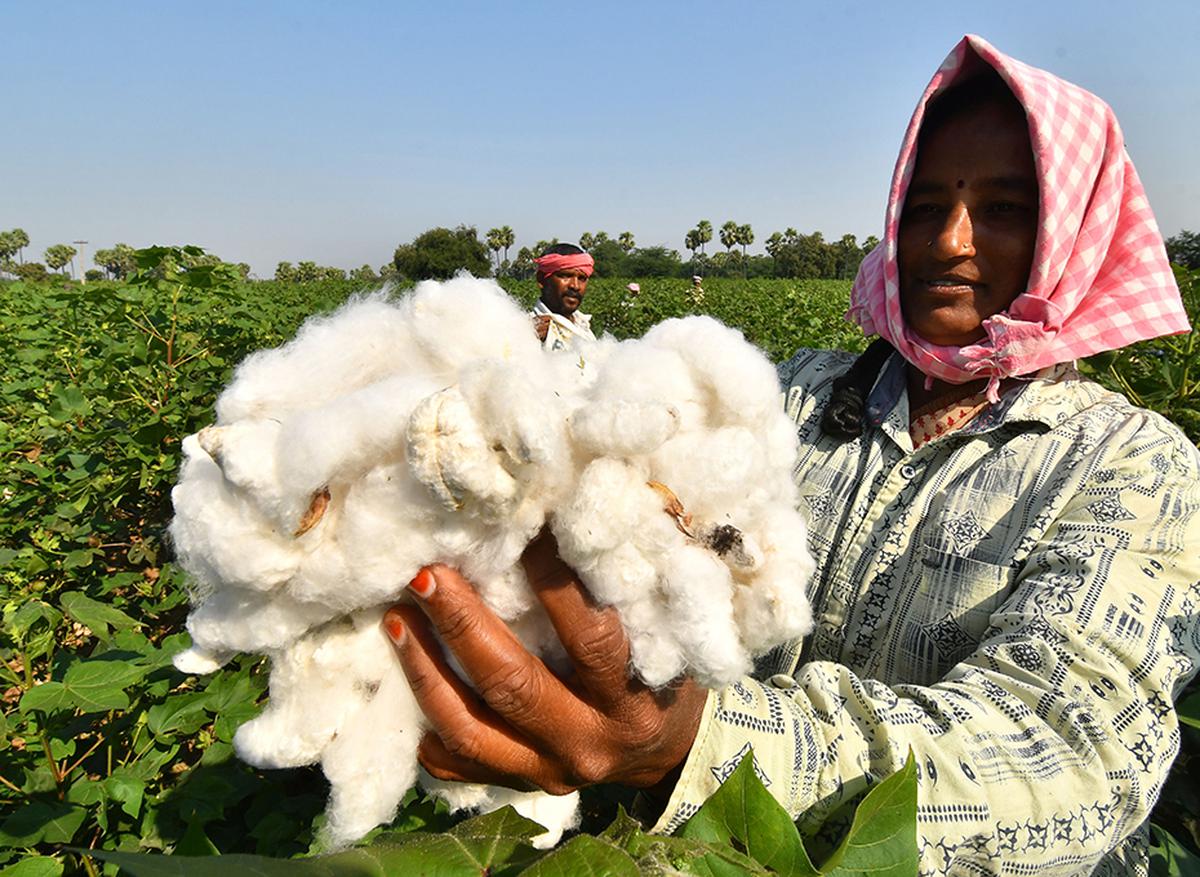
The cotton industry in India faces challenges in the upcoming season due to factors like pink bollworm infestation and insufficient monsoon rains. The Committee on Cotton Production and Consumption recently estimated a 6% decrease in cotton production for the 2023-2024 season compared to the previous year.
Production Estimations
- Cotton production for 2023-2024 is projected to be 316.57 lakh bales, down from 336.60 lakh bales in the previous season.
- Central and southern regions, including Gujarat, Maharashtra, Telangana, Andhra Pradesh, Karnataka, and Tamil Nadu, are expected to experience lower production.
Factors Affecting Production
- Pink bollworm infestation and inadequate monsoon in various regions are impacting cotton production.
- Atul Ganatra, president of the Cotton Association of India, highlighted these challenges affecting farmers.
Demand vs. Supply
- Nishant Asher, secretary of the Indian Cotton Federation (ICF), emphasized that the main concern this year is demand, not supply.
- Despite daily arrivals of 70,000 to one lakh bales, the global low demand for textiles and clothing remains a significant challenge.
International Impact
- Global cotton production for 2023-2024 is expected to increase by 3%, leading to a 10% rise in global stocks, according to the International Cotton Advisory Committee.
- Declining international prices could make Indian cotton comparatively expensive, impacting the domestic textile industry further.
Market Price and Support
- As of November 7, the price of Shankar-6 variety of cotton stood at ₹56,500 per candy.
- Cotton Corporation of India Chairman and Managing Director, Lalit Kumar Gupta, assured that officials are overseeing procurement centers, ensuring farmers receive the minimum support price, considering both domestic and international factors.









 Dinesh Pant Retires as LIC Managing Dire...
 Starbucks to Set Up Its First India GCC ...
 Warren Buffett Steps Down After Decades ...