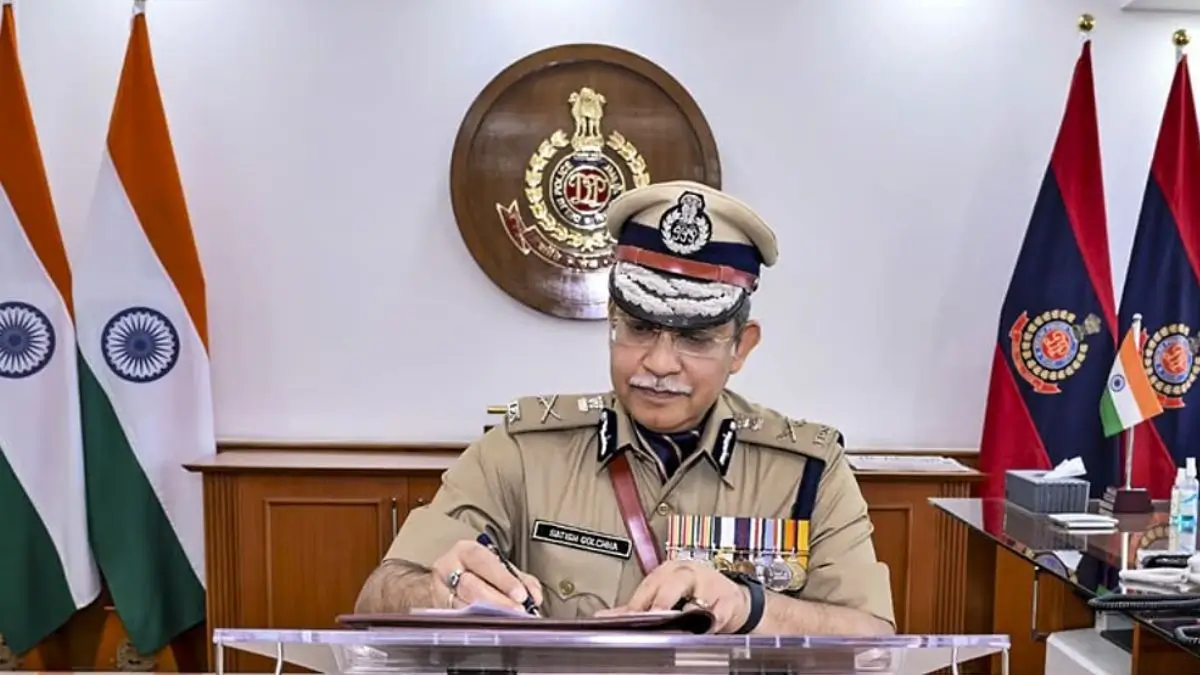
Satish Golcha, who had earlier served as the Commissioner of Police for Delhi, has been posted with a fresh posting in the Home Guards Directorate of the Delhi government. Golcha has been appointed as Officer on Special Duty (OSD) and he is expected to head the Home Guards department as its Director General from October 1, 2026. This decision comes after his dismissal as the Delhi Police Commissioner in July and subsequently his posting at the office of the Lieutenant Governor.
What Will Be Satish Golcha’s New Posting?
As per the order issued by the Home Department of the Government of NCT of Delhi, Satish Golcha, IPS (AGMUT: 1992), has been transferred and posted as OSD in the Directorate of Home Guards.
Golcha’s OSD posting will be valid till the superannuation of Virender Singh, IPS (AGMUT: 1991) on September 30, 2026.
Thereafter, from October 1, 2026, Golcha will take up charge as the Director General of Home Guards.
Why is Golcha Taking Charge From October 1?
This order sets up a transition plan related to the retirement of the current DG, Virender Singh.
Until Singh retires on September 30, Golcha will be the OSD at the Directorate of Home Guards. The official assumption of his duties of DG will start from October 1.
The Delhi Police has also been asked to include Golcha in their cadre for getting his pay against an existing post until he takes over as the DG.
Previous Career of Golcha in Delhi Police
Golcha has occupied many top-level posts in Delhi Police. Prior to his appointment as the Commissioner of Delhi Police, he was the Director General (Prisons), Delhi.
He had also served as the Special Commissioner (Law & Order) and occupied many other important posts during his tenure in Delhi Police.








 Tukaram Mundhe Appointed Secretary of Co...
 Prakash Rajpurohit Appointed Deputy Elec...
 Press Council of India Reconstituted Wit...